
📊 Full opportunity report: Make Every Walk A Story With Route-Aware Narration on IdeaNavigator AI — validation score, market gap, and execution plan.

Prime made for students and young adults
- Fast, free delivery for dorm and study essentials
- Prime Video and Amazon Music included
- Member-only deals
TL;DR
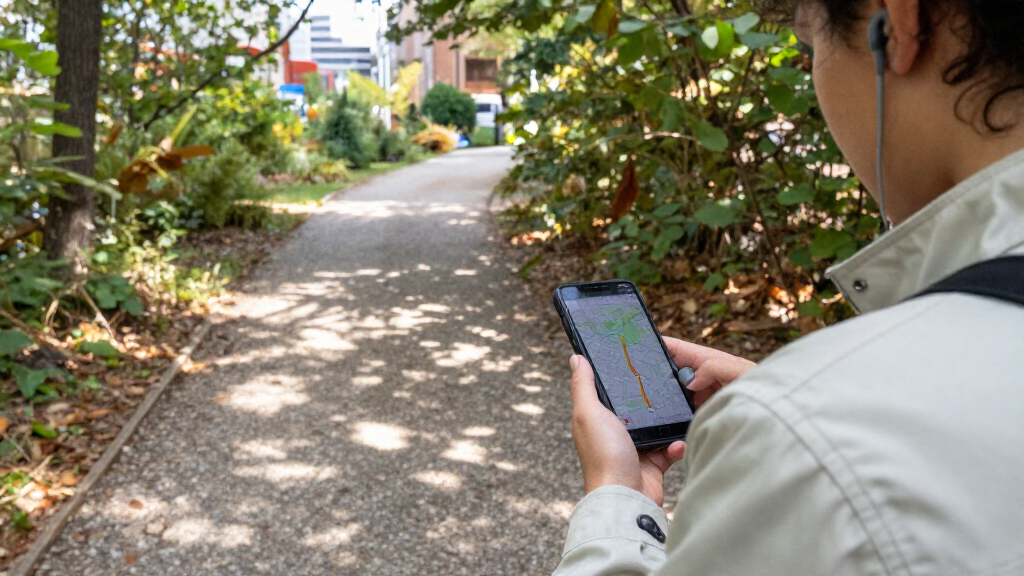
IdeaNavigator AI has outlined a product concept for a walking app that generates narration tied to a user’s live route, using local records to describe history, buildings and other details. The proposal recommends testing the idea in two cities and measuring week-four walking retention and narration accuracy; no launch, pilot results or product performance are reported.
IdeaNavigator AI has proposed an audio walking app that generates narration based on a user’s route, describing local history, architecture and other details as the walker moves. The concept is framed as an early product opportunity, not a launched service: its proposed test would begin in two cities and track repeat use and narration accuracy.
The proposed app would let a user start a walk and receive narration tied to the route in real time. The suggested content includes local history, building descriptions and unusual details, with narration that responds at corners and landmarks. Users could choose themed modes such as history, architecture or nature, and save routes they like.
The proposal identifies its initial audience as walkers who want their neighborhoods and travel destinations narrated. It argues that conventional podcasts are not tied to a listener’s location, while existing tour apps tend to focus on established landmark districts. That is the concept’s assessment of an unmet need, rather than independently measured evidence about the audio-tour market.
For a first test, the proposal recommends launching in two cities, then measuring walks per week among users at week four and auditing narration accuracy on a sample of routes. It suggests a consumer subscription as a potential revenue model, alongside licensing for tourism boards. No pricing, partners, launch schedule, city selections or test results are provided.
Product concept · Early validation
Make Every Walk a Story With Route-Aware Narration
An audio walking app concept from IdeaNavigator AI would generate narration tied to a user’s live route, drawing on local records to describe history, architecture and other details. It remains a proposal; no launch or pilot results are reported.
01 / The experience
A route becomes the script
The proposal imagines narration that follows a walker through familiar neighborhoods or travel destinations. Content could surface as a route unfolds, with users choosing a theme and saving routes they enjoy.
Stories in place
Hear about local events and history connected to streets and places along the walk.
Look up as you go
Get building descriptions and details about the surroundings, timed to the route.
Choose a lens
Switch between history, architecture or nature themes, and save routes worth revisiting.
02 / Proposed user flow
From start to story
A narrow first workflow could test whether route-linked narration is useful for everyday explorers. The concept names corners and landmarks as moments to respond, but leaves the underlying technical approach open.
Pick a theme
Select history, architecture or nature for the walk.
Begin walking
Start a route through a neighborhood or destination.
Hear what’s nearby
Receive local narration as the walk reaches relevant places.
Save and revisit
Keep routes a user likes for another walk.
03 / Why test it
Two questions before scale
The proposed two-city test focuses on whether people return to the experience and whether the generated content is reliable. Those measures can inform an early decision, but alone they cannot establish broad demand or commercial viability.
Walks per week at week four
Track how often pilot users walk with the app by the fourth week. This offers an early signal of routine use; it does not prove long-term retention or willingness to pay.
Audit sample routes
Review narration accuracy on a sample of routes, including descriptions of local places and history. No accuracy threshold or results are provided.
Market-gap note: the proposal argues that podcasts are not location-tied and existing tour apps often center on landmark districts. This is the concept’s assessment, not independently measured market evidence.
04 / What remains unknown
Promising premise, open questions
Route-aware narration would need to locate the walker, select relevant source material and speak at useful moments. The proposal offers no technical demonstration, data inventory or cost comparison.
Potential revenue models: a consumer subscription and licensing for tourism boards. No pricing, partners, customer interest or commercial results are reported.
05 / Evidence status
Proposal, not a reported pilot
The suggested next step is a two-city test, but no cities, start date, recruitment plan, decision threshold or pilot arrangement are named. Wider demand and the ability to scale across cities remain unproven.
Is the app available now?
No launch is reported. The app is presented as a concept, and the two-city pilot is a recommendation rather than a confirmed test.
What would it narrate?
Route-linked local history, building descriptions and unusual details, with optional history, architecture and nature themes.
How would use be evaluated?
Measure walks per week at week four and audit narration accuracy across a sample of routes.
How might it make money?
The proposed models are consumer subscriptions and tourism-board licensing. No prices or agreements are reported.
Testing Audio Beyond Tourist Districts
The idea targets a practical gap between location-independent listening and tours built around famous sites. If narration can be generated accurately for ordinary streets, the service could give walkers a reason to explore familiar neighborhoods as well as destinations, without requiring a separately produced recording for every route. That potential is still untested: the proposal does not establish that users will listen repeatedly or pay for the service.
The suggested pilot focuses on two questions that would help judge whether the concept is viable: repeat use and factual reliability. Week-four walks per week could indicate whether the app becomes part of a user’s routine, while route audits could expose errors in descriptions of places and history. These measures would not, by themselves, establish subscription demand or whether a service can work across many cities.
Tourism-board licensing could give the product another route to revenue, but would involve a different buyer and use case from an individual subscription. The proposal does not report interest from tourism organizations or evidence that either business model is commercially viable.
Products Worth Considering

Bose QuietComfort Wireless Noise-Cancelling Headphones, Petal Pink

Bose QuietComfort True Wireless Earbuds with Active Noise Cancellation, Black

Apple AirPods Pro 3 Wireless Earbuds with Active Noise Cancellation
As an affiliate, we earn on qualifying purchases.
Why Route-Based Narration Is Proposed Now
The proposal’s timing rests on the claim that large language models can generate location-grounded narration on demand from open data, including historical records, architecture information and place records. It argues that this could reduce the cost of producing audio for each route, a constraint it says has kept audio tours concentrated on landmark areas. No technical demonstration, data inventory or cost comparison accompanies the concept.
The product would depend on more than generating engaging prose. Route-aware narration would need to identify a walker’s location, select relevant material and deliver it at suitable moments, while keeping descriptions accurate and useful. The proposal points to corners and landmarks as points for reacting to a route, but does not specify how location detection, source checking, privacy or connectivity would be handled.
Its recommended scope is deliberately narrow: try one workflow for people who want their neighborhood or travel route narrated, rather than begin with a broad audio platform. The proposed two-city test would provide an initial way to examine usage and content quality before making claims about wider demand.
Accuracy, Demand and Product Details
No app launch or operating test is reported. There are no named cities, user numbers, retention figures, accuracy results, subscription prices or tourism-board agreements. The two-city pilot is a recommendation, not confirmation that a pilot has been arranged.
The proposal also leaves open how the service would verify generated descriptions and handle gaps or contradictions in local data. It does not explain whether narration would be available offline, how often it would speak, how it would avoid distracting walkers, or what location information it would collect. These details could affect both the usefulness of the experience and users’ willingness to adopt it.
There is no evidence yet that people would pay for recurring access, that tourism boards would license the product, or that walk-frequency and accuracy checks would predict longer-term retention. Those questions require testing rather than inference from the concept.
A Two-City Test Would Set the Next Step
The next step proposed by IdeaNavigator AI is to test the app in two cities and review two measures: walks per week at the four-week mark and the accuracy of narration across a sample of routes. The plan does not give a start date, test duration beyond the week-four measure, recruitment method or threshold for deciding whether the results are strong enough to proceed.
If a pilot is conducted, its findings could clarify whether walkers return to the experience and whether generated local descriptions can meet an acceptable accuracy standard. Evidence on willingness to pay and tourism-board interest would still be needed to assess the proposed subscription and licensing models. Until those results are available, the app remains a product proposal rather than a demonstrated service.
Source: IdeaNavigator AI
Key Questions
Is the route-aware walking app available now?
No launch is reported. The app is presented as a product concept, and the two-city pilot is a proposed validation plan rather than a confirmed test.
What would the app narrate?
The concept calls for route-linked narration about local history, buildings and unusual details, with optional history, architecture and nature themes.
How would the proposal test whether people use it?
It recommends measuring walks per week at week four in a two-city test, alongside an audit of narration accuracy on a sample of routes.
How might the service make money?
The proposed models are a consumer subscription and licensing for tourism boards. No prices, customers or licensing agreements are reported.
What is still unknown about the concept?
It is not clear whether a pilot will happen, whether generated narration can be kept accurate, or whether walkers and tourism boards would pay for the service. The proposal also gives no launch date or technical details.
Source: IdeaNavigator AI