TL;DR

Prime made for students and young adults
- Fast, free delivery for dorm and study essentials
- Prime Video and Amazon Music included
- Member-only deals
Educational science kits for kids span chemistry, physics, biology, earth science, and coding, with clear age bands from ages 3–5 (sensory, large parts) through teens (real lab equipment). One-time kits cost $15–60 while STEM subscription boxes run $20–40/month. Pick kits with non-toxic, CPSC-compliant materials that align with NGSS standards so the fun doubles as genuine science learning.
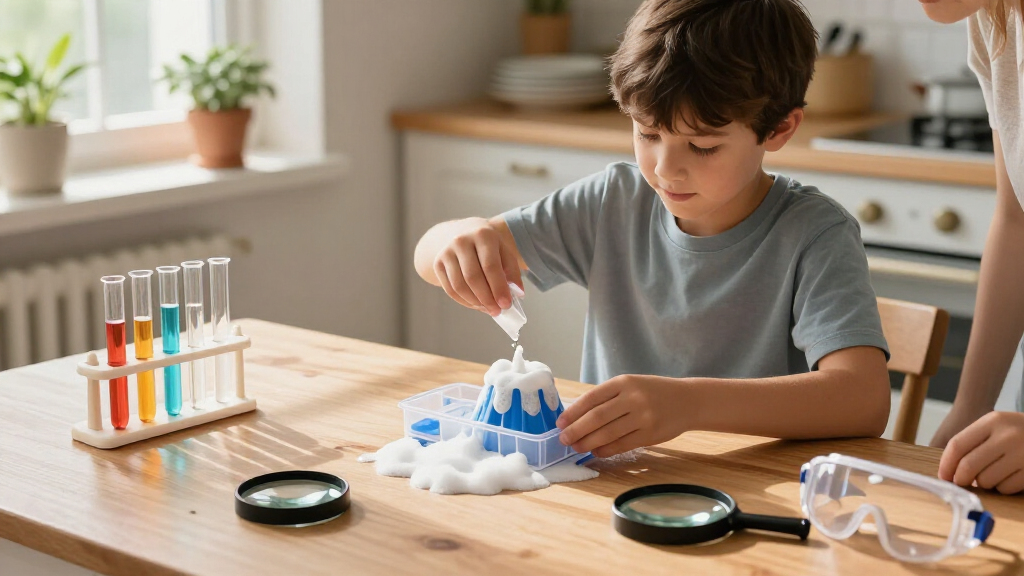
The baking-soda volcano has officially been retired. Today’s educational science kits for kids include programmable robots, real lab glassware, and augmented-reality apps that turn your kitchen table into a working laboratory — no papier-mâché required.
But here’s the catch: the market is crowded, prices range from $15 throwaway kits to $40/month subscriptions, and plenty of them are glittery toys wearing a lab coat. You need to know which ones actually teach something.
In this guide, you’ll get age-by-age recommendations, safety facts worth knowing before you buy, an honest subscription-vs-one-time comparison, and a buying checklist you can screenshot before shopping. Let’s get into it.
Match the kit category to your kid’s existing obsession — a forensic set beats a pricey engineering kit for the right child.
Buy at the top of the age range: an 8+ kit for a 9-year-old stretches them; for a 7-year-old, you’ll be doing the project.
Budget roughly $15–60 for one-time kits and $20–40/month for subscriptions — test interest with one-time kits first, then subscribe.
Check for CPSC compliance, ASTM F963 labeling, and stick to brands like Thames & Kosmos, National Geographic, Snap Circuits, and 4M.
Kits aligned with NGSS standards can count as real science curriculum — check the box if you homeschool.
The 6 Types of Science Kits (And Which Kids Love Each One)
Science kits fall into six main categories, and matching the type to your kid’s natural curiosity is the single biggest predictor of whether the kit gets used twice or two hundred times. A dinosaur-obsessed 7-year-old will ignore a circuits kit. A tinkerer will find a butterfly garden boring. Here’s the map.
- Chemistry kits — safe reaction experiments like color-changing liquids and fizzing tablets. Best for kids who love the “whoa” moment. Brands: Thames & Kosmos, Scientific Explorer.
- Physics and engineering kits — Snap Circuits (Elenco) lets kids build working radios and doorbows without touching a wire stripper. Perfect for builders and tinkerers.
- Life science kits — microscopes, butterfly gardens, plant-growing sets. Slower pace, big payoff for patient, nature-loving kids.
- Earth science kits — rock and mineral collections, volcano kits, weather stations. National Geographic’s rock kits are a gateway drug to geology.
- Coding and robotics kits — Botley (screen-free, ages 5+), Sphero, LEGO Boost, and micro:bit for older kids. Ideal for kids who already love screens but need a purpose for them.
- Specialty kits — crystal growing, forensic detective sets, dissection kits. Great for kids with a specific obsession.
My neighbor’s daughter ignored three engineering kits before a $25 forensic set — fingerprint dusting, ink analysis — had her solving “crimes” around the house for a month. The category matters more than the price tag.
Which Kit for Which Age: A Cheat Sheet That Saves You Guesswork
Age is the #1 buying factor for science kits, because mismatched kits fail in both directions — too simple and it’s babyish, too complex and it’s frustrating. Manufacturers label ages for safety and cognitive reasons, so treat those ranges as real limits, not marketing fluff.
| Age | What Works | Supervision Needed | Example |
|---|---|---|---|
| 3–5 years | Sensory kits, large parts, color mixing, magnet play | Always — adult does the pouring | Learning Resources magnet sets |
| 6–8 years | Hands-on experiments with a helper | Adult nearby for chemistry steps | 4M crystal-growing kit |
| 9–12 years | Independent exploration, circuits, coding, multi-step labs | Spot checks only | Snap Circuits Pro, KiwiCo Tinker Crate |
| Teens | Advanced chemistry, Arduino, real lab glassware | Chemistry only | Thames & Kosmos chemistry sets, micro:bit |
One more tip: buy at the top of the age range, not the bottom. A kit labeled 8+ for a 9-year-old stretches them; the same kit for a 7-year-old usually means you’re doing the project while they watch.
Are Science Kits Safe? What to Check Before You Hand One Over
Reputable science kits are very safe — modern chemistry kits use non-toxic, household-grade chemicals (baking soda, citric acid, cabbage powder indicator) rather than the genuinely hazardous stuff sold decades ago. The real risks are small parts and skipping the instructions, not the chemicals.
Before buying, run this quick check:
- Look for CPSC compliance and ASTM F963 toy-safety labeling on the box.
- Check the age grade — anything with small parts is labeled 3+ at minimum for choking-hazard reasons.
- Read the supervision level. Chemistry and dissection kits almost always say “adult supervision required,” and they mean it.
- Stick to established brands: National Geographic, Thames & Kosmos, Scientific Explorer, Learning Resources, Snap Circuits, and 4M have consistent quality control.
- Watch for undisclosed app requirements if you’re trying to limit screen time.
One caveat: cheap unbranded kits on marketplaces sometimes skip safety testing entirely. If the price seems too good and the brand is unsearchable, pass.
Subscription Box or One-Time Kit? The Honest Math
STEM subscription boxes cost $20–40 per month and one-time kits run $15–60, so the right choice comes down to how often your kid actually does projects. Subscriptions exploded after 2020, when pandemic homeschooling sent demand through the roof — and they’ve stayed popular because they solve a real problem: novelty arriving on a schedule.
| Factor | Subscription Box | One-Time Kit |
|---|---|---|
| Cost per project | $20–40/month | $15–60 total |
| Novelty | New project every month | Single topic, done |
| Reusability | Mostly one-and-done materials | Building kits (Snap Circuits) reuse forever |
| Best for | Kids who bore quickly; busy parents | Testing a specific interest |
| Big names | KiwiCo, Mel Science, CrunchLabs, Little Passports | National Geographic, Thames & Kosmos, 4M |
My rule of thumb: start with one or two one-time kits in a category your kid already likes. If they finish them in a weekend and ask for more, a subscription pays for itself. If the kit sits half-done on a shelf, you just saved $300 a year.
Are They Actually Educational, or Just Expensive Toys?
Good kits are genuinely educational — hands-on learning improves retention compared to passive instruction, a finding consistently supported by education research on experiential learning. When your kid mixes two liquids and watches the color snap from purple to green, that reaction isn’t just a trick; it’s acid-base chemistry encoded in memory through their own hands.
The best kits also build what teachers call inquiry skills: making a prediction, testing it, failing, adjusting. That’s the scientific method practiced at the kitchen table. Quality kits align with the Next Generation Science Standards (NGSS) used in US schools, which matters doubly if you homeschool — you can legitimately count a Tinker Crate build as a science lesson.
Look for kits that include a real explanation of why the experiment works, not just step-by-step instructions. A kit that ends with “cool, right?” is a toy. A kit that ends with “this happened because of a chemical reaction between X and Y” is a teacher.
5 Trends Making This Year’s Kits Better Than Ever
Kits have changed a lot in the last few years, and knowing the current trends helps you spot the good stuff. STEAM — adding art and design to STEM — means craft-hybrid kits now pull in kids who’d never touch a circuits board. Here’s what’s new on shelves.
- Screen-free coding — Botley and similar toys teach programming logic with zero apps, perfect for ages 4+.
- Sustainability themes — solar-powered builds, renewable energy labs, and recycling-science kits are everywhere.
- AR integration — apps that layer augmented reality onto physical experiments, like watching molecules assemble over a real reaction.
- Real instruments — tweens and teens now get actual lab glassware and professional-grade components, not plastic imitations.
- Inclusive design — gender-neutral packaging is becoming the norm, and brands actively market to girls in STEM rather than boxing them out.
That last trend matters more than it sounds. For decades, science kits were implicitly marketed to boys. The shift toward neutral packaging means your daughter sees herself in the box art — and research on role modeling suggests that tiny detail changes who picks up the pipette.
Frequently Asked Questions
What’s the best science kit for a 5-year-old?
For ages 3–5, choose sensory-based kits with large parts: magnet sets, color-mixing labs, or simple butterfly gardens. Learning Resources and 4M both make excellent preschool options. Avoid anything with small parts or multi-step instructions — at this age, you’ll be doing most of the experiment while they watch the wow moment.
Are chemistry kits actually safe for kids?
Yes — modern kits from reputable brands use non-toxic, household-grade chemicals like citric acid and baking soda, nothing like the hazardous kits of decades past. Look for CPSC compliance and ASTM F963 labeling, and provide adult supervision for any reaction experiments, especially for kids under 9. The bigger risk is small parts for toddlers, not the chemicals.
Are STEM subscription boxes worth the money?
At $20–40/month, subscriptions are worth it if your kid consistently finishes projects and asks for more — the monthly novelty keeps momentum going that single kits can’t. Test first with one or two one-time kits in a category they already like. If those sit half-finished, skip the subscription and save the money.
Do science kits count as real homeschool curriculum?
Many do — quality kits from Thames & Kosmos and KiwiCo align with Next Generation Science Standards (NGSS), the same framework US schools use. Check the packaging or product page for NGSS alignment. A kit with proper scientific explanations of why each experiment works can legitimately stand in for a science lesson, especially in elementary and middle grades.
Which science kits are screen-free?
Most chemistry, earth science, life science, and building kits (like Snap Circuits) require no screens at all. For coding without screens, Botley teaches programming logic entirely through a remote and physical robot. Check product listings for app requirements if you’re specifically avoiding screens — some robotics kits, like LEGO Boost, require a tablet.
Conclusion
If you remember one thing from this guide, make it this: the best science kit is the one your specific kid will actually open twice. Age-appropriate, safety-tested, and matched to their curiosity beats expensive and impressive every single time.
Start with one $25 kit this weekend. Watch what happens when the fizz hits the flask — that pop of curiosity is the sound of a scientist being made.
Fall Picks
fall essentials
As an affiliate, we earn on qualifying purchases.