
TL;DR

Prime made for students and young adults
- Fast, free delivery for dorm and study essentials
- Prime Video and Amazon Music included
- Member-only deals
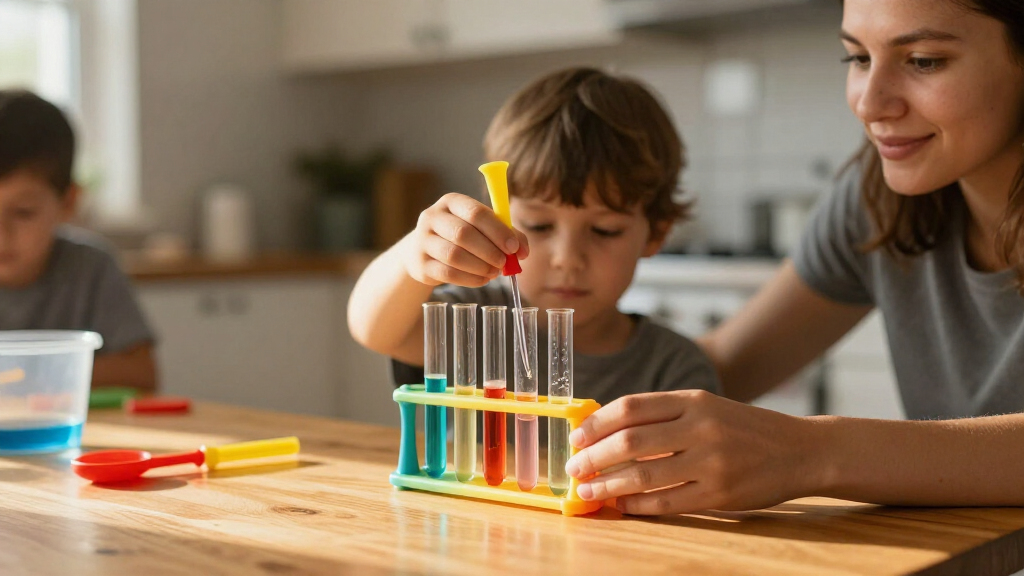
Educational science kits for kids let children explore topics such as circuits, crystals, robotics, and ecosystems by building, testing, and observing. Choose a kit that fits the child’s abilities and interests, has clear safety guidance, and leaves room to try ideas beyond the printed steps; then ask what they predict and notice.
A tiny bulb flashes on, and a child’s face lights up with it. In that moment, an invisible idea—electricity moving through a circuit—has become something they can see and test.
Educational science kits for kids bring ideas in science, technology, engineering, and math into reach through hands-on projects. This guide will help you choose a kit that suits your child, check its practical demands, and turn each activity into a chance to ask, predict, and explore.
Choose a topic the child already enjoys, then check the activity’s reading, dexterity, and attention demands.
Read safety directions and supervision guidance before buying, especially for kits with small parts, heat, sharp tools, glass, batteries, or chemicals.
Look for projects that invite predictions and variations, not only one fixed result.
Compare setup, cleanup, storage, refill needs, and required household materials alongside the price.
Ask what the child expects to happen, what they observed, and what they want to test next.
See how a kit turns an abstract idea into something real
Educational science kits for kids make abstract concepts tangible by letting children build something, observe what it does, and change a part to see whether the result changes. A circuit kit, for example, lets them connect a battery, wires, and a bulb. Opening the path switches off the light; closing it again completes the circuit. The bulb’s response gives a visible clue about a process they cannot see directly.
That clue matters because children can compare an explanation with evidence. When the light goes out, they might first guess the battery is dead. Checking the connections tests that idea; if fixing a loose wire makes the bulb shine, they have reason to revise their explanation. A kit cannot guarantee that kind of thinking—an activity completed as a recipe may leave little to discuss—but a pause for prediction and observation turns the steps into an investigation.
Activities span chemistry, biology, physics, astronomy, robotics, coding, and engineering. Each topic offers a different kind of learning tradeoff: a crystal kit makes slow change visible, but requires patience before results appear; a paper-airplane challenge produces quick feedback, but children may need help isolating one design change at a time. Matching the activity to a child’s temperament can keep the science engaging while showing that some questions take repeated trials to answer.
The kit itself is a starting point. A parent or sibling can ask, “What would you change next?” and give the child time to answer. If every variation is supplied in advance, the child may focus on completing tasks; leaving a manageable choice open helps them practice deciding what evidence to look for. The conversation often teaches more than rushing to finish every activity.
Match the kit to the child, not just the age label
Educational science kits for kids work best when the activity fits a child’s reading, dexterity, attention, and experience as well as their age. The maker’s recommended age gives you a useful first check, often reflecting the activity’s complexity and safety needs, but it cannot tell you whether a child will enjoy reading a long booklet or handling tiny parts. A mismatch can turn a promising project into frustration—or encourage a child to attempt steps they are not ready to manage safely.
For instance, a curious seven-year-old who loves animals might get more from a simple habitat or gardening kit than from a robot that requires careful assembly and screen-based setup. A teenager who enjoys drawing may stick longer with a design challenge than with a kit built around memorizing terms. Interest helps sustain attention, while a suitable level of challenge gives the child room to learn; too little challenge can feel repetitive, and too much can leave the adult doing the interesting parts.
Before you choose, look for clear illustrations, manageable steps, and plain explanations of the science. Check how much setup and cleanup the activity needs, whether you must supply household materials, and where the finished project will live. These details affect whether a kit fits into ordinary family routines. A kit that needs a large table may be awkward in a small apartment, while a project that can be stored between sessions may be easier to return to than one that must stay assembled.
Accessibility matters, too. Consider whether the instructions match the child’s language needs and whether the tools and tasks suit their abilities. Clear instructions and adaptable tasks can let children take part more independently; when they cannot access a key step, an adult may end up carrying out the experiment for them. A kit should invite participation, not make every step feel like a test.
Use this five-step check before you buy
Choose a science kit by checking interest, ability, safety, flexibility, and practical fit before you compare prices. Each check affects whether a child can use the kit and return to it: an exciting topic may not overcome difficult setup, while a simple project can become absorbing when it offers meaningful ways to experiment. This quick process can spare you a box that looks exciting online but sits untouched beside the craft drawer.
- Start with an interest. If your child watches the Moon from the window, try astronomy; if they take apart old toys, look for engineering or robotics. A familiar interest offers an easy entry point, though a kit can also introduce a new topic if its first activity feels approachable.
- Check the real activity. Read the age recommendation alongside the reading level, fine-motor demands, attention required, and size of any parts. A child may understand the science but struggle with tiny connectors or a long sequence of instructions, so consider what they can do independently and where support will be needed.
- Read the safety directions. Look for supervision guidance, warnings, protective equipment, and any use of heat, sharp tools, glass, batteries, or chemicals. The safety demands affect who can participate and when; if adult help is required throughout, make sure that level of supervision fits your household.
- Look for room to experiment. Challenge cards, refill supplies, or suggestions for changing a design can keep a kit useful after the first project. More variations give children reasons to repeat an activity, although refill costs and extra materials can add to the total expense.
- Picture the cleanup. Check storage, setup time, replacement parts, and whether the experiment needs materials you do not already have. A project that is quick to set up may be easier to revisit, while a slower one might still suit a child who enjoys careful, extended work.
Imagine choosing a bubbling chemistry set because it looks impressive, then discovering it needs careful adult help and a clear work surface. If that routine does not fit your family’s evenings, a sturdy building kit with repeatable challenges may be a better match. The choice is not about which subject is more valuable; it is about whether the activity can become part of your actual routine.
Price alone cannot tell you which kit teaches more. Compare the included parts, number of activities, refill needs, and how easily a child can return to the project. A modest kit with clear instructions and several ways to experiment may offer more lasting fun than a larger box with one complicated build. Conversely, a higher-cost kit may make sense when its durable parts or refill options support many projects; consider how often your child is likely to use it rather than treating the piece count as a measure of value.
Turn one finished project into a week of discovery
A kit becomes more educational when a child predicts, tests, observes, and talks about what happened instead of only following steps. Each part of that cycle has a purpose: a prediction makes the child’s current idea visible, a test gives them evidence, and describing the observation helps separate what happened from what they expected. Try pausing before the next instruction and asking, “What do you think will happen if we change this?” The child gets to lead the experiment while you keep safety directions in place.
Say your child builds a paper airplane that dives toward the floor. Instead of fixing it for them, ask what they noticed, then invite them to fold one wing differently or use a different sheet of paper. Changing one feature at a time makes it easier to connect a change with the flight, though real results can vary with the throw. A quick test can turn a disappointing flight into a lively comparison, and repeating the same throw a few times can show whether the difference is consistent.
Digital videos or apps can add demonstrations, but check whether a device, account, or internet connection is required. A video may help explain a process that is hard to see, while a screen-based activity can add setup or distract from the materials in front of the child. At-home kits that use ordinary materials are easy to repeat; still, follow the kit’s directions and do not swap in unapproved substances. Repeating a safe activity can make comparison easier, but changing ingredients without guidance can introduce risks and make results harder to interpret.
Some recent kit trends connect coding and robotics, blend science with design through STEAM projects, or explore gardening and renewable energy. These combinations can help children see links between subjects—for example, a robot may involve both building and programming—but a trend label does not show how much of each subject a child will actually practice. Features vary by brand and region, so treat labels as clues and check the actual activity. A colorful kit with a screen may appeal to one child; another may prefer soil, seeds, and the smell of damp earth.
Keep the fun safe, practical, and repeatable
A science kit is appropriate for a child only when the materials and activity match the instructions and supervision guidance. “Educational” does not mean risk-free: inspect parts, heed warnings, and keep small components away from children who might swallow them. Safety is part of whether an activity is usable at all; if the needed supervision or setup cannot be provided, choose a different project rather than relying on the label.
Some projects call for an adult nearby, especially when they involve batteries, sharp tools, glass, heat, or chemicals. If your child is young, you might set up the activity together, then let them handle the observations and choices they can manage safely. This keeps the adult responsible for risky steps while preserving opportunities for the child to think, predict, and make decisions.
Plan for the room around the experiment, too. A crystal-growing project may need a quiet shelf where it will not be bumped, while a robot challenge may need floor space and fresh batteries. Those small details affect how often the kit gets used: a project that fits the available space is easier to revisit, and an ongoing experiment needs somewhere it can remain undisturbed.
Let the child troubleshoot within safe limits. If a bulb stays dark, help them check the connections before swapping parts. Checking one connection at a time gives them a chance to find the cause and learn how the circuit works; replacing everything at once might restore the light but hide what went wrong. The earlier click of a working circuit becomes a useful memory: they already know what success looks like, and now they have a puzzle to solve.
Frequently Asked Questions
What age are science kits suitable for?
Science kits range from preschool activities to challenging projects for teenagers. Use the age label as a starting point, then check the reading, dexterity, attention, and supervision the activity calls for.
Do children need adult supervision with science kits?
Often, especially for younger children and activities involving small parts, heat, sharp tools, batteries, glass, or chemicals. Follow the kit’s supervision guidance and stay involved at the level it recommends.
Are more expensive science kits better?
Not necessarily. Compare the quality and quantity of parts, number of activities, refill needs, and how much room there is to experiment. A less expensive kit with clear steps and repeatable projects can keep a child engaged.
How can I make a science kit more educational?
Ask the child to predict what will happen, describe what they see, and suggest one change to test. Let them troubleshoot before you step in, while following the safety directions.
Conclusion
Pick a kit your child can safely use, understand, and adapt. Then give them the time and space to ask their own questions.
The best project may end with a crooked paper plane, a glowing bulb, or a crystal catching the light—and one more “What if?”
Fall Picks
fall essentials
As an affiliate, we earn on qualifying purchases.