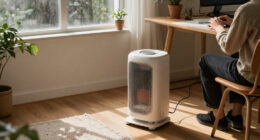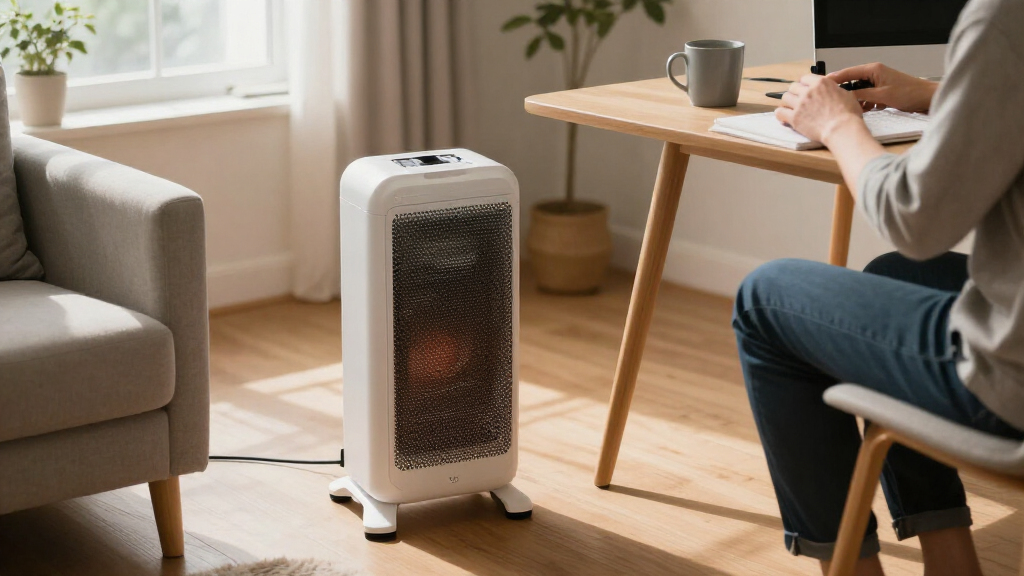

When choosing an electric space heater, the real decision is often between quick warmth where you are sitting and gentler heat that can run quietly for hours. Ceramic heaters use an electrically heated ceramic element and a fan to move warm air into the room. Oil-filled radiator heaters warm sealed oil inside their fins; the oil does not need replacing, and the heater releases heat gradually, usually without a fan.

Prime made for students and young adults
- Fast, free delivery for dorm and study essentials
- Prime Video and Amazon Music included
- Member-only deals
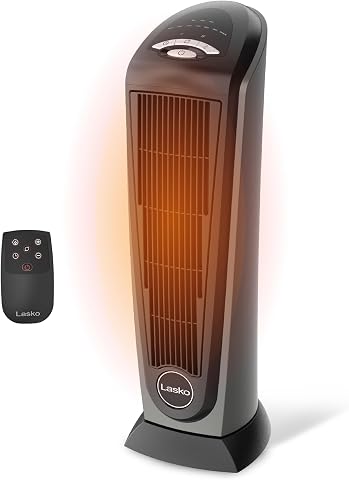
Lasko 23-Inch Ceramic Tower Space Heater with Remote Control, Silver (751320)
- ✔ Heating element: Ceramic
- ✔ Maximum output: 1500 watts
- ✔ Heat settings: 2

DREO Portable Ceramic Space Heater with Thermostat
- ✔ Heating element: PTC ceramic
- ✔ Maximum output: 1500 watts
- ✔ Listed coverage: 200 sq. ft.
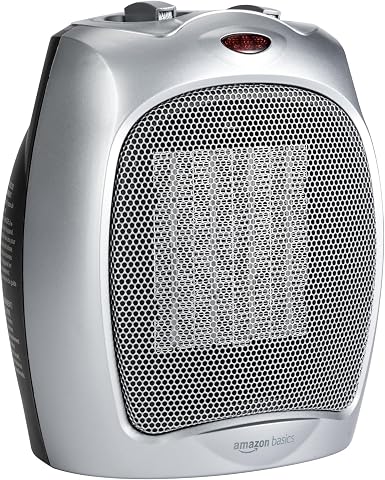
Amazon Basics Portable Ceramic Space Heater, 1500W, Silver
- ✔ Heating element: Ceramic
- ✔ Power settings: High 1500W, low 900W, fan-only
- ✔ Listed coverage: 161.4 sq. ft.
Ceramic models suit short heating sessions, home offices, and people who want a compact unit they can move between rooms. Oil-filled radiators suit longer stays in bedrooms or living spaces where fan noise and bursts of airflow are unwelcome. Both convert electricity into heat, so neither is inherently cheaper to run for the same amount of heat delivered. The practical differences are how quickly that heat reaches you, how it feels, and whether the added convenience of a particular model justifies its price.
At a Glance
| Criteria | Ceramic space heaters | Oil-filled radiator heaters | Winner |
|---|---|---|---|
| Time to feel warm | Fan-driven warmth is usually felt quickly nearby | Takes longer for the radiator body and room to warm | A |
| Heat after switch-off | Drops quickly once the heating element and fan stop | Fins continue releasing stored heat for a while | B |
| Noise and airflow | Fan noise and moving air; some models offer oscillation | Usually fanless and quiet, with no forced airflow | B |
| Portability | Typically compact and easier to carry | Heavier and bulkier; wheels are common | A |
| Room coverage | Best for personal or nearby spot heating; performance varies by wattage and room | Better suited to steady warmth over longer periods in a small or moderate room | Depends |
| Purchase and running value | Often inexpensive to buy; running cost depends on wattage, use, and electricity rate | Often costs more upfront; not inherently cheaper to run at the same heat output | A |
| Safety features | Look for tip-over shutoff, overheat protection, and a stable base | Look for overheat protection, a stable design, and clear clearance guidance | Depends |
Lasko 23-Inch Ceramic Tower Space Heater with Remote Control, Silver (751320)
The Lasko 23-Inch Ceramic Tower is our best overall choice because its design addresses a common limitation of portable heaters: warmth can feel concentrated near the unit. Widespread oscillation moves the airflow across a broader part of the room, while the remote lets us change heat settings, oscillation, or timer without walking back to the heater. That combination makes it more convenient for everyday use in a shared indoor space than the compact, fixed-direction Amazon Basics model.Its controls are less granular than DREO’s. Lasko has two heat settings and a thermostat range of 60–85 °F, whereas DREO offers temperature adjustments from 41–95 °F in 1-degree increments. The seven-hour timer is also shorter than DREO’s 12-hour timer. In return, Lasko’s taller oscillating format is better suited to moving warmth around than either small, non-tower option. Overheat protection and cool-touch housing add useful safeguards, but they do not remove the need to follow placement and operating instructions. This is an indoor-only heater, and its value depends on whether oscillation matters more to us than finer temperature control.
Pros:
- Oscillation helps distribute airflow across more of the room.
- Remote operates heat settings, oscillation, and timer.
- Carry handle makes it easier to move between indoor rooms.
- Overheat protection and cool-touch housing are included.
Cons:
- Two heat settings give less control than DREO’s four-speed design and fine thermostat adjustments.
- Seven-hour timer is shorter than DREO’s 12-hour timer.
- Intended for indoor use only.
Best for: People who want a remote-controlled heater that can sweep warm airflow across a shared indoor room.
Not ideal for: Buyers who want 1-degree temperature adjustments, a 12-hour timer, or a compact heater for a desk or tabletop.
Bottom line: Choose Lasko when room-spanning oscillation and remote convenience matter more than highly precise temperature settings.
“Choose Lasko when room-spanning oscillation and remote convenience matter more than highly precise temperature settings.”
DREO Portable Ceramic Space Heater with Thermostat
DREO is the clearest choice when we care about setting a specific temperature and keeping a heater unobtrusive. Its thermostat adjusts in 1-degree increments across a 41–95 °F range, giving us more precision than Lasko’s 60–85 °F range or the simpler Amazon Basics thermostat. A stated 34 dB noise level also makes it the quietest of the three by specification; that can matter in a bedroom, study, or other space where steady airflow is welcome but prominent fan noise is not.The 12-hour timer extends scheduling flexibility beyond Lasko’s seven-hour timer, and its remote, child lock, tip-over protection, and overheat protection make for a substantial feature set in a 3-pound heater. DREO lists coverage of 200 square feet, but we should treat that figure as a manufacturer specification rather than a promise for every room. Like the other two, it needs a corded outlet, and the compact design is intended for localized indoor heating rather than warming an entire home. Compared with Lasko, it gives up the tower format and oscillation; compared with Amazon Basics, it is larger by listed weight and more involved in its controls. Its advantage is control and quietness, not the simplest possible operation.
Pros:
- Thermostat adjusts in 1-degree increments across a wide stated range.
- 34 dB stated noise level is the lowest among these three options.
- Remote control and 12-hour timer support convenient scheduling.
- Tip-over and overheat protection, flame-resistant materials, and child lock are listed.
Cons:
- Requires a corded electrical outlet.
- Listed heating coverage is limited to 200 square feet.
- No oscillation is listed, unlike the Lasko tower heater.
Best for: People who want a compact indoor heater with precise thermostat adjustments, a longer timer, and low stated noise.
Not ideal for: Buyers who prefer a basic one-dial heater, need heat distributed by oscillation, or expect it to cover more than its listed 200 square feet.
Bottom line: Pick DREO if quiet operation and precise temperature control matter more than oscillation or the simplest control layout.
“Pick DREO if quiet operation and precise temperature control matter more than oscillation or the simplest control layout.”
Amazon Basics Portable Ceramic Space Heater, 1500W, Silver
Amazon Basics takes the most stripped-down approach of this group: a lightweight 2.8-pound body, a thermostat, and three operating modes. The high setting reaches 1500 watts, the low setting drops to 900 watts, and fan-only mode provides airflow without the heater running at either heat level. That lower-power setting gives us an option between full output and no heat, a useful distinction from Lasko’s two heat settings and DREO’s emphasis on precise temperature adjustment.At 7.52 × 6.34 × 9.45 inches, it is easy to position on a tabletop for spot heating, and its listed coverage is 161.4 square feet. That is lower than DREO’s stated 200 square feet, though coverage figures should not be treated as directly measured or guaranteed comparisons. The tradeoff for the compact size is a non-oscillating design: airflow stays pointed in one direction, unlike Lasko’s sweeping tower format. Its stated noise level of 43 dB is also higher than DREO’s 34 dB. Tip-over and overheat protection are included, but the product description specifically says to avoid humid areas. For simple, portable heat in a dry indoor spot, it is the most focused option; buyers seeking broad distribution or more detailed controls should look to the other two.
Pros:
- Lightweight 2.8-pound design is convenient to reposition.
- Offers high, low, and fan-only settings.
- Tip-over and overheat protection are included.
- Compact dimensions suit tabletop spot heating.
Cons:
- Does not oscillate, so airflow remains directed in one direction.
- Avoid use in bathrooms or other humid environments.
- 43 dB stated noise level is higher than DREO’s listed 34 dB.
Best for: People who want a lightweight tabletop heater with a lower-power heat mode and fan-only setting for a dry indoor space.
Not ideal for: Buyers who need oscillation, quietest listed operation, a child lock, or a heater suitable for humid rooms.
Bottom line: Choose Amazon Basics for portable, direct spot heat and a lower setting, while accepting less room-spanning airflow and fewer control refinements.
“Choose Amazon Basics for portable, direct spot heat and a lower setting, while accepting less room-spanning airflow and fewer control refinements.”
As an Amazon Associate we earn from qualifying purchases.
Key Differences
The clearest difference is response time. A ceramic heater can push warm air toward a desk or chair soon after it starts, which is useful when a room is cold but you only need comfort for a short stretch. An oil-filled radiator has a slower start because its oil and metal casing must heat first. In return, those warm fins continue giving off heat after the thermostat cycles or the unit is switched off. That lingering warmth is useful for extended occupancy, though it does not mean the heater creates more heat from each unit of electricity.
Comfort and placement matter too. Ceramic fans make some sound and move air, which can feel drafty or stir dust for some people. A radiator is generally quieter and avoids forced airflow, but its warmth spreads gradually and it takes up more floor space. Both types need sensible clearance and careful placement. Neither is a substitute for central heating in a large, poorly insulated space, and neither should be chosen by assuming that its heater technology alone guarantees lower bills.
For value, compare the purchase price and features with how you will use the heater. A basic ceramic model is often the economical choice for occasional personal warmth. Paying more for an oil-filled model can make sense when quiet operation and steady heat matter every day. For either type, choose a thermostat and appropriate safety shutoffs, and use the manufacturer’s instructions for placement and operation.
Detailed Comparison
Time to feel warm (Ceramic space heaters wins — moderate)
Ceramic wins; the gap is moderate. Its fan moves heated air into the occupied area quickly, making a cold desk or chair feel more comfortable sooner. The radiator first heats its oil and metal fins, so it is slower to respond. Choose ceramic for brief sessions or when you want to feel warmth soon after switching the heater on.
Heat after switch-off (Oil-filled radiator heaters wins — moderate)
Oil-filled wins; the gap is moderate. Its warm oil and fins continue to release heat for a time after the element stops heating. Ceramic models lose their active warmth more quickly when the fan and element stop. The radiator’s residual heat can smooth out a long session, though it does not eliminate the electricity needed to heat the room.
Noise and airflow (Oil-filled radiator heaters wins — moderate)
Oil-filled wins; the gap is major for noise-sensitive users. Most radiator heaters warm the room without a fan, so they are a better fit for sleeping, reading, or quiet work. Ceramic heaters circulate air and make fan noise, though sound levels vary across models. If you are not bothered by airflow, the difference may matter less than response time.
Portability (Ceramic space heaters wins — moderate)
Ceramic wins; the gap is moderate. Compact ceramic units are generally easier to lift and move between rooms. Oil-filled radiators are heavier and occupy more space, although many have wheels. If you want one heater to move from a home office to a sitting area, a ceramic model is usually more convenient.
Room coverage (moderate difference)
It depends on the room and model; neither type wins outright. Wattage, insulation, room size, drafts, and heater placement affect results more than the label alone. Ceramic fans can direct warmth toward a nearby person; a radiator can provide steadier heat over a longer session. Check the manufacturer’s guidance for the room and use case instead of treating a claimed coverage area as universal.
Purchase and running value (Ceramic space heaters wins — moderate)
Ceramic usually wins on purchase price; the gap depends on the models. Basic ceramic heaters often cost less to buy, making them an accessible choice for occasional use. An oil-filled model can justify a higher upfront price when quiet, steady warmth is a priority. Running cost depends on power draw, hours of use, thermostat settings, and the local electricity rate; for the same heat output, the heater type alone does not make electricity cheaper.
Safety features (major difference)
Neither type wins by category alone; compare the specific unit. Tip-over shutoff and overheat protection are useful features, but designs and safeguards vary. Follow the supplied clearance and placement instructions, keep the heater away from fabrics and walkways, and avoid using it where the manufacturer says it is unsuitable. A model with clear instructions and the safety features appropriate to your setting is the better choice.
Ceramic space heaters: Pros and Cons
Pros:
- Warms a nearby person or area quickly
- Often compact and easy to move
- Basic models are often relatively inexpensive
Cons:
- Fan noise may disturb sleep or quiet work
- Airflow can feel drafty or stir dust
- Warmth drops off quickly once the heater stops
Oil-filled radiator heaters: Pros and Cons
Pros:
- Usually quiet because it does not need a fan
- Continues releasing heat briefly after switching off
- Provides steady warmth during longer sessions
Cons:
- Takes longer to warm up
- Heavier and bulkier than many ceramic models
- Can cost more upfront without guaranteeing lower electricity use
Who Should Choose What
Choose Ceramic space heaters if:
- You want quick warmth at a desk, chair, or other nearby spot.
- You will use the heater for shorter sessions or move it between rooms.
- Keeping the initial purchase cost low matters more than fan noise.
Choose Oil-filled radiator heaters if:
- You plan to heat a room steadily for long stretches.
- A fan would disturb sleep, calls, reading, or concentration.
- You value quiet operation and gradual warmth enough to pay more upfront.
Skip both if: Skip both if you need economical whole-home heating or cannot provide the clearances and supervision required by the manufacturer’s instructions. Look at improving insulation or using a heating system suited to the space.
Value for Money
A ceramic heater is generally the better value when the need is occasional, personal warmth: it often costs less to buy and responds quickly. An oil-filled radiator earns its higher purchase price for users who value quiet operation and gradual warmth through long sessions. Neither design is automatically less expensive to run. Compare each model’s wattage and expected hours of use against your electricity rate, and use a thermostat so the heater does not run harder or longer than needed.
Final Verdict
For most people who need a portable heater for short bursts at a desk or in one nearby area, choose a ceramic model. It warms that space quickly and is often less expensive to buy. Choose an oil-filled radiator if you will spend long periods in the same room and fan noise or moving air would bother you; the slower warm-up is a fair trade for quiet, steady heat.
The deciding factor is how you use the room, not a promise of lower bills from either heater type. Buy an oil-filled model at a premium only when its quiet, gradual warmth solves a real problem for you. If you need to heat several rooms or an entire home, skip both as a primary solution and consider a heating system designed for that job.
Frequently Asked Questions
Which type heats a room faster?
A ceramic heater usually makes a nearby area feel warmer sooner because its fan moves heated air into the room. An oil-filled radiator takes longer to heat up. Room size, insulation, placement, and wattage affect both.
Are oil-filled heaters cheaper to run?
Not inherently. Both types use electricity to produce heat, and cost depends on power draw, operating time, thermostat settings, and your electricity rate. Residual heat from a radiator does not make it a more efficient way to produce the same amount of heat.
Is a ceramic heater suitable for a bedroom?
It can work if its fan noise and airflow are comfortable for you and the model is used according to its instructions. For a quieter bedroom, an oil-filled radiator may be a better fit. Check safety guidance and keep any heater clear of bedding and curtains.
Which heater should I buy for a home office?
Choose ceramic for quick warmth near your desk and easy movement between rooms. Choose oil-filled if you work in the same room for hours and want quiet, fanless heat. Your tolerance for airflow and noise is the main deciding factor.