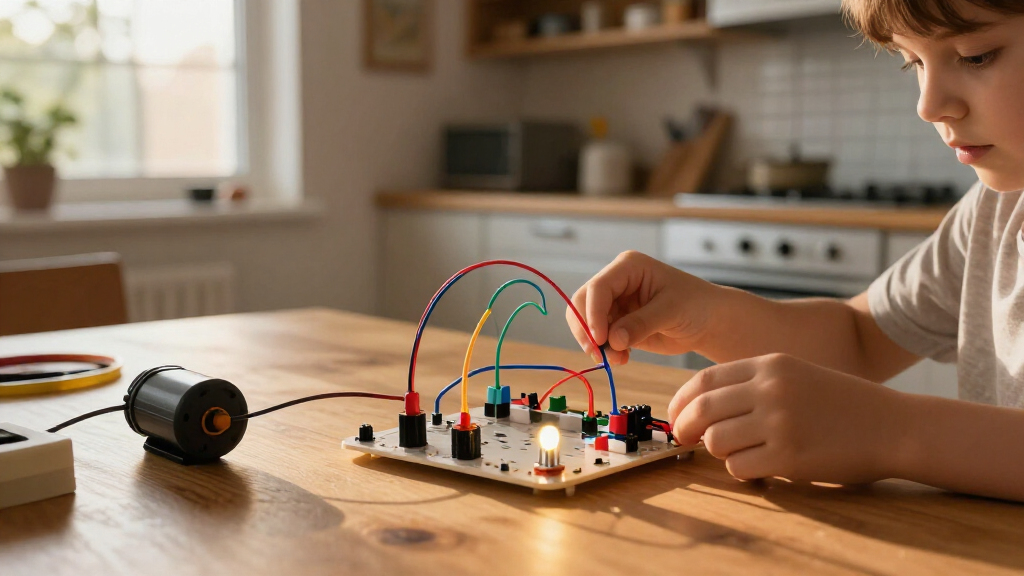

Educational electronics kits for kids range from simple snap-together circuits to robotics builds and programmable components, so the right choice depends on a child’s age, patience, and interest. I’d make the Snap Circuits Classic SC-300 my best overall pick for its broad project range and accessible, tool-free circuit building. The Snap Circuits Jr. SC-100 is a gentler starting point, while the ELEGOO Mega 2560 R3 suits older kids ready to move toward coding and more involved setup. The main tradeoff is between easy assembly and room to grow: simpler kits lower the barrier to a first success, while advanced kits ask for more adult help and persistence. Read on for how all 15 options compare and which kit fits your learner.

Prime made for students and young adults
- Fast, free delivery for dorm and study essentials
- Prime Video and Amazon Music included
- Member-only deals
Key Takeaways
Snap Circuits Classic SC-300 is the strongest all-around fit in this lineup because it balances an accessible building style with more room to explore than the Jr. SC-100.
The Snap Circuits range offers clear steps between skill levels: Jr. SC-100 for a first circuit kit, Classic SC-300 for broader play, and Pro SC-500 for learners who want more project depth.
ELEGOO Mega 2560 R3 differs from snap-together kits by introducing programmable electronics, but its added setup and learning curve make it a better fit for older or more patient beginners.
Robotics kits such as the Butterfly EduFields 40-in-1 and Tsomtto 6-in-1 suit kids motivated by moving builds; they are less direct choices for a learner who mainly wants to understand basic circuits.
High project counts, including Anyeve’s 448+ circuits, do not automatically mean the easiest learning path. Clear instructions, age fit, and component style matter more when a child is building independently.


| educational electronics kits for kid | Brand | Recommended age | Projects | Model |
|---|---|---|---|---|
| Butterfly EduFields 10-in-1 ST | Butterfly EduFields | 8–12 years | 10 | — |
| VLGOEM 66-Piece Electronics ST | VLGOEM | — | Over 1,200 advertised | — |
| Anyeve Electronics Science Kit | Anyeve | — | 448+ | — |
| Snap Circuits 203 Electronics | Snap Circuits | — | 200+ | CM-200 |
| Snap Circuits Jr. SC-100 STEM | — | 8 years and up | 100+ | SC-100 |
| SMILESSKIDDO Electronics STEM | SMILESSKIDDO | 3 years and up | — | RC1007 |
| Snap Circuits Arcade SCA-200 S | Snap Circuits | 8 years and up | More than 200 | SCA-200 |
| Dr. STEM Toys Circuit Science | Dr. STEM Toys | — | — | D518 |
| National Geographic Circuit Ki | National Geographic | — | More than 120 | — |
| EUDAX Basic Electricity and Ma | EUDAX | 8–18 years | — | EUDAX-FC-80PCS |
| Snap Circuits Pro SC-500 Elect | Elenco | 8 years and older | 511 | SC-500 |
| ELEGOO Mega 2560 R3 Electronic | — | — | — | — |
| Butterfly EduFields 40-in-1 ST | Butterfly EduFields | 8–17 years | — | SKU504 |
| Tsomtto 6-in-1 Robotics STEM K | Tsomtto | 8–12 years; product details list conflicting age ranges | — | — |
| Snap Circuits Classic SC-300 S | — | 8 years and older | — | — |
More Details on Our Top Picks
Butterfly EduFields 10-in-1 STEM Robotics Kit for Kids
I’d pick this kit for kids who want moving builds, not just circuits on a grid. Its 10 robotics and electronics projects use more than 100 components to introduce mechanics and engineering alongside basic electronics. The illustrated, step-by-step manual gives younger builders a path through the assembly, while line-following and obstacle-avoidance functions make the finished robots more interactive than the fixed circuit experiments in the Snap Circuits 203 Electronics Discovery Kit. That added robotics focus comes with a tradeoff: some projects may need components beyond what’s included, so families should be ready for possible gaps rather than expect every build to be self-contained. For ages 8–12, it’s a more specialized choice than the broad circuit exploration of the Snap Circuits Jr. SC-100.
Pros:- More than 100 components support a range of robotics and electronics builds
- Ten projects give kids multiple chances to practice assembly and engineering
- Illustrated step-by-step instructions support guided building
- Line-following and obstacle-avoidance features add interactive robot behavior
Cons:- Some projects may require components not included in the kit
- More focused on robotics than broad, beginner circuit experimentation
Best for: Families with children ages 8–12 who want to build working robots and explore mechanics as well as basic electronics.
Not ideal for: Buyers seeking a self-contained circuit kit with a clearly specified parts list for every project; some builds may require additional components.
- Brand:Butterfly EduFields
- Model number:506
- Projects:10
- Components:100+
- Recommended age:8–12 years
- Educational focus:STEM, robotics, engineering, electronics, mechanics
- Robot functions:Line-following and obstacle avoidance
- Instructions:Illustrated step-by-step manual
Our verdict“Choose this for an 8–12-year-old drawn to functional robots, provided you can accommodate possible extra parts for some projects.”
VLGOEM 66-Piece Electronics STEM Kit for Kids
The VLGOEM kit is a practical entry point for children who need a guided, no-soldering introduction to circuits. Its 66 numbered, color-coded pieces snap together without tools, and the included color manual helps make the first experiments less reliant on adult improvisation. Unlike the robotics-focused Butterfly EduFields 10-in-1, this kit keeps attention on assembling circuit parts rather than building moving mechanisms. The listing advertises over 1,200 projects, but it does not detail that count, so I’d weigh the accessible format more heavily than the headline number. It’s listed for ages over 6, though the product description gives inconsistent age guidance; that uncertainty makes it a less straightforward pick for families choosing specifically for a younger child.
Pros:- 66 snap-together parts require no soldering or extra tools
- Numbered, color-coded pieces support more orderly assembly
- Color project manual provides guided activities
- Battery-free operation avoids the need to supply batteries
Cons:- Age guidance in the product description is inconsistent
- The advertised project count is not independently detailed
- Plastic construction and a relatively large 11.8 x 10.6 x 3.1-inch package may be less convenient for compact storage
Best for: Families seeking a tool-free, snap-together circuit set with a color manual for a child ready to follow guided STEM projects.
Not ideal for: Buyers who need clearly explained age guidance or a well-documented project list before choosing a kit for a young child.
- Brand:VLGOEM
- Model number:XHJ-1
- Piece count:66
- Projects:Over 1,200 advertised
- Age guidance:Over 6 years; product description also notes inconsistent guidance
- Included components:Circuit parts, plastic grid, color project manual
- Assembly:Snap-together; no soldering or extra tools required
- Batteries:Not required
- Dimensions and weight:11.8 x 10.6 x 3.1 inches; 2.3 pounds
Our verdict“Choose it for guided, tool-free circuit building when the child’s age fits the listing’s unclear guidance and the project-count claim is not your main deciding factor.”
Anyeve Electronics Science Kit with 448+ Circuit Projects for Kids
Anyeve stands out for the breadth of circuit ideas it advertises, with 448+ projects built from 32 snap-together parts. The manual and tool-free assembly make it approachable for families who want a guided route into series and parallel circuits, while the broad age range listed—from 36 months to 12 years—may appeal to households with children at different stages. Compared with the VLGOEM 66-Piece kit, Anyeve has fewer circuit parts but a more specific stated focus on circuit arrangements. Its project count is a substantial promise, though the supplied information does not detail each project. AA batteries are required and not included, unlike VLGOEM’s battery-free setup, so plan for that extra requirement before starting.
Pros:- Advertises more than 448 circuit projects
- Introduces series and parallel circuits through hands-on experimentation
- Snap-together parts need no soldering or tools
- Includes a step-by-step project manual and plastic base grid
Cons:- AA batteries are required and not included
- The 32 circuit parts may offer less component variety than the VLGOEM kit’s 66 pieces
- The supplied product details do not itemize the advertised project count
Best for: Families wanting many guided circuit-project ideas and a hands-on way to introduce series and parallel circuits.
Not ideal for: Buyers who want to start immediately without supplying batteries or who need a project list that is fully itemized in the product details.
- Brand:Anyeve
- Model number:RC1001A
- Projects:448+
- Circuit parts:32
- Age range:36 months to 12 years
- Included components:Plastic base grid, 32 circuit parts, project manual
- Assembly:Snap-together; no soldering or tools required
- Batteries:AA batteries required; not included
Our verdict“Pick Anyeve for a large advertised menu of guided circuit experiments, as long as you’re prepared to provide AA batteries.”
Snap Circuits 203 Electronics Discovery Kit
The Snap Circuits 203 is a balanced choice for kids ready to move past a first circuit set without stepping into robotics. Its 42 snap modules and 200+ projects span simple circuits as well as alarms and detectors, giving children a mix of foundational and more application-style builds. The color project manual and tool-free assembly keep the activity focused on understanding how the parts connect. Compared with the Snap Circuits Jr. SC-100, this kit includes more modules and a wider stated project range; compared with the Butterfly EduFields 10-in-1, it stays with electronics rather than moving builds. The tradeoff is that three AA batteries are required but not included, and the age guidance starts at 8.
Pros:- More than 200 projects cover simple circuits, alarms, and detectors
- 42 snap modules provide more parts than the Snap Circuits Jr. SC-100
- Color project manual supports guided construction
- No tools are needed for assembly
Cons:- Requires three AA batteries, which are not included
- Recommended for ages 8 and up, so it is not the clearest fit for younger children
- Focuses on circuit experiments rather than robotics or mechanical builds
Best for: Families with children ages 8 and up who want a guided circuit kit with more variety than a starter set, including alarms and detectors.
Not ideal for: Younger beginners, or buyers who want robotics projects or a kit that includes the required batteries.
- Brand:Snap Circuits
- Model:CM-200
- Age range:8 years and up
- Projects:200+
- Included components:42 snap modules and color project manual
- Batteries:3 AA batteries required; not included
- Tools required:None
- Example project types:Simple circuits, alarms, and detectors
Our verdict“Choose the Snap Circuits 203 for an 8-and-up learner ready for broader circuit projects than the SC-100 offers, but not robotics.”
Snap Circuits Jr. SC-100 STEM Electronics Kit, 100+ Projects, Ages 8+
For a child beginning hands-on electronics, the SC-100 keeps the task focused: connect color-coded, numbered snap parts, follow the illustrated manual, and see basic circuitry take shape without soldering or tools. Its 100+ projects give a new builder room to repeat and extend the basics, while the 28 electrical components make the kit a simpler starting point than the Snap Circuits 203 with 42 modules and 200+ projects. That smaller component set is also the main limit: children who already know basic circuits may want more variety, and the product text gives inconsistent component counts, describing both 28 components and 29 parts. Batteries are required but not included. I’d choose it for a beginner who values approachable steps over a larger project range.
Pros:- More than 100 projects introduce and reinforce basic circuitry
- Color-coded, numbered snap parts simplify assembly
- Illustrated project manual supports independent guided building
- No soldering or extra tools are required
Cons:- Batteries are required but not included
- The product text gives conflicting component counts, listing 28 electrical components and 29 parts
- Fewer components and projects than the Snap Circuits 203
Best for: Families introducing an electronics beginner age 8 or older to basic circuits through illustrated, repeatable projects.
Not ideal for: Experienced young builders seeking a larger component selection, or families who want a kit that can be used without supplying batteries.
- Model:SC-100
- Recommended age:8 years and up
- Projects:100+
- Components:28 electrical components; product text also describes 29 parts
- Included items:Plastic snap-grid, electrical components, project manual
- Tools required:None
- Soldering required:No
- Batteries:Required; not included
Our verdict“Choose the SC-100 for a first-time circuit builder who benefits from clear, tool-free steps and does not need the broader range of the Snap Circuits 203.”
SMILESSKIDDO Electronics STEM Kit with 35 Circuit Parts
SMILESSKIDDO’s snap-together layout makes this a gentle starting point for children learning how circuits connect: its 35 parts support guided builds covering series and parallel connections, without soldering or extra tools. The 37-page illustrated manual and four indicator cards give kids visual support as they follow projects, while the stated 118 configurations and 420-plus project ideas leave room to revisit the components in different ways. Compared with the Snap Circuits Arcade SCA-200, which is aimed at ages 8 and up and emphasizes games, this kit is labeled for ages 3 and up and focuses more directly on basic circuit concepts. That broad age label does not make every small component suitable for every young child, so adult supervision matters. AA batteries are not included, and the project counts may be more appealing to families who like guided experimentation than to children seeking a finished game right away.
Pros:- Snap-together parts introduce series and parallel circuit connections without soldering.
- Illustrated 37-page manual supports guided learning.
- Four indicator cards add visual cues to project building.
- Many listed configurations and project ideas encourage repeated experimentation.
Cons:- AA batteries are required but not included.
- The 3+ age recommendation calls for careful adult supervision around small components.
- Its basic circuit focus may feel less engaging to children seeking arcade-style projects.
Best for: Families seeking a visually guided first introduction to simple circuits, with an adult available to supervise younger children.
Not ideal for: Buyers who want batteries included, or older children ready for game-focused builds or more advanced electronics.
- Brand:SMILESSKIDDO
- Model:RC1007
- Circuit parts:35
- Guided configurations:More than 118
- Project ideas:More than 420
- Manual and cards:37-page illustrated manual; 4 indicator cards
- Recommended age:3 years and up
- Batteries:AA batteries required; not included
- Dimensions and weight:14.5 x 11 x 3.1 inches; 1.13 kg
Our verdict“Choose this for a supervised, visually guided introduction to circuits; pick the Snap Circuits Arcade SCA-200 instead if games are the main draw.”
Snap Circuits Arcade SCA-200 STEM Electronics Kit for Kids Ages 8+
For a child who learns best by making something playful, the Snap Circuits Arcade SCA-200 puts games, lights, and sound effects at the center of circuit building. Its color-coded components snap onto a plastic grid, letting kids focus on how a build works rather than handling tools or solder. The kit offers more than 200 projects, a broader activity count than the SMILESSKIDDO Electronics STEM Kit, but its arcade emphasis makes it a less direct pick for a younger beginner seeking a gentle, visually guided introduction to basic connections. The listed age is 8+, and the small components may be awkward for younger hands. Families should also plan for three AA batteries, sold separately. Choose this when interactive play is likely to keep a school-age child experimenting; skip it if the priority is deeper theory or projects aimed at very young children.
Pros:- More than 200 projects provide varied ways to explore electronics.
- Color-coded snap components need no soldering or tools.
- Arcade-style games and sound effects give circuit learning an immediate play outcome.
- Plastic grid helps organize component placement during builds.
Cons:- Requires three AA batteries that are not included.
- Small components can be difficult for younger children to handle.
- Its game-focused activities may be less suitable for learners seeking systematic, advanced electronics study.
Best for: Families with children aged 8 and up who are motivated by building electronic games, lights, and sound effects.
Not ideal for: Younger children, or learners seeking a more theory-led kit focused on fundamental circuit concepts rather than arcade-style projects.
- Brand:Snap Circuits
- Model:SCA-200
- Recommended age:8 years and up
- Projects:More than 200
- Component format:Color-coded snap-together components on a plastic grid
- Project types:Arcade-style games, lights, and sound effects
- Tools and soldering:Neither required
- Batteries:3 AA batteries required; not included
Our verdict“Pick the SCA-200 for an 8+ child who wants to learn circuits through games and effects, not for a younger beginner who needs simpler guidance.”
Dr. STEM Toys Circuit Science Kit with 100+ Experiments
Dr. STEM Toys Circuit Science Kit ranges beyond simple lights: its 100-plus experiments include sound, a motor, a working radio, and a floating-ball activity. That mix gives learners several ways to connect electrical ideas with visible or audible results, making it a stronger fit for kids who want variety than a narrowly themed kit. Compared with the National Geographic Circuit Kit, whose listed projects include a keyboard, light show, copter, and voice amplifier, this kit also highlights a working radio and motorized activities. The supplied details do not specify a project-by-project manual or battery requirements, so buyers have less information about setup and ongoing supplies. Its 8–16 age range suits school-age learners, and the 30-day warranty is a meaningful limitation for a kit intended for repeated use. I’d choose it for activity variety, not for the clearest documented instructions.
Pros:- Offers more than 100 hands-on experiments.
- Includes varied activities involving lights, sounds, and a motor.
- Working-radio activity extends beyond basic circuit demonstrations.
- Listed for both home and school learning.
Cons:- The stated manufacturer warranty lasts only 30 days.
- The supplied product details do not specify battery requirements or instruction format.
- Its 8–16 age range makes it a poor match for very young beginners.
Best for: Families or educators seeking a wide mix of light, sound, motor, and radio experiments for children aged 8–16.
Not ideal for: Buyers who want clearly specified instructions, a longer stated warranty, or a simple kit for preschool-age children.
- Brand:Dr. STEM Toys
- Model:D518
- Age range:8–16 years
- Experiments:More than 100
- Activities:Lights, sounds, motor, working radio, and floating ball
- Materials:Plastic, metal, and paper
- Dimensions:3.5 x 17.5 x 13.5 inches
- Weight:2.5 pounds
- Warranty:30 days
Our verdict“Choose this for school-age learners who want varied experiments, including a radio and motor, and are comfortable with the short stated warranty.”
National Geographic Circuit Kit for Kids with 120 Electrical Projects
The National Geographic Circuit Kit pairs more than 120 projects with two instruction formats: illustrated directions and video instructions reached through a QR code. That flexibility can help families who prefer printed guidance as well as kids who follow demonstrations more easily. Its activity mix includes a keyboard, light show, copter, and voice amplifier, giving it a more varied feel than the Snap Circuits Arcade SCA-200, which leans into arcade-style builds. Components connect without tools, so setup stays focused on experimenting rather than assembly hardware. The main boundary is also clear: this is designed for children, not older learners looking for advanced electronics projects. Product details do not provide an age range, battery requirements, or dimensions, which leaves some practical planning questions unanswered. I’d favor it when instruction choice and different project types matter more than advanced depth.
Pros:- More than 120 electrical projects provide a broad activity selection.
- Offers both illustrated instructions and QR-linked video instructions.
- Components connect without tools.
- Activities include music, lighting, flight, and voice amplification.
Cons:- Designed for children and may not meet older users’ needs for advanced projects.
- The supplied details do not state an age range.
- Battery requirements and kit dimensions are not specified in the supplied details.
Best for: Families who want children to choose between illustrated and video guidance while exploring several kinds of circuit projects.
Not ideal for: Older students seeking advanced electronics work, or buyers who need clear age, battery, or size details before choosing.
- Brand:National Geographic
- Projects:More than 120
- Tools required:None
- Instruction formats:Illustrated instructions and QR-linked video instructions
- Example projects:Keyboard, light show, copter, and voice amplifier
- Component connection:Snap-together
Our verdict“Choose this for child learners who benefit from both printed and video instructions; older students seeking advanced work should look elsewhere.”
EUDAX Basic Electricity and Magnetism Experiment Kit
EUDAX Basic Electricity and Magnetism Experiment Kit stands apart by putting magnetic experiments alongside circuit work. Its 79 items include 56 electricity components and 21 magnetism components, with activities such as fruit batteries, electromagnets, and a hand-crank generator. That combination gives students a chance to explore more than snap-circuit configurations, making this the most science-lab-oriented choice here. Compared with the National Geographic Circuit Kit, which emphasizes a wide variety of child-friendly electrical projects and video guidance, EUDAX has a stated 8–18 age range and covers magnetism directly. The tradeoff is that it calls for more planning and care: repair tools are included, but the product description does not say whether projects are tool-free, and three AA batteries are not supplied. The storage bag helps keep its many pieces together, though it does not remove setup demands.
Pros:- Combines electricity and magnetism experiments in one kit.
- Includes projects such as fruit batteries, electromagnets, and a hand-crank generator.
- Color manual supports project guidance.
- Storage bag provides a place to keep the included components and tools.
Cons:- Three AA batteries are required but not included.
- The supplied description does not establish that projects are tool-free.
- A 79-item kit may require more setup and organization than simpler snap-circuit options.
Best for: Students aged 8–18 and families or educators seeking hands-on projects that cover both circuits and magnetism.
Not ideal for: Young children seeking a simple snap-together activity, or buyers who want batteries included and explicitly tool-free builds.
- Brand:EUDAX
- Model:EUDAX-FC-80PCS
- Number of items:79
- Electricity components:56
- Magnetism components:21
- Included accessories:2 repair tools, color manual, and storage bag
- Recommended age:8–18 years
- Battery requirement:3 AA batteries; not included
- Materials and weight:Copper, plastic, iron, paper, and fabric; 1.43 kg
Our verdict“Pick EUDAX for an older child or student who wants to study both electricity and magnetism, rather than a quick, tool-free circuit kit.”
Snap Circuits Pro SC-500 Electronics Kit, 500+ Projects, Ages 8+
511 projects give the SC-500 the broadest circuit-building runway in this group, from introductory experiments to projects involving a radio, voice recorder, and visual displays. Its color-coded snap-together parts keep assembly accessible for children who are not ready for breadboards or coding. Compared with the Snap Circuits Classic SC-300, this kit adds 11 parts and a larger project library, making it a better fit for kids who want plenty of follow-on challenges. The tradeoff is that both kits use the same approachable snap-circuit style, so this is not the pick for learning to program a controller; the ELEGOO Mega 2560 offers that route. Four AA batteries are also sold separately, and the larger project count may be more than a beginner needs.
Pros:- Provides 511 projects, including radio and voice-recorder activities
- Color-coded parts snap together without tools or soldering
- Three illustrated manuals guide learners through projects of increasing complexity
- Offers more project variety than the Snap Circuits Classic SC-300
Cons:- Requires four AA batteries, which are not included
- Does not introduce controller-based coding like the ELEGOO Mega 2560 kit
- The large project library may feel overwhelming to children who want a short, focused build
Best for: Families with children aged 8 and up who want a tool-free circuit kit that can support repeated projects as skills grow.
Not ideal for: Kids ready to learn coding, microcontrollers, or breadboard prototyping; the ELEGOO Mega 2560 is better suited to those goals.
- Brand:Elenco
- Model:SC-500
- Projects:511
- Parts:72
- Recommended age:8 years and older
- Power:Four AA batteries, not included
- Included:Plastic snap-grid, 72 electrical parts, and 3 project manuals
Our verdict“Choose the SC-500 for a long-lasting, no-solder introduction to circuits, but pick the ELEGOO kit if coding is the main learning goal.”
ELEGOO Mega 2560 R3 Electronics Starter Kit with 35+ Guided Projects
This kit is the clear step up for learners ready to move beyond preconfigured circuits: its Mega 2560 R3 controller and 200-plus components support projects involving sensors, displays, RFID, and motor control. The 35-plus guided lessons with example code give a learner a route into programming as well as electronics. Compared with the Snap Circuits Pro SC-500, it trades quick, tool-free assembly for greater control over how circuits behave; that flexibility brings a steeper learning curve. The breadboard avoids soldering, but beginners still need to identify and connect many separate components, and the larger parts collection can take time to organize. I’d choose this for a child with patient adult support or prior coding interest, not as the easiest first electronics kit.
Pros:- Includes 200-plus components for varied electronics and coding projects
- Guided lessons provide example code for getting started
- Mega 2560 board offers 54 digital I/O pins, 16 analog inputs, and 15 PWM outputs
- Includes a solderless breadboard and storage case
Cons:- The number and variety of components can be difficult for beginners to learn and organize
- Breadboard wiring is less immediate than the snap-together approach of the Snap Circuits kits
- Its guided projects call for more setup and troubleshooting than no-coding kits
Best for: Older children or teens who want guided coding projects and have an adult available to help with breadboard wiring and setup.
Not ideal for: Younger first-time learners who need color-coded, snap-together builds; the Snap Circuits Classic SC-300 is more approachable.
- Controller board:Mega 2560 R3
- Digital I/O pins:54
- PWM outputs:15
- Analog inputs:16
- Hardware serial ports:4
- Flash memory:256 KB
- Included components:200+
- Guided projects:35+
- Connectivity:USB
Our verdict“Pick this kit for a learner ready to combine programming with electronics, rather than for a child who needs simple snap-together experiments.”
Butterfly EduFields 40-in-1 STEM Robotics Kit for Kids
For children interested in robots and everyday mechanisms, this kit shifts the focus from the circuit-by-circuit experiments of the Snap Circuits Classic SC-300 to 40-plus plug-and-play builds, including a doorbell and hand water dispenser. Its 100-plus components and reusable sensors—such as IR, flame, touch, and light-dependent sensors—offer varied ways to explore how electronic inputs affect a build. Unlike the ELEGOO Mega 2560, it requires no coding or soldering, so the projects are more accessible to children who want to assemble and observe rather than program. That convenience also limits how much learners can customize or extend the electronics. Batteries are separate, and the holder is not compatible with Duracell batteries, a practical restriction worth checking before buying.
Pros:- Supports more than 40 robotics and practical project builds
- Includes over 100 components and reusable sensors
- Plug-and-play assembly avoids soldering and coding
- Instructions and concept manuals support guided exploration
Cons:- Requires separately supplied AA batteries
- Duracell batteries are incompatible with the battery holder
- No coding requirement makes it less suited to learners seeking programmable electronics
Best for: Children aged 8–17 who want to build sensor-based robotics and household projects without taking on coding or soldering.
Not ideal for: Learners seeking programmable robotics or unrestricted battery choice; the ELEGOO Mega 2560 is a stronger fit for coding, while this kit has a specific battery incompatibility.
- Brand:Butterfly EduFields
- Model:SKU504
- Project count:40+
- Components:100+
- Recommended age:8–17 years
- Sensors:IR, flame, touch, LDR, and others
- Battery requirement:AA batteries; Duracell batteries are not compatible
- Assembly:Plug and play; no soldering or coding required
Our verdict“Choose this for sensor-rich, no-code project building, but look to the ELEGOO kit when programming is part of the learning plan.”
Tsomtto 6-in-1 Robotics STEM Kit for Kids
Rather than offering a broad electronics curriculum, the Tsomtto kit centers on six distinct builds, including a reptile robot, balance car, bubble machine, and fiber lamp. That makes it a more contained building activity than the Butterfly EduFields 40-in-1 kit, which offers many more projects and reusable sensors. A screwdriver and step-by-step instructions support hands-on construction, helping children practice following a sequence and working with parts. The tradeoff is limited project variety: six builds give less room for repeated experimentation than the 318-project Snap Circuits Classic SC-300, and the supplied details do not describe a comparable range of circuit lessons. Some children may need adult help during assembly, and the product information gives conflicting age ranges, so I would check the seller’s current guidance before choosing it.
Pros:- Includes six different builds, from a balance car to a bubble machine
- Screwdriver and step-by-step manuals support hands-on assembly
- Projects encourage construction, coordination, and problem solving
- Can work as a family or small-group building activity
Cons:- Six projects offer less repeat-play variety than the Butterfly EduFields 40-in-1 or Snap Circuits SC-300
- Some children may need adult help with assembly
- Product details list conflicting age ranges
Best for: Families seeking a short, shared construction activity for children aged 8–12 who enjoy assembling moving or visual projects.
Not ideal for: Children who want many electronics experiments, sensor exploration, or a clearly documented age recommendation; the Butterfly EduFields 40-in-1 offers more project breadth.
- Brand:Tsomtto
- Set size:6 projects
- Recommended age:8–12 years; product details list conflicting age ranges
- Included components:Robot building kit, screwdriver, and instruction manuals
- Learning objectives:Concentration, construction, creativity, hand-eye coordination, logical thinking, motor skills, problem solving, and STEM
- Material safety:Described as non-toxic
Our verdict“Choose Tsomtto for a compact set of guided builds to do together, not for a broad or clearly specified electronics-learning path.”
Snap Circuits Classic SC-300 STEM Electronics Kit, 300+ Projects, Ages 8+
The SC-300 offers a straightforward way to learn how circuits connect: 61 color-coded parts snap onto a grid, and illustrated instructions take children through 318 projects without tools or soldering. Compared with the larger Snap Circuits Pro SC-500, it has fewer parts and projects, which makes it a more focused starting point for families unsure whether a child wants an extensive electronics collection. The SC-500 is the better choice for learners who want extra projects such as a voice recorder, while the SC-300 still covers activities such as radios, alarms, doorbells, and lights. It does not offer the sensor-based robotics of the Butterfly EduFields 40-in-1 or coding of the ELEGOO kit, and four AA batteries are not included.
Pros:- Includes 318 projects covering circuits such as radios, alarms, and lights
- Color-coded parts snap together without tools or soldering
- Illustrated instructions introduce circuit building progressively
- More focused than the 511-project Snap Circuits Pro SC-500
Cons:- Requires four AA batteries, which are sold separately
- Has fewer parts and projects than the Snap Circuits Pro SC-500
- Does not provide programmable or sensor-rich robotics projects like other kits in this roundup
Best for: First-time circuit builders aged 8 and up who want clear, tool-free projects without the larger collection in the SC-500.
Not ideal for: Children who already want a broad project library, sensor-based robotics, or coding; consider the SC-500, Butterfly EduFields 40-in-1, or ELEGOO Mega 2560 instead.
- Project count:318
- Parts:61
- Recommended age:8 years and older
- Power:Four AA batteries, not included
- Assembly:Snap-together; no tools or soldering required
- Included items:Plastic snap-grid, 61 electrical parts, instruction manual, and project guide
Our verdict“Pick the SC-300 for an accessible first circuit kit, and choose the SC-500 if a larger project library matters more.”
How We Picked
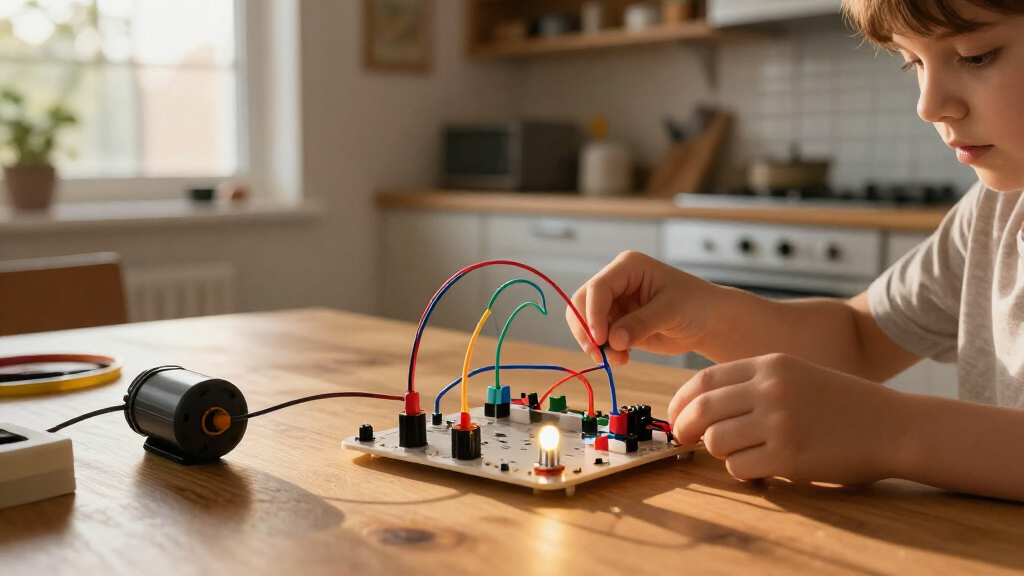
I ranked these kits by how well they help kids learn electronics through practical building, rather than by project count alone. I weighed age accessibility, clarity of the learning path, variety of experiments, and the amount of setup or adult help likely to be needed. I also looked at what a kit teaches: basic circuit concepts, electricity and magnetism, robotics, or programmable electronics. Since those goals are different, a higher-complexity kit does not automatically rank above a simpler one.
The order favors kits that offer a useful balance of learning, ease of use, and room to keep exploring. Snap Circuits options rank well for their approachable component-based format, with the project range helping distinguish beginner and more expansive choices. Robotics and Arduino-style kits serve narrower interests and can offer a more advanced path, but their added complexity affects who can use them comfortably. Broader circuit sets and experiment kits remain strong alternatives when their subject focus or project variety better matches a child’s interests.
Factors to Consider When Choosing Educational Electronics Kits For Kids
Before choosing, I’d match the kit to the kind of learning a child will actually enjoy: assembling circuits, investigating science concepts, making a moving robot, or programming components. A large set can look like the best long-term choice, but a smaller kit with a clear first project may get used more often. These factors help separate genuine fit from impressive-looking project counts.
Match the Kit to the Learning Goal
Start with what the child wants to make, not with the largest number on the box. Circuit kits teach how components work together; electricity-and-magnetism sets may focus more on science demonstrations; robotics kits add mechanical builds; and programmable boards bring coding into the process. These goals can overlap, but they are not interchangeable. A child fascinated by moving machines may lose interest in a kit focused on static circuit experiments, while a beginner curious about lights and switches may find robotics assembly distracting. Choose the category that gives the learner a quick route to a project they care about.
Choose a Difficulty That Encourages Independence
Age guidance is only a starting point: reading ability, fine motor skills, patience, and experience with instructions all affect how independently a child can build. Snap-together components can make early circuit work more approachable, while kits with loose wires, more assembly steps, or programming usually call for closer support. Think about whether an adult will be available for setup and troubleshooting, especially for a first project. A kit that is slightly challenging can reward a motivated child, but too many early obstacles can turn a learning activity into a frustrating one. When in doubt, favor a clear first build over the most advanced-looking set.
Look Beyond the Project Count
Project totals are useful only when the activities are distinct, well explained, and suited to the learner. A high count may include variations on similar circuits, while a smaller set can still teach a strong sequence of ideas. Check whether instructions explain why a circuit works or simply show where each piece goes. For younger learners, visual directions and short, achievable builds can matter more than a long list of experiments. For an experienced child, a wider component range and room to invent may carry more value than step-by-step repetition.
Account for Setup, Tools, and Adult Help
Some kits are designed for quick assembly, while others involve wiring, software, batteries, or parts that need careful handling. Those requirements affect how often a child can start a project without help and whether the kit fits into a short play session. Check the product details for any separate batteries, tools, computer access, or other supplies rather than assuming everything is included. Adult guidance can be a positive part of shared learning, but it may be a poor match for a family seeking independent activities. Make the support level part of the purchase decision, not an afterthought.
Pay for Room to Grow Only When It Will Be Used
A more expansive kit can make sense when a child already enjoys electronics and wants new challenges, but extra components do not guarantee lasting interest. Beginners often benefit more from a manageable set that builds confidence before introducing more variables. For a child who has completed basic circuit projects, a larger kit or programmable option can extend learning into new skills. Consider whether the child is likely to revisit projects, modify designs, or move on to a harder level. I’d choose expansion potential when there is a clear next step, not simply because the kit contains more parts.
Check Storage and Repeat-Use Practicalities
Electronics kits tend to include small pieces that can go missing between projects, so storage affects whether the set stays usable. A kit with many components may need a dedicated container and a habit of returning pieces after each session. Also consider whether projects can be built, taken apart, and rebuilt without wearing down parts or creating a complicated reset. If the kit will travel between homes or classrooms, portability and easy organization may matter more than the number of experiments. These practical details help a child return to the kit instead of leaving it unused after the first build.
Frequently Asked Questions
Which kit makes the most sense for a child who has never built a circuit?
I’d begin with a kit that makes component connections clear and gives the child a short first project, rather than choosing by project count. The Snap Circuits Jr. SC-100 is the most straightforward fit among these picks for a first circuit experience, while the SC-300 offers more room to continue if the child is ready for a broader set. A child who likes building but needs help reading directions may still benefit from an adult nearby at the start. If the child is more interested in robots than circuits, a robotics kit may be a better hook, though it changes the learning focus. Match the first project to the child’s interest and confidence.
Should I choose a kit with hundreds of projects over one with fewer?
Not automatically. A large project count can provide plenty of variety, but it does not tell you whether the instructions are clear, the projects teach new ideas, or the child can build them without frustration. For a first-time learner, a smaller sequence with understandable steps may lead to more successful sessions. Experienced kids may appreciate a wider set of experiments, especially if they like trying variations and designing their own builds. Look at the learning progression and component range alongside the number of projects.
Is a robotics kit a good first electronics kit?
It can be, if the child is drawn to robots and is comfortable following multi-step builds. Robotics kits combine electronics with mechanical assembly, so they may involve more than learning how a simple circuit works. That added variety can keep a motivated builder engaged, but it can also make troubleshooting harder for a complete beginner. If the main goal is understanding basic electricity, a circuit-focused kit offers a more direct introduction. Choose robotics when the moving build is part of the appeal, not just because it sounds more advanced.
When does an Arduino-style kit make more sense than a snap-circuit set?
An Arduino-style kit makes more sense when the learner wants to combine electronics with programming and is ready to follow a more involved setup. It offers a different kind of challenge from snap-together circuit kits, which emphasize building connections and seeing immediate results. A child who already enjoys coding or has completed basic circuit projects may find the programmable path engaging. For a younger learner who wants quick, hands-on builds, snap circuits are often easier to start with. Check what computer, software, and adult assistance the chosen kit needs before deciding.
How can I tell if a kit will be too difficult for my child?
Look at more than the suggested age: consider whether the child can follow diagrams, manage small parts, and stay with a project when the first attempt does not work. The kit’s component style and setup requirements are strong clues; simple snap connections generally ask for less assembly than loose wiring or programmable boards. If the child has no electronics experience, start with a clear introductory project and a manageable number of steps. Adult support can bridge a skill gap, but it should not be the only way the child can make progress. A good fit should offer some challenge while still allowing early wins.
Conclusion
For most families, I’d choose the Snap Circuits Classic SC-300 as the best overall: it gives beginners an approachable format and more scope than the Jr. SC-100. For best value in learning progression, the Jr. SC-100 is the sensible beginner pick when a child needs simple, direct circuit projects; families seeking a wider set can compare it with the SC-300 rather than paying for complexity the learner may not use. The Snap Circuits Pro SC-500 is my best premium-style choice for kids ready to explore a larger project range, while the ELEGOO Mega 2560 R3 is the best match for older learners interested in programming and more involved builds. Choose the Butterfly EduFields 40-in-1 or Tsomtto 6-in-1 when robotics is the specific draw, and consider the National Geographic, Dr. STEM, EUDAX, or Anyeve sets when their experiment focus better suits the child’s curiosity. In short, buy for the learner’s next step—not the biggest project count.