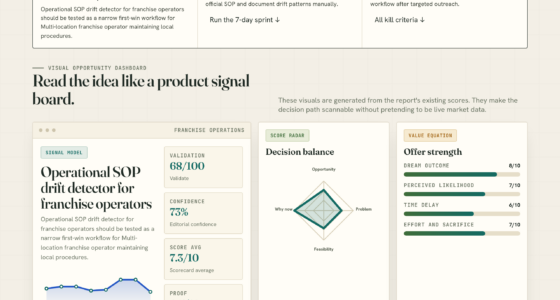
📊 Full opportunity report: Implementing Phone-Photo Gauge Monitoring In Industrial Facilities on IdeaNavigator AI — validation score, market gap, and execution plan.

Prime made for students and young adults
- Fast, free delivery for dorm and study essentials
- Prime Video and Amazon Music included
- Member-only deals
TL;DR
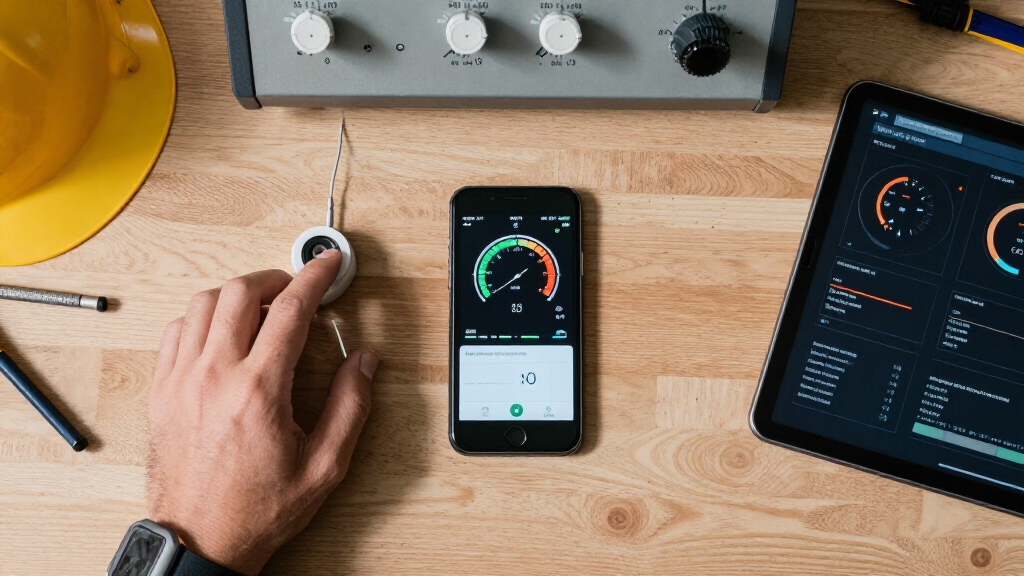
Industrial facilities are piloting a new workflow where technicians use phone photos to read gauges, replacing manual transcription. This approach aims to improve data accuracy and enable early failure detection without costly sensor retrofits.
Industrial facilities are beginning to implement a new workflow that replaces manual transcription of gauge readings with phone photos analyzed by sight recognition models. This development offers a low-cost, scalable method to collect real-time equipment data, potentially transforming maintenance practices across legacy systems.
The approach involves technicians photographing analog gauges, sight glasses, or counters during their routine rounds. An app then automatically reads the gauge value from the photo, compares it against expected ranges, logs the reading with timestamp and location, and flags anomalies immediately. This process aims to replace traditional clipboard-based rounds, which often suffer from transcription errors and lack of trend data.
Initial testing is underway at three facilities, where parallel photo-based and manual rounds are being conducted over a month. The goal is to compare error rates, early anomaly detection, and overall efficiency. The system is designed as a subscription service, with tiered pricing based on the number of gauges monitored per facility.
Experts note that recent advances in vision models have made accurate gauge reading from phone photos feasible, even for sight glasses and counters, without the need for retrofitting expensive sensors on legacy equipment. This approach leverages existing mobile devices, making it a cost-effective solution for facilities reluctant to invest in IoT sensors.
Potential Impact on Maintenance Data and Operations
This new workflow could significantly improve the accuracy and timeliness of maintenance data, enabling facilities to detect developing failures earlier and reduce unplanned downtime. By automating gauge readings, the system minimizes transcription errors and creates a continuous trend record, which is crucial for predictive maintenance strategies. The low-cost nature of this method makes it accessible for a wide range of legacy facilities, potentially transforming maintenance practices industry-wide.
Products Worth Considering

Samsung 34-Inch Odyssey G5 Ultra-Wide Curved Gaming Monitor

LG UltraGear 27GX704A-B 27-inch QHD OLED Gaming Monitor

DJI Osmo Mobile 8 Smartphone Gimbal with Mic Mini Transmitter, Infinity Black
As an affiliate, we earn on qualifying purchases.
Legacy Equipment and the Need for Cost-Effective Monitoring
Many industrial facilities rely on analog gauges, sight glasses, and counters that are difficult and costly to retrofit with IoT sensors. Traditional methods involve manual transcription onto paper, which is prone to errors and rarely used for trend analysis. Although some facilities have experimented with sensor-based solutions, high costs and complexity have limited adoption, especially in older plants.
Recent advances in computer vision and machine learning have made it possible to accurately read gauges from simple phone photos. This technological shift opens new opportunities for facilities to digitize their data collection processes without significant capital expenditure. Pilot programs are now testing this approach as a practical first step toward more automated maintenance workflows.
“Sight models now reliably read analog gauges from phone photos, making legacy equipment a data source without sensor installs.”
— an anonymous researcher
Unconfirmed Aspects and Pilot Limitations
It is not yet clear how the photo-based system will perform across diverse gauge types and lighting conditions. The pilot is limited to three facilities over one month, and longer-term data is needed to assess reliability, cost savings, and integration with existing maintenance systems. Additionally, the impact on technician workflows and acceptance remains to be fully evaluated.
Next Steps in Pilot Validation and Industry Adoption
The ongoing pilot will produce comparative data on error rates, anomaly detection, and operational efficiency. If results are positive, facilities may expand the program, and vendors could develop more sophisticated apps. Broader industry adoption will depend on demonstrating cost-effectiveness, reliability, and integration with existing maintenance management systems.
Key Questions
How accurate is the phone-photo gauge reading system?
Preliminary tests suggest high accuracy, with sight models reliably reading gauges under various conditions, but comprehensive validation results are still pending from the ongoing pilot.
What are the main benefits of replacing clipboard rounds with photos?
The system reduces transcription errors, provides continuous trend data, enables early failure detection, and is low-cost compared to installing sensors on legacy equipment.
Will this system work for all types of gauges?
It is most effective for analog gauges, sight glasses, and counters that can be visually read from a photo. Some gauges with complex displays or poor lighting may require further technological refinement.
What are the main challenges in implementing this workflow?
Challenges include ensuring photo quality under various lighting conditions, integrating the app into existing workflows, and validating long-term reliability and accuracy across different facilities.
When might this technology be widely adopted?
If pilot results demonstrate clear benefits, industry adoption could accelerate within the next one to two years, especially as vendors develop more robust solutions and facilities seek cost-effective automation options.
Source: IdeaNavigator AI