
TL;DR

Prime made for students and young adults
- Fast, free delivery for dorm and study essentials
- Prime Video and Amazon Music included
- Member-only deals
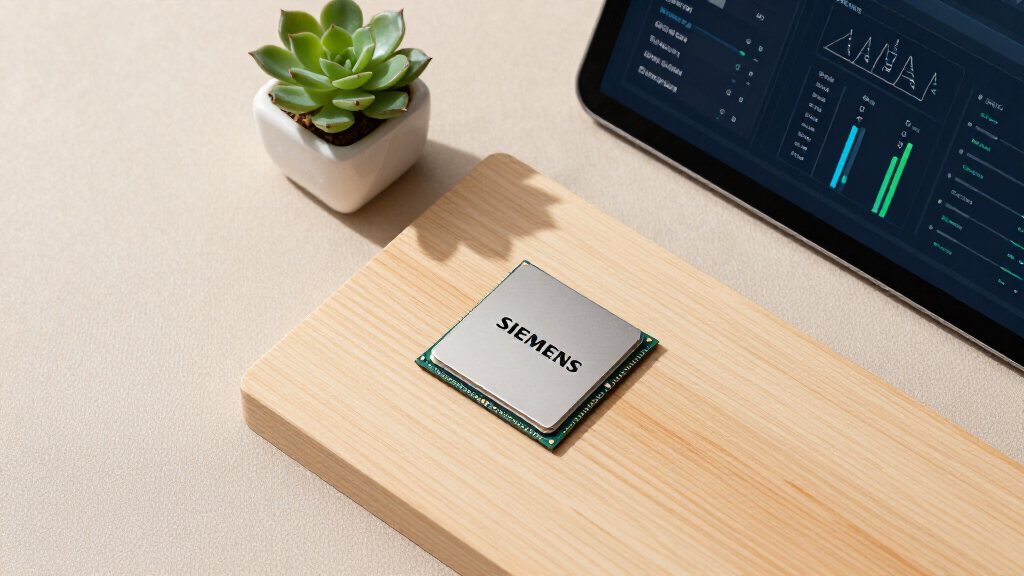
Siemens asserts that AI’s future in manufacturing lies in physical-world applications, not chatbots. The company is developing an Industrial Foundation Model and partnering with NVIDIA to embed AI across manufacturing processes, aiming to revolutionize industrial automation.
Siemens has revealed its strategic focus on integrating artificial intelligence into manufacturing, emphasizing physical-world applications over conversational AI. The company announced a major partnership with NVIDIA to develop an Industrial AI Operating System designed to embed AI across the entire industrial lifecycle, starting with a fully AI-driven factory in Erlangen, Germany.
During CES 2026, Siemens CEO Roland Busch stated that Industrial AI is no longer a feature but a force shaping the next century. The company is developing the Industrial Foundation Model (IFM), trained on proprietary data such as 3D models, engineering drawings, and sensor telemetry, to optimize engineering and automation processes. Siemens’ partnership with NVIDIA aims to accelerate simulation, enable generative digital twins, and support real-time optimization through GPU-accelerated software and physics-based AI models.
The first fully AI-driven manufacturing site is scheduled for launch in 2026 at Siemens’ Electronics Factory in Erlangen. Siemens also plans to introduce tools like Digital Twin Composer and collaborate with clients like PepsiCo to simulate facility upgrades, aiming to embed AI into the core of manufacturing operations and supply chains.
Why Physical AI Is a Game-Changer for Manufacturing
This development signals a shift toward AI applications that directly impact physical operations, potentially increasing efficiency, reducing costs, and enabling real-time decision-making. Siemens’ focus on proprietary data and domain expertise could give it a competitive advantage in industrial AI, especially as the category becomes more crowded with new entrants. The partnership with NVIDIA underscores the importance of specialized hardware and simulation tools in this transformation.
Products Worth Considering

Apple iPad Air (4th Generation, 10.9-inch, Wi-Fi, 256GB) – Space Gray

Amazon Kindle Paperwhite Signature Edition (12th Generation, 2024), 32 GB, Metallic Black

Sonos Era 100 SL Compact Microphone-Free Speaker, Black
As an affiliate, we earn on qualifying purchases.
Industrial AI Development and Siemens’ Strategic Position
Siemens’ emphasis on physical AI builds on years of accumulated industrial data, automation expertise, and existing customer relationships. Its announcement at Hannover Messe 2025 of the Industrial Foundation Model laid the groundwork for this shift. The company’s approach contrasts with general-purpose large language models, focusing instead on models trained on domain-specific data relevant to manufacturing, such as CAD drawings and sensor telemetry.
While other tech firms like Palantir and Qualcomm are advancing in industrial AI, Siemens’ long-standing presence in industrial automation and its strategic partnerships position it uniquely to lead this domain-specific AI revolution. However, the reliance on NVIDIA’s hardware and software infrastructure introduces dependencies and raises questions about sovereignty and long-term independence.
“Industrial AI is no longer a feature; it’s a force that will reshape the next century.”
— Roland Busch, Siemens CEO
Unconfirmed Performance Metrics and Deployment Timelines
Specific hardware configurations, performance benchmarks, and detailed deployment schedules for Siemens’ AI solutions remain undisclosed. The Erlangen factory’s AI integration is targeted for 2026, but measurable results and validation studies are not yet available, leaving some uncertainty about the practical impact and scalability of these initiatives.
Next Steps and Expected Developments in Industrial AI
Siemens plans to launch its fully AI-driven factory in Erlangen in 2026, alongside new tools like Digital Twin Composer. The company will likely publish performance data and case studies over the coming months, providing clearer validation of its AI platform’s capabilities. Additionally, Siemens will continue expanding its partnerships and customer implementations to embed AI deeper into manufacturing processes worldwide.
Key Questions
What is Siemens’ Industrial Foundation Model?
The Industrial Foundation Model (IFM) is Siemens’ specialized AI model trained on proprietary industrial data such as 3D models, drawings, and sensor telemetry to optimize manufacturing and engineering processes.
How does Siemens’ approach differ from general-purpose AI models?
Siemens’ models are designed specifically for physical and industrial data, focusing on domain expertise and physics-based information, unlike general models that primarily process text and internet-sourced data.
What role does NVIDIA play in Siemens’ AI strategy?
NVIDIA provides the hardware, simulation libraries, and frameworks for Siemens’ industrial AI platform, including GPU acceleration and physics-based AI models, forming the backbone of the ‘Industrial AI Operating System.’
Will Siemens’ AI solutions be available globally?
While Siemens plans to replicate its Erlangen factory model globally, the timeline for widespread deployment depends on validation, customer adoption, and integration challenges, which are still developing.
What challenges does Siemens face in implementing industrial AI?
Key challenges include validating performance metrics, managing dependencies on NVIDIA’s infrastructure, navigating long sales cycles in industrial sectors, and ensuring data sovereignty for European clients.
Source: ThorstenMeyerAI.com