
TL;DR

Prime made for students and young adults
- Fast, free delivery for dorm and study essentials
- Prime Video and Amazon Music included
- Member-only deals
Electric space heaters provide localized heat for a room or small area, and many household models draw about 1,500 watts. Resistance models turn nearly all their electricity into heat where they operate, but a heat pump can deliver more heat per unit of electricity; your actual cost depends on the heater’s wattage, operating time, and electricity rate. Choose by room conditions and comfort, then follow the manual’s placement and electrical instructions.
A 1,500-watt heater running at full power for an hour uses 1.5 kWh; multiply that by your electricity price to estimate cost.
Fan-forced, oil-filled, and infrared heaters deliver warmth differently, but resistance models use electricity in broadly similar ways to produce heat.
Room size alone does not tell you what heater will work well; check the manufacturer’s guidance and account for drafts, insulation, and ceiling height.
Plug the heater into a suitable wall outlet as its manual directs, keep it clear of combustibles, and turn it off when you leave the room or go to sleep.
A space heater may lower a bill when it lets you reduce central heating, but compare its operating cost with your usual system and any heat pump option.
How electric space heaters warm one room
Electric space heaters use electricity to produce heat close to where you need it, which can make a cold room more comfortable without heating your entire home. Most portable household models use resistance heating: electrical energy becomes heat at the heater, and a fan, warm surface, or radiant element carries that warmth into the space. A heater’s effect depends on the room’s insulation, drafts, ceiling height, and starting temperature.
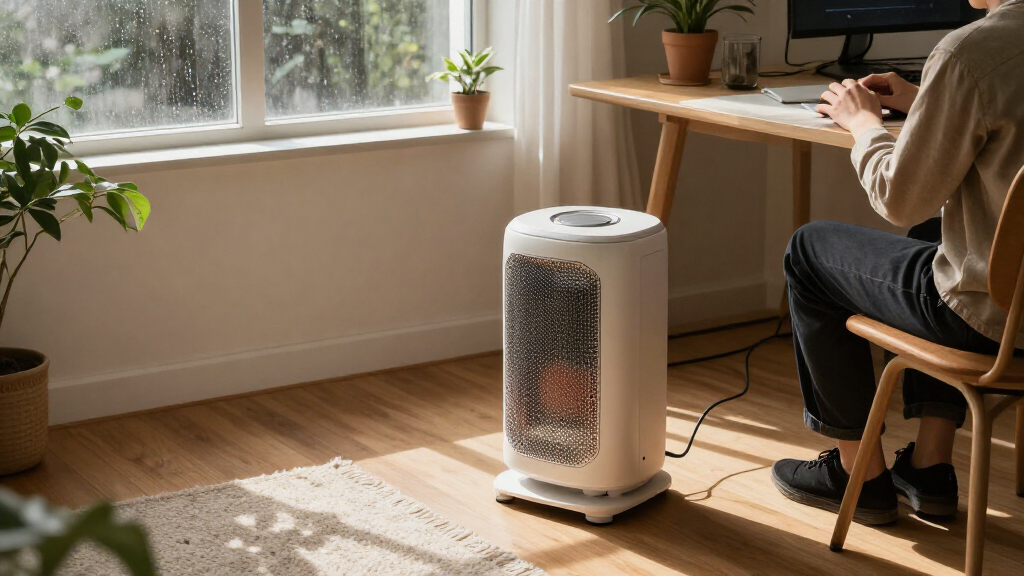
Consider a home office above a drafty garage. A heater beside the desk may warm the person working there, while the far end of the room stays cool because the door leaks air and the ceiling is high. The unit’s label or manual is a better starting point than a universal square-foot rule; two rooms with the same floor area can have very different heating needs.
Resistance heaters are highly effective at turning their electricity into heat at the point of use. That does not automatically make them the cheapest way to heat a home: heat pumps can provide more heat per unit of electricity, depending on the equipment, climate, installation, and upfront cost. The useful question is often whether warming one occupied room lets you turn down central heating, and whether the resulting bill still makes sense.
Products Worth Considering

Jackery Explorer 2000 v2 Portable Power Station, 2042Wh

Anker SOLIX C300 Portable Power Station, 288Wh

Bose SoundLink Flex (2nd Gen) Portable Bluetooth Speaker, Black
As an affiliate, we earn on qualifying purchases.
Estimate the hourly cost before you switch it on
A 1,500-watt heater uses 1.5 kilowatt-hours in one hour if it runs continuously at full power. To estimate the energy cost, multiply watts by hours and your electricity price, converting watts to kilowatts first: watts ÷ 1,000 × hours × price per kilowatt-hour. Your bill can differ because a thermostat may switch the heater on and off, and your electricity rate may vary by time or plan.
For example, if your electricity costs 30 cents per kilowatt-hour, one full hour at 1,500 watts costs about 45 cents: 1.5 × $0.30. Four hours at uninterrupted full power would use 6 kilowatt-hours and cost $1.80 at that rate. That is an estimate, not a promise: once the room warms up, a thermostat may cut the time the heating element runs.
Use the formula with your own rate and routine before relying on a heater for several hours each day. A digital display showing energy use can help you observe consumption, but a “smart” setting cannot repeal the link between power, runtime, and electricity use. Check the wattage and the hours; those two numbers tell you more about likely energy use than a vague “energy-saving” claim.
A thermostat can shorten heating time, but it does not make a running resistance heater produce more heat from each unit of electricity.
Choose the heat style that fits your routine
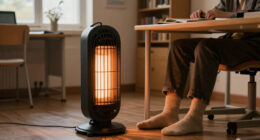
The best heater type depends on how you want to feel warm. Fan-forced heaters, including many ceramic models, move warm air quickly and suit a short burst of heat. Oil-filled radiators heat more gradually and can continue releasing warmth after you switch them off. Infrared or radiant heaters warm nearby people and objects directly, so they can work well when you stay in one spot.
Imagine you’re stepping into a cold study for a half-hour video call. A fan heater can bring warm air across the desk fairly quickly, though you may hear its fan. If you spend a whole quiet afternoon reading, an oil-filled radiator offers slower, often quieter warmth. If you sit still at a workbench in a large, chilly space, radiant heat can warm your body without first warming every corner of the room.
| Type | How it feels | Good fit |
|---|---|---|
| Fan-forced or ceramic | Fast, moving warm air | Short sessions and quick warm-up |
| Oil-filled radiator | Gradual, lingering warmth | Longer sessions and quieter rooms |
| Infrared or radiant | Direct warmth on nearby people or objects | A seated person or defined work area |
These styles do not change the basic electricity-to-heat relationship for resistance models. Your comfort, room layout, noise tolerance, and usage pattern determine which feels right. Try to match the delivery to the job: quick warm air for a brief visit, steady warmth for a longer stay, or radiant heat when you remain near the unit.
Check your room and electrical setup first
Room conditions and circuit capacity both matter when you choose a portable heater. Read the product’s room guidance, then account for insulation, ceiling height, drafts, and the temperature you want to reach. Many household models draw about 1,500 watts on a standard 120-volt circuit, which can use most of the available capacity of a household circuit when other devices share it.
Say your small bedroom has a gap under the door and a window that rattles on windy nights. Buying a larger heater based only on the floor area may not solve the discomfort efficiently; sealing drafts, when appropriate, can help keep warmth in. In another home, a compact, well-insulated spare room may warm easily even if its dimensions look similar on paper.
Before use, read the heater’s manual for outlet and circuit instructions. Many manufacturers advise plugging the unit directly into a suitable wall outlet and warn against extension cords or power strips because of the high current draw. Don’t run cords under rugs or across walkways, and stop using the heater if its plug, cord, outlet, or casing becomes unusually hot or damaged.
Keep the heater on a stable, level surface with the manual’s clearances around it. Bedding, curtains, furniture, clothing, and other combustibles should stay away from the heating unit. Keep it away from water and damp areas unless its specific rating permits that use.
Use these steps to heat a room more safely
Safer heater use starts before you plug it in. Protective features such as tip-over and overheat shutoffs can reduce certain risks, but they do not make a heater risk-free while you sleep or leave home. Use the manual and local fire-safety guidance for your specific model, and treat turning it off when you leave the room or go to sleep as the safer general practice.
- Pick a clear spot. Set the heater on a level, stable surface, away from curtains, bedding, clothing, furniture, children, and pets. Follow the exact clearance distances in the manual.
- Check the connection. Use a suitable wall outlet as the manufacturer directs. Keep the cord uncovered and out of walkways; don’t use a unit with a damaged cord, plug, outlet, or casing.
- Set and supervise it. Use the thermostat, timer, and operating modes as described in the manual. Keep the heater within sight while it runs and switch it off when you leave the room.
- Recheck the area. Make sure nothing has shifted near the heater and the cord has not become hot or damaged. Keep water and damp locations away unless the model is specifically rated for that setting.
For example, if a dog’s bed sits beside the only convenient outlet, move the heater and arrange the cord so your pet can’t reach or knock it over. A tip-over shutoff is a backup feature, not a reason to place the unit where a curious pet can bump it. The same thinking applies around young children: stable placement, supervision, and distance from hot surfaces matter.
Turn it off when unattended unless the manufacturer and local safety guidance explicitly allow the intended use. Timers can limit how long a unit operates, but they don’t replace a clear space, a sound outlet, or supervision.
Know when a space heater may lower your bill
A space heater may reduce your heating bill if you heat only an occupied room and turn down central heating. Savings depend on how long you run the portable unit, your electricity price, the cost of your usual heating system, and whether the rest of the home can safely stay cooler. If you run both systems at full settings for hours, the heater may add cost rather than save money.
Suppose you work in one room all day while the rest of the house sits empty. Lowering the central thermostat and using a heater near your desk could make sense, especially if the room is reasonably insulated and you use a thermostat or timer. If the room leaks heat and the central system already heats efficiently, a 1,500-watt portable unit may offer comfort without lowering the total bill.
Compare actual use rather than judging by the heater’s appearance or marketing. Write down its wattage, estimate the hours it runs, and multiply by your electricity rate. If you have a heat pump, compare that option too: it can deliver more heat per unit of electricity, although installation, climate, and upfront expense affect the decision.
Newer models may add digital thermostats, programmable schedules, remote controls, app connectivity, or energy-use displays. These features can make operation easier and help you track use, but they do not change a resistance heater’s basic power draw. Treat claims such as “smart” or “energy-saving” as prompts to check wattage, controls, runtime, and measured consumption.
Keep these key facts handy when you shop
Start with the job, the room, and the outlet. A small heater for a drafty bedroom, a quiet unit for a reading nook, and a portable heater for a workbench solve different comfort problems. Compare the manual’s room guidance and safety instructions, then check the features you will actually use, such as a thermostat, timer, portability, noise level, and recognized safety certification for your market.
For instance, a parent warming a playroom may value stable placement and a protective grille, while someone warming a desk before a morning shift may care more about quick heat and a timer. Tip-over and overheat shutoffs are useful protections, but they cannot prevent every fire or burn. Put the heater where people won’t bump it and where children and pets can’t reach it.
Keep this short checklist beside the product page:
- Power: Check the wattage and estimate cost using your electricity rate.
- Room: Consider drafts, insulation, ceiling height, and manufacturer guidance.
- Comfort: Choose quick air movement, quiet lingering warmth, or direct radiant heat.
- Controls: Look for a usable thermostat and timer if they suit your routine.
- Safety: Review shutoffs, clearances, outlet directions, and certification for your region.
One product can’t be the best choice for every room or household. Choose the heater whose delivery, controls, and instructions fit the space, then make sure its cost and electrical requirements fit your daily routine.
Frequently Asked Questions
How much does it cost to run an electric space heater?
Use watts ÷ 1,000 × hours × your electricity price per kilowatt-hour. A 1,500-watt heater running at full power for one hour uses 1.5 kWh, so at 30 cents per kWh that hour costs about 45 cents. A thermostat may reduce runtime and actual consumption.
Are electric space heaters energy-efficient?
Resistance heaters turn nearly all the electricity they consume into heat at the point of use. A heat pump can provide more heat per unit of electricity, though climate, installation, and upfront cost matter. A portable heater may still suit you if it lets you lower central heating while warming one occupied room.
Which is better: ceramic, oil-filled, or infrared?
It depends on the comfort you want. Fan-forced ceramic models warm air quickly, oil-filled radiators heat gradually and retain warmth after switch-off, and infrared models warm people and objects directly. For example, choose quick air movement for a short visit or radiant heat if you stay at one workbench.
Can I leave a space heater on overnight or while I’m away?
Turning it off when you leave the room or go to sleep is the safer general practice. Follow the product manual and local fire-safety guidance for any intended unattended use; tip-over and overheat shutoffs do not remove every hazard. Keep bedding, curtains, and furniture clear of the heater.
Can I use an extension cord or power strip with a heater?
Many manufacturers warn against extension cords and power strips because a high-wattage heater can draw substantial current. Follow your model’s manual and electrical safety guidance, and use a suitable wall outlet as directed. Stop using the heater if the cord, plug, or outlet becomes unusually hot or damaged.
Do oil-filled heaters use less electricity than ceramic models?
Oil-filled heaters can deliver warmth more gradually and retain heat after you switch them off, but they do not produce more heat per unit of electricity than other resistance heaters. The thermostat and the time the unit runs affect consumption. Compare wattage and your actual use rather than assuming oil-filled means lower bills.