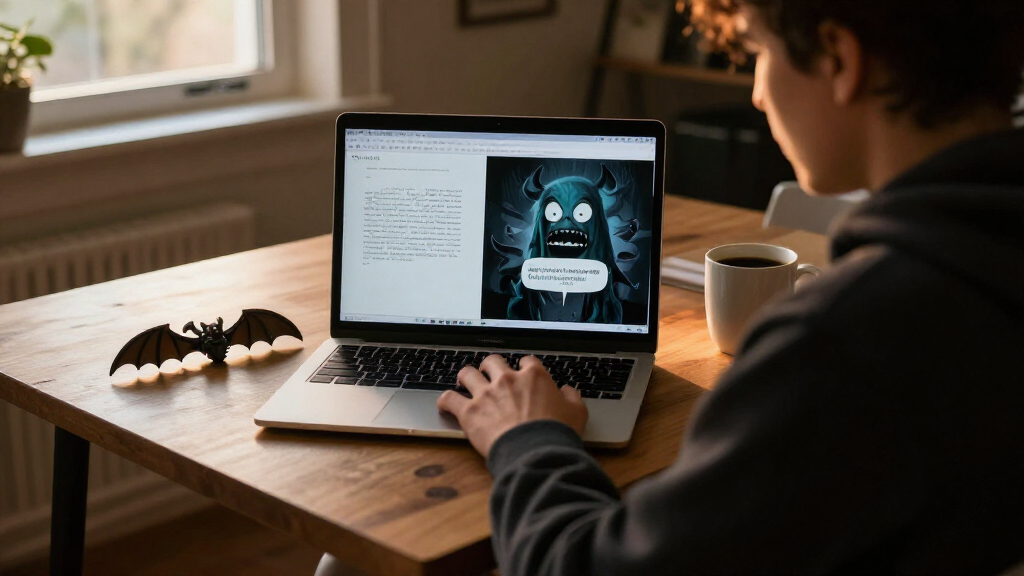

🔍 Read the full analysis: Hollow House: Building An AI Horror-Comedy From A Boring First Draft on ThorstenMeyerAI.com

Prime made for students and young adults
- Fast, free delivery for dorm and study essentials
- Prime Video and Amazon Music included
- Member-only deals
TL;DR
Thorsten Meyer says Hollow House, a 97-second AI-generated horror-comedy, was made in three versions between the evening of Oct. 27 and about 1:30 a.m. the next day. The first cut looked polished but felt boring; the final version used a faster structure and one video model with the full cast as references.
Thorsten Meyer has published Hollow House, a 97-second AI-generated horror-comedy, alongside an account of how he rebuilt it three times in one night. Meyer says the first version looked good but was “terribly boring and amateurish”; the final cut used quicker pacing and a shared set of character references to make the story work.
Meyer’s account, published on ThorstenMeyerAI.com on Oct. 28, says production ran from early evening on Oct. 27 until about 1:30 a.m. the following day. Across three versions, the project used 2,220 Higgsfield credits, which Meyer estimates cost about $95 at his plan’s rate, and roughly 2,100 ElevenLabs characters for music and sound effects. He says every character, voice and set in the film was AI-generated.
The short follows a ghost who joins the staff of an extreme haunted attraction. When a guest uses the safe word “cotton candy” and the scare does not stop, the workers realise the tall figure is not one of their performers. Their shift lead responds by asking whether the apparent new arrival signed a waiver. Meyer says the film’s script, characters and jokes are his own, while its structure was inspired by an AI horror-comedy short shared on X.
The first cut was built from 20 shots and ran 2 minutes 15 seconds. Meyer says the images and character consistency were strong, but the average shot lasted 5.6 seconds. He compared that with the inspiration short, which he counted at about 74 cuts across 2 minutes 14 seconds, or roughly 1.8 seconds per cut. The final version instead used three roughly 30-second segments generated by one model with the cast available as references, producing a 1:37 film. Meyer says only that third approach worked for him.
Production case file · Published October 28, 2026
Hollow House:
Building an AI Horror-Comedy From a Boring First Draft
Thorsten Meyer rebuilt a polished but slow first cut into a 97-second haunted-house comedy. His account traces three overnight versions—and the human editing choices that made the final rhythm work for him.
01 / The story
A ghost joins the scare crew
At an extreme haunted attraction, one guest says the safe word—and the fright keeps going. The staff begin to suspect their newest performer is not an employee at all.
Premise
One wrong arrival
A ghost joins the attraction’s staff, blending in with the performers until the scares cross a line.
The signal
“Cotton candy”
A guest uses the safe word, but the scare does not stop. The workers realize the tall figure is not one of theirs.
The punchline
Waiver first
Ray, the shift lead, responds to the apparent supernatural threat with a practical question: did the newcomer sign a waiver?
02 / Three cuts, one night
From slow setup to sharper timing
Meyer says the work ran from early evening on October 27 until about 1:30 a.m. the next day. Each version changed the film’s shape.
Version 01 · Rejected
Polished, but slow
20 shots · 2:15 runtime
Veo 3.1 fast animated generated start frames. Meyer says the faces, costumes and red-and-teal look held together, but the film felt amateurish and the comedy dragged.
Version 02 · Recut
More cuts, still long
66 fast cuts · 2:21 runtime
The supplied account gives these figures but does not provide a full shot-by-shot explanation of why this edit was replaced.
Version 03 · Final
Three linked segments
~30 seconds each · 1:37 runtime
One video model had the full cast available as references. Meyer says this faster structure was the only approach that worked for him.
Meyer counted about 74 cuts in the inspiration short, which ran 2:14. These are his measurements, not independently verified benchmarks.
03 / The reported workflow
References first, then iteration
The account describes AI-generated characters, voices and sets, with human decisions guiding the structure, retakes and final colour grade.
Build the cast
Eight full-length character sheets made with Google’s Nano Banana 2 through Higgsfield. Meyer says each 2K image cost two credits.
Generate shots
Version one used a start frame for each of 20 shots, animated with Veo 3.1 fast mode.
Check and retake
Whisper helped check dialogue. A spelled-out “HEY!” and garbled syllables were flagged for another attempt.
Reshape the film
The final approach used three segments with the full cast as references, followed by a human-applied colour grade.
“Did you even sign the waiver?”
Ray · Shift lead“Cotton candy.”
Derek · Guest“HEY!”
A line that needed a retake04 / What the account shows
Image quality is only one ingredient
The making-of is a single production account. It describes what Meyer says worked for this short, not a controlled test of AI filmmaking tools.
Creative judgment
Rejecting the first cut
Meyer identifies pacing, performance and editing as decisions that changed whether the finished piece held together.
Production limits
Some actions missed
A planned full head turn did not work as intended. Meyer used a still with the head already reversed and added a bone-crack sound.
Open questions
Results are project-specific
The account does not isolate the effects of model choice, references, editing or other adjustments, and reports no audience data.
05 / Key questions
What we know—and what remains open
What is Hollow House?
A 1:37 horror-comedy short about a ghost joining an extreme haunted attraction’s scare crew and ignoring a guest’s safe word. Meyer says the characters, voices and set were AI-generated.
What did the production cost?
Meyer reports 2,220 Higgsfield credits, estimated at about $95 under his plan, plus roughly 2,100 ElevenLabs characters for music and sound effects.
Why did the first cut fall flat?
Meyer says attractive visuals and consistent characters could not compensate for long shots and weak comic timing. He reports an average 5.6 seconds per shot.
What remains unverified?
The supplied account does not independently confirm the costs, production hours or cut counts. It offers limited detail on version two and no audience response or broader tool evaluation.
Why the First Cut Fell Flat
Meyer’s account points to a distinction that matters for AI-assisted filmmaking: generating attractive images is not the same as making an effective film. He says the first version had stable faces, costumes and a convincing red-and-teal haunted-house look, yet its slow rhythm and one-line-per-shot structure weakened both the comedy and the scares.
The reported costs and overnight schedule make the process a useful small-scale production case, but they are Meyer’s figures for this project and subscription plan, not a general price benchmark. The creative decisions he identifies were human ones: rejecting the first cut, changing how the footage was structured, and applying the final colour grade. In his account, AI tools supplied much of the material, while judgement about pacing, performance and editing determined whether the result held together.
Products Worth Considering

Bose QuietComfort Wireless Bluetooth Headphones with Active Noise Cancellation, Mic, USB‑C Charging, Deep Bass, 24‑Hour Battery – White Smok

Bose S1 Pro+ Portable PA Speaker

Logitech MX Master 4 for Mac, Ergonomic Bluetooth Mouse with Haptic Feedback, Ultra-Fast Scrolling, USB-C Charging, for MacOS, iPadOS, Windo
As an affiliate, we earn on qualifying purchases.
From Character Sheets to Final Cut
Before generating video, Meyer created one full-length reference image for each of eight characters using Google’s Nano Banana 2 image model through Higgsfield. He says each 2K image cost two credits and all eight were made in under two minutes. Those reference sheets were then used to guide later stills and video, a step intended to limit changes in details such as hair, clothing and body shape between shots.
For version one, Meyer generated a start frame for each of 20 shots and animated them with Google’s Veo 3.1 fast mode. He says the system produced speech and sound along with the visuals. The project also exposed production limits: a shouted “HEY!” was spoken as “H-E-Y,” a planned full head turn did not work as intended, and some physical actions came out differently from the script. Meyer says he checked generated dialogue with OpenAI’s Whisper speech-recognition model, which helped identify the spelled-out line and garbled syllables that needed a retake.
One rejected action was rephrased from a person being lifted to “floating” after an initial attempt was blocked, which Meyer said appeared to be a safety-filter issue. The revised shot passed, but the character barely left the ground. For the head-turn effect, Meyer says he substituted a still image with the head already reversed and added a bone-crack sound. These are examples from this production, not a systematic evaluation of the tools.
““Terribly boring and amateurish.””
— Thorsten Meyer, describing his reaction to the first version
What the Production Account Leaves Open
The account does not provide a full shot-by-shot breakdown of the second version, which ran 2 minutes 21 seconds and used 66 fast cuts, or explain in detail why that edit was replaced by the three-segment final approach. The supplied material also does not independently verify the reported credit use, estimated dollar cost, production hours or comparison cut counts; those figures are Meyer’s own measurements and estimates.
It is also unclear how much of the final film’s performance came from the choice of model, the reference images, editing or other adjustments beyond the colour grade. Meyer describes what worked for this short, but does not present controlled comparisons or claim that the same workflow would produce similar results on other projects. The source material gives no information about audience reception or distribution beyond the published video.
The Published Short and Its Workflow
The short and Meyer’s making-of account are already published, so the next development is whether he shares further production details or examples from the process. His account says it includes the behind-the-scenes images available to him, including character sheets, start frames, failed attempts and a contact sheet of the final cut. No follow-up project, release schedule or additional technical testing is announced in the supplied material.
Readers can compare the finished 1:37 film with Meyer’s description of its three versions, but the source does not report viewer data or a formal assessment of the result. Any broader conclusions about cost, reliability or the creative value of these tools would require more projects and evidence than this single production account provides.
Key Questions
What is Hollow House?
Hollow House is a 1:37 horror-comedy short about a ghost who joins an extreme haunted attraction’s scare crew and ignores a guest’s safe word. Meyer says the film’s characters, voices and set were AI-generated.
How many versions did Meyer make?
Meyer reports making three versions overnight. The first used 20 shots and ran 2:15, the second used 66 fast cuts and ran 2:21, and the final version uses three roughly 30-second segments and runs 1:37.
What did the production cost?
Meyer says the three versions used 2,220 Higgsfield credits, which he valued at about $95 under his plan, plus roughly 2,100 ElevenLabs characters for music and sound effects. These are project-specific figures reported by Meyer, not a general estimate for making AI films.
Why did the first cut not work?
Meyer says the visuals were strong but the film felt boring because the shots were too long and the comic timing was weak. He counted an average of 5.6 seconds per cut in the first version, compared with about 1.8 seconds in the short that inspired its structure.
What remains unverified?
The available account does not independently confirm Meyer’s cost, timing or cut-count figures, and it does not give detailed results for every version. It also does not report audience response or establish that the workflow will produce the same results on other films.
Source: ThorstenMeyerAI.com