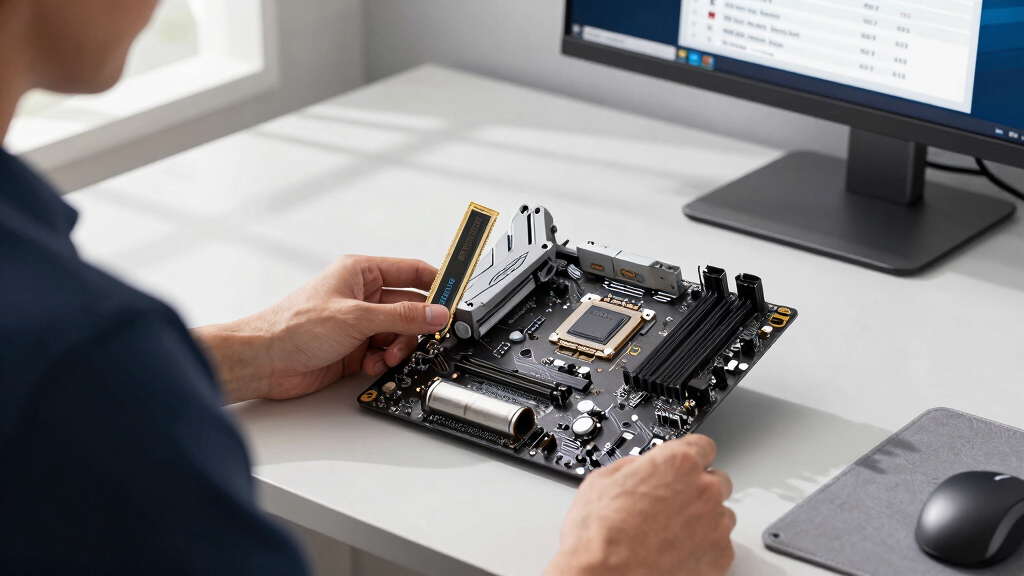

📊 Full opportunity report: DDR5 Now, DDR6 Soon: A Buyer’s Field Guide on ThorstenMeyerAI.com — validation score, market gap, and execution plan.

Prime made for students and young adults
- Fast, free delivery for dorm and study essentials
- Prime Video and Amazon Music included
- Member-only deals
TL;DR
DDR5 memory remains the best choice for 2026 builds, with DDR6 still in development and not suitable for mainstream purchases yet. Waiting for DDR6 is generally not cost-effective or necessary for most users now.
DDR5 memory is currently the standard for new high-performance PCs in 2026, with no immediate need to wait for DDR6, which is still in development and not yet suitable for mainstream adoption. This guidance helps consumers avoid overpaying or delaying builds unnecessarily amid ongoing market shortages and price volatility.
Market analysts and industry sources confirm that DDR5 memory is now the primary choice for most new desktop builds, with recommended configurations around DDR5-6000 and CL30 timings for optimal performance and value. Prices for DDR5 are stabilized at this point, making it the practical upgrade option for users needing reliable, high-speed memory today.
Meanwhile, DDR6, which promises significant performance improvements with wider channels and higher speeds, is not yet available for mainstream consumers. Its rollout is staged, beginning with enterprise servers in 2026–27 and not reaching desktop platforms until 2027 or later. DDR6 modules will require new CPUs and motherboards, with initial costs expected to be 2-3 times higher than DDR5 per gigabyte.
Experts warn against buying into DDR4 in 2026, as manufacturers have phased out DDR4 production and it no longer offers a future-proof or cost-effective solution. Building on DDR4 now would mean investing in outdated technology with no upgrade path.
DDR5 now, DDR6 soon
A buyer’s field guide. The 20-year instinct — wait for prices to drop, or wait for the next generation — is broken this cycle. Buy the DDR5 you actually need now; don’t wait for DDR6. Here’s the reasoning.
Driven to end-of-life, production slashed. Same money, dead-end socket. Leave a working DDR4 box alone — but never start a new build on DDR4 to “save.”
A framework, not a gamble. Buy the DDR5 you need now, at the sweet spot, in the capacity you’ll actually use — don’t buy DDR4, don’t wait for DDR6. The two costliest mistakes in this market are the ones that feel prudent: waiting for a price drop that isn’t coming, and waiting for a next-gen part that launches dearer than what’s on the shelf. Next: The SSD Squeeze.
Why Buying DDR5 Now Matters for Consumers
For most users, purchasing DDR5 memory now is the most cost-effective and performance-efficient choice, avoiding the premium and delays associated with DDR6. Waiting for DDR6 could mean missing out on two years of platform improvements and paying a substantial early-adopter premium, especially since DDR6’s widespread adoption isn’t expected until 2030. This guidance helps consumers make informed decisions in a volatile market, avoiding unnecessary expenses and future obsolescence.
As an affiliate, we earn on qualifying purchases.
2026 Memory Market and Future Development Timeline
The ongoing memory shortage and price spikes have driven consumers to consider delaying purchases or opting for older technology. However, industry forecasts indicate that DDR5 has stabilized and is ready for mainstream use, with the next significant upgrade—DDR6—still in the roadmap phase. DDR6’s technical advancements include increased bandwidth through wider channels and new form factors, but its ecosystem won’t mature until late 2020s. Historically, new memory standards take several years to reach mass adoption, and DDR6’s early-stage market presence will be limited and expensive.
“DDR6 introduces significant technical improvements but requires new platforms and will come with a high early cost.”
— Hardware manufacturing executive
Uncertainties About DDR6 Adoption and Pricing
While DDR6 is expected to launch in 2026–27, the exact timing of widespread availability, pricing, and compatibility with existing platforms remains uncertain. Early DDR6 modules are likely to be expensive, and stability or capacity issues may persist during initial releases. The long-term cost trajectory and real-world performance benefits are still unconfirmed until products are widely tested and adopted.
Next Steps for Consumers and Industry Watchers
Consumers should focus on current DDR5 offerings, selecting configurations aligned with their workload and budget. Industry observers should monitor JEDEC standard developments and motherboard compatibility lists for DDR6 validation, expected to appear in late 2026 or early 2027. Manufacturers will gradually introduce DDR6 modules, but mainstream adoption and price stabilization are likely to take several years.
Key Questions
Should I wait for DDR6 before upgrading?
For most users, waiting is not advisable. DDR6 is still in development and will be more expensive and less stable initially. DDR5 offers excellent performance for current needs, with no immediate need to delay builds.
Is DDR4 a good choice in 2026?
No. DDR4 is being phased out, and new platforms are moving exclusively to DDR5. Building on DDR4 now would limit future upgrade options and compatibility.
When will DDR6 be widely available?
Widespread adoption of DDR6 is expected around 2028–2030, with initial enterprise and high-end platforms leading the way in 2026–27.
Will DDR6 be significantly faster than DDR5?
Yes. DDR6 aims to double or triple effective bandwidth compared to DDR5, but these benefits will primarily matter for specialized workloads like scientific computing and AI, not gaming or general use.
What should I buy if I need memory now?
Buy DDR5-6000 with CL30 timings, and size capacity based on your workload—32GB for gaming and general use, 64GB for content creation. Avoid overbuying capacity or waiting for a future upgrade.
Source: ThorstenMeyerAI.com
Fall Picks
fall essentials
As an affiliate, we earn on qualifying purchases.