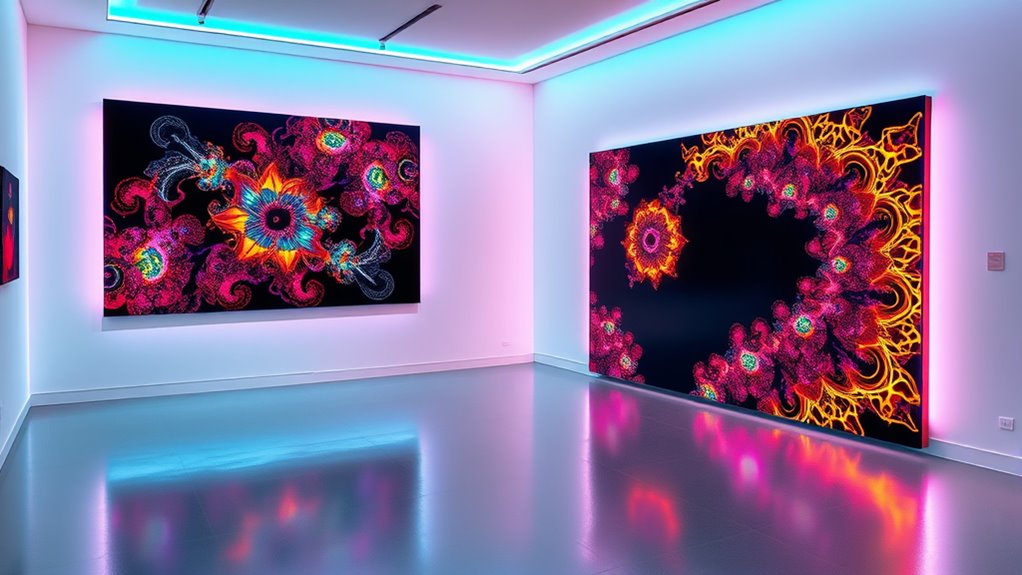

In 2025, AI-generated art is reshaping your idea of creativity by blending advanced algorithms with human imagination. You can explore new styles and experiment faster, pushing artistic boundaries you never thought possible. It challenges traditional notions of authenticity and emotional depth, making you question what truly constitutes art. As AI becomes a creative partner or competitor, understanding its impact will open up exciting new possibilities—stick around to discover how this revolution unfolds.
Key Takeaways
- AI algorithms are increasingly producing art that rivals human creativity, expanding artistic possibilities in 2025.
- Ethical debates around ownership and authorship are shaping the development and acceptance of AI-generated art.
- Artists utilize AI as a creative partner, exploring new concepts and pushing creative boundaries.
- The authenticity and emotional depth of AI art challenge traditional notions of human-centric creativity.
- AI’s evolving role in art continues to redefine originality, collaboration, and the future of artistic expression.
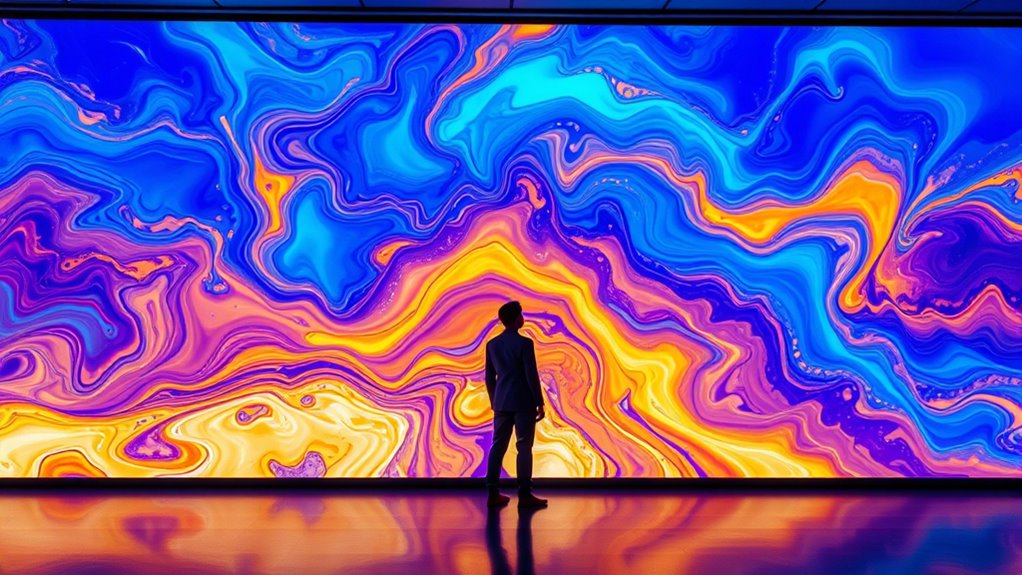
Have you ever wondered how computers can create stunning artwork? It’s a fascinating intersection of human creativity and machine ability, driven by rapid technological advancements. As AI algorithms grow more sophisticated, they can generate images, paintings, and designs that rival those made by human artists. But with this progress come important questions about ethical implications. Who owns the rights to AI-generated art? Is it fair to credit a machine, or should the credit go to the programmers and data that shaped its output? These issues challenge traditional notions of authorship and creativity, forcing us to reconsider what it means to create. Meanwhile, technological advancements continue to push the boundaries of what AI can do. Deep learning models are now capable of understanding complex artistic styles, blending different genres seamlessly, and even mimicking the unique touch of famous artists. This evolution makes AI-generated art more authentic and expressive, opening new avenues for artists and designers alike. You might find yourself contemplating whether AI is a tool that amplifies human creativity or a rival that diminishes it. Some see these tools as partners, enabling you to experiment with ideas faster and more freely than ever before. Others worry that AI could flood the market with generic, mass-produced images, diluting the value of original human craftsmanship. Despite these debates, it’s clear that AI is transforming the art landscape. Artists are now using AI to explore concepts they never would have attempted alone, pushing creative boundaries and expanding the definition of art itself. This technological progress also raises questions about authenticity and emotional connection. Can an AI-generated piece evoke the same feelings as a human-created masterpiece? For many, the answer is yes, as AI can mimic emotional tones and stylistic nuances convincingly. Still, some argue that true art must stem from human experience and consciousness, which machines lack. Additionally, the integration of AI into creative fields often relies on sophisticated appliance testing and compatibility, ensuring that new tools operate safely and effectively. As you navigate this new world of AI-generated art, it’s essential to recognize that both the ethical implications and technological advancements shape its future. They challenge you to think deeply about originality, ownership, and the essence of creativity. Whether AI becomes a collaborator or a competitor, one thing’s certain: it’s redefining what art can be in 2025, blending human ingenuity with machine intelligence in ways that continually surprise and inspire.
Top picks for "generat redefin creativity"
Open Amazon search results for this keyword.
As an affiliate, we earn on qualifying purchases.
Frequently Asked Questions
How Do Ai-Generated Artworks Influence Traditional Art Markets?
You see AI-generated artworks transforming the art market dynamics by shifting collector preferences toward innovative, tech-driven pieces. This influences how traditional artists position themselves and how collectors value originality and creativity. As AI art becomes more accepted, you might notice a broader acceptance of digital and experimental works, prompting galleries and investors to adapt, ultimately reshaping the landscape of the traditional art market.
What Are the Ethical Considerations of Ai-Created Art?
You should consider the ethical concerns around AI-created art, especially authenticity concerns and copyright dilemmas. As you create or share AI-generated pieces, be mindful of how they might blur lines of originality, raising questions about genuine authorship. Respect existing copyrights, and guarantee transparency about AI involvement. By addressing these issues, you help maintain integrity in the art world and protect artists’ rights while embracing new creative possibilities.
Can AI Art Possess Genuine Emotional Expression?
You might wonder if AI art can truly tap into human emotion. While AI can mimic emotional expression through algorithms, it lacks genuine feeling. Still, it can produce powerful, poignant pieces that evoke authentic reactions, sparking debates about creative authenticity. Ultimately, AI art can simulate emotional depth, but it doesn’t possess real human emotion. You, as an observer, bring your own feelings, making the experience uniquely authentic.
How Does Ai-Generated Art Impact Artists’ Careers?
AI-generated art impacts your career by opening new avenues for artistic collaboration and expanding your creative autonomy. You can leverage AI tools to enhance your ideas, experiment with styles, and reach wider audiences. However, it also challenges traditional roles, pushing you to redefine your skills and originality. Embrace these changes to stay competitive, using AI as a partner rather than a replacement, and discover fresh opportunities for growth.
What Are Future Technological Advancements Expected in AI Art?
Imagine stepping into a future where your creative journey is guided by evolving algorithms, like a trusty compass that sharpens with each adventure. Expect advancements in algorithm innovation that make AI art more intuitive and expressive. You’ll find new tools that foster creative collaboration, allowing you to co-create seamlessly with AI. These breakthroughs will open fresh artistic horizons, empowering you to push boundaries and redefine what’s possible in your craft.
Conclusion
As you explore AI-generated art, imagine stepping into a vast, empty canvas where your imagination is the only limit. Just like a painter’s brush, AI tools now open up endless possibilities, turning ideas into vivid reality—much like how a single spark ignited a wildfire. With over 60% of artists integrating AI into their work, it’s clear that this technology isn’t replacing creativity but amplifying it. Embrace it, and let your creativity soar beyond boundaries.