

Prime made for students and young adults
- Fast, free delivery for dorm and study essentials
- Prime Video and Amazon Music included
- Member-only deals
Subscription Science Kits vs. One-Time Big-Box Kits: Which One Actually Fits Your Child?
When parents shop for educational science kits, the real decision is rarely between two specific brands. It is between two fundamentally different products: monthly subscription kits like KiwiCo, Mel Science, or Little Passports, which deliver one curated project to your door every month, and one-time big-box kits like the National Geographic Mega Science series, Snap Circuits, or Thames & Kosmos chemistry sets, which hand you a thick box of experiments and components for a single purchase.

Doctor Jupiter Ultimate Science Experiments Kit for Kids Ages 8+
- ✔ Recommended age: 8+ years
- ✔ Number of experiments: 50+
- ✔ Instruction manual: Illustrated, step-by-step with science explanations

Kuovei Science Kit for Kids with 80 Experiments
- ✔ Brand: Kuovei
- ✔ Number of experiments: 80
- ✔ Recommended age: 6+ years (manufacturer lists 36 months–12 years)
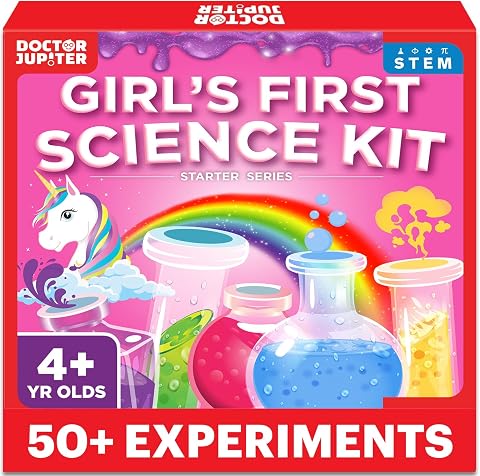
Doctor Jupiter First Science Experiments Kit for Kids Ages 4+
- ✔ Brand: Doctor Jupiter
- ✔ Age range: 4–12 years (best suited to 4–7)
- ✔ Number of experiments: 50+
These two formats are compared constantly because they sit at overlapping price points. A year-long subscription costs roughly the same as three or four premium boxed kits, so parents weighing them are really asking: do I want one well-designed project every month, or a pile of experiments available whenever my child wants them?
The main difference comes down to pacing and commitment. Subscriptions excel at sustaining curiosity over time, adapting to your child’s age, and requiring almost no parental prep beyond opening the box. One-time kits excel at immediate value, replayability of the components, and the freedom to skip months or stop spending entirely. Neither is objectively better — but one is clearly better for your household, depending on your child’s attention style, your budget flexibility, and how much hands-on time you want to invest.
Doctor Jupiter Ultimate Science Experiments Kit for Kids Ages 8+
This is the kit we would hand to a school-age child ready to move beyond baking-soda volcanoes. The Doctor Jupiter Ultimate distinguishes itself through its illustrated, step-by-step instruction manual that doesn’t just walk through procedures but explains the underlying concepts — a meaningful step up from Kuovei’s guidance cards, which cover the same ground with less pedagogical depth.Compared with the 4+ Doctor Jupiter kit from the same brand, this version skews toward genuine chemistry and physics: color-changing volcanoes and rainbow crystals introduce reactions and crystallization in ways an eight-year-old can grasp. The 50+ experiment count is lower than Kuovei’s 80, but each activity tends to carry more instructional weight, which is why this pick makes the most sense for families who prioritize learning over volume.The honest tradeoff: some experiments require adult help, particularly where measurement precision matters. That is less of a burden here than with Kuovei’s chemical-based activities, but parents of younger eight-year-olds should still plan to be nearby. The ASTM F963-17 compliance gives useful peace of mind for a kit in this category.
Pros:
- Over 50 experiments with real variety in chemistry and physical science
- Illustrated manual explains the science behind each activity, not just the steps
- Supports independent STEM learning for capable readers
- Meets ASTM F963-17 safety standards
Cons:
- Some experiments require adult assistance
- Experiment count trails Kuovei’s 80 for pure volume seekers
Best for: Children ages 8–12 who can follow written instructions and want to understand why experiments work, not just watch them happen.
Not ideal for: Kids under 8 or families wanting zero parental involvement — several activities need an adult hand.
Bottom line: The most balanced kit in this lineup — enough depth to genuinely teach, enough variety to keep an 8-to-12-year-old engaged for months.
“The most balanced kit in this lineup — enough depth to genuinely teach, enough variety to keep an 8-to-12-year-old engaged for months.”
Kuovei Science Kit for Kids with 80 Experiments
If your goal is maximum activities per box, the Kuovei kit’s 80 experiments make it the volume leader here. The included hardware is generous too: goggles, test tubes, petri dishes, measuring cups, droppers, and gloves give kids the feel of a real lab, which neither Doctor Jupiter kit matches in terms of equipment. That gear alone adds replay value beyond the printed experiments.Where this option falls short of the Doctor Jupiter Ultimate is instruction depth. The guidance cards explain steps and principles, but the framing is less thorough, and the contents list is notably vague — it ends with "and other items," so you won’t know exactly what’s inside until it arrives. For a category where precise materials matter, that opacity is a real drawback.The bigger consideration is safety logistics. Some experiments use chemical materials requiring careful handling, and the stated age guidance is inconsistent — "over 6 years" on one spec, 36 months to 12 years from the manufacturer. This model is better suited to supervised family sessions than solo exploration, which is why it slots in as our value pick rather than the overall winner.
Pros:
- 80 experiments — the largest count in this comparison
- Includes lab-style equipment like goggles, test tubes, and petri dishes
- Guidance cards cover both steps and scientific principles
- Wide age range works for families with multiple children
Cons:
- Contents list is vague — "and other items" leaves real uncertainty
- Chemical-based experiments demand careful handling and supervision
- Conflicting age guidance (over 6 vs. 36 months–12 years) complicates the buying decision
Best for: Budget-conscious families with kids around 6–12 who want the most experiments and lab-style equipment for shared, supervised sessions.
Not ideal for: Buyers who want a precise contents list upfront, or parents expecting a fully independent-learner kit.
Bottom line: The most experiments and equipment for the money, but the vague contents list and supervision demands mean parents must stay involved.
“The most experiments and equipment for the money, but the vague contents list and supervision demands mean parents must stay involved.”
Doctor Jupiter First Science Experiments Kit for Kids Ages 4+
The Doctor Jupiter First Science Kit proves that a starter kit doesn’t have to be a shallow one. It matches its older-sibling kit at 50+ experiments, but the activity design is fundamentally different: squishies, oobleck, perfumes, face masks, and volcanoes are all tactile, sensory-first projects that a four-year-old can genuinely participate in rather than just watch.Compared with the 8+ Ultimate version, the science here is more accessible and less precise — you won’t get crystallization chemistry, but you will get a child who associates science with play. That positioning is exactly why we rank it third overall yet first for young families: it solves a different problem. Kuovei’s kit, despite its broad 36-month-to-12-year claim, is a poor substitute at this age because its chemical-based experiments assume fine motor control and judgment a preschooler simply doesn’t have.The tradeoffs are real. Adult assistance is expected for most activities — this is a parent-child kit, not an independent one — and older kids in the 10–12 range will likely find the projects too simple. But for building early critical-thinking habits through screen-free, hands-on play, it’s the strongest entry point in this lineup.
Pros:
- 50+ experiments specifically designed for preschool motor skills and attention spans
- Sensory activities like squishies, oobleck, and perfume-making keep young kids engaged
- Illustrated instructions support parent-child collaboration
- Screen-free, hands-on introduction to critical thinking and STEM
Cons:
- Most experiments require adult assistance — this is not an independent-play kit
- Children at the top of the 4–12 range may find the activities too simple
- Less rigorous science content than the 8+ Ultimate kit
Best for: Parents of children ages 4–7 who want guided, sensory-rich science activities they can do together.
Not ideal for: Kids 10+ who will outgrow the simple activities quickly, or anyone seeking independent-play value.
Bottom line: The right first science kit: it trades chemistry rigor for age-appropriate wonder, making it the obvious choice for the under-7 crowd.
“The right first science kit: it trades chemistry rigor for age-appropriate wonder, making it the obvious choice for the under-7 crowd.”
As an Amazon Associate we earn from qualifying purchases.
At a Glance
| Criteria | Monthly Subscription Science Kits (e.g., KiwiCo, Mel Science, Little Passports) | One-Time Big-Box Science Kits (e.g., National Geographic Mega Science, Snap Circuits, Thames & Kosmos) | Winner |
|---|---|---|---|
| Upfront and Total Cost | Low upfront ($20–35/month) but $200–400/year if kept active | High upfront ($30–80 per kit) but spending stops whenever you choose | Depends |
| Engagement Over Time | High — new project every month prevents boredom | Front-loaded — intense burst of interest, then often shelf fatigue | A |
| Learning Depth and Structure | Strong — scaffolded, curriculum-style progression by age band | Varies widely — some kits (Snap Circuits) are deep, others are repetitive | A |
| Parental Effort Required | Low — everything pre-portioned and scripted | Moderate — often needs gathered household items and supervision | A |
| Replayability After First Use | Low to moderate — most projects are one-and-done builds | High — especially build systems like Snap Circuits and LEGO-style kits | B |
| Age Adaptability | Excellent — subscriptions advance with the child’s age band | Fixed — the kit is what it is; child may outgrow it | A |
| Flexibility and Commitment Risk | Weak — requires canceling, easy to forget and keep paying | Excellent — no commitment, buy only what you want | B |
| Quality of Materials and Instructions | Generally excellent — professionally designed booklets and components | Inconsistent — top brands are great, budget boxes can be thin | A |
Key Differences
Key Differences That Actually Matter
The first big difference is how spending works. A subscription looks cheap at $25 a month but quietly becomes a $300 annual line item if you never cancel — and many families don’t. A one-time kit is the opposite: an $80 Snap Circuits set feels expensive at the register, but that single purchase can cover two or three years of electronics tinkering with zero further spend. Families on tight monthly budgets often tolerate a one-time splurge better than a recurring charge, while families who prefer small predictable payments gravitate to subscriptions. Neither instinct is wrong, but the total-cost math should be done before choosing, not discovered on a credit card statement eight months later.
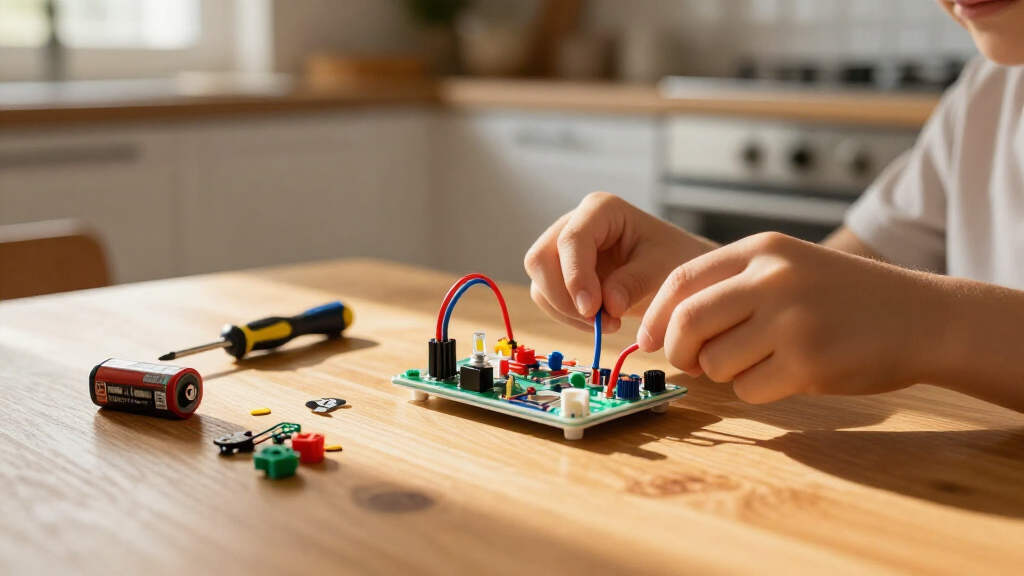
The second difference is engagement pattern. Subscriptions are engineered against boredom: a fresh project arriving monthly re-sparks interest on a schedule, which works remarkably well for children whose enthusiasm for any single toy fades within days. One-time kits produce the opposite curve — an excited weekend of nonstop experiments, followed by diminishing use. However, the best one-time kits break this pattern by being systems rather than activity lists: a Snap Circuits set with 100 projects, or a Thames & Kosmos chemistry kit with a proper manual, keeps getting pulled back off the shelf. A generic “300 experiments” box with tiny packets of powder usually does not.
The third difference is parental effort. Subscription kits are the low-effort option: materials are pre-measured, instructions are illustrated and self-guided for older kids, and the box arrives whether or not you planned anything. One-time kits frequently require you to supply vinegar, food coloring, batteries, or safety glasses, and chemistry-style kits need an adult present for anything involving heat or reactions. If you are a busy parent who wants science to “just happen,” subscriptions win decisively. If you enjoy doing experiments together on weekends, that prep work is not a burden at all — it is the point.
Detailed Comparison
Upfront and Total Cost (major difference)
Perceived pricing is deceptive in both directions. A $25/month subscription appears affordable but totals $300/year, and because cancellation requires action, many families pay for months their children ignore. A $60 one-time kit appears expensive but represents a hard spending ceiling. Over a full year of genuine monthly use, subscriptions deliver reasonable value per project; over a year of sporadic use, they are a poor deal. One-time kits win for anyone allergic to recurring charges; subscriptions win for anyone who will genuinely use every box.
Engagement Over Time (Monthly Subscription Science Kits (e.g., KiwiCo, Mel Science, Little Passports) wins — major)
This is where the subscription model earns its price. Novelty arriving on a schedule reliably restarts a child’s interest every month, and the best subscriptions (Mel Science, KiwiCo) tie projects into an ongoing narrative or skill progression. One-time kits typically produce one or two intense weeks, then shelf time — unless the kit is an open-ended building system. For children with short attention spans, this criterion alone justifies a subscription. For children who obsess over one thing for months, it matters much less.
Learning Depth and Structure (Monthly Subscription Science Kits (e.g., KiwiCo, Mel Science, Little Passports) wins — moderate)
Quality subscriptions are built by educators and scaffold deliberately: each box assumes and builds on prior concepts, and age bands keep content appropriately challenging. One-time kits range from genuinely deep (Snap Circuits teaches real circuit logic; Thames & Kosmos kits read like condensed school labs) to shallow crowd-pleasers built around baking-soda volcanoes. Because subscriptions are curated, their floor is higher; the ceiling of the best one-time kits is just as high, but you must pick carefully.
Parental Effort Required (Monthly Subscription Science Kits (e.g., KiwiCo, Mel Science, Little Passports) wins — moderate)
Subscriptions arrive with everything portioned and instructions a 8–10 year old can often follow alone. One-time kits commonly assume household supplies you may not have and adult supervision for anything messy, hot, or chemical. The practical gap is real: a subscription box can occupy a child on a Tuesday afternoon with zero planning, while a boxed kit often becomes a “Saturday with Dad” activity. Which is better depends on whether you view parental involvement as a cost or a benefit.
Replayability After First Use (One-Time Big-Box Science Kits (e.g., National Geographic Mega Science, Snap Circuits, Thames & Kosmos) wins — major)
Most subscription projects — a hydraulic claw, a lava lamp, a crystal tree — are consumed once and then displayed or discarded. One-time kits, especially construction-based ones, are inherently reusable: Snap Circuits parts get rebuilt into new configurations for years, and microscopes/telescopes outlive their packaging. If you measure value by hours-per-dollar rather than novelty-per-month, one-time kits win comfortably. This is the single strongest argument against subscriptions for budget-focused families.
Age Adaptability (Monthly Subscription Science Kits (e.g., KiwiCo, Mel Science, Little Passports) wins — moderate)
Subscriptions are designed to grow: you select an age band, and boxes scale in complexity, often with the option to move up as the child ages. A one-time kit is frozen at whatever level you bought — an advanced chemistry set overwhelms a 7-year-old, and a junior kit bores a 11-year-old a year later. This matters most for gifts from relatives who don’t know the child well; a subscription in the right age band is the safer bet.
Flexibility and Commitment Risk (One-Time Big-Box Science Kits (e.g., National Geographic Mega Science, Snap Circuits, Thames & Kosmos) wins — major)
One-time kits carry zero commitment: dislike it, and you are out one purchase, and you simply don’t buy another. Subscriptions carry real risk — forgetting to pause during a busy school term, boxes piling up unopened, or discovering your child dislikes the format after three deliveries. Most major subscriptions now offer easy pausing and cancellation, but the administrative burden still sits with you. This is the most common way subscription buyers end up regretting the purchase.
Quality of Materials and Instructions (Monthly Subscription Science Kits (e.g., KiwiCo, Mel Science, Little Passports) wins — minor)
Top-tier subscription brands (KiwiCo, Mel Science) produce genuinely professional booklets, quality components, and well-tested builds — their floor is consistently high. One-time kits are bimodal: name brands like National Geographic, Snap Circuits, and Thames & Kosmos match or exceed that quality, while no-name marketplace boxes can be thin on materials and vague in instructions. If you stick to reputable one-time brands, the quality gap closes to a tie; if you shop on price alone, subscriptions are safer.
Monthly Subscription Science Kits (e.g., KiwiCo, Mel Science, Little Passports): Pros and Cons
Pros:
- Constant novelty keeps kids engaged month after month
- Almost no parental prep — open the box and go
- Content scales with age bands as the child grows
- Consistent, professionally designed instructions and materials
- Great as a recurring gift from grandparents
Cons:
- Cumulative cost can reach $300+ per year
- Most projects have little replay value once built
- Requires remembering to pause or cancel
- Child may lose interest mid-subscription while payments continue
- No control over which topic arrives in which month
One-Time Big-Box Science Kits (e.g., National Geographic Mega Science, Snap Circuits, Thames & Kosmos): Pros and Cons
Pros:
- One-time purchase with a hard spending ceiling
- Build-system kits (Snap Circuits, LEGO-style) offer years of reuse
- You choose the exact topic your child loves
- No commitment, cancellation, or recurring charges
- Often better for sibling sharing and group use
Cons:
- Engagement usually fades after the initial burst
- May require extra household supplies and adult supervision
- Fixed difficulty level — child can outgrow or not be ready
- Quality varies sharply between brands
- Cheaper boxes can disappoint with tiny portions and weak instructions
Who Should Choose What
Choose Monthly Subscription Science Kits (e.g., KiwiCo, Mel Science, Little Passports) if:
- Your child’s enthusiasm for any single toy fades within a week or two
- You want science activities to happen with minimal planning on your part
- You’re buying for a child whose age and interests you only roughly know (gifts from relatives)
- You can commit to a monthly budget of $25–35 and will genuinely use each box
- You want a structured, multi-month progression rather than isolated experiments
Choose One-Time Big-Box Science Kits (e.g., National Geographic Mega Science, Snap Circuits, Thames & Kosmos) if:
- Your child has a specific passion — circuits, crystals, chemistry, geology — you can target directly
- You dislike recurring charges or want to control total spending precisely
- Your child obsesses over toys for months and would actually reuse an open-ended kit
- You enjoy doing experiments together and don’t mind gathering supplies
- You’re buying for multiple children who will share one kit
Skip both if: Your child has shown no independent interest in hands-on projects at all — free experiments from household materials (baking soda, magnets, kitchen chemistry) are a zero-cost way to test the waters before committing to either format.
Value for Money
Is Paying More Worth It?
Measured purely in hours of engagement per dollar, a well-chosen one-time kit — especially a Snap Circuits set or a quality microscope — usually beats a subscription, because reusable components keep delivering long after the subscription’s monthly projects are consumed. A $60 electronics set used over two years costs pennies per session; a $300 subscription year costs $25 per project regardless of whether the child touches it.
But value is not only replayability. If a subscription keeps a child genuinely excited about science for a full year — building, reading the booklet, asking questions — most parents would consider $300 well spent, comparable to a few months of lessons or a single video game plus accessories. The honest answer is that subscriptions justify their cost only when boxes get used promptly, which means the value question collapses into a question about your child’s habits, not the product.
For maximum value, the strongest strategy is often hybrid: one high-replay one-time kit as a foundation, plus a short (three-month, pre-paid, cancellable) subscription trial to see whether the monthly format suits your child before committing to a year.
Final Verdict
Choose a subscription science kit if your child’s interest burns bright and fast, if you want engagement delivered on autopilot, and if you will actually use each box — the monthly novelty and age-scaled progression are things no single purchase can replicate. Choose a one-time big-box kit if your child has a specific interest you can target, if you want a hard spending ceiling, or if you are drawn to build-system kits with years of reuse — Snap Circuits in particular is the best single-value purchase in the entire category.
The biggest deciding factor is your child’s attention style, not the products themselves. A child who masters and abandons projects quickly will extract more from twelve fresh boxes; a child who rebuilds the same thing endlessly will extract more from one deep, reusable kit. For undecided families, start with one reputable one-time kit in your child’s favorite topic and a three-month subscription trial — then commit to whichever format your child actually reaches for.
Frequently Asked Questions
Are subscription science kits worth the money?
They are worth it when every box gets used promptly and your child’s interest in single toys fades quickly. They become poor value when boxes pile up unopened, which is common during busy school terms. Treat a subscription as a $25–35/month experiment: try three months before committing to a full year, and set a calendar reminder to cancel if enthusiasm drops.
Can one-time science kits really hold a child’s interest long-term?
Some can. Kits structured as building systems — Snap Circuits, Thames & Kosmos construction sets, quality microscopes — stay in rotation for years because every session produces something new. Kits structured as a list of one-shot experiments (grow a crystal, make slime, erupt a volcano) typically exhaust themselves in a few weeks. Check whether the kit is a system or a consumable before buying.
What age is best to start each type of kit?
Subscriptions start as early as age 2–4 in play-based tiers and scale continuously into the teen years, which is one of their strongest advantages. One-time kits are age-fixed, so match the box to your child precisely: junior kits for ages 5–8, standard experiment kits for 8–12, and real chemistry and electronics kits for 10 and up with supervision.
Do I need to supervise my child with either option?
Subscription kits are designed for more independent use, with pre-portioned materials and child-friendly instructions, though young children still need help. One-time kits vary: geology and building kits are often independent, while chemistry kits involving heat, reactions, or chemicals require an adult. Read the supervision warning on the box rather than assuming either format is hands-off.
Which single kit gives the best value if I only buy one?
A Snap Circuits electronics set is the strongest one-purchase value in the category: it teaches genuine circuit logic, supports dozens to hundreds of documented projects depending on the version, and gets rebuilt for years by children roughly ages 8 to 14. Pair it with a topic-specific kit in whatever your child currently loves for the best two-purchase combination.
Fall Picks
fall essentials
As an affiliate, we earn on qualifying purchases.