📊 Full opportunity report: What Goes Into Planning A Backyard ADU? on IdeaNavigator AI — validation score, market gap, and execution plan.

Prime made for students and young adults
- Fast, free delivery for dorm and study essentials
- Prime Video and Amazon Music included
- Member-only deals
A new analysis from IdeaNavigator AI lays out a plan for paid backyard ADU feasibility reports — homeowner-ready documents that answer whether a specific lot can legally support an accessory dwelling unit and whether the project’s finances work. The analysis identifies the pre-construction research phase, not construction itself, as the biggest bottleneck in backyard ADU planning, and proposes selling per-address reports for roughly $25 to $75 to homeowners who want answers before hiring a builder.
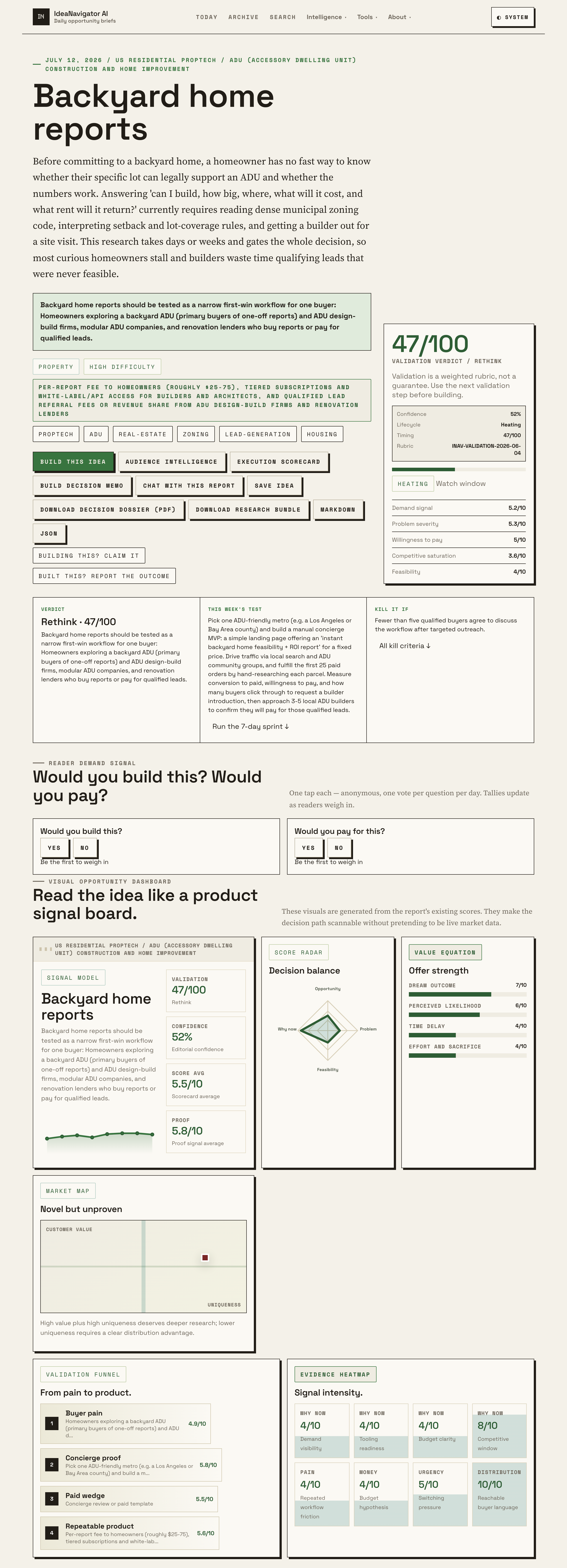
According to the analysis, a homeowner considering a backyard home currently has no fast way to determine whether their lot can legally support an ADU. Answering the basic questions — ‘can I build, how big, where, what will it cost, and what rent will it return?’ — requires reading dense municipal zoning code, interpreting setback and lot-coverage rules, and scheduling a builder site visit. The analysis states this research takes days or weeks and gates the entire decision, causing most curious homeowners to stall while builders spend time qualifying leads that were never feasible.
The proposed product is a web app where a homeowner enters a property address and pays for a PDF report. The report would ingest county parcel data — lot boundaries, lot size, and existing structure footprint — and evaluate the lot against state ADU law plus a curated set of local zoning rules. Each report would cover allowed ADU types, maximum size, setback and lot-coverage constraints, a buildable-area estimate, a realistic build-cost band, and projected rental income based on local rent comparisons.
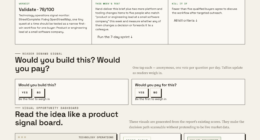
The recommended go-to-market approach is deliberately narrow: launch in one ADU-friendly metro — the analysis suggests a Los Angeles or Bay Area county — hand-curate the zoning rules, and fulfill the first 25 paid orders through manual parcel research before automating. Revenue would come from three streams: the per-report fee to homeowners, tiered subscriptions and white-label API access for builders and architects, and referral fees or revenue share from ADU design-build firms and renovation lenders that receive qualified leads.
Why ADU Feasibility Research Matters Now
The analysis rests on a housing-market shift that has been building for nearly a decade. California legalized ADUs statewide in 2016 and, according to the analysis, has loosened the rules nearly every year since, with other states and cities following. The scale is substantial: the analysis states that Los Angeles County alone permitted over 45,000 ADUs in 2023, and that ADUs now represent roughly one in five new housing units produced in California.
For homeowners, the significance is financial and practical. A feasibility report priced under $100 could replace weeks of self-directed research into zoning code, or an early consult that may cost far more. For builders and lenders, the product addresses a stated inefficiency: time spent qualifying leads on lots that could never legally host an ADU. If the validation metrics hold — homeowners converting to paid reports and clicking through to request builder introductions — the model could connect the two sides of the market at the exact moment a homeowner’s intent is highest.
The Data and Policy Shift Behind the Idea
Two converging developments make the concept newly practical, according to the analysis. The first is regulatory: statewide ADU legalization in California beginning in 2016 created a uniform legal baseline on top of which local rules operate, reducing the complexity of answering the basic buildability question. The second is technical: parcel and zoning data has matured, and LLM-based code parsing now makes it feasible to interpret dense zoning text at scale, the analysis states.
The macro backdrop is a persistent US housing shortage estimated in the millions of units, which has pushed policymakers toward loosening rules for smaller infill housing like ADUs. The analysis positions feasibility reports as a ‘narrow first-win workflow’ — a deliberately small product that solves one specific decision point in a much larger construction and home-improvement market, rather than attempting to serve the whole ADU process at once.
What the Analysis Hasn’t Proven Yet
The analysis is a plan, not a launched product. No per-address feasibility report service built on this blueprint currently exists as described, and the figures it relies on — the $25-75 price point, the 25-order validation target, and builder willingness to pay for leads — are projections that would need to be tested in market. The analysis itself frames the concept as something that should be tested, which is an explicit acknowledgment that demand is unverified.
Several practical questions remain open. It is not clear how accurate an LLM-assisted or manually curated rule set can be across jurisdictions where local amendments override state baselines, or who bears responsibility if a report is wrong about buildability. The analysis does not address liability, refund policy, or how reports would handle edge cases such as non-conforming lots, hillside ordinances, or utility connection constraints. It is also unclear whether homeowners will trust an automated report enough to pay for it before consulting a professional, and whether the cited permitting figures generalize beyond California to the other states the analysis says are following suit.
The Validation Steps the Analysis Prescribes
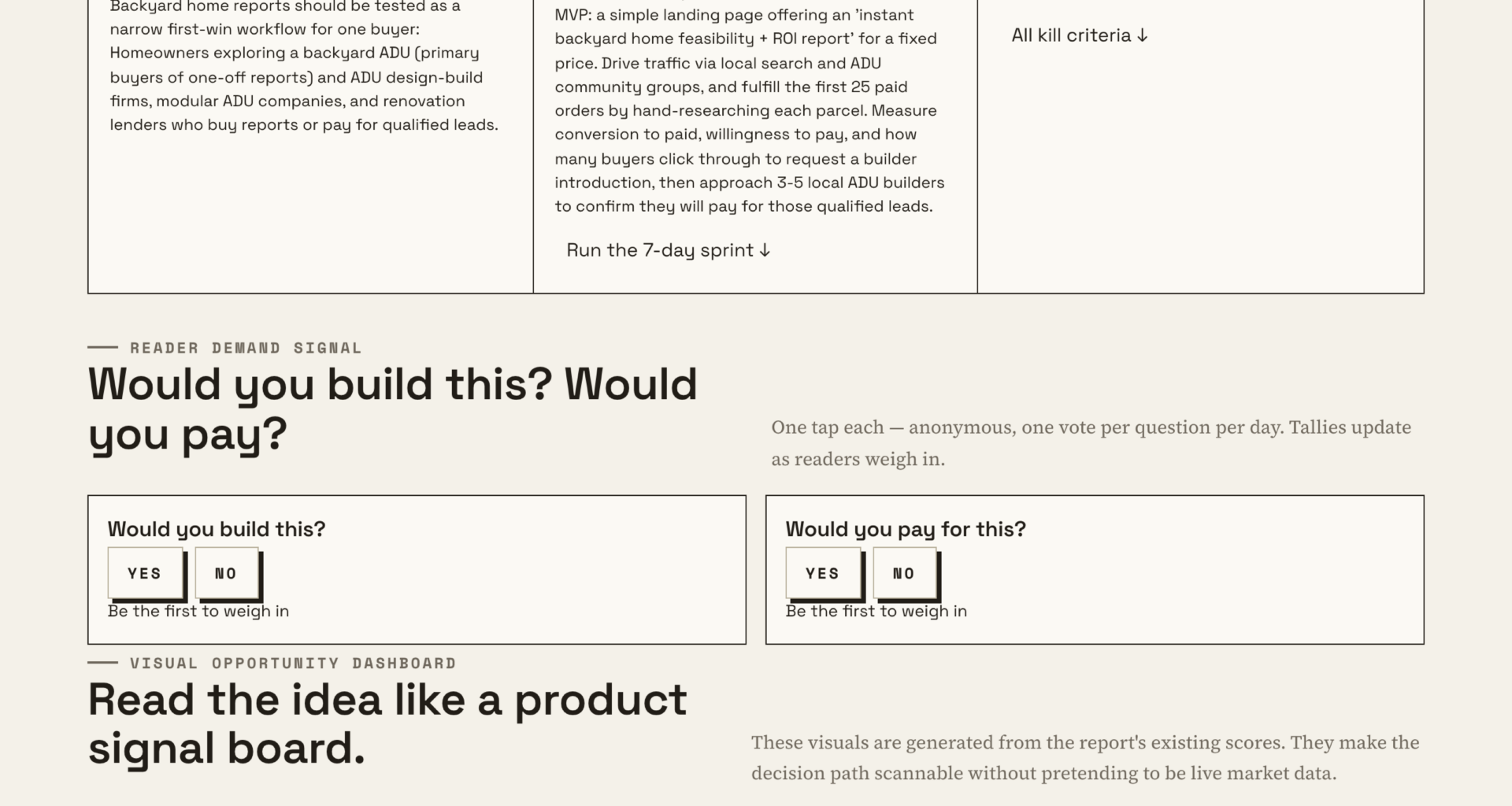
If the plan proceeds as written, the first step would be selecting one ADU-friendly metro — the analysis names a Los Angeles or Bay Area county as candidates — and building a simple landing page offering a feasibility and ROI report at a fixed price. Traffic would come through local search and ADU community groups, and the first 25 paid orders would be fulfilled through manual research rather than automation, treating the concierge process as the test of whether the product is worth building.
The metrics to watch, per the analysis, are conversion to paid, willingness to pay, and how many buyers click through to request a builder introduction. After that data exists, the plan calls for approaching three to five local ADU builders to confirm they would pay for qualified leads. Success at that stage would justify automating parcel ingestion and expanding the curated rule set to additional counties. None of these steps has been carried out yet, so the concept’s viability remains untested.
Key Questions
What is a backyard ADU feasibility report?
Under the IdeaNavigator AI proposal, it is a paid PDF report generated from a property address that covers whether an ADU is allowed on the lot, the maximum size and placement allowed under setback and lot-coverage rules, an estimated buildable area, a build-cost range, and projected rental income based on local rent comparisons.
How much would a report cost?
The analysis proposes a per-report fee to homeowners of roughly $25 to $75. Firms — ADU design-build companies, architects, and renovation lenders — would pay through tiered subscriptions, white-label or API access, and referral fees for qualified leads.
Why is backyard ADU planning considered difficult right now?
According to the analysis, answering basic questions about whether a lot supports an ADU requires reading dense municipal zoning code, interpreting setback and lot-coverage rules, and arranging a builder site visit — a process that takes days or weeks and stalls most homeowners before they commit.
How big is the ADU market?
The analysis states that Los Angeles County permitted over 45,000 ADUs in 2023 and that ADUs now account for roughly one in five new housing units in California. It also cites a US housing shortage estimated in the millions of units and says other states and cities are loosening their ADU rules.
Has this report product been built or validated?
No. The IdeaNavigator AI document is a plan and test proposal, not a launched service. It recommends fulfilling the first 25 paid orders manually in one metro to measure conversion, willingness to pay, and builder-lead demand before automating or expanding.
Source: IdeaNavigator AI
Fall Picks
fall essentials
As an affiliate, we earn on qualifying purchases.