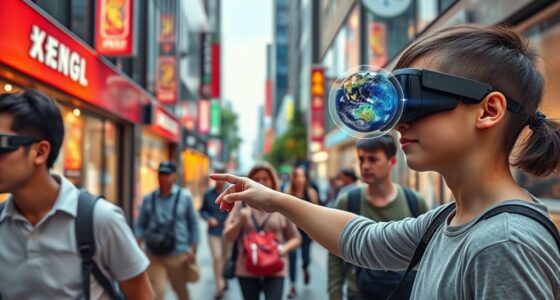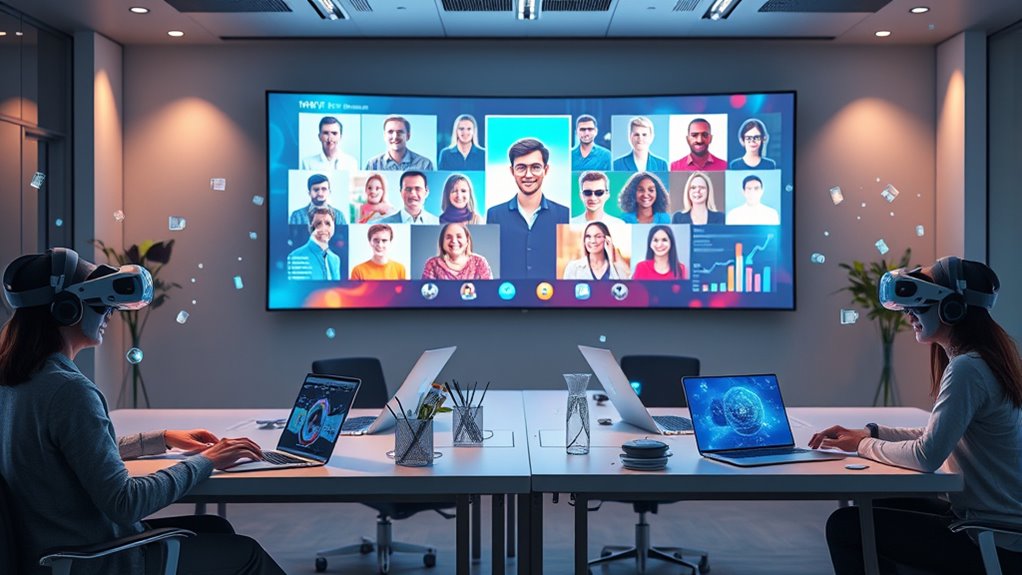

Virtual offices are quickly becoming the new norm as VR meetings reshape how you collaborate remotely. They immerse you in shared digital environments that feel more natural than traditional video calls, fostering genuine interactions and spontaneous ideas. These environments are flexible, allowing you to join from anywhere and customize your workspace. As technology advances, virtual offices will further enhance your team’s cohesion and productivity, making it essential to explore how this transformation impacts your future work landscape.
Key Takeaways
- Virtual reality enhances remote collaboration by creating immersive, shared digital environments that mimic real-world office interactions.
- Virtual offices support flexible work locations, reducing costs, travel, and physical workspace dependence.
- The technology fosters team cohesion and spontaneous interactions, addressing remote work challenges.
- Adoption may face initial resistance, but evolving features and security make virtual offices increasingly viable.
- VR meetings are expected to become a standard component of future organizational structures and remote work practices.

Virtual reality meetings are transforming the way teams collaborate by immersing participants in shared digital environments. Instead of relying solely on video calls or emails, you now have the opportunity to engage in virtual collaboration within immersive environments. These environments mimic real-world office spaces, enabling you to interact with colleagues as if you were physically present together. This shift not only makes meetings more engaging but also enhances communication, making it easier to interpret gestures, expressions, and body language. In virtual collaboration, the sense of presence is powerful—you feel connected, even when miles apart.
With immersive environments, you can create a sense of shared space that promotes spontaneous interactions and brainstorming sessions. You’re not just looking at a screen; you’re stepping into a virtual room where ideas flow naturally. This can lead to increased creativity and faster decision-making, as the barriers of digital fatigue or distraction are minimized. You can manipulate virtual objects, present ideas visually, or collaborate on digital whiteboards in real time, making the entire process more interactive and dynamic. The immersive aspect of these environments helps keep everyone engaged and focused, which is often challenging in traditional remote meetings. Additionally, the interactive nature of these platforms encourages active participation, reducing passive viewing and fostering a more inclusive environment for all team members.
Virtual collaboration in immersive environments also offers flexibility that traditional setups can’t match. You can join meetings from anywhere—whether you’re at home, in a café, or on the go—and still feel equally connected. This convenience reduces the need for physical office space and travel, cutting costs and saving time. As more companies adopt VR tools, you’ll find that virtual offices become increasingly common, providing a seamless transition between physical and digital workspaces. These environments can be customized to fit your team’s needs, whether it’s a formal conference room or a casual lounge for informal discussions. Moreover, the cybersecurity of these platforms is continuously evolving to address potential vulnerabilities and protect sensitive information.
Despite some initial resistance or technical hurdles, the benefits of virtual collaboration through immersive environments are clear. They foster a sense of community and teamwork, which can often feel diluted in traditional remote work. You’re no longer limited by the constraints of physical location or static video interfaces. Instead, you’re immersed in a dynamic, interactive space that encourages real-time collaboration and innovation. As technology continues to evolve, virtual reality meetings are poised to become a staple in everyday work life, reshaping how teams connect, brainstorm, and achieve goals in the digital age. Recognizing the importance of immersive environments can help organizations better understand the potential for transforming remote work practices in the future.
Top picks for "meeting virtual offic"
Open Amazon search results for this keyword.
As an affiliate, we earn on qualifying purchases.
Frequently Asked Questions
How Secure Are Virtual Meetings From Cyber Threats?
Virtual meetings face cybersecurity risks that you should consider, as cyber threats like hacking and data breaches can compromise sensitive information. While many platforms implement encryption and security measures, you’re still vulnerable to data privacy issues if you don’t follow best practices. To stay protected, you need to use strong passwords, enable two-factor authentication, and stay updated on security patches, ensuring your virtual meetings remain secure from cyber threats.
Can VR Meetings Replace All In-Person Interactions Effectively?
You might wonder if VR meetings can fully replace in-person interactions. While virtual presence and digital immersion create a more engaging experience than traditional video calls, they still lack some human elements like physical touch and nuanced body language. VR can enhance communication, but it’s unlikely to replace all in-person interactions entirely. For now, it’s a powerful supplement, not a complete substitute.
What Hardware Is Needed for Seamless VR Meeting Experiences?
You might think premium VR hardware is expensive, but investing in quality guarantees seamless meetings. You need a comfortable headset with good ergonomics, like adjustable straps and balanced weight, to stay engaged longer. A high-resolution display, accurate tracking sensors, and a reliable processor are essential for smooth interactions. Don’t overlook good audio equipment—crucial for realistic communication. With the right hardware, your VR meetings become more immersive and effective.
How Do Time Zones Impact Global VR Team Collaborations?
Time zone challenges considerably impact your global VR team collaborations by adding scheduling complexities. You need to coordinate meetings across different regions, often leading to inconvenient times for some members. To overcome this, you should implement flexible scheduling, record sessions for later viewing, and use asynchronous communication tools. This way, you minimize disruptions, guarantee everyone stays connected, and enhance productivity despite the inherent time zone differences.
Are There Health Risks Associated With Prolonged VR Headset Use?
You should be aware that prolonged VR headset use can cause health issues like eye strain and motion sickness. When you spend too much time immersed, your eyes may become fatigued, and the disconnect between visuals and physical movement can lead to discomfort. To protect yourself, take regular breaks, adjust headset fit, and limit continuous use. Being mindful helps you enjoy VR experiences without risking your health.
Conclusion
As you consider the rise of VR meetings, it’s clear they’re shaping a future where virtual offices become the norm. With immersive technology offering more engaging and flexible ways to connect, can traditional office spaces truly keep up? The question isn’t just about convenience but about redefining how we collaborate and communicate. Embracing this change might just be the key to staying ahead in the evolving world of work. Are you ready to step into the virtual office of tomorrow?