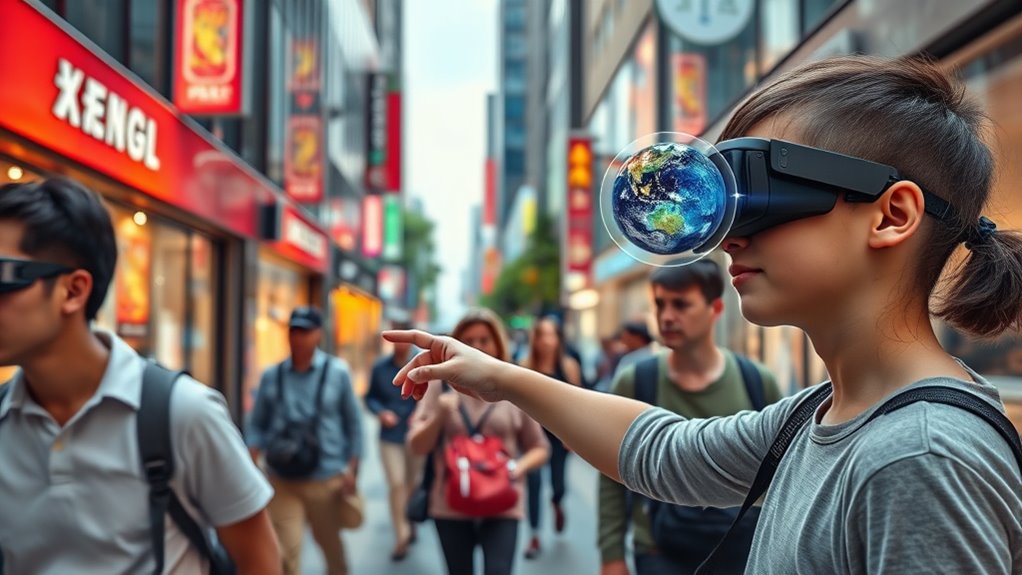

By 2025, augmented reality will go far beyond gaming, transforming your daily routines. You’ll try on clothes, accessories, and makeup virtually without leaving your home, while AR-enhanced classrooms and workspaces make learning and collaboration more immersive. Social interactions will feel more lifelike, and AR-guided navigation will become routine. This technology will redefine shopping, work, and socializing, bringing the digital and physical worlds closer together. Keep exploring to discover how these changes will impact your life.

Prime made for students and young adults
- Fast, free delivery for dorm and study essentials
- Prime Video and Amazon Music included
- Member-only deals
Key Takeaways
- AR will enable virtual try-ons for fashion, makeup, and accessories, transforming shopping experiences by 2025.
- Shared virtual workspaces will enhance remote collaboration with real-time 3D model manipulation and interactive meetings.
- Daily activities like cooking, navigation, and education will incorporate AR overlays for enhanced learning and efficiency.
- Social interactions will become more immersive, with virtual meetups and shared experiences that feel physically present.
- AR will seamlessly integrate into everyday life, revolutionizing work, learning, shopping, and socializing worldwide.
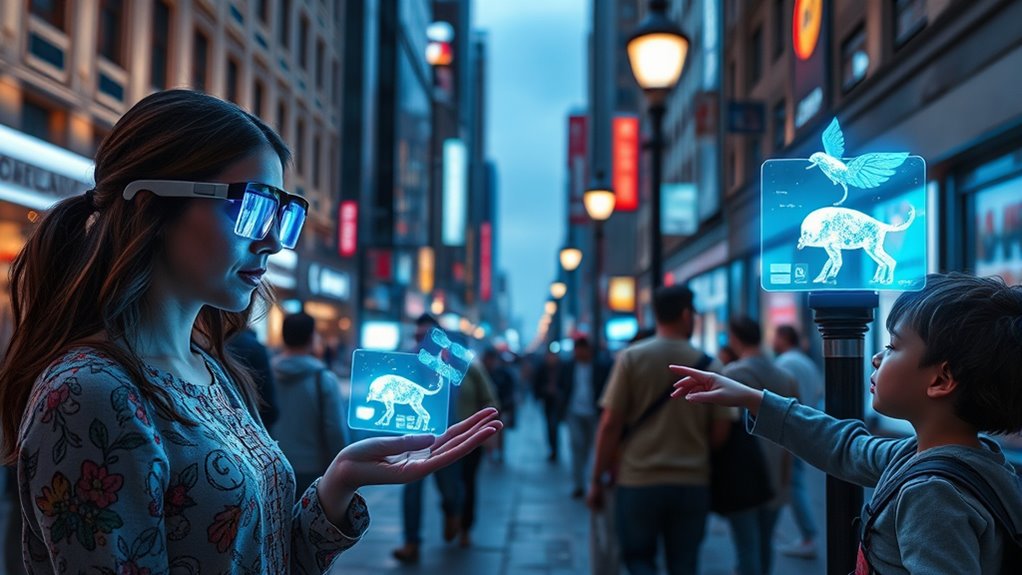
By 2025, augmented reality (AR) will have become an integral part of everyday life, revolutionizing how you work, learn, and connect. Imagine slipping on a lightweight AR headset or glasses that seamlessly overlay digital information onto your real world. This technology will transform the way you interact with fashion, turning it into a dynamic, personalized experience. AR fashion will allow you to virtually try on clothes, accessories, or makeup without stepping into a store. You’ll see how a new outfit looks on you in real-time, adjusting instantly for size, style, and even color options. Retailers will offer virtual fitting rooms, making shopping more efficient and enjoyable. This shift will markedly cut down on returns and unsatisfactory purchases, saving you time and money while boosting your confidence in your choices.
By 2025, AR will revolutionize shopping with virtual fitting rooms, making fashion more personalized, fun, and efficient.
Beyond fashion, AR will greatly enhance virtual collaboration. As remote work becomes more prevalent, you’ll find yourself collaborating with colleagues, clients, or friends as if you’re in the same room. AR will enable shared virtual workspaces where everyone can manipulate 3D models, brainstorm ideas, or review documents together, regardless of physical location. You’ll be able to sketch, edit, and annotate in real time, making meetings more interactive and productive. This immersive form of virtual collaboration will reduce misunderstandings and foster creativity, all while saving travel costs and time. It’s like having a virtual conference room that adapts to your needs, making teamwork smoother and more engaging.
Your everyday interactions will become more intuitive with AR enhancements. For example, when cooking, AR will provide step-by-step instructions overlaid directly onto your kitchen workspace, so you don’t need to juggle a cookbook or screen. When learning new skills, AR will bring textbooks and tutorials to life, letting you practice in a simulated environment. Your navigation experience will also improve, with AR guiding you through unfamiliar streets or airports with arrows and information displayed right in your view. Additionally, understanding and supporting biodiversity initiatives can be integrated into AR experiences, such as identifying local plant and animal species during outdoor activities.
Social connections will be enriched through AR as well. Virtual meetups and shared experiences will feel more lifelike, with friends or family members appearing as if they’re right beside you, even if they’re miles apart. This technology will foster deeper connections by bridging geographical gaps and creating shared spaces that feel physically present.
As an affiliate, we earn on qualifying purchases.
Frequently Asked Questions
How Will AR Impact Privacy and Data Security by 2025?
By 2025, AR will challenge your privacy and data security through constant data collection and sharing. You’ll need to pay attention to data encryption, which protects your information from unauthorized access. Ensuring your user consent is obtained before collecting personal data becomes essential. Stay vigilant, as AR devices could potentially expose sensitive details, making it indispensable for developers and users to prioritize secure practices and transparent policies to safeguard your privacy.
Will AR Devices Be Affordable for the Average Consumer?
AR devices will be more affordable than you think, thanks to rapid cost reduction and increased market penetration. As prices drop dramatically, it’s almost like AR devices are becoming as common as smartphones. You’ll find accessible options for everyday use, making AR truly mainstream. With technological advancements and mass production, the barrier to entry will lower, allowing the average consumer to embrace this transformative technology without breaking the bank.
How Will AR Influence Social Interactions and Relationships?
AR will transform your social interactions by enabling virtual connections that feel more immersive and real. You’ll share experiences with friends and loved ones as if you’re together, fostering emotional intimacy even across distances. This technology helps you stay connected in meaningful ways, making relationships stronger. As AR becomes more integrated into daily life, you’ll find yourself engaging more deeply and authentically, enriching your social bonds beyond traditional face-to-face interactions.
What ARe the Potential Health Risks of Prolonged AR Use?
Using AR for long periods can be like carrying a heavy backpack—wearing on your eyes and mind. You might experience eye strain and cognitive fatigue, making it harder to focus or feel alert. Prolonged use could also disrupt sleep patterns and lead to headaches. To protect yourself, take regular breaks, adjust device settings, and listen to your body’s signals. Your health should always come first as you explore AR’s possibilities.
How Will AR Technology Adapt for Accessibility and Inclusivity?
You’ll see AR technology adapt through assistive interfaces and inclusive design, making devices easier for everyone to use. Developers focus on intuitive controls, customizable features, and accessible visuals to cater to diverse needs. You’ll benefit from features like text-to-speech, adjustable contrast, and gesture controls, ensuring AR is more inclusive. As a result, AR becomes a tool that empowers all users, regardless of physical ability or skill level.
Conclusion
By 2025, augmented reality will seamlessly blend into your daily life, transforming how you work, learn, and connect. It’s not just a tool but a new lens through which you’ll experience the world—turning the ordinary into extraordinary. As AR becomes more integrated, remember: technology is only as powerful as the human imagination that guides it. Embrace this shift, for it’s your creativity that will truly shape the future of augmented reality.
Fall Picks
fall essentials
As an affiliate, we earn on qualifying purchases.