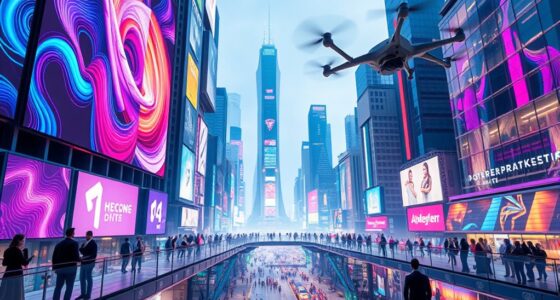
🔍 Read the full analysis: Could AI Render KIRIN EXPRESS’s Floating-Seam Journey Without Image Assets? on ThorstenMeyerAI.com

Prime made for students and young adults
- Fast, free delivery for dorm and study essentials
- Prime Video and Amazon Music included
- Member-only deals
TL;DR
KIRIN EXPRESS is a fictional maglev exhibition page described by ThorstenMeyerAI.com, not a real train or rail service. Its browser-drawn visuals and interactive journey illustrate how an AI-built web experience can work without photographs or video, though the source does not provide independent testing or performance results.
ThorstenMeyerAI.com describes KIRIN EXPRESS in the original analysis as an AI-built exhibition page for a fictional maglev train, using browser-drawn scenery, CSS, and canvas rather than photographs or video. The concept imagines a train traveling at 603 km/h and makes its fictional ten-centimetre levitation gap the page’s visual and navigation motif; it does not describe a real rail operator or train.
The page’s defining visual feature is a luminous vertical seam representing the gap beneath the train. According to the site’s description, hovering panels, cool shadows, and a palette of porcelain white, grey, deep indigo, and sakura pink extend that idea across the design. Vehicle shapes, landscapes, instruments, and motion are rendered in the browser, rather than supplied as image or video assets.
Scrolling is tied to the fictional route. The source says the page’s JavaScript checks which station is nearest the vertical centre of the viewport, then adjusts blur and speed effects so the landscape softens between stops and sharpens at a station. A canvas draws as many as 72 horizontal motion lines, with their length and pace responding to scrolling. The animation is limited to relevant page areas and pauses when the browser tab is hidden; a still presentation is provided for visitors who prefer reduced motion.
Other controls give visitors ways to explore the imagined system. A 20-second departure sequence stages platform preparation, levitation, and acceleration. A CSS-built guideway diagram lets visitors switch between magnetic attraction and repulsion, while a field-test control sends a pulse along the seam. A dusk slider changes the simulated view through the train’s windows. The source also describes a three-pass design process, but provides no independent audit or test results for the finished page.
An Image-Free Web Experience
The project’s relevance is as a design demonstration, not a transport announcement. It shows how an elaborate fictional setting can be represented with code-drawn graphics and interaction, avoiding conventional photography and video. That approach can give a page a distinctive style and make its visual elements respond to visitors, while also making the interface itself part of the story.
The page also links its concept to practical web-design concerns. The source describes reduced-motion handling and pausing animation when a tab is hidden, choices intended to limit unnecessary movement and background activity. It does not report measured frame rates, accessibility audit results, or comparative data on loading performance, so those benefits should not be treated as independently verified outcomes.
Products Worth Considering

Bose QuietComfort Wireless Bluetooth Noise-Cancelling Headphones, Cypress Green

Sonos Era 300 Wireless Smart Speaker with Dolby Atmos, Black

Kindle Paperwhite Signature Edition 32GB (2024 Model) – Metallic Black
As an affiliate, we earn on qualifying purchases.
The Gap Shapes the Interface
KIRIN EXPRESS is identified by its creator as room 129 of 175 in an exhibition of AI-built web experiences. The train, its stations, and the stated 603 km/h speed belong to the fictional brief. The page’s design begins from another invented detail: a ten-centimetre space between train and guideway.
That gap is used both as a visual rule and as an interaction idea. The brief calls for a persistent seam, floating elements, a guideway cross-section, a staged departure, and window scenes at dusk. The accompanying description says the finished room uses HTML, CSS, JavaScript, and canvas for its visuals, with no image assets. It also refers to an AI-written design guide explaining the visual system and interaction choices.
“The ten-centimetre gap beneath the train [is] the organising principle for the whole page.”
— ThorstenMeyerAI.com, describing KIRIN EXPRESS
What the Description Does Not Verify
The source presents a design description, not an independent technical review. It does not provide a publication date, browser compatibility results, measured loading times, frame-rate tests, or an accessibility audit. Although the brief specifies target screen widths and performance and contrast goals, the material does not confirm that those goals were tested or achieved.
It is also unclear from the supplied material whether every element of the described experience is available on the live page, or whether the design guide and complete implementation are publicly accessible. The route, train, and operating details are fictional; no real service or rail technology announcement is being reported.
The Live Page and Its Build Notes
ThorstenMeyerAI.com directs readers to the live KIRIN EXPRESS page and says the room’s design guide contains build notes. Visitors can use those materials to see which described controls and effects are present. No launch schedule, follow-up development, or independent evaluation is specified in the source, so further technical claims would require testing or additional documentation.
Key Questions
Is KIRIN EXPRESS a real train or rail service?
No. The source identifies it as a fictional exhibition piece, not a real train, rail operator, or product from an actual company.
What does “without image assets” mean here?
The page description says its vehicle forms, scenery, instruments, and motion are drawn in the browser rather than supplied as photographs or video. It names CSS and canvas among the techniques used.
How does scrolling change the experience?
According to the source, JavaScript tracks the station nearest the centre of the screen. The page adjusts speed and blur effects around that position, making the landscape appear to sharpen at stations and soften between them.
Does the source confirm that the page meets its performance and accessibility targets?
No independent results are provided. The brief specifies goals such as reduced-motion support, pausing animations in hidden tabs, and performance across several screen sizes, but the source material does not include audit findings or measured results.
Source: ThorstenMeyerAI.com