
📊 Full opportunity report: Build vs Buy a Prebuilt AI Workstation on ThorstenMeyerAI.com — validation score, market gap, and execution plan.

Prime made for students and young adults
- Fast, free delivery for dorm and study essentials
- Prime Video and Amazon Music included
- Member-only deals
TL;DR
In 2026, the traditional cost advantage of building a custom AI workstation has diminished due to component shortages and price spikes. Buyers now must weigh cost, time, thermal control, and warranty when choosing between building or purchasing prebuilt systems.
In 2026, the longstanding rule that building a custom AI workstation is cheaper than buying a prebuilt has changed, driven by component shortages and rising prices. Buyers now need to compare costs directly for their specific configurations, considering not only price but also thermal management, warranty, and time investment.
Component shortages and price spikes for DDR5 RAM, GPUs, and SSDs have increased the cost of DIY AI workstations, often surpassing prebuilt options that purchase components in bulk before the shortages worsened. Consequently, some prebuilt vendors now offer systems at prices that are difficult to match when building individually, challenging the traditional cost advantage of DIY setups.
Manufacturers like BIZON, Puget Systems, and Lambda validate thermals and perform extensive burn-in testing, providing systems that run cooler, quieter, and with a warranty. These prebuilt systems often include optimized cooling solutions like water-cooling and validated thermal performance, saving time and reducing risk for professional users.
On the other hand, DIY builders retain control over component selection, thermal tuning, and upgradeability, and can still achieve cost savings if they enjoy the process and have the expertise. The choice now hinges on whether users prioritize cost, control, thermal performance, or convenience.
Build vs buy
an AI workstation.
The real question behind this whole series: do you pull the five heat-and-noise levers yourself, or buy a prebuilt where the vendor pulled them for you? And in 2026, the old “building is cheaper” rule has broken. Match your situation in Part 3.
Why 2026 Changes the Build vs Buy Equation
The shift in component pricing and availability means that the cost advantage of building your own AI workstation is no longer guaranteed. For professionals and enthusiasts, this redefines the decision, emphasizing factors like thermal management, warranty, and time investment over raw price savings. It also underscores the importance of evaluating current market conditions rather than relying on past assumptions.
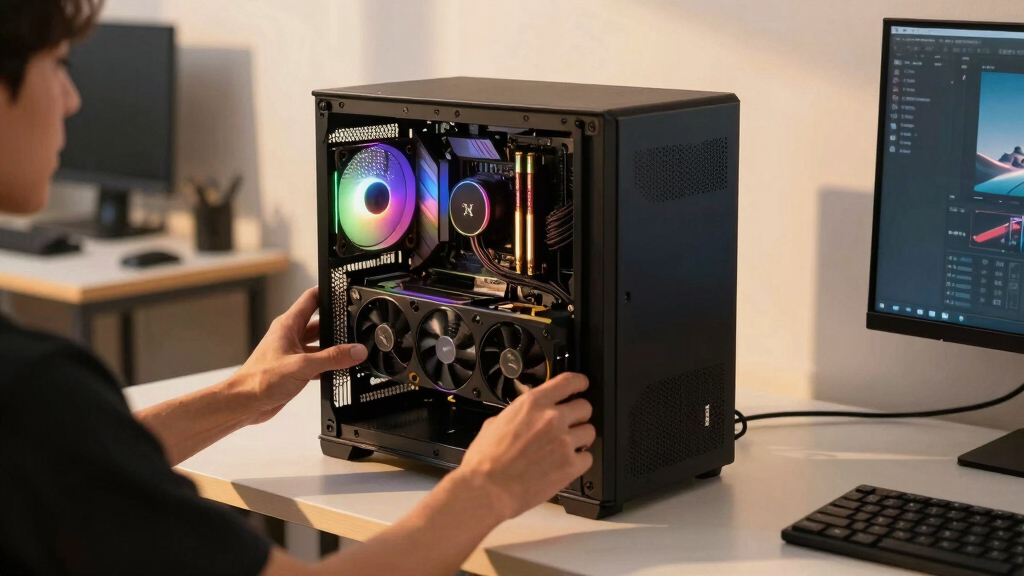
prebuilt AI workstation with water cooling
As an affiliate, we earn on qualifying purchases.
As an affiliate, we earn on qualifying purchases.
Component Shortages and Price Spikes Reshape 2026 AI Workstation Market
Since 2024, global shortages of high-end components like DDR5 RAM and GPUs have driven prices upward. Previously, DIY builders could assemble high-performance AI systems for under $1,000, but now such builds often exceed $1,250 before considering software licensing. Meanwhile, prebuilt vendors, having purchased components in bulk before prices surged, can offer systems at competitive or even lower prices than DIY options, especially for multi-GPU configurations.
This market shift challenges the decades-old notion that building always saves money, forcing buyers to perform detailed price comparisons for their specific needs.
"The traditional cost advantage of DIY AI workstations has evaporated in 2026 due to component shortages and price hikes, making prebuilt systems more competitive than ever."
— Thorsten Meyer, AI hardware expert
Remaining Questions About Future Market Trends
It is not yet clear whether component prices will stabilize or continue to rise through 2026, which could further influence the build-vs-buy calculus. Additionally, how much individual thermal tuning can offset the advantages of prebuilt validation remains to be seen, especially as new cooling technologies emerge.
Next Steps for Buyers and Builders in 2026
Consumers should now compare specific configurations and prices from both DIY and prebuilt vendors, considering not just initial cost but also thermal performance, warranty, and time investment. Market conditions may evolve, so ongoing price monitoring and thermal testing will be crucial for making informed decisions. Manufacturers may also introduce new cooling solutions and warranty options to attract buyers.
Key Questions
Is building a cheaper AI workstation still possible in 2026?
It depends on current component prices and your thermal management skills. Due to shortages and price hikes, building may no longer be cheaper for many configurations, especially multi-GPU systems.
What are the advantages of buying a prebuilt AI workstation?
Prebuilts offer validated thermals, professional testing, warranty coverage, and quick setup with preinstalled AI software stacks, saving time and reducing risk.
Can DIY builders achieve better thermal performance than prebuilt systems?
Yes, if they have thermal expertise and time to tune fans, undervolt GPUs, and optimize airflow. However, prebuilt systems often come with factory-validated cooling solutions that are difficult to replicate DIY.
How should I price a build versus a prebuilt in 2026?
Compare current component prices for your specific configuration against the cost of prebuilt systems, including warranty and support. Market conditions are volatile, so ongoing comparison is recommended.
Will component prices stabilize soon?
It is uncertain. Market dynamics, supply chain issues, and new cooling technologies could influence prices, but no definitive trend is confirmed for 2026.
Source: ThorstenMeyerAI.com
Fall Picks
fall essentials
As an affiliate, we earn on qualifying purchases.