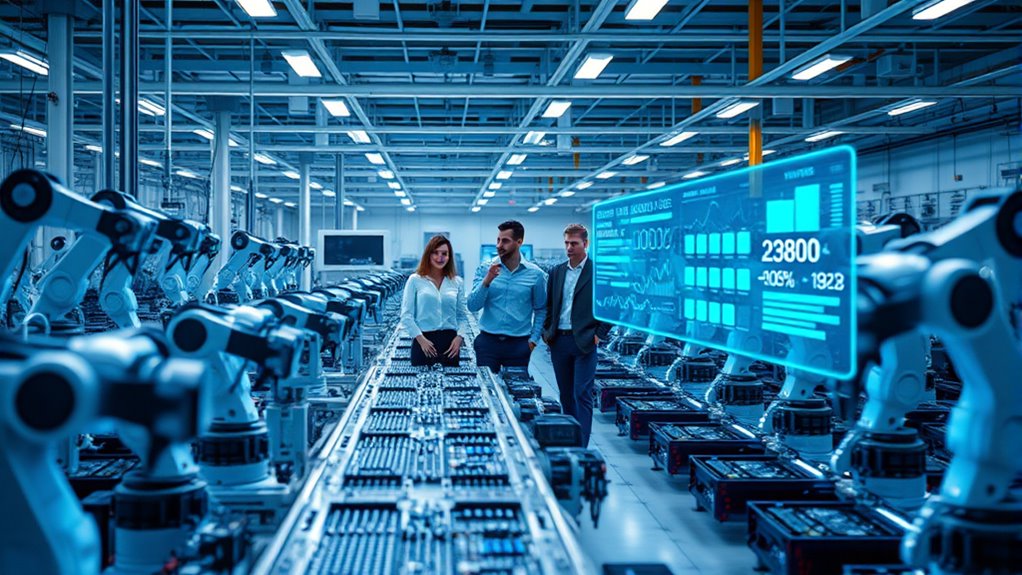

Jobs involving routine, rule-based tasks are the most likely to change next as automation continues to evolve. This includes roles in manufacturing, customer service, and data analysis, where machines can perform repetitive processes quickly and accurately. While some jobs may disappear, others will evolve or require new skills, especially in areas needing human empathy, strategic thinking, or complex problem-solving. Staying adaptable will help you navigate these shifts as automation progresses; discover what’s next beyond this overview.
Key Takeaways
- Routine, rule-based jobs in manufacturing, customer service, and data analysis are most susceptible to automation.
- Jobs requiring creative thinking, emotional intelligence, and complex problem-solving are less likely to be automated soon.
- AI tools are increasingly augmenting roles in professional fields, transforming how tasks are performed rather than replacing entire jobs.
- Roles with predictable processes, such as administrative or clerical work, are among the next to experience significant automation.
- Continuous upskilling in digital literacy, data handling, and ethics is essential to adapt to evolving job automation trends.
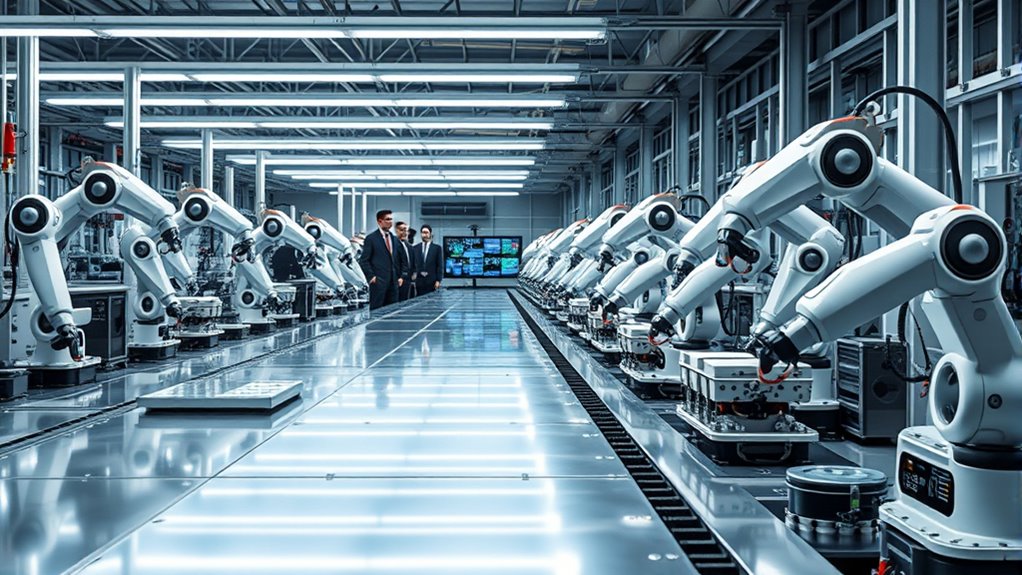
Have you ever wondered how automation is transforming the workforce? The rapid rise of AI implementation is reshaping industries at a pace that might feel overwhelming. As companies adopt more advanced technologies, tasks that once required human effort are now handled by machines, leading to increased efficiency and reduced costs. But with this shift comes a vital need to consider the ethical implications. When AI takes over roles traditionally held by humans, questions about fairness, job displacement, and decision transparency arise. You might be asking yourself, “How will this impact my job or career prospects?” Understanding which jobs are next to change requires looking at how AI can perform routine, repetitive tasks more accurately and faster than humans, especially in sectors like manufacturing, customer service, and data analysis. These roles are often the first to be affected because their processes are predictable and rule-based, making them ideal for automation.
However, it’s not just about replacing jobs; it’s also about how AI implementation influences workplace ethics. Companies must navigate ethical considerations such as bias in AI algorithms, privacy concerns, and accountability for decisions made by automated systems. For example, if an AI system determines creditworthiness or hiring decisions, there’s a risk that biased data could perpetuate unfair treatment. You need to stay informed about how organizations are addressing these issues because ethical practices will shape the future landscape of employment. For instance, understanding the importance of data quality ensures that AI systems make fairer and more accurate decisions. An organization’s approach to ethical considerations influences not only public trust but also the sustainability of AI integration within their workforce. Additionally, understanding the types of cookies used on company websites can help you better grasp how your data might be collected and used in this evolving digital environment. Recognizing the importance of color accuracy in AI-driven visual tasks could also play a role in future automation applications. Moreover, staying updated on regulatory frameworks related to AI can help organizations implement responsible automation strategies.
As automation advances, roles involving creative thinking, emotional intelligence, and complex problem-solving are less vulnerable. Jobs requiring human empathy, strategic planning, and nuanced judgment are likely to evolve rather than disappear. Yet, even in these areas, AI tools are increasingly assisting professionals, augmenting their capabilities rather than replacing them outright. This means that adapting to the changing job market involves acquiring new skills that complement AI technology. Upskilling in areas like data literacy, digital fluency, and ethical AI usage becomes essential to remain competitive.

AI Workshops That Sell: Package Live Training, Automate Delivery & Scale Workshops into Evergreen Courses and Memberships: 7-step system for workshop … Money and Achieve Finacial Freedom Book 9)
As an affiliate, we earn on qualifying purchases.
As an affiliate, we earn on qualifying purchases.
Frequently Asked Questions
How Will Automation Impact Global Job Markets Differently?
Automation impacts global job markets differently based on local AI ethics and cultural implications. You might find certain regions adopting automation quickly due to supportive policies, while others face ethical concerns that slow progress. Cultural attitudes toward technology shape how jobs change, affecting employment stability and skills needed. As you navigate these shifts, understanding these differences helps you prepare for evolving job opportunities and challenges across diverse markets.
Which Industries Are Most Resistant to Automation?
When it comes to industries most resistant to automation, you’re really hitting the nail on the head. Manual labor jobs, especially those requiring physical dexterity and adaptability, tend to stick around longer. Creative jobs, like artists or writers, also resist automation because they depend on human imagination and nuance. These sectors are the last bastions where machines haven’t quite taken over, keeping the human touch alive and kicking.
What Skills Will Be Most Valuable in an Automated Workforce?
You’ll find that skills like creativity, emotional intelligence, and complex problem-solving become increasingly valuable in an automated workforce. To stay ahead, you should engage in reskilling initiatives and develop AI literacy, which helps you adapt to new tools and workflows. These skills complement automation, making you indispensable in roles that require human insight and innovation, ensuring your relevance and growth in evolving industries.
How Can Workers Transition to New Roles Caused by Automation?
Imagine a river constantly flowing—your career must adapt just like the water. To navigate job displacement caused by automation, you should embrace reskilling strategies that build new skills. Stay proactive, seek training opportunities, and remain flexible. These steps help you transform challenges into opportunities, ensuring you don’t just survive but thrive in this changing landscape. Reskilling isn’t just a choice; it’s a crucial survival skill in today’s evolving job market.
What Ethical Concerns Are Associated With Workforce Automation?
You should consider the ethical concerns linked to workforce automation, such as AI bias and privacy issues. As automation advances, there’s a risk AI systems might reinforce stereotypes or unfair treatment if not properly managed. Additionally, data privacy becomes vital, as increased reliance on automation often means more personal information is collected and stored. Addressing these concerns guarantees that automation benefits everyone without compromising fairness or individual privacy.

Critical Data Literacies: Rethinking Data and Everyday Life
As an affiliate, we earn on qualifying purchases.
As an affiliate, we earn on qualifying purchases.
Conclusion
So, as robots and AI take over tasks, you might find yourself wondering who’s really winning. Ironically, the jobs that once defined human work—creative, empathetic, complex—are now the ones handsomely handed over to machines. You’ll sit back, watching the future unfold like a sci-fi movie, while the human touch becomes a rare commodity. In the end, you might just be replaced by the very technology meant to serve you—talk about progress!

The Simple Google Gemini AI Guide for Workspace: Master Practical AI Skills to Elevate Productivity Improve Collaboration Enhance Decision Making and … Role Across the Modern Digital Workplace
As an affiliate, we earn on qualifying purchases.
As an affiliate, we earn on qualifying purchases.

Workflow Automation with Microsoft Power Automate: Design and scale AI-powered cloud and desktop workflows using low-code automation
As an affiliate, we earn on qualifying purchases.
As an affiliate, we earn on qualifying purchases.