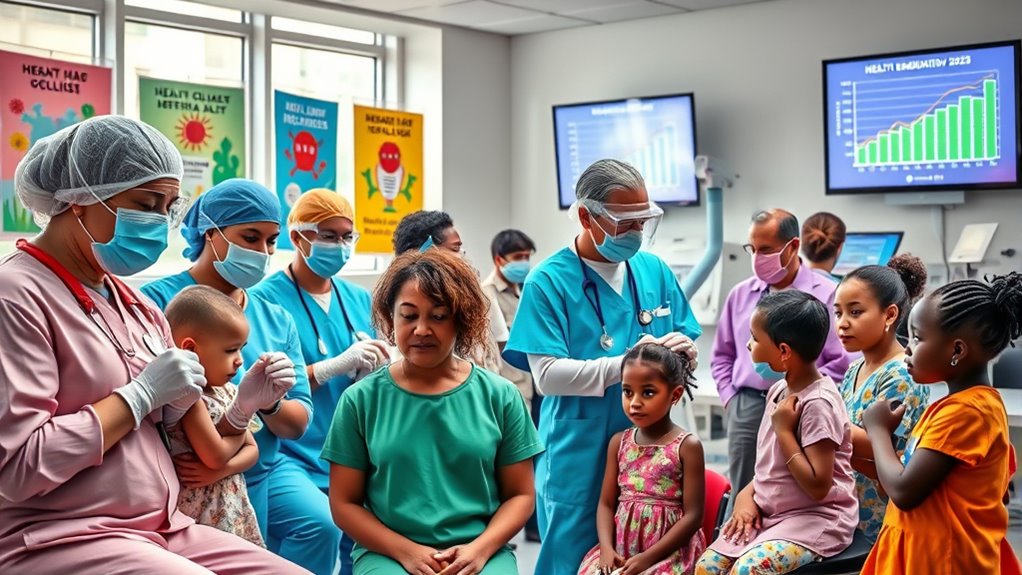

By 2025, you’ll see significant progress in controlling infectious diseases through advanced vaccine technologies that enable faster and safer immunizations. Efforts focus on equitable distribution, especially for low-income countries, reducing disparities. Global health systems become more resilient, with better surveillance and rapid response teams to prevent outbreaks early. Data analytics drive targeted interventions, and international cooperation strengthens preparedness. Keep exploring to discover how these innovations are shaping a healthier world for everyone.
Key Takeaways
- Significant advancements in vaccine technology are enabling faster, safer, and more adaptable immunization campaigns worldwide.
- Global efforts are prioritizing equitable vaccine distribution to low-income countries, reducing disparities and preventing outbreaks.
- Investment in early warning systems and surveillance enhances pandemic preparedness and rapid response capabilities.
- Strengthened health infrastructure and resilient systems improve global capacity to manage emerging health threats.
- Data analytics and transparent information sharing facilitate targeted interventions and more effective disease control strategies.
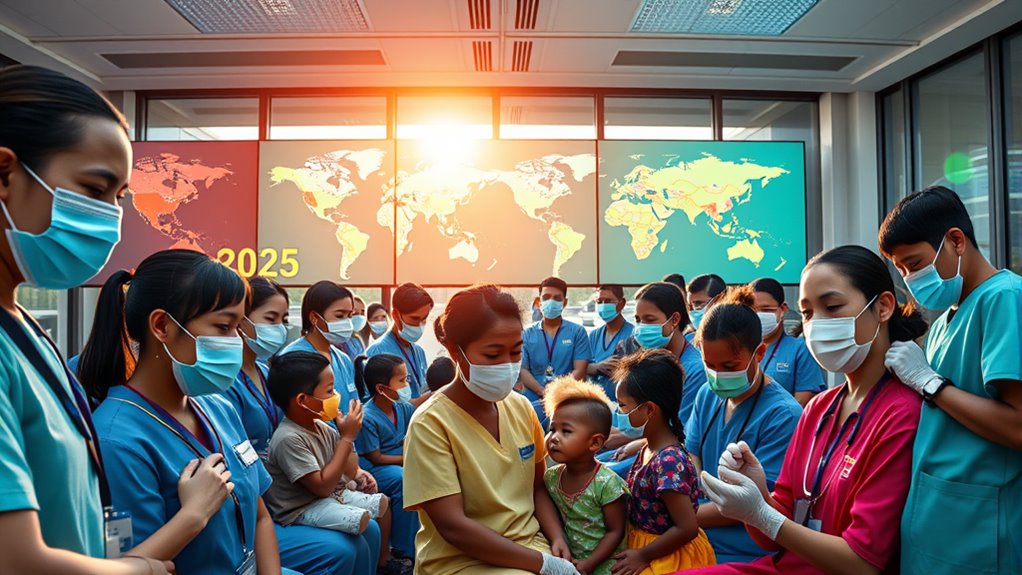
What will the future of global health look like by 2025? If current trends continue, you’ll see significant strides in tackling infectious diseases, but challenges like vaccine equity and pandemic preparedness will remain central to the conversation. As the world becomes more connected, efforts to ensure vaccines reach every corner of the globe are gaining momentum. You’ll notice a shift toward more equitable distribution of vaccines, especially for low-income countries that have historically been left behind. Initiatives are emerging to address these disparities, with organizations collaborating to improve supply chains, reduce costs, and eliminate logistical barriers. The push for vaccine equity isn’t just about fairness; it’s a practical strategy to prevent outbreaks before they start. When vaccines are accessible worldwide, you reduce the chances of dangerous variants emerging and spreading. This focus on fairness will be complemented by advancements in vaccine technology, making immunization campaigns faster, safer, and more adaptable to new threats.
At the same time, pandemic preparedness is evolving from reactive to proactive. You’ll see countries investing heavily in early warning systems, enhanced surveillance, and rapid response teams. These efforts aim to detect outbreaks at their source, giving health agencies the tools to contain issues before they escalate into full-blown crises. Global health organizations are working together to develop standardized protocols and share data more transparently, recognizing that no country is truly safe until all are protected. You might also observe a rise in international funding dedicated to building resilient health systems, ensuring that hospitals, laboratories, and workforce capacity keep pace with emerging threats. This increased readiness isn’t just about stockpiling supplies; it’s about creating a culture of preparedness embedded within health infrastructure worldwide. Additionally, the emphasis on global health data collection and analysis will continue to grow, enabling more accurate predictions and targeted interventions.
Frequently Asked Questions
How Does Climate Change Impact Global Health Initiatives?
Climate change impacts your efforts by disrupting climate resilience, making it harder to control disease spread. You’ll need to adapt health policies to address new risks like vector-borne illnesses and extreme weather events. These changes challenge resources and planning, requiring proactive strategies. By integrating climate considerations into health policy, you can strengthen health systems, improve resilience, and better protect vulnerable populations from climate-related health threats.
What Role Do Private Sectors Play in Disease Eradication Efforts?
Imagine you’re part of a public-private partnership, like the one between GSK and the WHO to develop malaria vaccines. The private sector plays a crucial role in disease eradication by investing in research, leveraging resources, and fulfilling corporate social responsibility. Your involvement accelerates innovation, expands outreach, and sustains health initiatives, making it easier to reach vulnerable populations and ultimately eradicate diseases more effectively.
How Are Mental Health Issues Integrated Into Global Health Strategies?
You see that mental health issues are increasingly integrated into global health strategies through targeted mental health integration and policy development. You’re encouraged to advocate for policies that prioritize mental health, ensuring resources are allocated effectively. By supporting initiatives that promote mental health awareness and integrate services into primary healthcare, you help reduce stigma and improve access, ultimately strengthening overall health systems and achieving better outcomes worldwide.
What Are the Biggest Challenges in Vaccine Distribution Worldwide?
Did you know that over 10% of vaccines are wasted globally? The biggest challenges in vaccine distribution are maintaining the cold chain and overcoming vaccine hesitancy. Without proper storage, vaccines lose effectiveness, especially in remote areas. Additionally, misinformation fuels hesitancy, reducing vaccination rates. Addressing these issues requires strengthening infrastructure and community engagement, ensuring vaccines reach everyone safely and confidently.
How Is Technology Used to Monitor and Control Disease Outbreaks?
You use digital surveillance to track disease patterns in real-time, helping you quickly identify outbreaks. Data analytics processes vast amounts of health data, revealing trends and hotspots. This combination allows you to monitor disease spread, predict future cases, and implement targeted interventions efficiently. By leveraging technology, you can respond swiftly to outbreaks, ultimately controlling their impact and saving lives.
Conclusion
As you look ahead, remember that progress in global health is a marathon, not a sprint. While we’ve made significant strides against disease, challenges still lie ahead. Your commitment and efforts are essential to turning this tide. Don’t lose sight of the finish line; together, you can be the change that makes a real difference. Stay inspired and keep pushing forward—because when it comes to health, every step counts.