

Urban air mobility, including flying cars and air taxis, is quickly gaining momentum with ongoing pilot projects and technological advances. Many cities are testing these vehicles to improve traffic flow and reduce congestion, while new regulations are beginning to shape safe, effective frameworks for operation. Although challenges remain, such as airspace management and safety standards, progress suggests that urban air mobility is indeed taking off. Keep exploring to discover how this exciting movement could soon transform city travel for you.

Prime made for students and young adults
- Fast, free delivery for dorm and study essentials
- Prime Video and Amazon Music included
- Member-only deals
Key Takeaways
- Pilot projects worldwide demonstrate ongoing testing and development of flying cars and air taxis.
- Innovations in vehicle design focus on safety, efficiency, and VTOL capabilities for urban environments.
- Regulatory frameworks are still evolving to address airspace management, safety, and legal standards.
- Collaboration between tech companies and governments is advancing standards and infrastructure.
- While progress is promising, widespread adoption depends on overcoming regulatory, safety, and societal challenges.
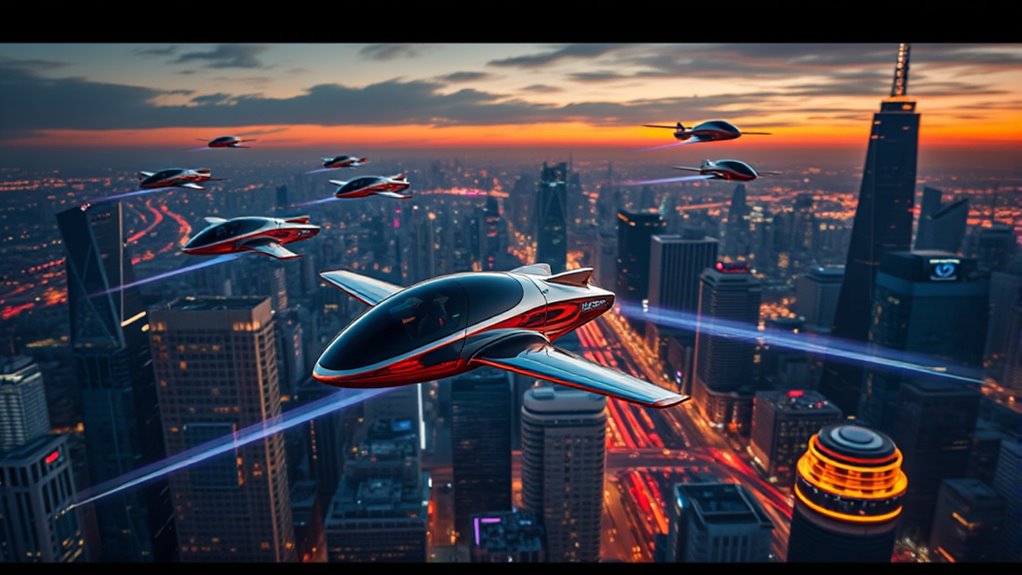
Have you ever wondered how cities might reduce traffic congestion and improve transportation? The idea of urban air mobility, with flying cars and air taxis, is gaining momentum as a potential solution. These vehicles promise to transform how we move within crowded cities by soaring above traffic jams and offering quicker, more direct routes. But turning this vision into reality isn’t just about futuristic designs; it also involves maneuvering complex regulatory challenges that could determine how soon these innovations become mainstream.
Futuristic designs are at the heart of urban air mobility. Engineers and designers are creating sleek, compact vehicles that combine the aesthetics of cars with the functionality of aircraft. Many of these designs emphasize vertical takeoff and landing capabilities, allowing them to operate in tight urban spaces without the need for traditional runways. The goal is to develop vehicles that are safe, efficient, and easy to operate, all while fitting into the existing cityscape. These innovations excite both technologists and city planners, as they hold the promise of reducing ground traffic and opening up new, less congested corridors for transportation. Still, these ambitious designs face hurdles beyond just engineering; integrating them into city environments requires careful planning and adaptation.
Sleek, compact vehicles with vertical takeoff and landing capabilities aim to transform urban transportation and reduce ground traffic.
Regulatory challenges stand as one of the biggest barriers to widespread adoption of flying cars and air taxis. Governments and aviation authorities need to establish comprehensive rules for airspace management, safety standards, licensing, and operational protocols. Unlike traditional cars, these vehicles will operate in a layered airspace system, requiring sophisticated traffic management to prevent collisions and ensure smooth flow. Developing these regulations takes time, as policymakers must balance innovation with safety concerns and public acceptance. Additionally, issues related to noise pollution, privacy, and liability need addressing before authorities can fully endorse flying vehicles. Without clear legal frameworks, manufacturers might hesitate to scale up production, and cities might delay integrating air mobility solutions into their transportation networks. Regulatory frameworks are essential for establishing safe and reliable urban air mobility systems.
Despite these challenges, progress continues. Pilot projects are underway in several cities worldwide, testing the practicalities of flying car operations and regulatory models. Entrepreneurs and government agencies are collaborating to develop standards that can support innovation while protecting public interests. As technological advances make these vehicles more reliable and affordable, regulatory bodies will need to keep pace with the evolving landscape. If these hurdles are addressed effectively, urban air mobility could revolutionize how we think about city transportation, making it faster, cleaner, and more flexible. Until then, the future of flying cars remains an exciting possibility—one that’s steadily taking shape through a blend of innovative design and thoughtful regulation.
Frequently Asked Questions
What Are the Main Safety Concerns for Urban Air Mobility?
Your main safety concerns with urban air mobility include ensuring emergency protocols are well-established and reliable. You need extensive pilot training to handle complex situations, like system failures or unexpected obstacles, effectively. Maintaining robust safety standards, preventing collisions, and managing air traffic are also critical. By focusing on thorough training and emergency procedures, you can help make urban air mobility safer and more reliable for everyone using it.
How Affordable Will Flying Cars and Air Taxis Be for Everyday Users?
Sure, flying cars will cost a fortune—probably more than your house—making affordability prospects seem bleak. But don’t worry; as with all tech, prices will drop over time thanks to mass production and innovation. You’ll soon find urban air mobility more accessible, turning those sci-fi dreams into reality. So, while today’s cost considerations might make you hesitate, future prices could make flying taxis your everyday ride.
What Infrastructure Is Needed to Support Urban Air Mobility?
You’ll need specialized infrastructure like vertiport design tailored for quick takeoffs and landings, ensuring safety and efficiency. Air traffic management systems must adapt to handle increased aerial vehicles, coordinating flight paths and avoiding congestion. Investing in secure charging stations, maintenance facilities, and clear signage will support smooth operations. These elements are vital to seamlessly integrate urban air mobility into daily life, making flying cars and air taxis practical and reliable.
How Will Regulations Impact the Development of Flying Cars?
Regulations act like the traffic signals guiding flying cars through the sky’s bustling highway. They’ll shape how quickly and safely urban air mobility takes off. Regulatory hurdles and evolving policy frameworks could either smooth your journey or create gridlock. You’ll need clear rules for safety, air traffic management, and licensing. If policymakers stay ahead of innovation, they’ll help you soar smoothly; if not, delays and complications could ground your dreams.
Are There Environmental Risks Associated With Urban Air Mobility?
You should consider that urban air mobility can pose environmental risks, including increased air pollution from emissions and noise pollution in city areas. As these vehicles become more common, they may contribute to local air quality issues and disturb residents with noise. It’s essential for developers and regulators to prioritize eco-friendly designs and strict noise controls to mitigate these environmental impacts and ensure sustainable urban air mobility.
Conclusion
Think of urban air mobility as a rising tide, lifting us above crowded streets to new heights. As these flying cars and air taxis take flight, they’re like birds breaking free from the ground’s grip, soaring toward a future of faster, freer travel. The sky’s open and full of promise—your journey is about to take off into a new era. Embrace the winds of change, and get ready to fly beyond the horizon.
Fall Picks
fall essentials
As an affiliate, we earn on qualifying purchases.