
TL;DR

Prime made for students and young adults
- Fast, free delivery for dorm and study essentials
- Prime Video and Amazon Music included
- Member-only deals
A Smithsonian Magazine report published November 3, 2026, describes how the eruption of Thera, on modern Santorini, buried the Bronze Age settlement of Akrotiri. Researchers generally date the eruption to between 1620 and 1530 B.C.E., though its precise timing and the extent of its effects across the Aegean remain uncertain.
A Smithsonian Magazine report published November 3, 2026, revisits the Bronze Age settlement of Akrotiri, on today’s Santorini, which was buried by ash and pumice after the eruption of the volcano Thera. Scholars generally place the eruption between 1620 and 1530 B.C.E., but its exact date and its role in wider changes across the Aegean remain debated.
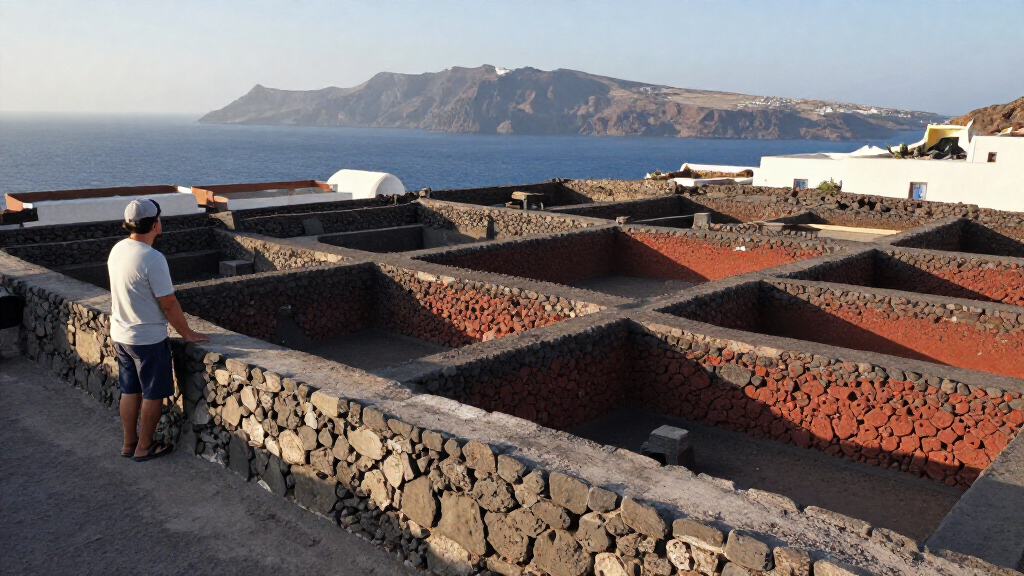
Archaeological deposits at Akrotiri preserve buildings and other traces of a settlement associated with the Cycladic Bronze Age. The volcanic material covered the site, leaving evidence that researchers can use to study life on the island before the eruption. Smithsonian quotes archaeologist Lefteris Zorzos, whose research focuses on Santorini’s prehistoric landscape, describing the site as having been encapsulated by the destruction.
The report says the eruption was followed by the collapse of part of the volcanic caldera into the sea, altering Santorini’s landscape. Layers of sand and pebbles between archaeological deposits are presented as evidence that tsunamis also affected the area. Volcanic ash spread widely, with the report noting deposits as far away as modern Egypt and Israel.
The eruption’s effects beyond Santorini are less settled. Archaeologist Spyridon Marinatos proposed that earthquakes and tsunamis damaged Minoan settlements on Crete and disrupted trade. The report says that explanation is no longer widely accepted as a single-cause account; many historians instead point to several possible factors in the Minoans’ decline, including environmental change, trade disruption, political instability and conflict with the Mycenaeans.
A Rare Record of Cycladic Life
Akrotiri matters because the volcanic deposits preserved a substantial Bronze Age settlement, offering researchers evidence about the built environment and society of the Cyclades. The site is sometimes compared with Pompeii, whose buildings were preserved by the eruption of Vesuvius in 79 C.E. The comparison is about burial and preservation; it does not mean the two disasters or communities were the same.
The eruption also provides evidence for studying how a major volcanic event affected nearby communities and landscapes. But claims about its wider political consequences require care: the available account does not establish that Thera’s eruption alone caused the decline of the Minoan civilization. Treating the event as one part of a more complex history keeps the archaeological evidence distinct from later interpretation.
Products Worth Considering

Samsung Odyssey G9 49-Inch Curved Dual QHD Gaming Monitor

DJI Mini 5 Pro Fly More Combo with DJI RC 2

Amazon Kindle Paperwhite 16GB, 7-Inch Display, Graphite
As an affiliate, we earn on qualifying purchases.
How Akrotiri Was Excavated
Akrotiri’s remains became known through excavation rather than continuous occupation. In 1866, miners quarrying pumice on Therasia, an island west of Santorini, encountered a prehistoric building. The French School at Athens conducted a small excavation in 1870, but large-scale work at Akrotiri began in 1967 under archaeologist Spyridon Marinatos.
Marinatos had studied the Minoan palace at Knossos on Crete and traced pumice there to Thera. He linked the eruption to the Minoans’ decline, proposing that seismic damage and tsunamis disrupted coastal settlements and shipping. The Smithsonian report says later scholarship has moved away from attributing that decline to one disaster. Akrotiri is sometimes associated with Plato’s Atlantis, but the report says most modern scholars regard the Atlantis story as an allegory, not a historical identification of the settlement.
“Everything was absolutely annihilated and completely encapsulated on the island.”
— Lefteris Zorzos, archaeologist, as quoted by Smithsonian Magazine
Dating the Eruption and Its Reach
The eruption’s precise date remains contested. The report gives a broad scholarly range of 1620 to 1530 B.C.E., rather than a settled year. The material provided does not specify which dating methods or competing estimates account for the continuing debate.
The scale of damage across the Aegean also remains a matter of interpretation. Deposits and geological evidence point to ashfall and possible tsunami impacts, but the source does not establish that one eruption directly caused the Minoans’ decline. The extent of any effects on particular settlements, trade routes and political developments is not detailed here.
Further Evidence From the Site
The account identifies no newly announced excavation, research finding or publication schedule. The next steps described are part of the longer work of archaeological interpretation: researchers must continue to study the site’s deposits and compare evidence from Santorini with records elsewhere in the Aegean to refine the eruption’s date and assess its reach.
For readers, the clearest current picture is that Thera’s eruption buried Akrotiri during the second millennium B.C.E., preserving traces of a Bronze Age community. A more exact chronology and a definitive account of the eruption’s role in regional events remain unresolved.
Key Questions
What happened to Akrotiri?
The Bronze Age settlement on what is now Santorini was buried by ash and pumice after the eruption of the volcano Thera.
When did the Thera eruption happen?
Scholars generally date it to between 1620 and 1530 B.C.E., but the exact date remains disputed.
Is Akrotiri the lost city of Atlantis?
The Smithsonian report says some people have proposed the connection, but most modern scholars treat Plato’s Atlantis as an allegory, not a confirmed identification of Akrotiri.
Did the eruption cause the Minoan civilization to decline?
The source does not establish that. Many historians attribute the Minoans’ decline to multiple possible factors, rather than to the eruption alone.
Source: smithsonianmag.com