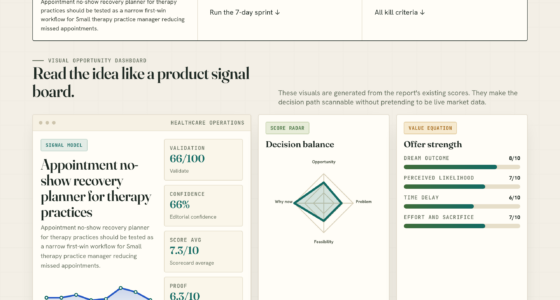
📊 Full opportunity report: Driving Access To Public Benefits Through Automated Benefit Check Tools on IdeaNavigator AI — validation score, market gap, and execution plan.
Listen free for 30 days with Audible
Thousands of audiobooks and originals — cancel anytime.
Start your free trialAs an affiliate, we earn on qualifying purchases.
TL;DR
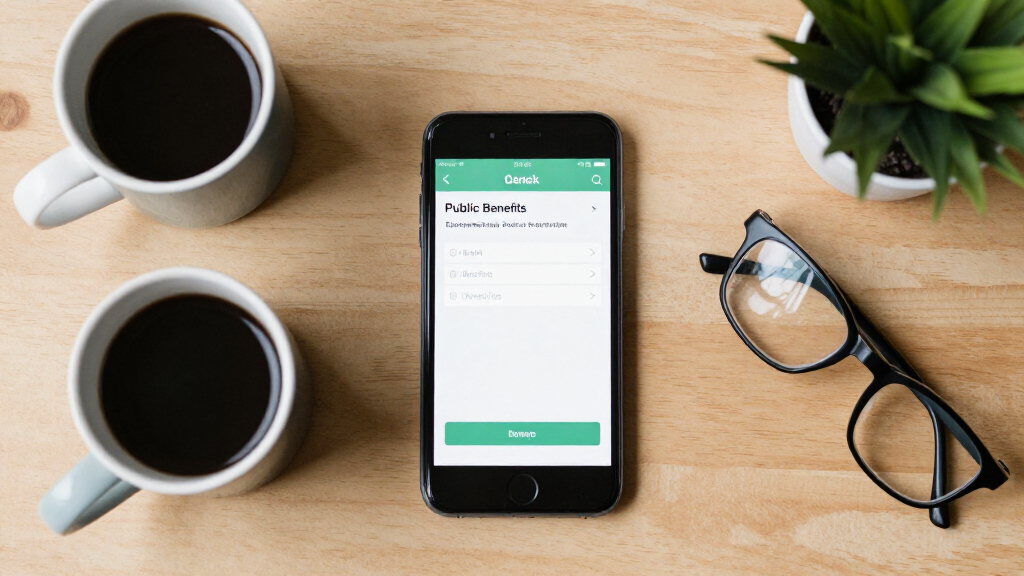
A new automated benefit check chatbot is being tested to help clinics and nonprofits quickly identify eligible low-income individuals for programs like SNAP and Medicaid. This innovation responds to a large unclaimed benefits gap and aims to improve efficiency and accuracy in benefits access.
A new conversational AI benefit screening tool is being piloted at community clinics and nonprofits to rapidly identify low-income clients eligible for multiple public assistance programs, addressing a longstanding gap in benefits access caused by fragmented eligibility rules and manual screening processes. This development is significant because it could dramatically reduce the $100 billion in unclaimed benefits annually and improve service delivery for millions of low-income families.
The tool, developed by an organization leveraging AI technology, is a white-label chatbot that can be embedded on clinic websites or accessed via SMS. It asks clients a series of yes/no and multiple-choice questions to determine likely eligibility for programs such as SNAP, Medicaid, EITC/CTC, WIC, and LIHEAP, providing benefit estimates and next-step application links. The initial pilot involves 5-10 benefits navigators at FQHCs and community nonprofits across two states, aiming to assess whether the tool reduces screening time and increases the identification of eligible clients.
Following the shutdown of Benefits Data Trust, a major nonprofit that handled benefits screening for seven states, health systems and state agencies have faced a capacity gap in delivering benefits access services. The new AI-powered tool aims to fill this void by offering a scalable, low-cost solution that can handle multilingual screening and deliver near-instant results. It is designed to log anonymized outcomes for organizational dashboards and export summaries to assist with applications, streamlining what is traditionally a manual, time-consuming process.
Impact of Automated Benefits Screening on Access
This innovation could significantly increase the number of eligible low-income individuals who claim benefits they qualify for but have previously been missed due to manual, fragmented screening processes. By automating eligibility checks, clinics and nonprofits can serve more clients efficiently, potentially unlocking over $100 billion annually in unclaimed benefits. The technology also offers the promise of reducing administrative costs and improving the accuracy of benefit eligibility assessments, which are often hampered by complex rules and documentation burdens.
benefits eligibility screening chatbot
As an affiliate, we earn on qualifying purchases.
As an affiliate, we earn on qualifying purchases.
Background on Benefits Access Challenges and Technological Solutions
For years, low-income families have left billions of dollars in benefits unclaimed each year because of complex eligibility rules spread across federal, state, and local programs. Manual screening by caseworkers and navigators is slow, labor-intensive, and prone to errors, often leading to missed opportunities for assistance. The shutdown of Benefits Data Trust in 2024, which previously handled benefits enrollment for multiple states, created a significant gap in capacity for community-based organizations and health systems. Meanwhile, the post-pandemic Medicaid redetermination process has increased the demand for efficient eligibility screening, highlighting the need for scalable digital solutions. Advances in conversational AI now make it feasible to deliver multilingual, multi-program screening at near-zero marginal cost, promising to transform benefits access for vulnerable populations.
Uncertainties Around Pilot Outcomes and Adoption
It is not yet clear how the pilot will perform in real-world settings regarding accuracy, user acceptance, and actual increase in benefits claimed. The effectiveness of the tool in diverse populations and across different states with varying eligibility rules remains to be validated. Additionally, questions remain about the scalability of deployment, integration with existing systems, and long-term sustainability of the model without ongoing human oversight.
Next Steps for Pilot Evaluation and Broader Deployment
The pilot is expected to run over the next 4-6 weeks, during which participating organizations will measure reductions in screening time, increases in identified eligible clients, and navigator-rated accuracy. If successful, the developers plan to expand the tool to additional states, integrate it into more clinics and nonprofits, and explore outcome-based contracts with Medicaid managed care organizations. Further research will be needed to assess long-term impacts on benefits uptake and administrative costs, as well as user experience and trust among clients.
Key Questions
How does the benefit check chatbot work?
The chatbot asks clients a series of yes/no and multiple-choice questions about their circumstances. It then estimates which programs they likely qualify for, provides benefit dollar estimates, and offers next-step application links.
What programs can the tool screen for?
The initial version covers SNAP, Medicaid, EITC/CTC, WIC, and LIHEAP, with plans to expand to other programs as the model matures.
Who is testing this tool?
Benefits navigators at 5-10 FQHCs and community nonprofits in two states are participating in the pilot, with plans to evaluate its impact over 4-6 weeks.
What are the potential benefits of this technology?
It could reduce screening time, increase benefits claimed, lower administrative costs, and help more low-income families access assistance they are eligible for.
When will wider deployment happen?
If the pilot proves successful, developers plan to expand deployment to additional states and organizations over the coming months, with ongoing validation and improvements.
Source: IdeaNavigator AI
Fall Picks
fall essentials
As an affiliate, we earn on qualifying purchases.