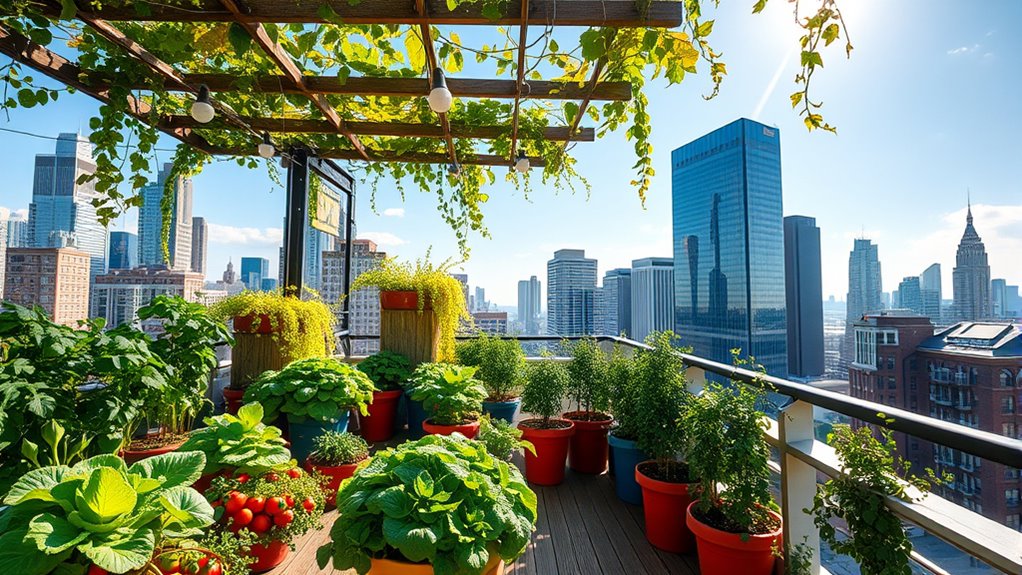

To grow food in small city spaces, choose compact plants like herbs, lettuce, tomatoes, and dwarf fruit trees that suit your sunlight and water conditions. Use containers, vertical gardens, and strategic placement to maximize space, while managing pests naturally with beneficial insects and organic sprays. Maintain soil health and proper airflow to prevent issues. By following these tips, you’ll create a thriving urban garden—keep exploring to discover more secrets for successful city gardening.

Prime made for students and young adults
- Fast, free delivery for dorm and study essentials
- Prime Video and Amazon Music included
- Member-only deals
Key Takeaways
- Select compact, high-yield plants like herbs, cherry tomatoes, and dwarf fruit trees suitable for limited space.
- Maximize space using vertical gardening, containers, and window boxes to grow more plants efficiently.
- Maintain proper airflow, watering, and soil health to promote plant growth and reduce pests in small areas.
- Implement natural pest control methods, such as beneficial insects and organic sprays, to protect plants sustainably.
- Develop a consistent maintenance routine, stay informed about plant needs, and utilize community resources for support.

Have you ever wondered how to turn limited city spaces into thriving gardens? If you’re enthusiastic to grow your own food despite small balconies, rooftop patios, or tiny yards, the key lies in smart plant selection and effective pest control strategies. Your first step is choosing plants that thrive in confined spaces and are suited for urban environments. Opt for compact varieties like cherry tomatoes, lettuce, herbs such as basil and mint, or dwarf fruit trees. These plants not only make the most of limited space but also tend to be more manageable and productive. When selecting plants, consider their sunlight needs, water requirements, and growth habits. This ensures you create a sustainable, low-maintenance garden that produces consistently.
Transform small urban spaces into productive gardens with smart plant choices and pest management.
Once you’ve picked the right plants, managing pests becomes essential to keep your urban garden healthy and productive. Urban settings often attract pests like aphids, whiteflies, or spider mites, which can quickly damage your plants if not controlled early. Instead of resorting to harsh chemicals, focus on integrated pest management techniques. Regularly inspect your plants for signs of pests or disease, and remove any affected leaves or insects by hand. Introducing beneficial insects like ladybugs or predatory wasps can naturally keep pest populations in check. Additionally, using organic sprays such as neem oil or insecticidal soap provides a safe way to control pests without harming your plants or the environment.
Creating a healthy environment is crucial for pest control, so confirm your plants are not stressed by overwatering or poor soil conditions. Good airflow and proper spacing between plants help reduce humidity and discourage pests from settling in. Mulching can also prevent weed growth and retain soil moisture, which benefits your plants and minimizes pest hiding spots. Regularly assessing environmental factors, such as soil quality and light exposure, can significantly improve plant health and pest resistance. Proper soil preparation and understanding of local climate conditions are essential for a successful urban garden. Incorporating community involvement can also enhance your gardening efforts, offering additional support and knowledge sharing.
Finally, don’t forget that maintaining your garden’s success involves ongoing care. Keep learning about the specific needs of your chosen plants and stay alert for any pest issues. Developing a gardening routine can help you stay consistent and proactive in your garden management. Understanding brewing techniques and their principles can also inspire creative ways to use herbs and plants in your garden, such as making herbal teas or infusions. With patience and attention, you can transform small city spaces into lush, productive gardens. Whether you’re growing herbs on a windowsill or vegetables on a rooftop, strategic plant selection and proactive pest control are your best tools for thriving urban gardening. The effort you put into choosing the right plants and protecting them from pests will reward you with fresh, homegrown food and a green oasis amidst the city hustle.
As an affiliate, we earn on qualifying purchases.
Frequently Asked Questions
What Are the Best Plants for Shaded Urban Gardens?
If you’re wondering about the best plants for shaded urban gardens, focus on shade tolerant plants that thrive without direct sunlight. Opt for container friendly greenery like ferns, hostas, or impatiens, which flourish in limited light and are easy to manage in small spaces. These plants will brighten your shaded corners and add lush, vibrant touches to your urban oasis. Choose the right shade tolerant plants for a thriving, beautiful garden in any shaded spot.
How Can I Deter Pests in Small City Gardens?
You might believe pests are unstoppable, but nature offers solutions. Try companion planting—mixing herbs like basil or marigolds with vegetables—to naturally repel pests. You can also use natural repellents such as neem oil or garlic spray to keep bugs at bay. These methods not only protect your small city garden but also promote healthy, thriving plants without harmful chemicals. With a little effort, pests won’t stand a chance.
What Are Low-Cost Methods to Start Urban Gardening?
You can start urban gardening on a budget with simple, low-cost methods. Begin with DIY planter ideas using recycled containers like buckets or old furniture. Practice urban composting to enrich your soil naturally. These methods are affordable, effective, and easy to implement, making it possible to grow fresh food even in limited spaces. Plus, they help reduce waste and create a sustainable, thriving garden right in your city environment.
How Do I Water Efficiently in Limited Space?
You can water efficiently by installing drip irrigation systems, which deliver water directly to your plants’ roots, reducing waste. Consider rainwater harvesting to gather and use natural water, saving resources and lowering costs. These methods are perfect for limited spaces, ensuring your plants stay hydrated without overwatering. Regularly check soil moisture and adjust your watering schedule to keep your garden healthy and thriving with minimal effort.
Are There Community Programs for Urban Gardeners?
You might wonder if there are community programs for urban gardeners. The good news is that many cities offer community garden initiatives and urban gardening workshops. These programs provide opportunities to connect with fellow gardeners, learn new techniques, and access shared resources. Participating can boost your skills and make urban gardening more enjoyable. Check local city websites or community centers to find programs near you and get involved today.
Conclusion
Now that you know how easy it is to grow food in small spaces, why not start today? With a few containers or a tiny balcony, you can enjoy fresh herbs, veggies, and a sense of accomplishment. Imagine stepping outside to pick your own dinner—doesn’t that sound rewarding? Urban gardening proves that even in tight spaces, you can cultivate more than just plants—you can grow a healthier, happier you. So, what are you waiting for?
Halloween Picks
halloween
As an affiliate, we earn on qualifying purchases.