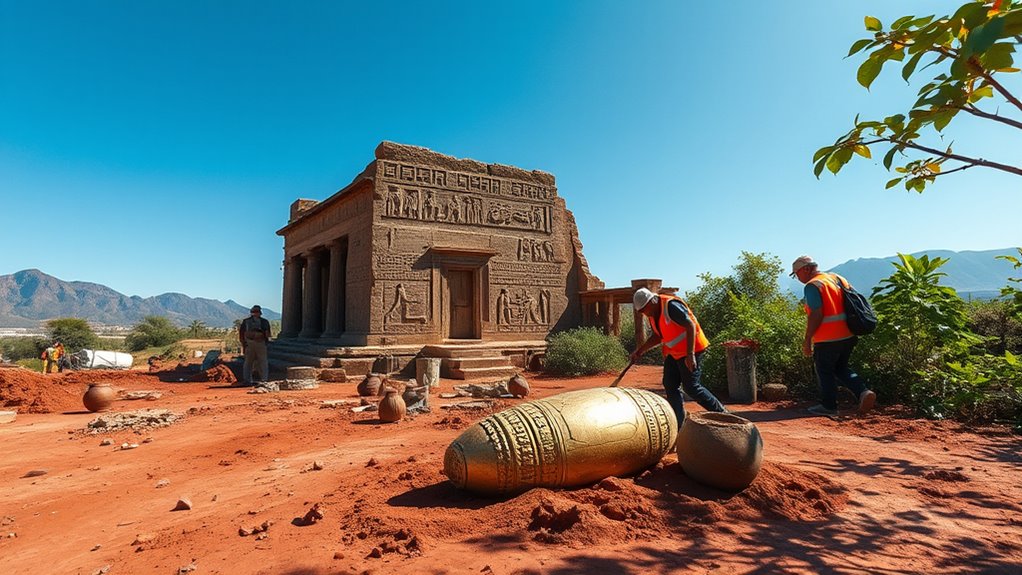

In 2025, notable archaeological finds showcase how modern technology transforms archaeology. Non-invasive methods like ground-penetrating radar, drone surveys, and 3D imaging uncover ancient sites without damaging them. Discoveries include a well-preserved city buried beneath jungle, ancient tombs from Egypt’s New Kingdom, and a 2,000-year-old shipwreck in the Mediterranean, revealing trade and cultural insights. If you continue exploring, you’ll uncover fascinating details behind these groundbreaking discoveries and what they mean for history.
Key Takeaways
- The discovery of a well-preserved ancient city beneath Central America’s jungle has provided new insights into early civilizations.
- Advanced non-invasive technologies like ground-penetrating radar and drone surveys led to significant Egyptian tomb discoveries in 2025.
- Underwater archaeology revealed a 2,000-year-old Mediterranean shipwreck, offering details about ancient trade routes.
- 2025’s finds include artifacts such as jewelry, pottery, and tools that deepen understanding of ancient daily life and cultural practices.
- Modern archaeological techniques continue to enhance site preservation while uncovering previously unknown aspects of ancient societies.
Have you ever wondered what secrets ancient civilizations left behind? Each new discovery offers a glimpse into the lives, beliefs, and innovations of people long gone. In 2025, archaeologists have uncovered some truly remarkable finds that deepen our understanding of the past. These discoveries showcase how modern archaeological techniques continue to revolutionize the way we explore ancient sites, revealing treasures hidden beneath layers of earth and time. Using advanced technology like ground-penetrating radar, drone surveys, and 3D imaging, researchers are uncovering artifacts and structures without disturbing their original context. This approach helps preserve delicate sites while extracting maximum information, making each excavation more precise and insightful. Additionally, non-invasive methods are increasingly allowing archaeologists to study sites in their original state, minimizing damage and preserving their integrity.
Modern technology uncovers ancient secrets while preserving fragile sites.
One standout find this year was a well-preserved ancient city buried beneath dense jungle in Central America. Thanks to a combination of aerial surveys and meticulous excavation, archaeologists identified a sprawling metropolis that dates back over a thousand years. The city’s layout suggests it was a major cultural hub, with intricate road systems, ceremonial centers, and residential areas. By applying archaeobotanical analysis and geophysical surveys, researchers reconstructed the city’s environment and daily life, revealing farming practices, trade routes, and social hierarchies. This discovery not only sheds light on a previously unknown civilization but also demonstrates how cutting-edge archaeological techniques can breathe new life into old stories.
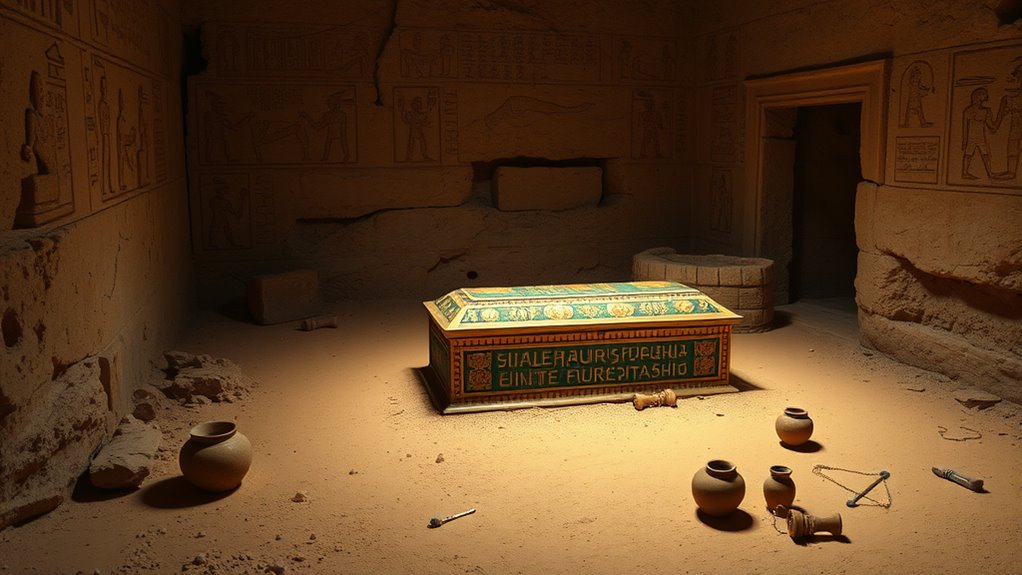
In Egypt, a team uncovered a series of well-preserved tombs that date back to the New Kingdom period. Using non-invasive imaging methods like laser scanning and ground-penetrating radar, they mapped the tombs’ interior without causing damage. Inside, they found beautifully decorated chambers filled with artifacts, including jewelry, pottery, and statues. The precision of these techniques allowed archaeologists to understand the tombs’ architecture and contents better, providing clues about the burial practices and beliefs of that era. Such discoveries highlight how technological advancements are transforming Egyptology, enabling researchers to explore complex burial sites more thoroughly than ever before.
Meanwhile, in the Mediterranean, underwater archaeologists found a shipwreck believed to be over 2,000 years old. Using remote-operated vehicles and sonar imaging, they mapped the site and recovered cargo that included amphorae, coins, and tools. These artifacts help piece together trade networks and economic exchanges during antiquity. The ability to explore these submerged sites with minimal disturbance demonstrates how modern archaeological techniques open new windows into the maritime history of ancient civilizations.
In every case, these discoveries remind you that the past is still very much alive, waiting to be uncovered. As technology advances, so does your chance to understand the stories of ancient civilizations more fully, making each find an exciting step forward in archaeology’s ongoing quest.
Top picks for "ancient discovery notable"
Open Amazon search results for this keyword.
As an affiliate, we earn on qualifying purchases.
Frequently Asked Questions
What New Technologies Aided These Discoveries in 2025?
In 2025, digital imaging and drone surveys played vital roles in archaeological discoveries. You leverage digital imaging to analyze sites with detailed, high-resolution visuals, revealing hidden details. Drone surveys allow you to access difficult terrain and quickly scan large areas from above, uncovering new structures and artifacts. These technologies make your excavation efforts more precise and efficient, opening new frontiers in understanding ancient civilizations.
Were Any of These Finds Linked to Famous Historical Figures?
You might think these discoveries are just ancient relics, but several are linked to famous historical figures, offering fascinating historical connections. For example, a newly unearthed artifact hints at notable personalities from ancient civilizations, bringing their stories vividly to life. These finds deepen our understanding of history, connecting the past to well-known figures and enriching our knowledge of their lives, making history feel more real and immediate for you.
How Might These Discoveries Change Current Historical Theories?
These discoveries could considerably alter current historical theories by offering new insights into ancient cultures and events. You might see fresh evidence that challenges existing narratives, sparking scholarly debates. The historical implications are profound, as they can reshape our understanding of past civilizations. As you analyze these finds, you’ll contribute to evolving historical models, making the field more dynamic and all-encompassing.
Were Any Ancient Artifacts Damaged During Excavation?
Like fragile glass in a storm, some artifacts faced damage during excavation, highlighting the ongoing challenge of artifact preservation. You’re aware that excavation challenges can sometimes lead to accidental harm, despite careful efforts. While archaeologists endeavor to minimize damage, delicate artifacts may still be affected. This reminds you that every discovery involves balancing the thrill of uncovering history with the responsibility of safeguarding it for future generations.
What Future Archaeological Projects Are Planned for 2026?
In 2026, you’ll explore exciting archaeological projects focused on ancient trade routes and lost city explorations. Teams plan to map uncharted pathways connecting civilizations and uncover hidden cities buried by time. You’ll participate in digs aimed at revealing trade networks that shaped history, offering new insights into ancient cultures. These ambitious projects promise to deepen our understanding of human history and foster discoveries that could redefine archaeology in the coming years.
Conclusion
As you reflect on these remarkable discoveries, it’s clear that history’s secrets are like buried treasures waiting to be uncovered. Each find is a shining thread in the rich tapestry of our past, reminding us that the past is never truly gone. These archaeological breakthroughs are like windows opening onto ancient worlds, inviting you to imagine the lives once lived. Together, they weave a story that continues to inspire and ignite curiosity within us all.