
Esports in schools uses competitive gaming as an effective learning tool by fostering technical skills, digital literacy, and teamwork. It creates inclusive environments where all students can quickly participate and develop a sense of community. Additionally, it offers opportunities to explore careers in technology, coding, and design. Integrating esports into education makes learning more engaging and relevant, helping students build skills for the future. Keep exploring to discover how this innovative approach can support your educational goals.
Key Takeaways
- Esports promotes digital literacy, technical skills, and teamwork, integrating gaming into educational environments as a valuable learning tool.
- Competitions foster strategic thinking, decision-making, and collaboration, enhancing student engagement and motivation.
- Esports introduces students to game design, coding, and technology careers, supporting STEM education and future career pathways.
- It provides inclusive opportunities for diverse students to participate, develop confidence, and build a sense of community.
- Incorporating esports aligns with modern curricula, making learning interactive, relevant, and preparing students for a digital future.
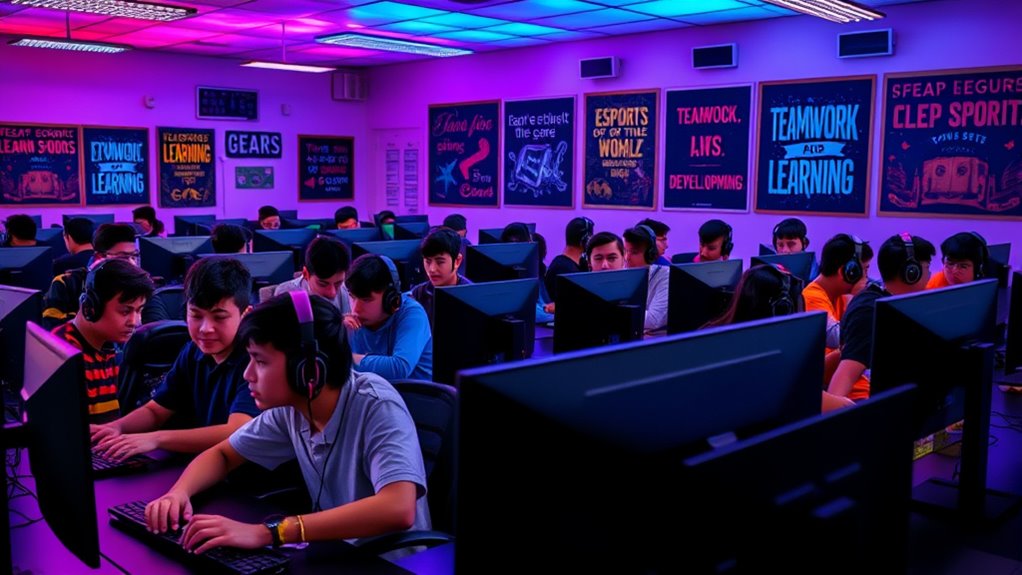
Esports in schools is rapidly gaining popularity as a legitimate extracurricular activity that combines competitive gaming with educational benefits. As a student, you might find that participating in esports offers more than just entertainment; it’s a way to develop valuable skills while engaging with your peers. Schools are increasingly integrating technology into their curricula, and esports fits perfectly into this trend. With dedicated gaming rooms and advanced gaming equipment, schools are creating spaces where tech-savvy students can thrive. This technology integration isn’t just about gaming; it provides opportunities to learn about hardware, software, and digital literacy, which are essential skills in today’s tech-driven world. When you’re involved in esports, you learn to navigate complex gaming platforms, troubleshoot technical issues, and understand game design—skills that are transferable to real-world careers in technology.
Esports in schools promotes technical skills, digital literacy, and teamwork through dedicated gaming spaces and innovative learning opportunities.
Your engagement levels tend to rise when you participate in esports activities. Unlike traditional sports, esports offers an inclusive environment where students of all backgrounds can find a place to excel. Whether you’re a seasoned gamer or new to competitive gaming, you can quickly become involved and feel a sense of belonging. Schools often use esports as a tool to boost student engagement by fostering teamwork, strategic thinking, and communication skills. You’ll learn how to collaborate with teammates, develop game strategies, and make quick decisions under pressure—all valuable life skills. The interactive nature of esports keeps you actively involved, which can lead to better focus, motivation, and a sense of achievement.
Beyond the immediate benefits, esports in schools can also promote academic success. Many programs incorporate educational components such as coding, digital art, and marketing, encouraging you to explore interests that extend beyond gaming. For instance, understanding game design can inspire you to pursue careers in computer science or graphic design. Schools might also organize tournaments and leagues, giving you goals to work toward and a sense of community. These activities create a dynamic environment where technology and education intersect, making learning more engaging and relevant to your daily life. Additionally, engaging with digital literacy through esports prepares you for future technological challenges and opportunities. As the skills learned in esports can be applied to problem-solving and critical thinking, you become better equipped for various academic and career pursuits. Developing technical skills through esports can also open pathways to future careers in the tech industry, further emphasizing the importance of integrating gaming into education.
In essence, esports is transforming how students interact with technology and education. When you become part of a school esports team, you’re not just playing games—you’re building skills that are increasingly important in our digital age. It’s a platform that fosters student engagement, enhances technological literacy, and promotes personal growth, all while delivering the thrill of competition. As this trend continues to grow, it’s clear that esports is shaping the future of extracurricular activities by making learning more interactive, inclusive, and aligned with the skills needed in the modern world.
Frequently Asked Questions
How Can Schools Ensure Fair Play in Competitive Gaming?
To guarantee fair play in competitive gaming, you should focus on cheating prevention by implementing strict rules and monitoring systems. Regular referee training is essential to spot and address any misconduct swiftly. Encourage transparency and integrity by fostering a positive gaming culture. By combining these strategies, you create a level playing field, promote sportsmanship, and help students develop values like honesty and respect through their gaming experiences.
What Are the Long-Term Academic Impacts of Esports Participation?
Sure, because spending hours gaming sounds like a surefire way to boost your grades, right? Irony aside, participating in esports can actually enhance your cognitive development and social skills. Long-term, you might find yourself sharper and more connected, thanks to strategic thinking and teamwork. So, rather than hindering your academic journey, esports could surprisingly support your growth, blending fun with valuable skills that stick with you.
How Do Esports Programs Integrate With Traditional Curricula?
You see, curriculum integration involves weaving esports programs into traditional lessons, making them a seamless part of learning. By employing innovative pedagogical strategies, educators can turn gaming into a valuable teaching tool. You might incorporate game-based assignments or use esports to teach teamwork and strategic thinking. This approach helps students see esports as more than just entertainment, fostering skills that complement their academic growth while aligning with existing curricula.
What Are the Health Risks Associated With Competitive Gaming?
You might face health risks from competitive gaming, like excessive Screen Time that leads to eye strain, headaches, and disrupted sleep. Prolonged periods of intense focus can cause eye fatigue and worsen vision. Additionally, sitting for long hours increases the risk of poor posture and related musculoskeletal issues. To stay healthy, take regular breaks, practice good posture, and limit Screen Time, especially during extended gaming sessions.
How Can Schools Secure Funding for Esports Programs?
To secure funding for esports programs, you should explore sponsorship opportunities from local businesses and gaming companies, which can provide financial support and equipment. Additionally, applying for equipment grants from educational foundations or government programs can help cover costs. You might also consider hosting fundraising events or partnering with community organizations to boost your budget. These strategies can make launching and maintaining a successful esports program more feasible.
Conclusion
Think of esports in schools as a bridge connecting students’ passions to valuable skills. It’s not just about winning games; it’s about building teamwork, strategic thinking, and resilience. Embrace this digital frontier as a fertile ground for growth, where every match is a stepping stone toward future success. Just like a seed grows into a towering tree, these experiences can help you reach new heights—if you’re willing to step onto the path.