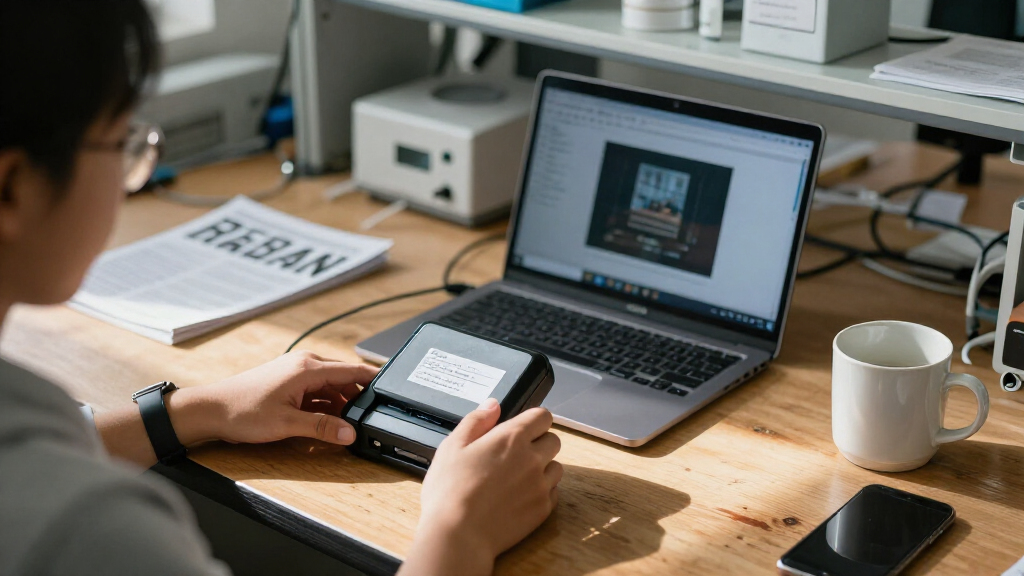
The best portable document scanners balance speed, reliable page feeding, and easy file handling without taking up a desk. I rank the ScanSnap iX1300 as the best overall choice for its wireless or USB connectivity and duplex scanning, while the Canon imageFORMULA R10 stands out for straightforward, sheet-fed document capture and the Epson ES-60W for wireless scanning on the move. The main tradeoff is between a feeder that handles batches and two-sided pages, a smaller single-sheet scanner that travels easily, and a handheld wand that offers flexibility but demands more manual control. Read on for the full breakdown of all 14 options and guidance on which type fits your paperwork.

Prime made for students and young adults
- Fast, free delivery for dorm and study essentials
- Prime Video and Amazon Music included
- Member-only deals
Key Takeaways
- The ScanSnap iX1300 leads for mixed everyday workloads: duplex scanning and wireless or USB connection make it more versatile than the single-sheet Epson DS-70 and ES-50.
- Feeders matter more than headline portability for recurring paperwork: the iX1300, Canon R10, and iX2500 suit batches better than compact one-page-at-a-time models.
- Wireless is a specific convenience, not a substitute for a workflow check: the Epson ES-60W and ScanSnap options add connection flexibility, but buyers should confirm that their devices and software fit the intended setup.
- Handheld wand scanners trade consistency for independence: the MUNBYN, Hczrc, AOZBZ, and blue handheld model can capture different-sized items without a document feeder, but each page requires a steady manual pass.
- The lineup splits into two distinct categories: Epson, Canon, Brother, Plustek, and ScanSnap models focus on feeding documents; handheld models that save to a memory card suit occasional capture away from a computer.
| Epson DS-70 Portable Single-Sheet Document Scanner |  | Best for Long Documents | Scanner type: Single-sheet, sheet-fed document scanner | Connection and power: USB; USB-powered | Optical resolution: 1200 dpi | VIEW LATEST PRICE | See Our Full Breakdown |
| HPPS100 Portable USB Document and Photo Scanner |  | Best for Lightweight Everyday Scans | Scanner type: Sheet-fed, single-sided document scanner | Connection and power: USB 2.0; USB-powered | Scanning speed: Up to 15 pages per minute | VIEW LATEST PRICE | See Our Full Breakdown |
| Plustek S410 Plus Portable Document Scanner |  | Best for Hands-Off Single-Page Scanning | Scanner type: Sheet-fed document scanner | Connection and power: USB; USB-powered | Resolution: 600 dpi | VIEW LATEST PRICE | See Our Full Breakdown |
| ScanSnap iX1300 Wireless or USB Duplex Color Document Scanner, White |  | Best for Wireless Batch Scanning | Scanner type: Document and receipt scanner | Connection: USB and Wi-Fi | Scanning: Duplex color | VIEW LATEST PRICE | See Our Full Breakdown |
| Canon imageFORMULA R10 Portable Document Scanner |  | Best Value for Duplex Batches | Scanner type: Document scanner | Connection and power: USB; USB-powered | Scanning: Duplex | VIEW LATEST PRICE | See Our Full Breakdown |
| Epson WorkForce ES-60W Wireless Compact Mobile Document Scanner |  | Best for Wireless Mobile Scanning | Scanner type: Single-sheet-fed document scanner | Connectivity: Wi-Fi and USB | Resolution: 1200 dpi | VIEW LATEST PRICE | See Our Full Breakdown |
| ScanSnap iX2500 High-Speed Wireless or USB Document Scanner, Black |  | Best for High-Volume Scanning | Scanner type: Business card and document scanner | Connectivity: Wi-Fi 6 and USB-C | Duplex scan speed: Up to 45 pages per minute | VIEW LATEST PRICE | See Our Full Breakdown |
| Brother DS-640 Compact Mobile Document Scanner |  | Best for Laptop-Powered Simplicity | Model: DS-640 | Scanner type: Business card and document scanner | Scan speed: Up to 16 pages per minute | VIEW LATEST PRICE | See Our Full Breakdown |
| ScanSnap iX1300 Wireless or USB Double-Sided Color Document Scanner, Black |  | Best Compact Duplex Scanner | Scanner type: Document and receipt scanner | Connectivity: USB and Wi-Fi | Scanning: Double-sided color | VIEW LATEST PRICE | See Our Full Breakdown |
| Epson WorkForce ES-50 Compact Mobile Document Scanner |  | Best for Simple USB Scanning | Scanner type: Single-sheet-fed document scanner | Connection: USB 2.0 | Power: USB-powered; 2.1 watts | VIEW LATEST PRICE | See Our Full Breakdown |
| MUNBYN Portable Handheld Wand Scanner, 900 DPI, A4, 16GB SD Card, Black |  | Best for Books and Flat Originals | Scanner type: Handheld wand scanner | Maximum scan size: A4 | Resolution: 300, 600, or 900 dpi | VIEW LATEST PRICE | See Our Full Breakdown |
| Hczrc Portable Handheld Scanner for A4 Documents, Photos, and Receipts |  | Best for Simple, Driver-Free Setup | Scanner type: Handheld scanner for receipts, photos, and documents | Resolution: 300, 600, or 900 dpi | Storage: Included 16GB microSD card; supports up to 32GB | VIEW LATEST PRICE | See Our Full Breakdown |
| AOZBZ 900 DPI Portable Handheld Document Scanner with 16 GB SD Card |  | Best for Basic USB File Transfer | Scanner type: Handheld document scanner | Resolution modes: 300, 600, and 900 dpi | Storage: Included 16GB SD card; supports up to 32GB microSD/TF | VIEW LATEST PRICE | See Our Full Breakdown |
| Handheld A4 Portable Scanner, 300/600/900 DPI, JPEG/PDF, Includes 16GB SD Card, Blue |  | Best for Included Travel Accessories | Scanner type: Handheld | Scanning width: A4 (216 mm) | Resolution: 300, 600, or 900 dpi | VIEW LATEST PRICE | See Our Full Breakdown |
| portable document scanner | Scanner type | Resolution | Compatibility | Dimensions |
|---|---|---|---|---|
| Epson DS-70 Portable Single-Sh | Single-sheet, sheet-fed document scanner | — | — | — |
| HPPS100 Portable USB Document | Sheet-fed, single-sided document scanner | — | — | — |
| Plustek S410 Plus Portable Doc | Sheet-fed document scanner | 600 dpi | — | — |
| ScanSnap iX1300 Wireless or US | Document and receipt scanner | 600 dpi | — | — |
| Canon imageFORMULA R10 Portabl | Document scanner | — | Windows and Mac | — |
| Epson WorkForce ES-60W Wireles | Single-sheet-fed document scanner | 1200 dpi | PC, Mac, iOS, and Android | 1.8 × 10.7 × 1.3 inches |
| ScanSnap iX2500 High-Speed Wir | Business card and document scanner | 600 dpi | Mac, PC, iOS, and Android | 6.26 × 11.5 × 6.34 inches |
| Brother DS-640 Compact Mobile | Business card and document scanner | 300 dpi | Windows, Mac, and Linux | 1.99 × 11.9 × 1.45 inches |
| ScanSnap iX1300 Wireless or US | Document and receipt scanner | 600 dpi | — | 4.5 × 11.7 × 3.3 inches |
| Epson WorkForce ES-50 Compact | Single-sheet-fed document scanner | 1200 dpi | Windows and Mac | — |
| MUNBYN Portable Handheld Wand | Handheld wand scanner | 300, 600, or 900 dpi | — | 0.84 × 10 × 0.7 in |
| Hczrc Portable Handheld Scanne | Handheld scanner for receipts, photos, and documents | 300, 600, or 900 dpi | Windows XP or later; Mac OS 10.4 or later | 2 × 11 × 1.5 in |
| AOZBZ 900 DPI Portable Handhel | Handheld document scanner | — | Windows XP, 7, and Vista; Mac OS 10.4 or later | 10 × 1 × 1 in |
| Handheld A4 Portable Scanner | Handheld | 300, 600, or 900 dpi | Windows 2000 or later; listed examples include Windows 2000, ME, and XP | — |
More Details on Our Top Picks
Epson DS-70 Portable Single-Sheet Document Scanner
The Epson DS-70 is the pick I’d make for occasional scans that may run well beyond a standard page. Its maximum document length of 72 inches accommodates long receipts and other extended documents, while OCR software can turn scans into searchable PDFs or editable text. At 9.44 ounces, it is easy to pack, and USB power means there is no battery or separate power supply to manage.
Compared with the Canon imageFORMULA R10, the DS-70 trades an automatic feeder and duplex scanning for a smaller, simpler setup. That makes it a better fit for a few pages at a time, not a paperwork backlog: each page must be fed individually. Its 5.5-second-per-page speed is useful for quick jobs, but manual feeding keeps it behind batch-oriented models for multi-page work.
Pros:- Supports documents up to 72 inches long, beyond the standard-page limit of many compact scanners.
- Lightweight at 9.44 ounces and powered through USB.
- Scans a page in as little as 5.5 seconds.
- Includes OCR software for searchable PDFs and editable text.
Cons:- Requires feeding pages one at a time.
- Does not offer duplex scanning or an automatic document feeder.
- Requires a computer connection for power and scanning.
Best for: Traveling consultants and field staff who scan long receipts, forms, or occasional pages directly to a computer.
Not ideal for: Anyone digitizing stacks of double-sided paperwork who wants an automatic feeder or hands-off batch scanning.
- Scanner type:Single-sheet, sheet-fed document scanner
- Connection and power:USB; USB-powered
- Optical resolution:1200 dpi
- Scanning speed:As fast as 5.5 seconds per page
- Maximum document size:8.5 × 72 inches
- Supported media:Documents, business cards, ID cards, and receipts
- Software and compatibility:OCR and document management software; Windows and Mac
- Dimensions and weight:13 × 5.5 × 2.7 inches; 9.44 ounces
- Warranty:3-year limited warranty with Next-Business-Day Replacement
Our verdict“Choose the DS-70 for a light, computer-connected scanner that handles unusually long documents, but skip it if you need efficient batch or duplex scanning.”
HPPS100 Portable USB Document and Photo Scanner
For a scanner that can slip into a bag without adding much weight, the HPPS100 stands out at just 3 ounces. It handles documents, photos, receipts, and cards, and HP WorkScan adds automatic scanning, size detection, editing, and image cleanup. USB power and an included cable keep the setup straightforward for home, school, or travel use.
Unlike the Epson DS-70, the HPPS100 lists a 10-sheet standard capacity and scans at up to 15 pages per minute, but it is still single-sided: double-sided pages require a second pass. Its maximum paper size is 8.5 × 14 inches, so it cannot handle the DS-70’s extra-long documents. I’d choose it for varied small items and routine single-sided pages, not long originals or a large two-sided filing project.
Pros:- Very light at 3 ounces and compact enough for travel.
- Scans at up to 15 pages per minute.
- HP WorkScan includes size detection, editing, and image cleanup tools.
- Handles documents, photos, receipts, business cards, and cards.
Cons:- Scans only one side at a time.
- Maximum paper size is 8.5 × 14 inches, shorter than the DS-70’s long-document support.
- Listed standard sheet capacity is limited to 10 sheets.
Best for: Students, remote workers, and travelers who want an especially light USB scanner for receipts, cards, photos, and standard documents.
Not ideal for: People who regularly scan long documents or need fast duplex capture of double-sided paperwork.
- Scanner type:Sheet-fed, single-sided document scanner
- Connection and power:USB 2.0; USB-powered
- Scanning speed:Up to 15 pages per minute
- Resolution and color depth:1200 dpi; 24-bit color
- Standard sheet capacity:10 sheets
- Maximum paper size:8.5 × 14 inches
- Supported media:Business cards, paper, photos, receipts, and cards
- Software and compatibility:HP WorkScan; Windows and macOS
- Dimensions and weight:2 × 11.6 × 1.4 inches; 3 ounces
Our verdict“Pick the HPPS100 for lightweight, varied, mostly single-sided scanning; choose a duplex model if turning pages over would slow your routine.”
Plustek S410 Plus Portable Document Scanner
The Plustek S410 Plus suits buyers who want single-page scanning to start automatically rather than pressing a button for every sheet. Its USB-powered design keeps it portable, while included DocAction with OCR can create searchable or editable Word, Excel, and PDF files and send them to a computer, FTP, or shared folder. Those workflow options make it more useful for organizing routine office documents than a barebones scanner.
Compared with the Epson DS-70, the Plustek also feeds one sheet at a time, but its listed resolution is 600 dpi rather than 1200 dpi, and it does not list the Epson’s support for documents up to 72 inches. Its automatic scanning and file-routing options are the distinction here, not batch capacity. Buyers should also note that it needs a connected computer for both power and file storage, and its listed operating systems are Windows versions only.
Pros:- Automatically starts scanning without a button press.
- OCR can create searchable or editable Word, Excel, and PDF files.
- Can route files to a computer, FTP, or shared folder.
- USB-powered compact design avoids a separate power supply.
Cons:- One-sheet standard capacity means pages must be handled individually.
- Requires a connected computer for power and file storage.
- Listed operating-system support covers Windows 7, 8, 10, and 11, not Mac.
Best for: Windows-based freelancers or office staff who scan individual receipts, cards, and forms into organized searchable files.
Not ideal for: Mac users, people who need standalone scanning, or anyone processing stacks of pages without manual feeding.
- Scanner type:Sheet-fed document scanner
- Connection and power:USB; USB-powered
- Resolution:600 dpi
- Standard sheet capacity:1 sheet
- Supported media:Paper, business cards, and plastic ID cards
- Software:Plustek DocAction with OCR
- Supported operating systems:Windows 7, 8, 10, and 11
- Dimensions and weight:1.6 × 11.7 × 1.9 inches; 0.41 kg
- Warranty:2 years
Our verdict“Choose the S410 Plus if automatic single-sheet capture and OCR routing matter more than high resolution, Mac support, or batch feeding.”
ScanSnap iX1300 Wireless or USB Duplex Color Document Scanner, White
The ScanSnap iX1300 is the most capable choice here for scanning a small batch without tying every job to a USB connection. Its duplex capture scans both sides, while Wi-Fi supports connections to computers, mobile devices, or cloud services; it can also scan without a computer using ScanSnap Home. Deskewing, color optimization, and blank-page removal help reduce cleanup after mixed document batches.
Against the Canon imageFORMULA R10, the iX1300 adds Wi-Fi and a faster listed rate of up to 30 pages per minute, while both offer a 20-sheet capacity and duplex scanning. The tradeoff is its 4.4-pound weight: it is compact for a feeder scanner, but far less convenient to carry than the single-sheet Epson DS-70. Its 20-sheet capacity also suits modest batches, not continuous high-volume work, and compatibility depends on the devices and operating systems in use.
Pros:- Duplex scanning reaches up to 30 pages per minute.
- Wi-Fi and USB provide flexible connection options.
- Can scan without a computer using ScanSnap Home.
- Automatic deskewing, color optimization, and blank-page removal help reduce manual cleanup.
Cons:- At 4.4 pounds, it is much heavier to carry than single-sheet portable models.
- The 20-sheet capacity limits the size of unattended batches.
- Compatibility depends on supported operating systems and devices.
Best for: Small-office teams and mobile professionals who need Wi-Fi, two-sided batch scanning, and options to scan without a computer.
Not ideal for: Travelers prioritizing the lightest possible kit or offices that routinely process batches larger than 20 sheets.
- Scanner type:Document and receipt scanner
- Connection:USB and Wi-Fi
- Scanning:Duplex color
- Maximum scan speed:Up to 30 pages per minute
- Resolution:600 dpi
- Standard sheet capacity:20 sheets
- Supported media:Documents, photos, receipts, business cards, thick items, and plastic cards
- Dimensions and weight:4.5 × 11.7 × 3.3 inches; 4.4 lb
- Warranty:1-year depot warranty
Our verdict“Choose the iX1300 for wireless, duplex batch scanning and computer-free workflows, not for ultralight travel or large-volume feeding.”
Canon imageFORMULA R10 Portable Document Scanner
The Canon imageFORMULA R10 gives portable-scanner buyers an automatic feeder and duplex capture without requiring a Wi-Fi workflow. It holds 20 sheets and scans both sides at up to 12 pages per minute, so a short stack of forms or receipts takes less handling than with the single-sheet Epson DS-70. USB power and built-in software for editing and organizing scans make it a practical computer-connected option for home or office use.
Compared with the ScanSnap iX1300, the R10 is slower on paper and lacks Wi-Fi, but it weighs less than a kilogram and retains the same listed 20-sheet feeder capacity. That makes it a straightforward fit for modest batches rather than a wireless or computer-free setup. The main media limitation is clear: Canon does not intend this model for photographs on photo paper, so buyers seeking a photo-capable scanner should choose another option.
Pros:- Duplex scanning captures both sides at up to 12 pages per minute.
- 20-sheet automatic feeder handles short document batches.
- USB-powered design avoids a separate power adapter.
- Built-in software supports scan editing and organization.
Cons:- No Wi-Fi connection or computer-free scanning is listed.
- Not intended for photographs on photo paper.
- Its 12-page-per-minute speed is below the ScanSnap iX1300’s listed 30-page-per-minute maximum.
Best for: Home-office users and traveling professionals who need a compact USB scanner for short batches of two-sided documents.
Not ideal for: People who need Wi-Fi or standalone scanning, or anyone planning to digitize photographs printed on photo paper.
- Scanner type:Document scanner
- Connection and power:USB; USB-powered
- Scanning:Duplex
- Maximum scan speed:Up to 12 pages per minute
- Automatic feeder capacity:20 sheets
- Resolution and color depth:600 dpi; 24-bit color
- Compatibility:Windows and Mac
- Dimensions and weight:3.74 × 11.22 × 1.57 inches; 998 g
- Suggested daily volume:500 scans
Our verdict“Pick the R10 for straightforward USB-powered duplex batch scanning, but choose the iX1300 if wireless access or faster listed throughput matters more.”
Epson WorkForce ES-60W Wireless Compact Mobile Document Scanner
The Epson WorkForce ES-60W is a strong fit when portability means scanning away from a desk, not just moving a scanner between rooms. At 10.56 ounces, it is lighter than the desktop-oriented ScanSnap iX2500, and Wi-Fi lets it work with compatible phones and computers without a USB cable. Its quick, single-page capture suits receipts, IDs, and occasional paperwork; included OCR can turn scans into searchable PDFs or editable files. The tradeoff is its one-sheet feed: a stack of documents takes repeated manual loading, unlike the iX2500’s 100-sheet feeder or the iX1300’s 20-sheet capacity. Cloud workflows also depend on an internet connection and compatible software. Choose it for mobile flexibility and small batches, not recurring bulk scanning.
Pros:- Wi-Fi and USB support both mobile and computer-based scanning
- Lightweight, compact body is easy to carry
- OCR supports searchable PDFs and editable Word and Excel files
- Accepts documents, receipts, and ID cards, including pages up to 72 inches long
Cons:- Single-sheet feeding slows down multi-page jobs
- Cloud scanning depends on an internet connection and compatible software
Best for: Traveling professionals who scan receipts, IDs, and a few pages at a time using a phone or laptop
Not ideal for: People regularly digitizing large paper stacks, because every page must be fed individually
- Scanner type:Single-sheet-fed document scanner
- Connectivity:Wi-Fi and USB
- Resolution:1200 dpi
- Scan speed:As fast as 4 seconds per page
- Maximum document size:8.5 × 72 inches
- Supported media:Paper, receipts, and ID cards
- Dimensions:1.8 × 10.7 × 1.3 inches
- Weight:10.56 ounces
- Compatibility:PC, Mac, iOS, and Android
Our verdict“Choose the ES-60W if wireless scanning and a very light carry matter more than feeding a stack of pages at once.”
ScanSnap iX2500 High-Speed Wireless or USB Document Scanner, Black
For buyers who need to process stacks rather than carry a scanner everywhere, the ScanSnap iX2500 is the most capable workhorse in this group. Its 100-sheet feeder and duplex speed of up to 45 pages per minute can reduce the handling involved in recurring office or home-office batches. Wi-Fi 6 and USB-C offer flexible connections, while the touchscreen and file-organization tools make it better suited to repeat workflows than the single-sheet Epson ES-60W. That capacity comes with a clear portability compromise: at 7.7 pounds, it is far less convenient to take on trips, and the feeder still needs refilling for jobs larger than its capacity. Some workflow features also rely on compatible apps or cloud services. Pick it for throughput and organization, not pocketable mobility.
Pros:- 100-sheet automatic feeder accommodates sizable scanning batches
- Duplex scanning reaches up to 45 pages per minute
- Wi-Fi 6 and USB-C support computer, mobile, and cloud workflows
- Paper-feed safeguards help reduce jams and document damage
Cons:- At 7.7 pounds, it is much less portable than the single-sheet mobile models
- The feeder requires refilling for jobs beyond 100 sheets
- Some workflow tools depend on compatible apps or cloud services
Best for: Small-office teams and home-office users who regularly scan double-sided stacks and want built-in file organization
Not ideal for: Frequent travelers or occasional users who need a light scanner that fits easily in a bag
- Scanner type:Business card and document scanner
- Connectivity:Wi-Fi 6 and USB-C
- Duplex scan speed:Up to 45 pages per minute
- Resolution:600 dpi
- Standard sheet capacity:100 sheets
- Color depth:24-bit
- Dimensions:6.26 × 11.5 × 6.34 inches
- Weight:7.7 pounds
- Compatibility:Mac, PC, iOS, and Android
Our verdict“Choose the iX2500 when fast, organized batch scanning matters more than carrying your scanner between locations.”
Brother DS-640 Compact Mobile Document Scanner
The Brother DS-640 keeps mobile scanning straightforward: connect it to a laptop or PC by USB, then scan documents, receipts, business cards, or plastic IDs. Its stated speed of up to 16 pages per minute makes it a more practical choice for consecutive pages than the single-sheet Epson ES-50, though it still lacks the automatic feeder found on the ScanSnap iX1300. The long-page support is useful for forms and other documents that exceed standard letter length, and included OCR and image tools can help make files easier to search and read. The main limitation is dependence on a computer for both power and scanning; there is no wireless, phone-first workflow. It is a practical travel companion for laptop users, but not for people who want to scan independently of a computer.
Pros:- USB power avoids carrying a separate power adapter
- Handles documents up to 72 inches long, along with receipts and plastic cards
- Includes OCR and image enhancement tools
- Compatible with Windows, Mac, and Linux
Cons:- Requires a connected PC or laptop for power and scanning
- No Wi-Fi or direct mobile scanning workflow
- Image rotation is available on PC only
Best for: Laptop-carrying field workers who need a USB-powered scanner for receipts, cards, and occasional long documents
Not ideal for: Phone-first users or anyone who needs wireless scanning without a connected computer
- Model:DS-640
- Scanner type:Business card and document scanner
- Scan speed:Up to 16 pages per minute
- Connection and power:USB; 2.5 watts
- Maximum document length:72 inches
- Resolution:300 dpi
- Media types:Business cards, embossed cards, ID cards, laminated cards, paper, plastic cards, and receipts
- Dimensions:1.99 × 11.9 × 1.45 inches
- Compatibility:Windows, Mac, and Linux
Our verdict“Choose the DS-640 if you want a compact, computer-connected scanner with broad media support and no need for wireless operation.”
ScanSnap iX1300 Wireless or USB Double-Sided Color Document Scanner, Black
The ScanSnap iX1300 is a middle ground between the pocketable single-sheet scanners and the larger ScanSnap iX2500. Its duplex scanning up to 30 pages per minute handles both sides of a page in one pass, while Wi-Fi and USB let it serve computers, mobile devices, and cloud workflows. It also accepts photos, receipts, and plastic cards, making it more versatile for mixed household paperwork than the document-focused Epson ES-50. The compact footprint suits a small desk, but its 20-sheet capacity means it cannot match the iX2500 for larger batches. At 4.4 pounds, it is compact rather than truly lightweight, and some workflows—such as Chromebook scanning—require the mobile app. Choose it when automatic two-sided scanning matters, but a large feeder does not.
Pros:- Duplex capture scans both sides without manually turning pages
- Wi-Fi and USB support computer, mobile, and cloud scanning
- Handles paper, photos, receipts, and plastic cards
- Automatic de-skew, color optimization, and blank-page removal simplify file cleanup
Cons:- 20-sheet capacity is modest for larger jobs compared with the iX2500
- At 4.4 pounds, it is heavier than the handheld and single-sheet mobile options
- Some workflows, including Chromebook scanning, require the mobile app
Best for: Home-office users with limited desk space who scan mixed paperwork and want wireless duplex capture
Not ideal for: People who need a genuinely lightweight travel scanner or routinely process stacks larger than 20 sheets
- Scanner type:Document and receipt scanner
- Connectivity:USB and Wi-Fi
- Scanning:Double-sided color
- Maximum scan speed:Up to 30 pages per minute duplex
- Resolution:600 dpi
- Standard sheet capacity:20 sheets
- Media types:Paper, photos, and plastic cards
- Dimensions:4.5 × 11.7 × 3.3 inches
- Weight:4.4 pounds
Our verdict“Choose the iX1300 for compact, wireless duplex scanning across varied media, provided its 20-sheet capacity fits your workload.”
Epson WorkForce ES-50 Compact Mobile Document Scanner
The Epson WorkForce ES-50 is the simplest pick for scanning a few pages with a laptop: it is compact, weighs 9.44 ounces, and draws power through USB, so there is no battery to charge. Epson includes OCR tools for searchable PDFs and editable Word and Excel files, giving it more document-processing capability than a basic image-only portable scanner. Compared with the wireless ES-60W, the ES-50 gives up phone-friendly Wi-Fi and is a little slower, at up to 5.5 seconds per page rather than 4 seconds. Like the ES-60W, it feeds one sheet at a time, so neither is a good fit for routine stacks; unlike the Brother DS-640, it is limited to Windows and Mac. Pick it for lightweight, cable-based use—not wireless flexibility or batch speed.
Pros:- Very light and compact for carrying with a laptop
- USB power means no battery or separate power supply is needed
- OCR supports searchable PDFs and editable Word and Excel files
- Handles receipts, ID cards, and documents up to 72 inches long
Cons:- Single-sheet feeding makes multi-page jobs manual
- USB-only connectivity does not support wireless or direct phone scanning
- Compatible with Windows and Mac, but not listed for Linux or mobile devices
Best for: Windows or Mac users who travel with a laptop and scan occasional receipts, IDs, and document pages
Not ideal for: Mobile-device users or people who need wireless scanning or frequent multi-page batch work
- Scanner type:Single-sheet-fed document scanner
- Connection:USB 2.0
- Power:USB-powered; 2.1 watts
- Resolution:1200 dpi
- Scan speed:As fast as 5.5 seconds per page
- Standard sheet capacity:1 sheet
- Supported media:Documents up to 8.5 × 72 inches, receipts, and ID cards
- Weight:9.44 ounces
- Compatibility:Windows and Mac
Our verdict“Choose the ES-50 if you want a light, USB-powered scanner for occasional pages and do not need wireless connectivity.”
MUNBYN Portable Handheld Wand Scanner, 900 DPI, A4, 16GB SD Card, Black
The MUNBYN’s wand-style design is the main reason to choose it: you can scan a book page or other flat original without pushing it through a sheet feeder. At 145 g, it is the lightest of these four handheld picks, and its included 16GB SD card lets you save scans for later transfer by USB without a driver. Three settings, up to 900 dpi, provide flexibility for text or finer image detail. Compared with the Epson WorkForce ES-50, this MUNBYN can handle bound pages, but it requires you to move the scanner steadily across each page rather than feeding a sheet automatically. That manual motion can take practice and may produce uneven results. It saves JPG or PDF files; editable Word or Excel output requires separate OCR software.
Pros:- Scans flat originals, including book pages, without feeding them through a mechanism.
- Lightweight 145 g body is easy to pack.
- Three resolution settings, including 900 dpi, support different image-detail needs.
- Includes a 16GB SD card and transfers files by USB without a driver.
Cons:- Manual movement over each page takes practice to keep scans consistent.
- JPG and PDF output does not provide editable text without separate OCR software.
Best for: Traveling students and researchers who need to capture book pages, loose documents, or photos without a sheet feeder.
Not ideal for: People digitizing stacks of loose pages or needing editable text files directly; manual wand movement slows repeated scanning, and OCR software is separate.
- Scanner type:Handheld wand scanner
- Maximum scan size:A4
- Resolution:300, 600, or 900 dpi
- Storage:Included 16GB SD card
- Output formats:JPG and PDF
- Connectivity:Wireless scanning; USB for computer connection and file transfer
- Dimensions:0.84 × 10 × 0.7 in
- Weight:145 g (0.32 lb)
Our verdict“Choose the MUNBYN if book pages and a particularly light wand matter more than the guided feeding of the Epson WorkForce ES-50.”
Hczrc Portable Handheld Scanner for A4 Documents, Photos, and Receipts
The Hczrc is a straightforward pick for someone who wants files saved to removable memory without installing scanning software first. It writes JPEG or PDF scans to an included 16GB microSD card, then uses USB to transfer them to a computer. Its three resolution options reach 900 dpi, so buyers can choose a lower setting for routine paperwork or a higher one for more image detail. Compared with the MUNBYN Portable Handheld Wand Scanner, its appeal is similar, but the listed specs give it a larger, heavier body and call for two AA batteries, which are not included. That makes spare batteries part of the travel kit. Like the other wand scanners here, it depends on a steady hand; it is better for occasional pages than a regular flow of paperwork.
Pros:- Includes a 16GB microSD card and saves scans directly to it.
- Offers 300, 600, and 900 dpi settings.
- Supports JPEG and PDF output.
- Works with listed Windows and Mac systems without software installation.
Cons:- Two AA batteries are required and are not included.
- Manual movement over the page can make consistent scanning difficult.
- At 9.6 oz, it is heavier than the MUNBYN wand scanner.
Best for: Travelers and occasional scanners who want removable-card storage and a simple USB file-transfer workflow on Windows or Mac.
Not ideal for: People who scan frequently, prefer a scanner that feeds pages, or want to start scanning without supplying batteries.
- Scanner type:Handheld scanner for receipts, photos, and documents
- Resolution:300, 600, or 900 dpi
- Storage:Included 16GB microSD card; supports up to 32GB
- File formats:JPEG and PDF
- Power:Two AA batteries, not included
- Connection:USB
- Dimensions:2 × 11 × 1.5 in
- Weight:9.6 oz
- Compatibility:Windows XP or later; Mac OS 10.4 or later
Our verdict“Pick the Hczrc for a simple card-and-USB workflow if you are comfortable supplying batteries and scanning each page by hand.”
AOZBZ 900 DPI Portable Handheld Document Scanner with 16 GB SD Card
The AOZBZ keeps the workflow basic: scan by hand, save a JPEG or PDF to removable memory, and connect by USB 2.0 when it is time to transfer files. It includes a 16GB card, supports cards up to 32GB, and offers 300, 600, and 900 dpi settings. Those details make it a reasonable fit for occasional paperwork or image capture when automatic feeding is not the priority. Compared with the Hczrc Portable Handheld Scanner, the AOZBZ lists a lighter 170 g body, though both require manual passes and have similar resolution choices. Its key limitation is compatibility: the supplied data names Windows XP, 7, and Vista, plus Mac OS 10.4 or later, rather than newer systems. I would check device compatibility before choosing it for a current computer.
Pros:- Includes a 16GB card and supports removable storage up to 32GB.
- Three resolution modes reach 900 dpi.
- Saves scans as JPEG or PDF.
- USB 2.0 plug-and-play operation does not require preinstalled software.
Cons:- Manual scanning requires steady movement and can be inconsistent.
- Listed operating-system compatibility is limited to Windows XP, 7, and Vista, and Mac OS 10.4 or later.
Best for: People with a compatible older Windows or Mac computer who want an inexpensive-to-operate handheld scanner for occasional pages and removable-card storage.
Not ideal for: Buyers using newer operating systems without confirmed compatibility, or anyone scanning batches who would benefit from a sheet-fed model such as the Epson WorkForce ES-50.
- Scanner type:Handheld document scanner
- Resolution modes:300, 600, and 900 dpi
- Storage:Included 16GB SD card; supports up to 32GB microSD/TF
- File formats:JPEG and PDF
- Connection:USB 2.0
- Sensor:CIS
- Dimensions:10 × 1 × 1 in
- Weight:170 g
- Compatibility:Windows XP, 7, and Vista; Mac OS 10.4 or later
Our verdict“Choose the AOZBZ for occasional handheld scanning only if its listed computer compatibility matches your setup.”
Handheld A4 Portable Scanner, 300/600/900 DPI, JPEG/PDF, Includes 16GB SD Card, Blue
This handheld A4 scanner is the most accessory-focused option in this group: its listed package includes a protective bag, calibration card, cleaning cloth, USB cable, and software CD. It also offers color or black-and-white scanning and three resolution settings. The supplied speed figures show the practical tradeoff: a page takes about three seconds at 300 dpi, compared with about ten seconds at 900 dpi. That gives you a choice between faster routine capture and finer detail, though neither setting removes the need to guide the scanner by hand. Compared with the MUNBYN Portable Handheld Wand Scanner, this model supplies more listed accessories but has no built-in memory and requires two AA batteries. Its stated compatibility is Windows-only, making it a less flexible choice for Mac users.
Pros:- Includes a protective bag, calibration card, cleaning cloth, USB cable, and software CD.
- Scans A4 originals in color or black and white.
- Offers 300, 600, and 900 dpi settings with JPEG or PDF output.
- Listed page times help buyers weigh speed against resolution.
Cons:- Requires two AA batteries, which are not included.
- Has no built-in memory and needs a MicroSD/TF card.
- Listed compatibility is limited to Windows systems.
Best for: Windows users who want an occasional-use handheld scanner with a protective bag and basic maintenance accessories included.
Not ideal for: Mac users, frequent document scanners, or travelers who do not want to carry spare batteries and a separate memory card.
- Scanner type:Handheld
- Scanning width:A4 (216 mm)
- Resolution:300, 600, or 900 dpi
- Scan speed:About 3 seconds/page at 300 dpi, 8 seconds/page at 600 dpi, and 10 seconds/page at 900 dpi
- File formats:JPEG and PDF
- Storage:MicroSD/TF card, 1–32GB; no built-in memory; 16GB card stated as included
- Power:Two AA batteries, not included
- Dimensions and weight:10 × 0.98 × 0.98 in; about 0.31 lb
- Compatibility:Windows 2000 or later; listed examples include Windows 2000, ME, and XP
Our verdict“Choose this model for its travel accessories and selectable scan speed if you use Windows and accept separate batteries and memory.”
How We Picked
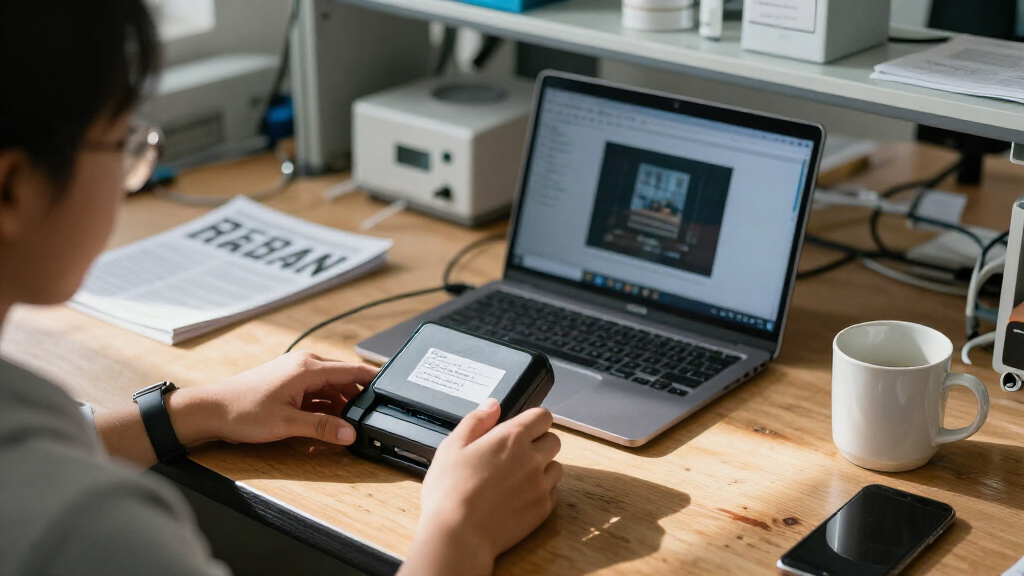
I compared these portable document scanners by the jobs their designs support, rather than treating every compact device as interchangeable. The main criteria were page-feeding approach, duplex capability where specified, connection options, portability, and how much manual effort each workflow asks of the user. I also weighed versatility for receipts and photos, expected convenience for frequent scanning, and whether a device appears better suited to computer-connected work or standalone capture.
The ranking favors models that can serve more everyday document needs with less page-by-page handling. That puts the ScanSnap iX1300 ahead as a flexible duplex option, with the Canon R10 and wireless Epson ES-60W serving distinct priorities. Compact single-sheet scanners rank well for readers who value a small footprint, while handheld wand scanners sit lower for routine paperwork because steady manual scanning is less suited to repeatable batches. The black iX1300 remains a separate listed product, but its stated scanning and connection features match the white version; color alone does not change its practical role.
Factors to Consider When Choosing Portable Document Scanners
Before choosing a model, I’d start with the shape of the paperwork you actually scan. A scanner that is easy to carry may still slow you down if you process multi-page forms, while a feeder can be unnecessary for a few receipts or loose photos. These broader checks help match the scanner to your routine, software, and tolerance for manual work.
Choose a feed mechanism that matches your weekly volume
For recurring paperwork, the feed mechanism has a bigger effect on day-to-day convenience than a small difference in scanner dimensions. A sheet-fed model lets you move through pages without guiding the scanner over each line, while a handheld wand requires you to pass it steadily across every page. Estimate how many pages you scan in a typical session, not just how often you scan. If you regularly digitize multi-page forms, prioritize a feed-based model and check its supported page workflow before buying. For occasional single sheets, a compact manual or one-page design can be easier to pack and store. A common mistake is choosing the smallest scanner, then finding that its process adds too much handling to routine work.
Decide whether duplex scanning will save you real effort
Duplex scanning captures both sides of a sheet in one workflow, which matters most for forms, identification paperwork, and documents with notes on the reverse. It may add little value if nearly everything you scan is single-sided. Before paying for a duplex-capable model, look at the documents you handle across a normal month and count how often the back contains useful information. Also check how the scanner handles mixed single- and double-sided pages, since a feature only helps if it fits the way you work. Buyers sometimes focus on page speed while overlooking the time spent flipping paper. For occasional, mostly one-sided capture, a simpler scanner may be the more sensible fit.
Match wireless and USB connections to your actual setup
Wireless capability can make a scanner easier to place or share, but it does not automatically make scanning faster. Check which devices you plan to scan from and whether the scanner’s supported software and connection methods work with them. USB may be the steadier choice at a fixed workstation or when you prefer a direct connection. Wireless is more useful when your desk changes, you scan from different devices, or cable placement is inconvenient. Avoid assuming that a wireless scanner will work like a standalone memory-card device; these are different workflows. If you need to save scans without a computer, confirm that the scanner explicitly supports that use before choosing.
Treat handheld memory-card models as a separate workflow
Handheld scanners can be useful when you need to capture a page away from a desk or handle items that do not suit a feeder. Their independence comes with a tradeoff: you guide the scanner by hand, so steady movement and consistent coverage are part of the job. That makes them a weaker fit for batches of contracts or repeated office scanning than feed-based models. Check the included storage format and how files move from the card to your phone or computer; convenient capture is less useful if transfer becomes a chore. If image consistency matters for archiving or searchable business records, compare the device’s software and output workflow rather than focusing on the stated resolution alone. Choose this style for flexibility, not as a shortcut to automatic document handling.
Check what the scanner does after capture
Scanning is only one part of turning paper into useful files. Think about whether you need searchable PDFs, simple image files, organized folders, or a quick way to send documents to another application. Software support can shape the workflow as much as the scanner itself, especially if you scan receipts for records or paperwork for later retrieval. Verify compatibility with your computer or mobile device and check whether the software supports the file types and organization features you need. A low-effort capture process can still create extra work if every file needs renaming or manual sorting. Buyers who only need occasional image copies can accept a simpler workflow than people maintaining a searchable archive.
Pay for capacity and convenience you will use
A larger or more feature-rich scanner makes sense when it removes a recurring annoyance, such as manually turning pages or connecting through a cable each time. For a few pages per month, that added capability may take up space without changing much. Consider where the scanner will live, how often you carry it, and whether it will be used by one person or shared. For mobile use, a compact design matters only if its power and connection needs also suit the places you work. For a home office, dependable batch handling may matter more than the smallest footprint. The best fit is the model that reduces effort in your actual routine, not the one with the longest feature list.
Frequently Asked Questions
Is a portable document scanner better than using a phone camera?
A phone camera is usually enough for an occasional receipt or one-page form, especially if you already use a scanning app. A dedicated scanner can be more convenient for repeated paperwork because feed-based models move pages through a consistent capture process and some handle both sides. Handheld wand scanners do not offer the same automatic page feeding, so they are not automatically a better choice than a phone for quick one-off scans. Think about volume, repeatability, and how you want files organized. If you only scan now and then, an app may avoid buying another device; for regular multi-page work, a document scanner can reduce handling.
Should I choose a duplex feeder or a smaller single-sheet scanner?
Choose duplex feeding when you often scan batches or pages with useful content on both sides. It can reduce the handling involved in processing forms and records, even if the scanner itself is less compact. A single-sheet model makes more sense when you scan a few pages at a time and prioritize a small device for travel or limited desk space. Consider how often you would otherwise flip pages or scan them twice; that is the practical cost of giving up duplex handling. Do not pay for batch convenience if your documents rarely require it. Match the device to your normal session, not an occasional unusually large job.
Can a handheld scanner replace a sheet-fed model for office paperwork?
It can capture pages, but it does not provide the same workflow as a sheet-fed scanner. With a wand scanner, you move the device across each page yourself, which takes more care and makes batch work less convenient. That design can suit occasional capture, books, or items that are awkward to feed through a machine. For recurring forms, receipts, or multi-page documents, a feed-based model is generally the more practical category to compare. Also check how files are stored and transferred, since some handheld models rely on a memory card. Choose a wand for access and flexibility, not for automated page handling.
Does wireless scanning mean I can scan without a computer?
Not necessarily. Wireless describes a connection option, while standalone scanning depends on whether the device can capture and save files without a computer or another host device. The ScanSnap and Epson wireless models in this lineup are presented with wireless or USB connectivity, whereas several handheld scanners specify memory-card storage. Before buying, confirm that the scanner works with the device you intend to use and that its software supports the files you need. If you need to scan where no computer is available, look for explicit standalone or memory-card support. A wireless connection alone does not promise that workflow.
Which kind of portable scanner is best for receipts and photos as well as documents?
Start by checking the kinds of items you scan and how often you handle each. A feeder-based scanner can suit receipts and standard pages when its supported document handling fits their size, while a handheld wand may offer more flexibility for items that are awkward to feed. The HPPS100 is listed for documents and photos, giving it a distinct stated use, but buyers should still verify the supported formats and software workflow. For photos, look beyond a resolution figure and check whether the output and color handling meet your needs. If most of your work is standard paperwork, choose for reliable document handling first and treat occasional photo scanning as a secondary requirement.
Conclusion
For the broadest everyday mix of paperwork, I recommend the ScanSnap iX1300 as best overall: duplex scanning and wireless or USB connectivity give it more flexibility than the compact single-sheet options. The Brother DS-640 is my best value-style pick for buyers who want a compact, feed-based scanner and do not need the iX1300’s stated duplex and wireless combination. For best premium, the ScanSnap iX2500 is the lineup’s high-speed wireless or USB model, suited to buyers who prioritize a more capable scanning setup. Beginners who want a straightforward document-focused choice can start with the Canon imageFORMULA R10, while frequent travelers who want wireless capture should look at the Epson ES-60W. For specific needs, choose a handheld wand such as the MUNBYN when standalone memory-card capture matters, and the HPPS100 when document and photo scanning are both part of the plan. Pick by workflow first: page feeding for regular paperwork, wireless for flexible placement, and handheld capture for occasional jobs a feeder cannot handle conveniently.