
Smart rings and wearables mainly measure your heart rate, oxygen levels, step count, calories burned, and sleep quality. They use sensors like PPG to track blood flow and pulse continuously, giving you real-time health insights. These devices also monitor heart rate variability and detect irregularities, helping you understand your cardiovascular health and overall fitness. If you keep exploring, you’ll discover even more about how these devices support your wellness journey.
Key Takeaways
- Wearables and smart rings primarily measure heart rate and heart rate variability continuously throughout the day and night.
- They track sleep quality, duration, oxygen saturation, step count, and calories burned during activities.
- Sensors like photoplethysmography (PPG) detect blood flow, pulse, and irregular heart rhythms.
- Data is synced with apps to monitor health trends, stress levels, and fitness progress.
- Additional parameters include activity levels, sleep patterns, and sometimes skin temperature.
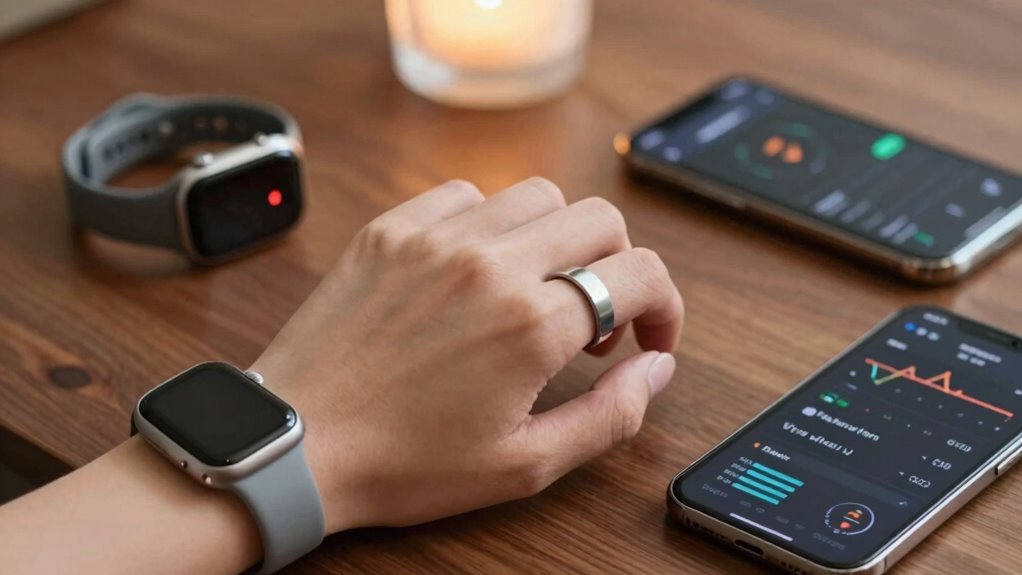
Alongside sleep tracking, heart rate monitoring is a central feature of many wearables. When you wear a smart ring or wristband, it continuously tracks your heart rate throughout the day and night. This real-time data offers valuable insights into your cardiovascular health, stress levels, and overall fitness. For example, if your resting heart rate is elevated over several days, it might signal fatigue or an underlying health issue. Conversely, a lower, stable heart rate can indicate good cardiovascular fitness. Heart rate monitoring also plays a crucial role during workouts, helping you optimize intensity and track progress. Some wearables even alert you if your heart rate exceeds safe thresholds or if there are irregularities that could suggest arrhythmias, encouraging proactive health management.
Beyond sleep and heart rate, these devices often measure additional parameters like oxygen saturation, step count, and calories burned, but sleep tracking and heart rate monitoring remain the core functionalities. They use sensors such as photoplethysmography (PPG) to detect blood flow and pulse, providing accurate, continuous data without invasive procedures. Many wearables sync with smartphone apps, where you can view detailed reports, trends, and personalized recommendations based on your data. This helps you make informed decisions about your lifestyle, exercise routines, and even stress management techniques.
In essence, these devices are not just passive gadgets—they’re active health companions. By measuring sleep quality and heart rate, they give you a clearer picture of your physical state, helping you improve your sleep habits, manage stress, and stay on top of your health goals. Their real-time monitoring and data-driven insights empower you to take control of your health in a way that’s simple, accessible, and tailored to your daily life.
As an affiliate, we earn on qualifying purchases.
Frequently Asked Questions
How Accurate Are Wearable Devices in Measuring Health Metrics?
Wearable devices are fairly accurate but can vary based on sensor calibration and individual differences. You should understand that these devices might not always provide 100% precise data, especially for complex metrics. They collect sensitive data, so it’s crucial to take into account data privacy and security. Regularly calibrate your device and review privacy settings to guarantee your health information stays protected while benefiting from the insights provided.
Can Smart Rings Replace Medical-Grade Health Monitoring Tools?
Like a fashion innovation that seamlessly blends style and function, smart rings can’t fully replace medical-grade health monitoring tools yet. They prioritize user comfort and ease of wear, making daily health tracking convenient. However, medical devices provide higher accuracy and reliability, especially for critical health decisions. So, while smart rings are great for regular insights and motivation, consult healthcare professionals for serious health concerns.
Do Wearables Track Mental Health or Emotional States?
Wearables do track mental health and emotional states through emotional sensing and mood tracking features. They monitor indicators like heart rate variability, sleep patterns, and activity levels to gauge emotional well-being. While they don’t diagnose conditions, they give you valuable insights into your mood fluctuations and stress levels. By analyzing this data, you can better understand your emotional health and make informed choices to improve your overall mental wellness.
How Secure Is the Data Collected by Smart Rings and Wearables?
The data collected by smart rings and wearables is generally secure, but it varies by device and provider. You should check if they use data encryption to protect your information during transmission and storage. Also, review privacy policies to understand how your data is handled, shared, or sold. Staying informed and choosing reputable brands helps guarantee your personal health data remains private and safe.
Are There Any Long-Term Health Risks From Wearing These Devices?
Some believe long-term safety concerns, like skin irritation, could arise from wearing smart rings and wearables over many years. While most devices are designed with skin-friendly materials, prolonged use might cause irritation or allergic reactions in sensitive individuals. Currently, there’s limited evidence of serious health risks, but it’s wise to monitor skin health and consult medical advice if you notice discomfort. Staying informed helps you enjoy these devices safely.
Conclusion
Think of your wearable as a helpful navigator on your health journey, guiding you with data. Just like a compass points north, a smart ring reveals insights about your sleep, activity, and heart rate. But remember, it’s only as accurate as the signals it receives. So, wear it with curiosity, not certainty. After all, even the most advanced tech can’t replace listening to your body’s quiet whispers, reminding you that health is a true personal voyage.