
By 2025, drone delivery is expected to be a common way for you to receive packages in urban areas. Advances in infrastructure, like aerial corridors and drone hubs, along with improved regulations, make safe and efficient delivery possible. Cities are creating drone-friendly zones, and companies are testing new systems. If you want to understand how these developments shape your future deliveries, you’ll find more details with what’s coming next.
Key Takeaways
- Urban infrastructure is evolving with designated air corridors and landing zones to support drone delivery systems.
- Regulatory frameworks are gradually approving controlled drone operations, focusing on safety and privacy standards.
- Progress includes establishing drone-friendly zones like rooftop hubs and aerial pathways in cities.
- By 2025, drone delivery is expected to become common in urban areas, facilitated by infrastructure and policy developments.
- Collaboration between governments and companies is crucial for integrating drones safely into daily urban logistics.
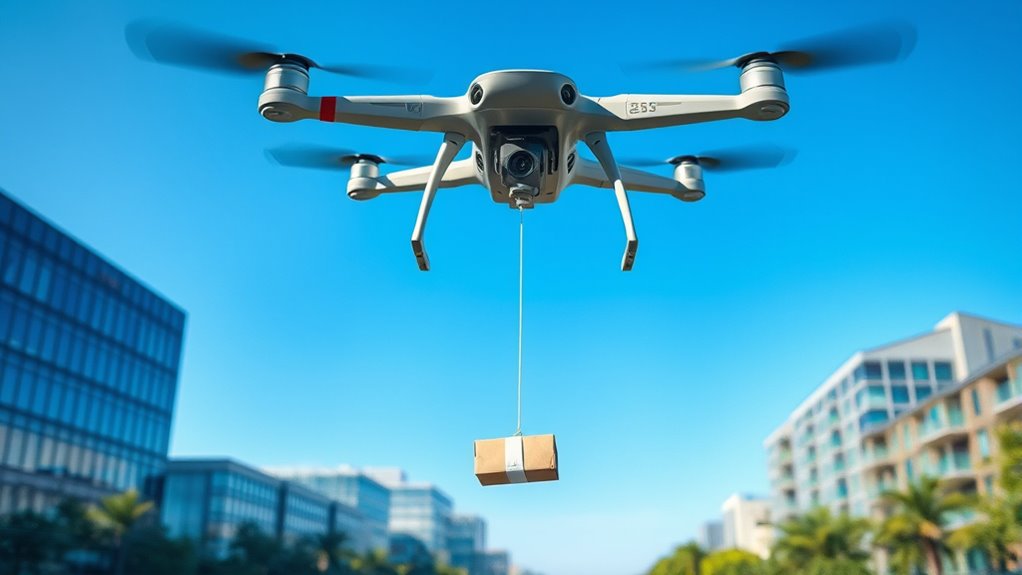
Drone delivery is revolutionizing how we receive packages by offering faster, more efficient service. As you consider how this technology will transform daily life by 2025, it’s important to understand the hurdles and progress involved. One of the main obstacles lies in adapting urban infrastructure to accommodate flying delivery drones. Cities are built around ground-based transportation, with roads, bridges, and power lines designed for traditional vehicles and pedestrians. Integrating drones into this environment means creating designated air corridors, safe landing zones, and secure hubs that don’t interfere with existing infrastructure. Local governments and companies are working together to develop these systems, but it’s a complex process. Urban areas demand meticulous planning to ensure drones can navigate safely without disrupting city life or risking accidents. This involves installing sensors, establishing no-fly zones, and upgrading communication networks to manage drone traffic efficiently. Comfort solutions for urban environments are also being considered to support the safe operation of drones in densely populated areas.
Alongside infrastructure challenges, regulatory hurdles remain considerable. Governments worldwide are cautious about deploying drone delivery at scale, primarily due to safety and privacy concerns. Regulatory agencies are tasked with crafting rules that balance innovation with public safety. This includes setting standards for drone certifications, flight paths, and operating procedures. You might find that restrictions vary markedly from one city or country to another, creating a patchwork of regulations that companies must navigate. These rules aim to prevent collisions, protect airspace, and address privacy issues related to drone surveillance capabilities. However, they often slow down deployment and increase costs for companies trying to implement drone delivery systems. As a result, many organizations are investing in lobbying efforts, pilot programs, and collaborative efforts with regulators to shape policies that facilitate growth while safeguarding public interests.
Despite these challenges, progress is evident. Regulatory bodies are increasingly open to testing and approving drone delivery in controlled environments. Urban infrastructure projects are underway to create drone-friendly zones, such as rooftop hubs and dedicated aerial corridors. These developments are promising signs that, by 2025, drone delivery could become a common sight in many cities. Still, it’s essential to acknowledge that the full integration of drone technology into urban ecosystems requires ongoing adjustments to regulations and infrastructure. As you witness these changes, you’ll notice that the journey toward widespread drone delivery isn’t just about technological innovation but also about building a safe and resilient framework for aerial logistics. With continued collaboration, smart planning, and regulatory evolution, drone delivery is poised to become a seamless part of your everyday package experience.
Frequently Asked Questions
How Will Drone Delivery Impact Traditional Postal Services?
Drone delivery will transform traditional postal services by enabling faster, more efficient deliveries through autonomous navigation. You’ll notice fewer delays and improved service reliability as drones handle last-mile delivery. However, you’ll also need to take into account drone maintenance to ensure safety and efficiency. While it might reduce the workload for postal workers, it will push the industry to adapt with new technology and regulations, ultimately reshaping how you receive packages.
What Privacy Concerns Are Associated With Drone Delivery?
Imagine drones as vigilant birds watching over your neighborhood. You might worry about data privacy if they record or transmit sensitive information. Surveillance concerns arise because drones could unintentionally capture private activities, raising fears of unauthorized data access. You need clear regulations to protect your privacy, ensuring drones only deliver and collect data for their intended purpose, so your personal space remains secure amid this airborne delivery revolution.
How Secure Are Packages Delivered by Drones From Theft?
Your packages delivered by drones are generally secure, thanks to theft prevention measures like tamper-proof packaging and secure drone locks. You can also track your package in real-time using advanced tracking systems, which help prevent theft by providing constant updates on its location. While no system is completely theft-proof, these features markedly reduce risks and give you peace of mind during delivery.
What Regulations Govern Drone Flight Paths in Urban Areas?
You’re responsible for steering urban airspace, where regulations govern drone flight paths to ensure safety. Authorities like the FAA set rules to manage drone traffic, including altitude limits, no-fly zones, and flight permissions within urban areas. These regulations help prevent collisions and unauthorized flights, allowing you to operate your drone confidently while complying with legal requirements. Staying updated on local rules is essential for safe, legal drone operations in busy city environments.
How Will Drone Delivery Services Affect Delivery Times During Peak Hours?
During peak hours, drone delivery services can substantially improve delivery speed despite urban congestion. While traffic delays challenge traditional vehicles, drones fly above the chaos, ensuring faster arrivals. This aerial approach shortens delivery times and maintains reliability, even when streets are crowded. As a result, you’ll experience quicker parcel arrivals, making drone delivery a game-changer for efficiency and consumer satisfaction, especially during busy times.
Conclusion
By 2025, drone delivery will weave itself into your daily life like threads in a tapestry, transforming the way you receive packages. It’s not just about faster delivery; it’s about opening new horizons, where the sky becomes a highway of possibility. As these machines take flight, they carry more than parcels—they carry the future, soaring above obstacles like a bird breaking free from its cage. Embrace this evolution; your world is about to take flight.