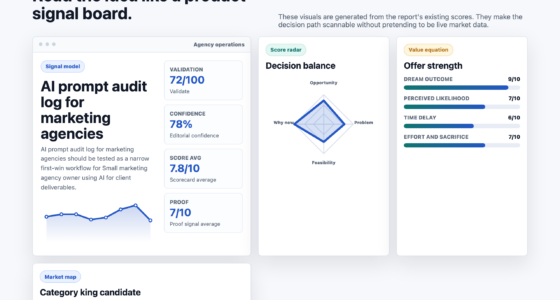

📊 Full opportunity report: Capital: The Lever Beneath the Levers on ThorstenMeyerAI.com — validation score, market gap, and execution plan.

Get school and study supplies delivered free — and shop member deals
- Fast, free delivery on millions of items
- Access to Prime Big Deal Days deals on October 6–7
- Prime Video, Amazon Music and more included
TL;DR
In 2026, major AI companies like SpaceX, Anthropic, and OpenAI are going public with valuations totaling around $4 trillion. This reveals how capital funding drives AI development and creates economic risks due to circular investments and high debt levels.
In June 2026, SpaceX, which now includes xAI, listed on the Nasdaq with a valuation near $1.77 trillion, briefly surpassing $2 trillion. Simultaneously, Anthropic and OpenAI are preparing for public offerings valued at approximately $965 billion and $730–850 billion respectively. These listings represent a significant movement of private AI valuations into public markets, emphasizing the importance of capital in AI infrastructure development.
In 2026, the combined private valuations of SpaceX/xAI, Anthropic, and OpenAI are estimated to be around $4 trillion. The offerings were heavily oversubscribed, with SpaceX’s IPO reaching a valuation of over $2 trillion, and insiders have already begun to sell billions in stock. This wave of public listings shifts risk from early investors to the broader market, reflecting the scale of capital flow supporting AI expansion.
Meanwhile, the flow of money reveals a circular pattern: Microsoft, Amazon, and Google invest heavily into Nvidia, which supplies AI chips, while Nvidia, in turn, funds AI research and infrastructure. This creates a feedback loop where demand appears continuous but depends on ongoing investment, which could pose systemic risks. Notably, Microsoft has recently reduced its commitments, indicating caution amid concerns about overextension.
Capital: The Lever Beneath the Levers
Every chokepoint costs money — so whoever can fund the buildout decides who builds at all. In 2026 the bill came due in public: a trillion-dollar IPO wave, financed by a circle of firms paying each other, now sold to everyone else.
The meta-chokepoint: it gates the other five, because you can’t build any of them without clearing the capital bar. A synchronized machine has no natural brake — no one can slow first — and the IPO wave moves the risk to the public as insiders take gains. The hedge is solvency that doesn’t depend on the music playing: sane burn, own what’s cheap, self-host where you can.
Impact of Capital Concentration on AI and Economy
This concentration of capital and valuations at the top of the AI industry highlights potential vulnerabilities. The circular flow of investments creates a system that may be sensitive to disruptions, where a slowdown or correction could have wider implications for the tech sector and the economy. The transfer of risk from private investors to public markets at high valuations raises questions about long-term sustainability, especially considering high levels of debt financing and limited consumer demand for AI services.
As an affiliate, we earn on qualifying purchases.
2026’s AI Funding Boom and Market Dynamics
Leading up to 2026, private AI companies like OpenAI, Anthropic, and SpaceX/xAI have accumulated significant valuations driven by private investment rounds and corporate backing. The transition of these companies to public markets marks a notable development, with valuations reaching trillions of dollars. This trend reflects a broader shift where private capital is increasingly channeled into public markets, often at high valuations, amid ongoing capital expenditure and limited consumer spending on AI products.
Historically, AI infrastructure has been financed primarily by a small group of large technology firms and private investors. The current wave indicates a shift toward public market funding, which introduces new systemic considerations due to interconnected corporate investments and leverage levels.
“Much of the current AI infrastructure spending is supported by private debt, with demand remaining uncertain.”
— Goldman Sachs executive
Uncertainties Surrounding AI Market Sustainability
The sustainability of current valuations remains uncertain, with limited evidence of widespread consumer demand for AI products and services. The high levels of private debt and the circular investment pattern could increase systemic vulnerabilities. Additionally, regulatory changes or technological disruptions could influence future funding and market stability, but their impacts are not yet clear.
Next Steps in AI Funding and Market Monitoring
Monitoring upcoming public listings and investor sentiment will be important for assessing market stability. Stakeholders may also need to consider the risks associated with circular investment patterns and high leverage. The upcoming IPOs of Anthropic and OpenAI will be key indicators, and any signs of market correction or slowdown in AI infrastructure investment will be closely observed.
Key Questions
Why are AI valuations so high in 2026?
Valuations are driven by substantial private investments, strategic corporate backing, and expectations of future growth, despite limited current consumer demand.
What is the main risk of the current AI funding model?
The circular investment pattern and high private debt levels could lead to systemic vulnerabilities, increasing the risk of market corrections if demand weakens or if major players reduce spending.
How does this funding cycle affect the broader economy?
High leverage and concentrated risk in AI infrastructure could make the economy more sensitive to shocks, especially if actual demand does not meet expectations or if valuations decline significantly.
What role do major tech firms play in this cycle?
Tech companies like Microsoft, Amazon, and Google support AI development through investments and cloud services, contributing to the interconnected funding ecosystem.
Source: ThorstenMeyerAI.com
Fall Picks
fall essentials
As an affiliate, we earn on qualifying purchases.