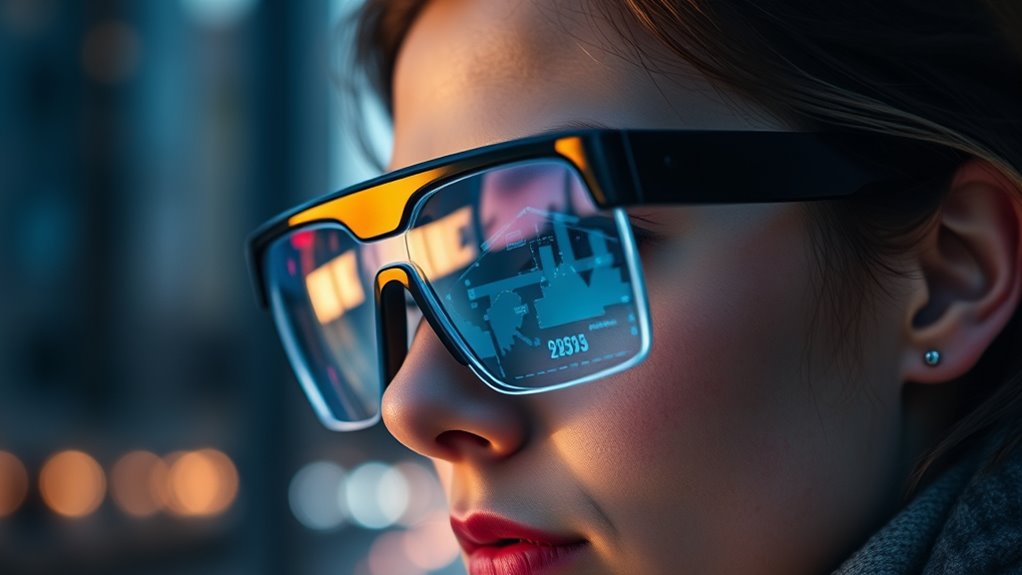

AR glasses are making rapid progress, but they still face key hurdles before reaching mainstream use in 2025. Challenges include creating lightweight, stylish designs with good battery life, and ensuring high-quality visuals that blend seamlessly with your surroundings. Privacy and data security are also concerns, though advancements in AI security are helping. If you want to understand what’s next for AR wearables and how close they really are to widespread adoption, keep exploring further.
Key Takeaways
- Advances in AI security are improving AR device safety, boosting confidence in their readiness for 2025.
- Design challenges like weight, comfort, and affordability still hinder widespread adoption of AR glasses.
- Privacy and data security concerns remain significant, requiring robust safeguards for mainstream acceptance.
- Hardware miniaturization and battery life limitations pose ongoing technical hurdles for AR wearables.
- Continued innovation in optics, display tech, and user interface are essential for AR glasses to be fully ready by 2025.

Augmented reality glasses are transforming the way you interact with digital content by overlaying information directly onto your view of the real world. With these devices, you can access directions, notifications, or even detailed data about your surroundings without pulling out your phone. However, as promising as this technology is, it faces significant hurdles before becoming mainstream by 2025. One of the biggest issues lies in privacy concerns. When you wear AR glasses, you’re often sharing more than just your gaze—you’re potentially capturing images and videos of your environment, which may include other people. This raises questions about data security and consent, especially as these devices become more connected and capable of transmitting information in real time. Manufacturers need to implement robust privacy safeguards, but balancing user convenience with data protection remains tricky. You might worry about who accesses your data or how your surroundings are recorded and stored, making privacy a central challenge for developers.
Alongside privacy issues, design challenges loom large. Creating AR glasses that are lightweight, comfortable, and stylish is no small feat. You want a device that seamlessly fits into your daily life without feeling bulky or awkward. Achieving this requires innovation in miniaturization of hardware components, such as cameras, sensors, and batteries, without sacrificing performance. Battery life is another concern; the more features these glasses pack, the faster your device runs out of juice. Developers are working to extend usage hours while keeping the design sleek. Additionally, the interface must be intuitive enough for anyone to use, yet powerful enough to handle complex tasks. Striking that balance is difficult, especially when considering diverse user preferences and ergonomic standards. If the glasses are uncomfortable or confusing to operate, their adoption will stall.
Furthermore, visual clarity and field of view are critical. You need augmented information to appear natural and unobtrusive, blending seamlessly into your surroundings. Achieving this requires sophisticated optics and display technology, which often adds to weight and cost. As a result, manufacturers face the dual challenge of making glasses affordable while ensuring they deliver a high-quality experience. These design challenges directly impact whether AR glasses will truly become part of your everyday routine by 2025. If they continue to be bulky, expensive, or confusing to use, widespread adoption could be delayed. So, while the promise of AR glasses is exciting—offering hands-free access to a digital overlay—overcoming privacy concerns and refining their design remain crucial steps before these devices can really take off.
Recent advancements in AI Security are also influencing the development of safer, more reliable AR technologies, helping to address some of these privacy and security challenges.
Frequently Asked Questions
How Will AR Glasses Affect User Privacy and Data Security?
AR glasses will raise significant privacy concerns and challenge data security. You’ll need to be cautious as these devices collect real-time data about your environment and interactions, which could be vulnerable to hacking or misuse. Companies must implement robust security measures to protect your information, but you should stay vigilant about how your data is stored and shared to avoid potential privacy breaches.
What ARe the Main Challenges in AR Glasses Battery Life?
Oh, the irony of wishing your AR glasses last all day! The main challenges lie in battery optimization and power management. You’ll find that balancing high-performance features with energy efficiency isn’t easy, especially when AR demands lots of processing power. Manufacturers are racing to improve these areas, but until then, you might need to carry a portable charger or accept shorter usage times. It’s a tricky tech puzzle.
Will AR Wearables Support All Smartphone Apps in 2025?
By 2025, AR wearables will likely support most smartphone apps, thanks to improved app compatibility and growing developer support. You’ll find that developers are increasingly creating AR-friendly versions of popular applications, making it easier to access your favorite tools. As the ecosystem matures, expect seamless integration, allowing you to use a wide range of apps directly on your AR glasses without compatibility issues.
How Accessible Will AR Glasses Be for People With Disabilities?
Imagine it’s 1984, and AR glasses become more accessible for everyone. You’ll find these wearables increasingly integrated with assistive technology and accessibility features, making them more usable for people with disabilities. Developers are focusing on voice commands, text-to-speech, and customizable interfaces. This trend guarantees AR glasses will be more inclusive, helping you navigate daily tasks, communicate, and access information with greater ease—breaking barriers and promoting equal access for all.
What Regulations Might Govern AR Wearable Usage in Public Spaces?
You’ll need to follow public space policies and privacy legislation when using AR wearables in public. Authorities may implement rules restricting recording, data collection, or display of sensitive information to protect privacy. Stay aware of local regulations, as they can vary widely, and always respect others’ rights. By doing so, you help guarantee responsible use of AR glasses, promoting safety and privacy for everyone around you.
Conclusion
So, are AR wearables ready for 2025? While technology has made huge strides, some features still feel like they’re straight out of a sci-fi flick, and the battery life remains a nagging issue. You might find yourself wishing for a hoverboard to get around faster, but for now, these glasses are more of a promising prototype than a daily essential. Keep an eye on the horizon—AR’s future is almost within your grasp.