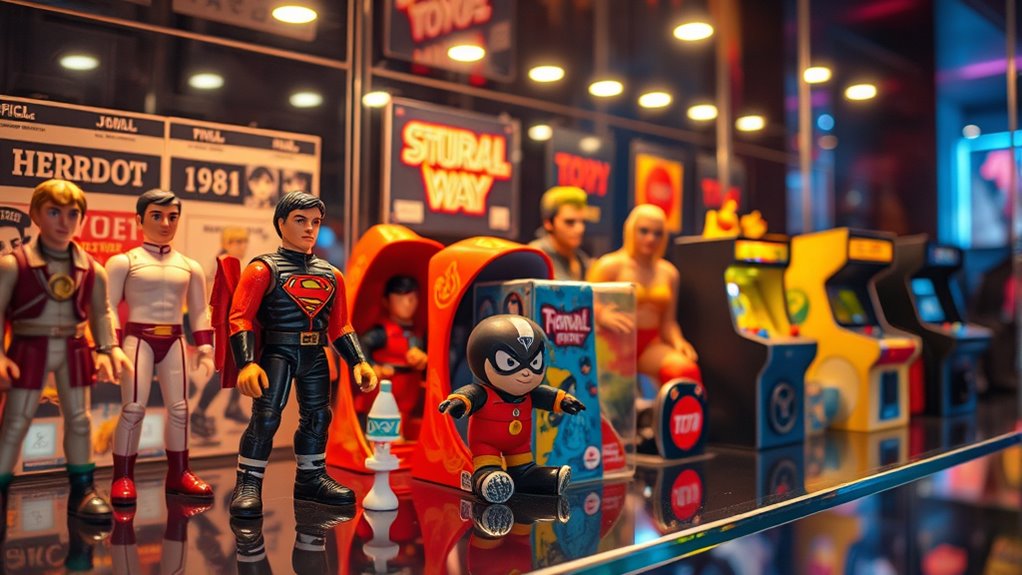

In 2025, nostalgia is shaping the toy industry by turning vintage characters and franchises into highly desirable collectibles. Adults and young collectors seek limited-edition toys that evoke childhood memories and emphasize craftsmanship. Digital platforms foster communities where fans trade and showcase their collections. Brands are blending past and present, creating unique designs with emotional appeal. If you keep exploring, you’ll discover how these trends are redefining what makes a toy truly valuable.
Key Takeaways
- Nostalgia marketing continues to fuel demand for vintage-inspired collectibles targeting both adults and new generations.
- Limited-edition reimagined characters and franchises enhance exclusivity and appeal to collectors.
- Digital platforms and social media boost community engagement, trading, and hype around nostalgic toy collectibles.
- Emphasis on craftsmanship, detailed design, and psychological appeal increases collectible desirability and perceived value.
- The blending of past and present trends will drive innovative toy designs and long-term brand loyalty into 2025.
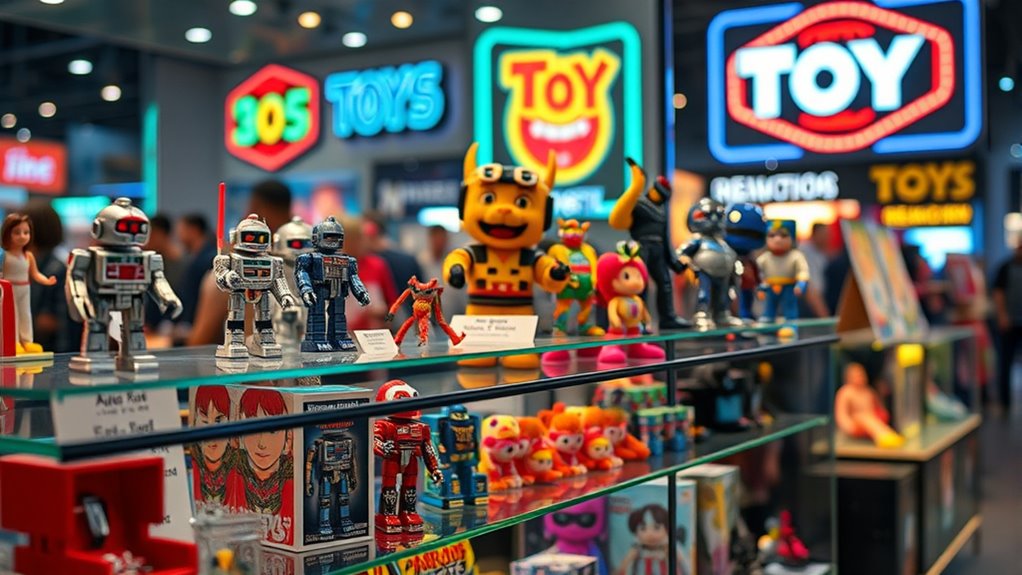
Are you curious about what the future holds for the toy industry? As we move into 2025, one of the biggest trends shaping the market is nostalgia marketing, which is fueling a surge in collectible toys. This approach taps into the emotions of adults who grew up with certain characters, shows, or brands, and now want to relive those memories through modern collectibles. It’s a smart move for toy companies because it creates a strong emotional connection, encouraging not just children but also adult collectors to buy and display these toys. The nostalgia-driven wave is giving rise to a new generation of collectible toys that blend vintage appeal with contemporary design, making them highly desirable across age groups.
Nostalgia marketing fuels collectible toy trends, appealing to both adults and kids with vintage-inspired designs and limited editions.
You’ll notice that many brands are reimagining classic characters and franchises, creating limited-edition collectibles that appeal to collectors and fans alike. These toys aren’t just playthings; they’re pieces of nostalgia that evoke a sense of childhood wonder while offering a sense of exclusivity. Limited runs, special packaging, and collaborations with pop culture icons are common strategies to increase their appeal. Collectible toys are no longer just for kids—they’re becoming investment pieces, with some appreciating in value over time. This shift has led to the rise of hobbyist communities and online marketplaces where enthusiasts trade and showcase their collections. Additionally, the use of digital platforms helps brands connect with a broader audience and generate buzz around new releases.
Moreover, the integration of nostalgia marketing extends beyond just reviving old toys. Companies are leveraging social media and digital platforms to build hype around these collectibles, engaging a new generation of fans who may not have experienced the original franchises firsthand but are enthusiastic to participate in the trend. This creates a cycle where younger audiences discover the classics through modern collectibles, fostering brand loyalty that can last for decades. Additionally, the craftsmanship and detail in these toys are increasing, making them more appealing to adult collectors who seek quality and authenticity. Recognizing the importance of collectible value, brands are emphasizing limited editions and unique features to boost desirability. This focus on psychological principles helps deepen emotional connections and sustain long-term interest in the collectibles.
Furthermore, understanding the contrast ratio in product presentation and display can enhance the visual appeal of collectible toys, making them stand out more vividly. In essence, nostalgia marketing is transforming the toy industry by turning familiar characters into valuable collectibles that appeal across generations. It also reflects how vintage appeal is becoming a key factor in product design and marketing strategies, resonating with both nostalgic adults and new fans. It’s a strategy that not only drives sales but also strengthens brand loyalty and community engagement. As 2025 approaches, expect to see more brands tapping into this trend, blending past and present to create timeless, desirable toys. Whether you’re a seasoned collector or just someone who appreciates a good blast from the past, the coming years will likely bring a wealth of nostalgic, collectible toys that capture hearts and imaginations alike.

STAR WARS The Vintage Collection Clone Trooper (501st Legion), OBI-Wan Kenobi 3.75 Inch Collectible Action Figure
STAR WARS: OBI-WAN KENOBI: This Clone Trooper (501st Legion) 3.75-inch action figure (9.5 cm) is inspired by the…
As an affiliate, we earn on qualifying purchases.
As an affiliate, we earn on qualifying purchases.
Frequently Asked Questions
How Will Technological Innovations Influence Nostalgic Toy Designs?
Technological innovations will markedly influence nostalgic toy designs by blending digital integration with retro revival themes. You’ll see how classic toys incorporate smart features, augmented reality, or app connectivity, making them more engaging and interactive. This fusion appeals to both nostalgia and modern tech-savvy kids. As a result, nostalgic toys become more dynamic, ensuring they resonate with today’s audiences while preserving their timeless charm.
What Demographic Is Most Interested in Nostalgic Collectibles?
Imagine a treasure chest of memories—this is what appeals most to millennial collectors and those driven by baby boomer nostalgia. You’re likely to find that these demographics show the greatest interest in nostalgic collectibles, as they seek to reconnect with their childhoods or past eras. Their desire for familiar, sentimental items fuels the market, making them the primary audience for these retro-inspired toys.
Are There Plans for Eco-Friendly Materials in Upcoming Toys?
You’re likely to see more toys made with eco-friendly materials soon. Manufacturers are planning to use recycled plastics to reduce waste and incorporate biodegradable packaging to lessen environmental impact. These sustainable options appeal to environmentally conscious consumers and align with growing demand for eco-friendly products. By choosing toys with recycled plastics and biodegradable packaging, you’re helping support eco-friendly initiatives and encouraging brands to prioritize sustainability in their upcoming collections.
How Do Licensing Agreements Impact New Collectible Releases?
Licensing agreements considerably influence your new collectible releases by shaping brand collaborations and imposing licensing restrictions. When a toy company secures a licensing deal, it gains the right to use certain characters or brands, which can boost a product’s appeal. However, licensing restrictions may limit creative freedom or the scope of the collectible. This careful balance ensures that your toys meet brand standards while appealing to nostalgic or new audiences.
Will Augmented Reality Play a Role in Future Toy Experiences?
You’ll find augmented reality becoming central to future toy experiences, as it enhances virtual play and makes interactions more immersive. With AR, you can see interactive packaging come alive, blending physical and digital worlds seamlessly. This technology encourages active engagement, allowing you to explore new dimensions of play. As AR evolves, it’ll reshape how you connect with toys, making every play session more dynamic and memorable.
limited edition nostalgic action figures
As an affiliate, we earn on qualifying purchases.
As an affiliate, we earn on qualifying purchases.
Conclusion
So, get ready to dig through your attic—because in 2025, nostalgia isn’t just a feeling, it’s a lucrative business. Your vintage toys will become the hottest collectibles, making you a millionaire in your sleep (or at least pretending you are). Who knew that reliving childhood memories could be so profitable? Just remember, as the trend shifts, so will your garage full of “valuable” relics. Welcome to the future of toy collecting—where yesterday’s toys are tomorrow’s gold.

LEGO Super Mario Game Boy – Retro Building Sets for Adults, Ages 18+ – Gifts for Birthdays – Collectible Model with Game Paks and Display Stand – 72046
BUILD AN ICON – Build the ultimate retro gaming display with the LEGO Game Boy (72046) model kit…
As an affiliate, we earn on qualifying purchases.
As an affiliate, we earn on qualifying purchases.
nostalgia franchise collectibles
As an affiliate, we earn on qualifying purchases.
As an affiliate, we earn on qualifying purchases.