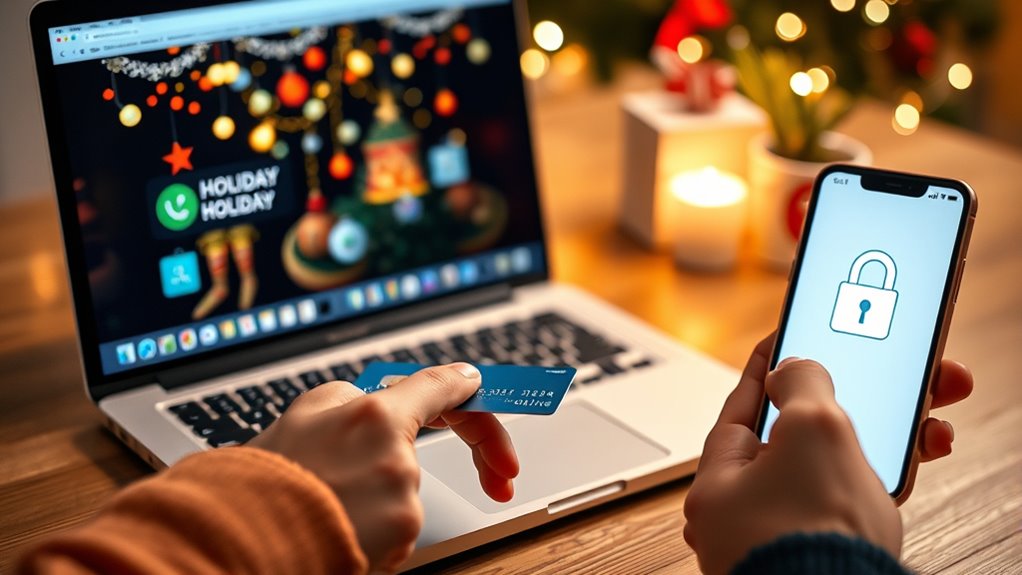

During the holidays, stay safe by recognizing phony emails that mimic trusted brands, avoid clicking on suspicious links, and never share personal info unless you’re on the official website. Be cautious of fake reviews and deals that seem too good to be true, and verify store legitimacy before purchasing. Keep an eye out for security indicators like “https” in URLs. To uncover more tips on protecting yourself, explore the full guide ahead.

Get school and study supplies delivered free — and shop member deals
- Fast, free delivery on millions of items
- Access to Prime Big Deal Days deals on October 6–7
- Prime Video, Amazon Music and more included
Key Takeaways
- Verify retailer websites directly by typing the URL; avoid links in unsolicited emails or messages.
- Be cautious of deals that seem too good to be true; research deals and check for authenticity.
- Look for security indicators like HTTPS and padlock icons before entering personal or payment information.
- Cross-check reviews across multiple platforms to identify fake or suspicious feedback.
- Stay alert to phishing attempts by verifying sender email addresses and avoiding sharing sensitive data online.

The holiday season is a joyful time, but it also attracts scammers looking to take advantage of unsuspecting shoppers. As you browse online for gifts, it’s vital to stay vigilant against common scams that can ruin your festive cheer. One of the biggest threats during this time is phishing emails. These deceptive messages often appear to come from trusted retailers or delivery services, urging you to click on links or provide personal information. They might claim there’s a delivery problem or a special holiday offer, but in reality, they’re designed to steal your passwords, credit card details, or other sensitive data. To protect yourself, always verify the sender’s email address before clicking any links, and avoid sharing personal info through email unless you’re certain of the source. Instead, go directly to the retailer’s official website by typing the URL into your browser.
Stay vigilant this holiday season—verify email senders and avoid sharing personal info to protect your festive cheer.
Fake reviews are another common scam you need to watch out for during the holidays. Scammers post glowing or overly negative reviews to manipulate your purchasing decisions. You might see a product with hundreds of five-star reviews, but upon closer inspection, many seem suspicious—generic language, overly enthusiastic praise, or reviews posted within a short time span. These fake reviews can lead you to buy items that are subpar or completely different from what’s advertised. To spot these, look for patterns in reviews, such as repeated phrases or reviewers with only one review posted. Cross-check product ratings on multiple sites or look for verified purchase indicators to confirm the reviews are genuine. Being cautious with reviews helps you avoid falling for scams that could leave you disappointed or out of money.
During this season, scammers also set up fake online stores that look legitimate but are designed solely to steal your money. They often offer unbelievable deals that seem too good to be true. Always check the website’s URL for security indicators like “https” and a padlock icon. If a deal seems too tempting, do some research to verify the retailer’s authenticity. Reading reviews outside of the shopping platform can also give you a clearer picture of the store’s reputation. Never rush into making purchases; scammers count on your impulse to catch you off guard. Additionally, understanding how sound vibrations can influence health and perception highlights the importance of trusting only reputable sources when researching products or services online.
In the end, your best defense is awareness. Stay cautious of phishing emails trying to lure you into giving away personal info, scrutinize reviews before trusting them, and verify the legitimacy of online stores. By staying alert and following these tips, you can enjoy your holiday shopping without falling prey to scams. It’s your holiday season—make it safe and joyful.
Frequently Asked Questions
How Can I Verify a Website’s Legitimacy Before Shopping?
You can verify a website’s legitimacy by checking its website security features, like HTTPS and a padlock icon in the address bar. Additionally, read online reviews to see what other customers say about their experiences. Look for contact information and a physical address, and avoid sites with poor design or suspicious links. Doing these checks helps make certain you’re shopping on a trusted site and keeps your personal information safe.
What Are Common Signs of a Holiday Scam Email?
You should watch for phishing indicators such as urgent language, unexpected offers, or requests for personal info. A suspicious sender’s email address that doesn’t match the company’s official domain is a red flag. Be cautious of generic greetings and poor grammar, as these are common signs of a holiday scam email. Always verify links before clicking and never share sensitive details unless you’re certain of the sender’s legitimacy.
Are There Specific Payment Methods Safer During Online Shopping?
Using mobile payment options like digital wallets or credit cards with fraud protection is safer during online shopping. They often offer secure checkout processes that encrypt your information, reducing scam risks. Avoid direct bank transfers or wire payments, which are harder to trace and recover if scams occur. Always verify the website’s security features, such as HTTPS, before entering payment details, and use trusted, reputable platforms for your shopping.
How Do I Report a Suspected Scam Website?
If you suspect a scam website, you should report it immediately. Use phishing alerts from your browser or security software to flag suspicious sites. You can also submit scam reporting to organizations like the Federal Trade Commission (FTC) or your local consumer protection agency. This helps prevent others from falling victim. Always document your findings with screenshots and details, then follow the official reporting process for swift action.
What Should I Do if I’Ve Fallen Victim to a Holiday Scam?
If you’ve fallen victim to a holiday scam, act quickly by reporting it to your bank or credit card company to prevent further loss. Use scam recovery tips like changing passwords and monitoring accounts. Reach out for emotional support resources to cope with the stress. Stay vigilant, document all communication, and consider contacting authorities or consumer protection agencies. Remember, taking prompt action helps protect your finances and well-being.
Conclusion
Stay vigilant this holiday season, and don’t let scammers turn your festive cheer into a nightmare. Think of online safety as your holiday lantern—shining brightly to guide you safely through the dark. Always double-check links, avoid deals that seem too good to be true, and trust your instincts. By staying cautious, you’ll keep your shopping experience merry and bright, ensuring your holiday spirit stays intact and your wallet stays safe.
Fall Picks
fall essentials
As an affiliate, we earn on qualifying purchases.