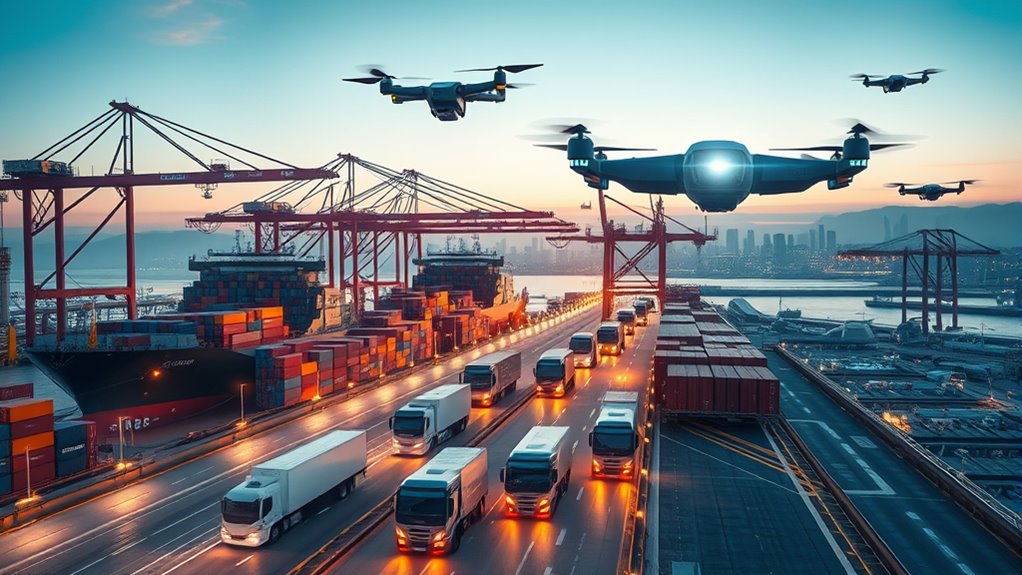

By 2025, your global supply chain will be more resilient and tech-driven, leveraging automation, AI, and advanced analytics to overcome shortages and navigate geopolitical shifts. Smarter logistics and interconnected systems will enable faster, more flexible responses to disruptions. Diversifying suppliers and embracing digital customs will help maintain smooth operations despite regulatory changes. Staying ahead means understanding these trends, and if you keep exploring, you’ll discover how to adapt and thrive in this evolving landscape.
Key Takeaways
- Advanced automation and AI will enhance supply chain efficiency, reducing shortages and improving responsiveness.
- Geopolitical shifts will drive diversification of suppliers and flexible sourcing strategies.
- Digital tools like blockchain and data analytics will increase transparency and regulatory compliance.
- Resilience will rely on real-time data, proactive risk management, and adaptable logistics networks.
- Organizations embracing innovation and agility will better navigate future disruptions and maintain competitiveness.
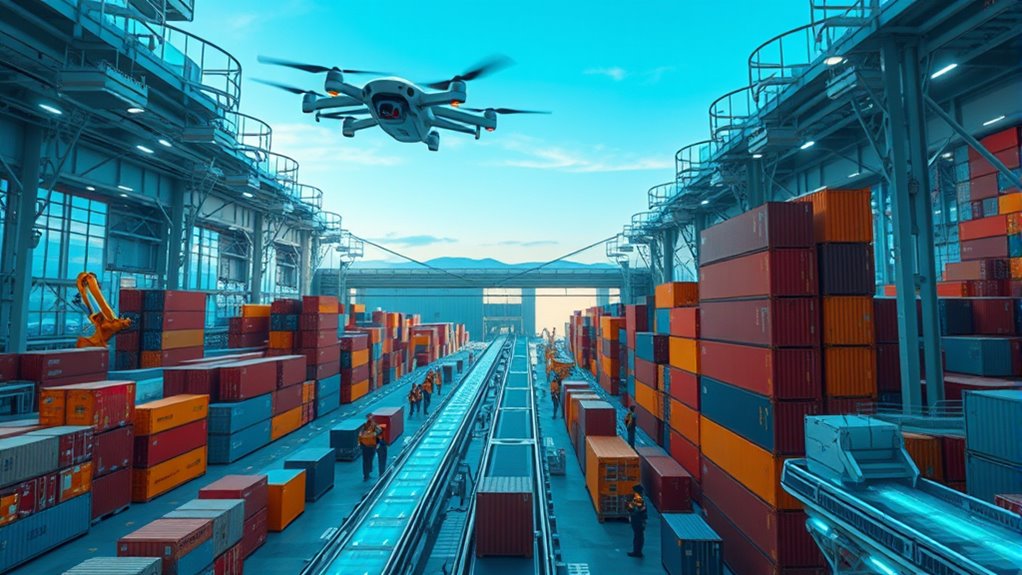
Have you ever wondered how the global supply chain will evolve by 2025? It’s a question many industry experts are asking as they anticipate significant shifts driven by technology and geopolitical changes. One of the most influential factors shaping this future is supply chain automation. You’ll see companies increasingly integrating robotics, artificial intelligence, and advanced data analytics into their logistics processes. Automation streamlines operations, reduces human error, and speeds up delivery times, helping businesses become more resilient against disruptions. As warehouses become smarter and transportation systems more interconnected, you’ll notice a move toward just-in-time inventory management that’s more responsive to real-time demand. This shift minimizes waste and maximizes efficiency, giving companies a competitive edge in an increasingly complex environment.
Supply chain automation will drive smarter logistics and boost resilience by 2025.
But technology alone doesn’t determine the future of the supply chain. Geopolitical impacts will play a pivotal role, introducing both challenges and opportunities. Trade tensions, tariffs, and shifting alliances could reshape global manufacturing hubs, prompting companies to rethink their sourcing strategies. Some regions may emerge as new centers of production, while others may face restrictions that force supply chains to adapt quickly. This geopolitical landscape creates a level of uncertainty that demands agility. You’ll need to stay alert to policy changes, diplomatic developments, and regional conflicts that could disrupt established routes or inflate costs. Companies that can navigate these geopolitical impacts by diversifying suppliers and building more flexible networks will be better positioned to maintain resilience.
Additionally, these geopolitical factors will influence regulatory standards and customs procedures, complicating cross-border trade. You might find that digital customs documentation and blockchain technology become essential tools for ensuring transparency and compliance. As governments implement stricter controls, supply chain automation can help manage compliance efficiently, reducing delays and penalties. The integration of advanced data analytics and other digital tools will be crucial for maintaining efficiency and transparency in this evolving landscape. The interplay between automation and geopolitical impacts will shape a more dynamic, yet more complicated, global logistics landscape. Those who adapt quickly, leveraging cutting-edge technology and understanding geopolitical nuances, will ultimately thrive in this evolving environment.
In essence, by 2025, the supply chain will be a complex tapestry woven with technological advancements and geopolitical realities. Your ability to embrace supply chain automation and stay informed about global political shifts will determine how well your business can navigate shortages, disruptions, and new market opportunities. Resilience won’t just be about bouncing back from setbacks but proactively shaping your supply chain to withstand inevitable changes. The future demands agility, innovation, and strategic foresight—qualities that will define the most successful organizations in the years ahead.
Top picks for "global supply chain"
Open Amazon search results for this keyword.
As an affiliate, we earn on qualifying purchases.
Frequently Asked Questions
How Will AI Influence Supply Chain Decision-Making Processes in 2025?
AI will considerably influence your supply chain decision-making in 2025 by enabling AI optimization and leveraging predictive analytics. You’ll be able to anticipate disruptions, optimize inventory levels, and streamline logistics more effectively. AI-driven insights help you make faster, data-backed decisions, reducing costs and increasing resilience. As a result, your supply chain becomes more agile, responsive, and better prepared for future challenges, ensuring smoother operations and improved customer satisfaction.
What Role Will Blockchain Technology Play in Supply Chain Transparency?
Imagine opening your supply chain records and instantly seeing every transaction clearly. Blockchain technology will play a pivotal role by providing a distributed ledger that guarantees transparency and security. You’ll rely on smart contracts to automate compliance and streamline processes, reducing fraud and errors. This transparency builds trust among partners, making your supply chain more resilient and responsive, helping you adapt swiftly to disruptions.
How Will Geopolitical Tensions Impact Global Supply Chain Resilience?
Geopolitical tensions will challenge your supply chain resilience by increasing trade restrictions and disrupting established routes. You’ll need to adapt quickly, relying on regional alliances to diversify sourcing and mitigate risks. Strengthening local networks helps buffer against global uncertainties, ensuring your operations stay resilient. Staying informed about political developments and fostering strategic partnerships will be essential for maintaining supply chain stability amid rising tensions.
What New Risks Are Emerging in the Supply Chain Post-Pandemic?
Did you know that 60% of supply chain disruptions now stem from cyber vulnerabilities? Post-pandemic, you face new risks like cyberattacks targeting logistics systems and persistent labor shortages that slow production and delivery. These issues threaten your supply chain’s resilience, forcing you to invest in cybersecurity and workforce strategies. Staying proactive against cyber threats and attracting talent becomes vital to maintaining smooth operations in this evolving landscape.
How Will Consumer Behavior Shifts Affect Supply Chain Planning?
You’ll need to adapt your supply chain planning to shifting consumer behaviors, as consumer trends and purchasing habits evolve quickly. With increased demand for sustainable products and faster delivery, you might face unpredictable spikes in demand. To stay resilient, track these trends closely, diversify your suppliers, and optimize your logistics. By doing so, you can better anticipate changes, meet customer expectations, and maintain a competitive edge in a dynamic market.
Conclusion
By 2025, your supply chain will be like a finely tuned orchestra, harmonizing technology, resilience, and agility. Challenges will still arise, but your ability to adapt and innovate will turn potential disruptions into opportunities. Think of it as steering a ship through changing tides—your proactive approach keeps you steady and on course. Embrace these shifts, and you’ll navigate toward a resilient, responsive supply chain that’s ready for whatever comes next.