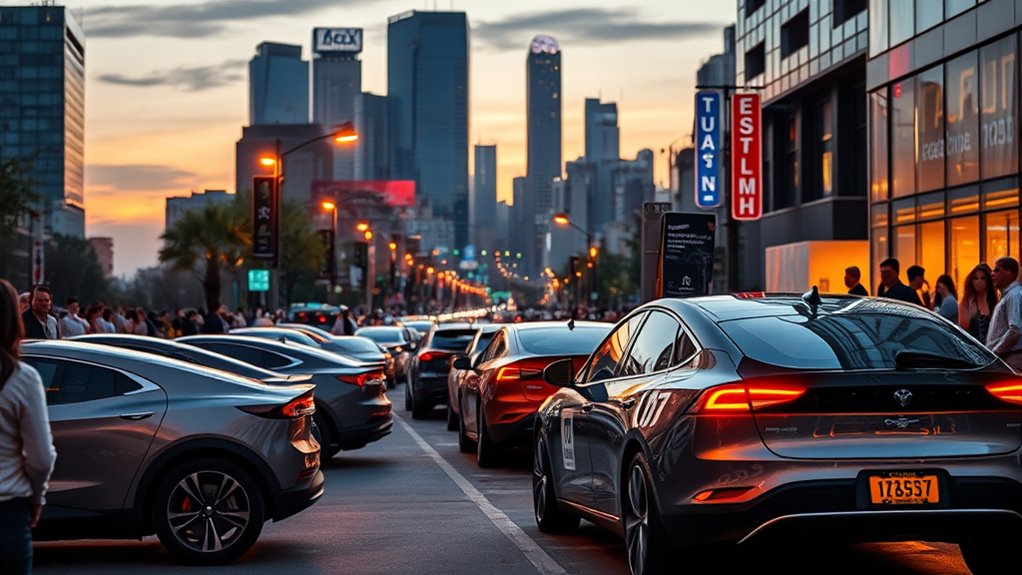

By 2025, you’ll see electric vehicles dominating the industry as advances in battery tech and charging infrastructure make them more practical and affordable. Longer-lasting batteries, faster chargers, and a growing network of stations reduce range anxiety and boost confidence in EVs. Automakers are expanding models to suit various needs, while governments support adoption through incentives. If you want to understand how these innovations are shaping the future of transportation, keep exploring this exciting shift.
Key Takeaways
- EVs are becoming the dominant vehicle type due to technological advances and expanding charging infrastructure.
- Battery improvements enable longer range, faster charging, and enhanced safety, making EVs more practical.
- Automakers are launching diverse EV models to meet increasing consumer demand across segments.
- Governments’ incentives and policies accelerate EV adoption, supporting industry growth.
- The rapid integration of technology and infrastructure indicates a swift transition toward electric transportation by 2025.

Have you noticed how electric vehicles are suddenly everywhere? It’s as if they’ve taken over the roads, transforming the way we think about transportation. The surge in EV popularity isn’t just a passing trend; it’s backed by significant advances in battery technology and the rapid expansion of charging infrastructure. These developments are making electric cars more practical, affordable, and appealing than ever before.
Battery technology has been at the forefront of this revolution. You’ll find that today’s EV batteries last longer, charge faster, and offer greater energy density than those from just a few years ago. This means you can drive farther without worrying about running out of power and spend less time plugged in. Manufacturers are constantly refining lithium-ion batteries, introducing new chemistries and solid-state alternatives that improve safety and performance. As a result, electric vehicles now match or even surpass traditional gas-powered cars in range, making them a more viable option for daily commuting and long trips alike.
Today’s EV batteries last longer, charge faster, and offer higher energy density, making electric cars more practical than ever.
Equally important is the rapid growth of charging infrastructure. No matter how advanced your EV is, if you can’t find a convenient place to recharge, it’s hard to see it replacing your gasoline car entirely. Fortunately, this is changing fast. Public charging stations are popping up across cities, highways, and even rural areas, making charging more accessible than ever. Fast chargers now can replenish a significant portion of your battery in just 15 to 30 minutes, cutting down what used to be a lengthy process to a quick stop. This expanded network reduces “range anxiety”—the worry that your car might run out of power before finding a station—and encourages more people to switch to electric.
The synergy between improved battery tech and charging infrastructure is transforming the car industry. As batteries become more efficient, affordable, and safer, and as charging stations become more widespread and quicker to use, you’re more likely to see electric vehicles as a practical choice. Automakers are investing heavily in these areas, pushing out new models that cater to various needs—from compact city cars to SUVs and trucks. Governments, too, are supporting this shift with incentives and policies that promote clean transportation.
In essence, the electric vehicle surge in 2025 isn’t just a fad; it’s a well-founded movement driven by technological progress. With better batteries and a robust charging network, you’re empowered to choose electric without sacrificing convenience or performance. The shift is happening swiftly, and it’s clear that the future of driving is electric—and increasingly accessible for everyone.
Top picks for "electric vehicl surge"
Open Amazon search results for this keyword.
As an affiliate, we earn on qualifying purchases.
Frequently Asked Questions
How Will EV Charging Infrastructure EVolve by 2025?
You’ll see significant growth in EV charging infrastructure by 2025, with public charging stations becoming more widespread and accessible. Expect faster, more reliable chargers and the expansion of wireless charging options, making charging even more convenient. As technology advances, you’ll be able to charge your EV seamlessly at home, work, or on the go, reducing range anxiety and supporting the broader adoption of electric vehicles.
What Are the Latest Battery Technology Advancements for EVS?
You’ll be excited to know that recent advancements in EV battery technology include solid-state batteries, which promise to triple range and cut charging times considerably. These new batteries, paired with fast-charging tech, mean you’ll spend less time plugged in and more time on the road. Experts expect solid-state batteries to hit mass production by 2025, transforming your driving experience with safer, more efficient, and longer-lasting power sources.
How Will Government Policies Impact EV Adoption Rates?
You’ll see government policies considerably impact EV adoption rates through incentives and strict emission regulations. When governments offer incentives like tax credits and rebates, it becomes more affordable for you to buy EVs. Additionally, tighter emission standards push automakers to produce more electric models, making EVs a viable option for your daily commute. These policies collectively encourage faster adoption, helping you contribute to a cleaner environment while enjoying the latest technology.
What Are the Predicted Costs of EV Ownership in 2025?
Think of EV ownership costs in 2025 as a balanced scale, where savings tip the odds in your favor. You’ll likely see lower maintenance expenses thanks to fewer moving parts, while upfront costs decrease with better affordability. Conducting a thorough cost analysis reveals that total ownership expenses could be quite competitive, making EVs a smart choice. Expect overall costs to be manageable, with savings growing as technology advances.
How Will Traditional Car Manufacturers Compete With EV Startups?
You’ll see traditional car manufacturers compete with EV startups through strategic innovation and expanding their market share. They’ll invest heavily in advanced technologies, enhance electric vehicle offerings, and leverage their established brand reputation. By adopting aggressive innovation strategies, they can differentiate themselves and attract consumers. As a result, they’ll challenge startups’ market dominance, foster competition, and guarantee their relevance in the rapidly evolving electric vehicle landscape.
Conclusion
As the electric vehicle era accelerates, you stand at the forefront of a formidable, futuristic frontier. Embrace the evolving ecosystem, empowered by innovation and inspired by sustainability. The surge signifies a sweeping shift, shaping a smarter, cleaner, and more sustainable society. Stay savvy, seize the shift, and steer steadily into the sensational, sustainable saga that’s shaping the sensational, sustainable saga that’s shaping 2025 and beyond. The future’s fast, and your journey begins today.