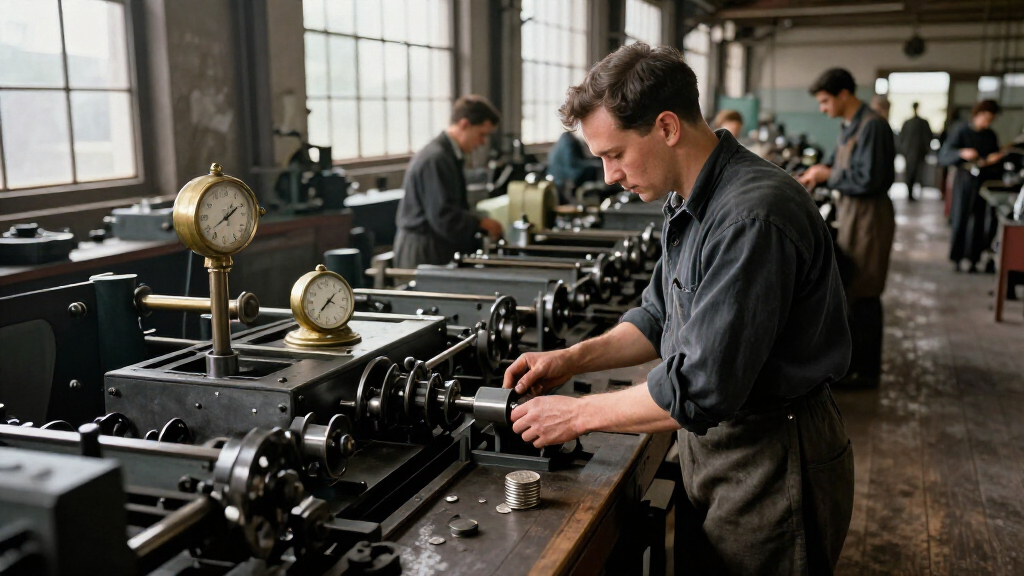

🔍 Read the full analysis: How A Five-Dollar Wage Became Part Of Assembly Line History on ThorstenMeyerAI.com

Prime made for students and young adults
- Fast, free delivery for dorm and study essentials
- Prime Video and Amazon Music included
- Member-only deals
TL;DR
Ford’s January 1914 five-dollar day came after assembly-line production sharply cut the labor time needed to build a Model T chassis, while workers were leaving at a high rate. The pay increase and shorter workday were tied to strict conditions; Ford’s turnover fell in 1914, though the episode’s figures largely come from company records and later historical research.
Ford Motor Co. raised its minimum daily wage to $5 on January 5, 1914, while cutting the workday from nine hours to eight, after its new assembly-line system accelerated production but workers left at a high rate. A November 6 episode of ThorstenMeyerAI.com’s “Work After Work” series argues that the pay change was chiefly a response to labor turnover, rather than a plan to help workers buy Ford cars.
At the Highland Park plant in Detroit, Ford’s moving line reduced the labor time recorded for assembling a Model T chassis from 12 hours and 28 minutes to 1 hour and 33 minutes by early 1914. Those figures are drawn from Henry Ford’s account, written with journalist Samuel Crowther and published in 1922. The episode describes the numbers as Ford’s own account, not an independent measurement.
The production change coincided with serious staffing churn. Figures cited from economists Daniel Raff and Lawrence Summers’ 1987 study put Ford’s 1913 turnover at 370%: the company hired 50,448 people to maintain an average workforce of 13,623. A company survey from March 1913 recorded roughly 7,300 departures that month. The episode says most were workers who missed five consecutive days and were counted as having quit, rather than people who formally resigned.
Ford’s $5 minimum was offered as “profit sharing” under strict conditions, according to the episode, and accompanied the shorter workday. It reports that turnover fell to 54% in 1914. Henry Ford later described the policy as “one of the finest cost-cutting moves we ever made,” a remark that supports the interpretation of the wage change as a staffing measure, though it does not by itself establish every motive behind the decision.
Pay as a Response to Turnover
The episode’s account complicates a familiar explanation that Ford raised wages mainly so his employees could afford the cars they built. It says the company’s immediate problem was keeping enough workers on the job: the moving line increased the pace and narrowed each person’s task, while high turnover meant constant hiring and disruption.
That makes the five-dollar day an early, prominent example of a company changing compensation and hours alongside a change in production methods. The reported fall in turnover suggests the policy helped stabilize staffing, but the supplied material does not isolate the wage increase’s effect from the shorter workday or other conditions. The broader lesson is not that higher pay automatically follows automation, but that productivity gains can create pressure to address the conditions workers face.
Products Worth Considering

Kindle Paperwhite 16GB (2024) – 7 Glare-Free Display, Weeks Battery Life – Black

Kindle Paperwhite Signature Edition 32GB (2024) – Auto-adjusting front light, wireless charging, weeks of battery life – Metallic Black

Jackery HomePower 3600 Plus Portable Power Station, 3584Wh, 3600W
As an affiliate, we earn on qualifying purchases.
From Stationary Chassis to Moving Line
Before Ford’s experiments, workers assembled a car around a chassis that remained in one place, bringing parts to it. Ford wrote that the first assembly-line trial began around April 1, 1913, with the flywheel magneto, a small generator used in the ignition system. He said the idea was inspired in general by overhead rails used in Chicago meatpacking plants.
Ford’s account says the magneto task was divided into 29 operations. Assembly time fell from about 20 minutes per unit to 13 minutes and 10 seconds, then to seven minutes and, after further changes, five minutes. The chassis line developed in stages: an early rope-and-windlass experiment cut the labor time to 5 hours and 50 minutes before further changes brought it to 1 hour and 33 minutes. These detailed production figures come from Ford’s 1922 book, so they should be read as the company’s historical account.
The source also places the wage decision in a period of expanding industrial employment, reporting that U.S. factory jobs rose by about a third between 1910 and 1920. It notes that assembly lines remain in use, with more tasks now handled by robots. That broad comparison is context, not evidence that the 1914 wage policy predicts how current workplaces will respond to automation.
What the Historical Figures Show
The account draws on sources with different roles: Ford’s own published recollections, a company survey, a museum estimate, and later academic research. Ford’s figures are company-reported historical data, while the 1987 study’s turnover estimate is a later analysis drawing on earlier labor research and company records. The source notes the Henry Ford museum gives turnover at about 380%, compared with the 370% figure attributed to Raff and Summers.
The material does not establish how much of the 1914 decline in turnover came from the higher wage, the shorter day, or the policy’s conditions. It also does not provide a detailed breakdown of those conditions or a complete account of how the wage was distributed among workers. The claim that the change was primarily a fix for turnover is supported by the staffing figures and Ford’s later comment, but remains an interpretation of the evidence rather than a complete record of management’s decision-making.
Further Evidence on Ford’s Policy
The source is a historical episode published on November 6, 2026, not a report of a new company announcement or an unfolding event. It identifies no upcoming release, investigation or formal milestone. Readers seeking to verify the historical account can compare Ford’s 1922 book with Raff and Summers’ 1987 study, the cited company survey and the Henry Ford museum’s estimate.
The episode’s next step in its own narrative is to connect the assembly line’s productivity gains to the labor conditions that prompted the wage change, then to the continuing role of automation in factories. Whether that comparison holds for modern workplaces depends on evidence about specific industries, workers and pay policies; the historical account alone does not answer it.
Key Questions
Why did Ford raise the minimum daily wage to $5?
The episode attributes the January 1914 increase chiefly to high worker turnover. It cites Ford’s staffing figures and a later comment in which he called the move a cost-cutting measure. The exact weight of each management motive is not established by the supplied material.
What changed on January 5, 1914?
Ford cut the workday from nine hours to eight and raised minimum daily pay from $2.34 to $5, according to the source. The new pay was described as profit sharing and came with conditions.
How much faster did the assembly line make chassis assembly?
Ford’s account gives a fall from 12 hours and 28 minutes to 1 hour and 33 minutes of labor per Model T chassis by early 1914. The figures come from Ford’s 1922 book, rather than a separate measurement cited in the episode.
Did Ford raise wages so workers could buy his cars?
The episode calls that explanation a legend and says the immediate issue was workers leaving faster than Ford could retain them. The staffing evidence supports turnover as a major concern, but the source does not provide a complete record of every reason behind the decision.
Source: ThorstenMeyerAI.com