Hanukkah 2025 celebrates the ancient miracle of the oil lasting eight days in the Holy Temple, symbolizing resilience, faith, and hope. You’ll observe traditions like lighting the menorah, sharing story-telling, and enjoying delicious foods such as latkes and sufganiyot. Modern touches include virtual celebrations and creative gift-giving. This festival continues to strengthen cultural connections and inspire new generations. If you’re curious about the full story behind Hanukkah’s timeless significance, there’s more to discover.
Key Takeaways
- Hanukkah commemorates the miracle of the oil lasting eight days in the Holy Temple.
- The central tradition is lighting the menorah, symbolizing hope and resilience.
- Celebrations include traditional foods like latkes and sufganiyot, as well as gift exchanges.
- Modern celebrations incorporate virtual events, social media sharing, and creative menorah designs.
- The holiday emphasizes cultural heritage, faith, and community, adapting traditions for contemporary relevance.
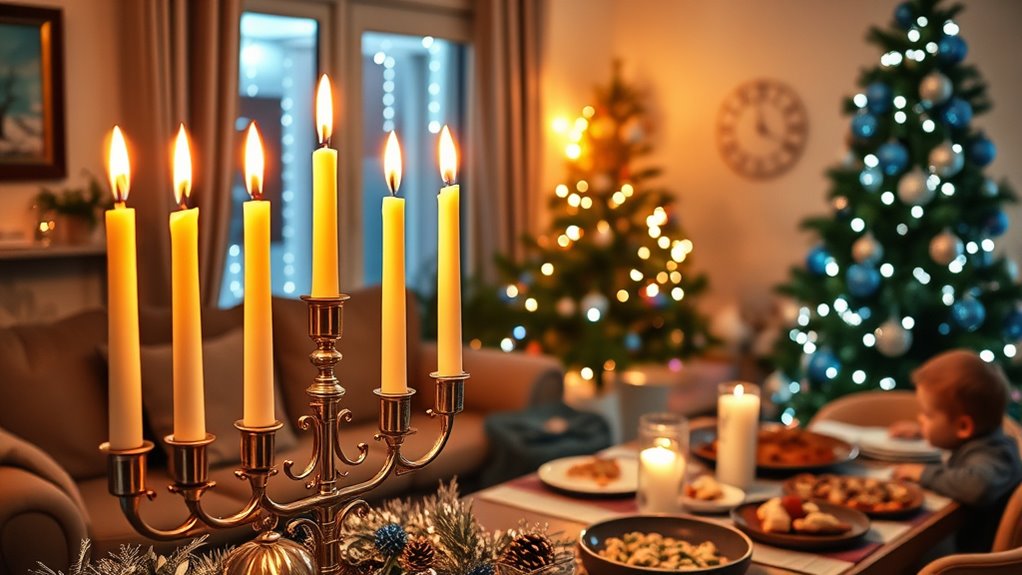
As Hanukkah 2025 approaches, families around the world prepare to celebrate the Festival of Lights with traditions old and new. This holiday, rooted in centuries of history, continues to be a time of joy, reflection, and togetherness. It commemorates the miracle of the oil that lasted eight days in the Holy Temple, a story that underscores resilience and faith. Understanding this historical significance helps you appreciate why Hanukkah remains an essential part of Jewish identity today. While the core story remains unchanged, modern celebrations have evolved to include new customs that resonate with contemporary life, making the holiday accessible and meaningful for each generation.
As Hanukkah 2025 approaches, celebrate the timeless miracle with traditions old and new, inspiring hope and resilience across generations.
During Hanukkah, lighting the menorah is central, symbolizing the miracle of the oil. In recent years, you might notice that families incorporate creative touches into this tradition, such as themed candles or unique menorahs that reflect personal or cultural identities. Many people also share the story of Hanukkah with children, emphasizing the importance of standing up for one’s beliefs. Beyond the religious aspects, the holiday has become a festive occasion to gather with loved ones, sharing meals, playing games like dreidel, and exchanging gifts. These modern celebrations blend age-old customs with current trends, making Hanukkah a lively, inclusive holiday.
Food plays a significant role during Hanukkah, with traditional dishes like latkes and sufganiyot taking center stage. You might find that families now experiment with new recipes or incorporate multicultural influences into their holiday menus. This reflects the evolving nature of the celebration, where culinary traditions adapt to diverse tastes and dietary preferences, yet still honor the holiday’s roots. Gift-giving has also become more prominent, especially in North America and Europe, where exchanging small presents adds an element of excitement. Many households now also participate in charity drives during Hanukkah, emphasizing the importance of kindness and community service, aligning with the holiday’s themes of hope and perseverance.
In today’s digital age, Hanukkah is celebrated both in person and online. Many share virtual menorah lightings, social media posts, and online community events, broadening the holiday’s reach and connecting people across distances. Despite these modern adaptations, the core values of Hanukkah—faith, resilience, and hope—remain unchanged. Additionally, converting to gold IRA has gained popularity among those looking to secure their financial future during this season of reflection. As you celebrate this year, consider how these traditions, both old and new, serve to strengthen your connection to your heritage and to loved ones. Whether lighting the menorah, sharing stories, or simply enjoying the company of family and friends, you participate in a centuries-old celebration that continues to inspire and illuminate new generations.
Frequently Asked Questions
How Did Hanukkah Originate Historically?
You might find it fascinating that Hanukkah originated when the ancient Maccabees fought against Greek oppression. They successfully reclaimed and rededicated the temple in Jerusalem, which had been defiled. According to tradition, they found only enough sacred oil to light the menorah for one day, but it miraculously burned for eight days. This miracle is the reason you celebrate Hanukkah with lights and festivities today.
What Are the Traditional Foods Eaten During Hanukkah?
You probably enjoy traditional fried foods during Hanukkah, like crispy latkes, which are potato pancakes fried in oil to honor the miracle of the oil lasting eight days. You might also indulge in Hanukkah desserts such as sufganiyot, jelly-filled donuts that are deep-fried and sweet. These traditional fried foods and treats symbolize the importance of oil and celebrate the festive spirit of the holiday.
How Is the Date for Hanukkah Determined Each Year?
You determine the date of Hanukkah each year based on Jewish calendar calculations, which follow the lunar cycle’s significance. It begins on the 25th day of Kislev, a month in the Hebrew lunar calendar. Since the lunar cycle varies slightly from the Gregorian calendar, Hanukkah shifts annually, usually falling between late November and late December. This lunar-based system guarantees the festival aligns with its traditional calendar and historical roots.
Are There Any Modern Adaptations of Hanukkah Celebrations?
Think of Hanukkah as a living tree, constantly growing with new branches. Today, contemporary celebrations embrace technological innovations like virtual lighting ceremonies, online menorah photo sharing, and social media festivities. These modern adaptations keep the spirit alive in a digital age, allowing families worldwide to connect and celebrate together, even from afar. It’s a beautiful fusion of tradition and innovation, ensuring the Festival of Lights shines brightly for generations to come.
What Significance Do the Menorah and Dreidel Hold Today?
You see the menorah as a powerful symbol of hope and perseverance, representing the miracle of the oil lasting eight days. The dreidel’s significance lies in its historical role, reminding you of Jewish resilience and tradition during times of persecution. Both items connect you to Hanukkah’s rich history and modern celebrations, fostering a sense of unity and cultural pride as you light the menorah and spin the dreidel.
Conclusion
As you celebrate Hanukkah 2025, remember that while the festival’s lights symbolize hope and resilience, they also remind you of centuries of perseverance. Each flickering candle contrasts with the darkness that once threatened to consume tradition, highlighting the power of faith. Embrace these moments of joy and reflection, knowing that the festival’s ancient history continues to illuminate your path today. In this glow, history and hope come together, guiding you through each night of celebration.