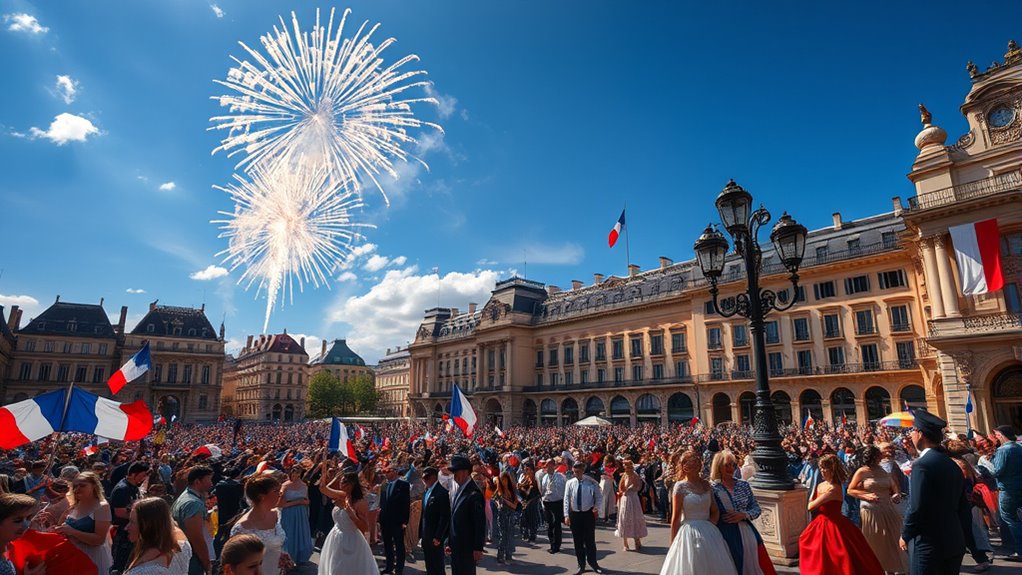
Bastille Day, celebrated on July 14th, marks the pivotal moment in French history when the crowd stormed the Bastille prison in 1789, challenging royal tyranny and sparking the French Revolution. This event symbolized the fight for liberty, equality, and fraternity, and it ended centuries of aristocratic privilege. Today, France commemorates this with patriotic parades, fireworks, and festivities. If you want to understand how this event shaped France’s national identity, there’s more to explore.
Key Takeaways
- Bastille Day, celebrated on July 14th, commemorates the storming of the Bastille prison in 1789, a pivotal event in the French Revolution.
- The event symbolized the fall of royal tyranny and the fight for liberty, equality, and fraternity in France.
- The storming marked the beginning of revolutionary change, challenging the old regime and inspiring widespread resistance.
- Modern celebrations include patriotic parades, fireworks, and festivities, honoring the courage of those who fought for freedom.
- The day symbolizes collective action’s power to challenge oppression and has become a national holiday reinforcing French values.
Have you ever wondered why July 14th is celebrated as Bastille Day in France? This day marks a pivotal moment in French history, rooted in the tumult of the French Revolution. The story begins with the Bastille prison, a symbol of royal tyranny and oppression. On that July morning in 1789, Parisians stormed the Bastille, seeking weapons, gunpowder, and to challenge the authority of King Louis XVI. The prison was more than just a detention center; it represented the old regime’s cruelty and the unfairness of the monarchy. When the crowd overpowered the guards and dismantled the Bastille, it sent a powerful message: the people were ready to stand up against tyranny. This event became a catalyst for revolutionary change across France, igniting a movement that would overthrow centuries of monarchy and aristocratic privilege. The fall of the Bastille symbolized the fight for liberty, equality, and fraternity—values that still resonate today.
In the aftermath, the French Revolution gained momentum, and the storming of the Bastille became a rallying cry for freedom. It marked the beginning of a new era, where ordinary citizens demanded rights and justice. The prison’s destruction was not just about freeing prisoners; it was about breaking free from oppressive structures and asserting the power of the people. Over time, the event was romanticized and turned into a national emblem of resistance. Every year on July 14th, France commemorates this act of rebellion, celebrating its independence from tyranny. The day is filled with patriotic parades, fireworks, and festive gatherings, honoring the courage of those who fought for change. Additionally, the event underscored the importance of color accuracy and contrast ratio in representing the full emotional and visual impact of historical moments, much like how modern projectors aim to faithfully reproduce images. Recognizing the symbolism of these events helps in understanding their enduring significance and the ideals they represent. Studying how cultural symbolism influences national identity can deepen appreciation for such historic milestones.
Today, the significance of Bastille Day extends beyond its historical roots. It reminds you of the importance of standing up for your rights and challenging injustice. The storming of the Bastille is a testament to how collective action can reshape a nation’s future. It’s a celebration of freedom that has inspired countless movements worldwide. When you watch the fireworks light up the Paris sky on July 14th, remember the brave souls who took action that day in 1789. Their courage transformed France from a land of inequality into a beacon of liberty. So, every year, the nation reflects on that historic event and reaffirms its commitment to the principles that continue to shape the country’s identity. Recognizing the importance of symbolism in revolutionary events helps us understand their lasting cultural impact. Moreover, understanding the historical context behind such pivotal moments enhances appreciation of their significance.
Top picks for "bastille history france"
Open Amazon search results for this keyword.
As an affiliate, we earn on qualifying purchases.
Frequently Asked Questions
How Do Different Regions in France Celebrate Bastille Day?
You’ll see that different regions in France celebrate Bastille Day with unique regional costumes and lively local festivities. In some areas, traditions include parades, fireworks, and music, reflecting local culture. In others, communities gather for outdoor meals or historical reenactments. These regional variations make the national celebration vibrant and diverse, allowing you to experience France’s rich cultural tapestry while enjoying the patriotic spirit that unites all regions.
What Are the Traditional Foods Served During Bastille Day?
On Bastille Day, you’ll enjoy traditional foods like French cheese, which is often served with fresh baguettes. You might also indulge in Bastille desserts, such as éclairs, tarte Tatin, or macarons. These treats highlight France’s rich culinary heritage. As you celebrate, savor these iconic flavors that symbolize French culture and history, making your day even more special with delicious, patriotic foods.
Are There Any Unique Customs or Rituals Associated With the Celebration?
Ever wondered if unique ceremonies make celebrations special? You’ll find that Bastille Day features historical rituals like military parades on the Champs-Élysées and fireworks lighting up the night sky. These traditions reflect France’s revolutionary spirit and unity. Do you realize how these unique ceremonies connect you to the nation’s history? Participating in or observing these customs immerses you in France’s rich cultural heritage, making the celebration truly memorable.
How Has Bastille Day Evolved Over the Last Century?
Over the last century, you’ve seen Bastille Day evolve from a primarily patriotic celebration into a grand spectacle of revolution anniversaries and historical commemorations. The focus shifted from political events to festive parades, fireworks, and cultural events that unite people across France. Today, you witness a blend of tradition and modern festivities, making it a vibrant reminder of France’s revolutionary history while embracing contemporary celebrations.
What International Events or Parades Commemorate Bastille Day Outside France?
You’ll notice that international parades and global celebrations mark Bastille Day outside France, highlighting its widespread significance. Countries like the US, UK, and Canada host events such as fireworks, concerts, and parades to honor French heritage and ideals of liberty. These celebrations foster cultural exchange, allowing people worldwide to partake in the historic spirit of Bastille Day and connect with France’s revolutionary legacy.
Conclusion
As you celebrate Bastille Day, remember it’s more than just fireworks and parades—it’s a symbol of freedom and revolution. Did you know that over 10 million people celebrate across France and around the world? That’s roughly one-sixth of France’s population! This shared enthusiasm shows how deeply the holiday resonates today. So, whether you’re watching fireworks or enjoying French cuisine, you’re part of a global tradition that honors liberty and unity.