Australia Day 2026 is a significant moment to reflect on its history, celebrate evolving traditions, and address ongoing controversies. While it honors the nation’s achievements, many question its date due to its complicated history with Indigenous peoples. The day is now increasingly about inclusivity, reconciliation, and acknowledging Indigenous perspectives. If you want to understand how Australia is redefining its identity and fostering unity, there’s more to explore beyond the surface.
Key Takeaways
- Australia Day 2026 marks a pivotal moment for reflection on history, inclusivity, and reconciliation, emphasizing Indigenous perspectives.
- Celebrations are evolving to include Indigenous art, storytelling, and official acknowledgments, fostering cultural understanding.
- The controversy around Australia Day centers on its colonial origins and its impact on Indigenous communities.
- The day aims to redefine national identity by embracing diversity and acknowledging past injustices.
- Australia Day 2026 represents ongoing efforts toward reconciliation, community unity, and respecting Indigenous heritage.
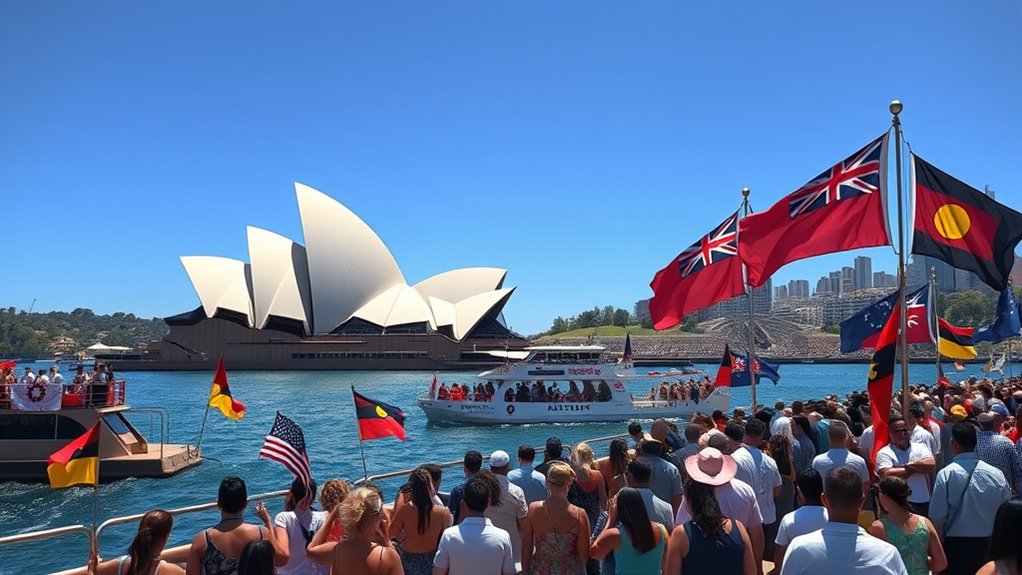
Australia Day 2026 promises to be a celebration like no other, as communities across the country prepare to honor their history, culture, and unity. But this year, the festivities will be more reflective, more inclusive, and more aware of the complex history that shapes the nation’s identity. Central to this shift are Indigenous perspectives, which challenge the traditional narrative and invite Australians to reconsider what it means to be part of this land. Many see this day not only as a celebration of national achievements but also as an opportunity to acknowledge the pain and injustices faced by Aboriginal and Torres Strait Islander peoples. Recognizing their stories and experiences is essential to shaping a more genuine and representative sense of national identity.
You might notice that more communities are incorporating Indigenous voices into their celebrations, whether through art, storytelling, or official acknowledgments. These acts acknowledge that the history of Australia extends far beyond European settlement and that the initial inhabitants have long been integral to the nation’s identity. By embracing Indigenous perspectives, you’re participating in a broader conversation about reconciliation and respect. This isn’t about erasing history but about integrating it into the fabric of national consciousness. It’s about understanding that the story of Australia isn’t complete without acknowledging the original custodians of the land and their enduring connections to it.
As you observe the festivities, you’ll see that many are now emphasizing unity through understanding. The focus has shifted from just celebrating achievements to fostering a sense of shared responsibility toward reconciliation. Some communities host events that highlight Indigenous culture, history, and contributions, helping to bridge gaps in understanding. This effort aims to redefine what national identity truly means—one rooted in respect, diversity, and acknowledgment of past wrongs. It’s about creating a space where everyone feels seen and valued, regardless of background. Additionally, engaging in inclusive celebrations can help strengthen community bonds and promote mutual respect across diverse groups.
In this way, Australia Day 2026 becomes more than a date on the calendar. It’s a reflection of ongoing dialogue and growth. You’re encouraged to listen, learn, and contribute to a more inclusive national story. By doing so, you’re helping shape a future where celebrating Australia includes honoring its Indigenous heritage and recognizing the richness it brings to the nation’s identity. The day stands as a reminder that unity isn’t just about celebration; it’s about understanding, reconciliation, and shared respect for all who call this land home.
Frequently Asked Questions
How Did Australia Day Originate Historically?
You might not realize that Australia Day originated from colonial roots, marking the arrival of the First Fleet in 1788. Over time, it became a symbol of national identity, celebrating the country’s history and achievements. However, its history also involves complex and often painful aspects of colonization, which many now question. As a result, the day’s meaning continues to evolve, reflecting Australia’s ongoing journey towards reconciliation and understanding.
What Are the Common Traditions Associated With Australia Day?
Ever wondered how Australians celebrate their national day? You’ll find cultural festivities like barbecues, fireworks, and community events, but also moments of reflection on Indigenous perspectives. Many gather to enjoy sports, parades, and concerts, embracing the diverse traditions that make up Australia’s identity. Do you participate in the celebrations, considering both the joyful festivities and the ongoing conversations around history and reconciliation?
Who Typically Organizes Australia Day Celebrations Nationwide?
You’ll find that Australia Day celebrations nationwide are typically organized by community groups and government agencies. Community groups often host local events, barbecues, and cultural activities, while government agencies coordinate larger festivities like official ceremonies, fireworks, and national events. These groups work together to guarantee a wide range of activities, fostering community spirit and national pride, even as debates around the holiday continue.
How Do Indigenous Communities View Australia Day?
You should understand that Indigenous communities often view Australia Day as a day of mourning rather than celebration, highlighting the impact of colonization. They emphasize the importance of respecting Indigenous perspectives and cultural sensitivities, advocating for change or alternatives to the current date. Recognizing their voices helps foster reconciliation and understanding, showing that this day holds deep emotional and cultural significance for many Indigenous Australians.
Are There Any Proposed Changes to Australia Day 2026?
Political debates dominate discussions about Australia Day 2026, with proposals for change gaining momentum. You might notice calls to shift the date, seek symbolic gestures, or even replace it altogether, aiming to soothe sensitivities and strengthen national identity. These proposed modifications aim to make the day more inclusive, reflecting diverse perspectives and promoting unity. As conversations continue, you’re encouraged to stay informed and participate in shaping Australia’s evolving cultural landscape.
Conclusion
So, as Australia Day 2026 rolls around, you might find yourself pondering whether celebrating with barbecues and fireworks is worth ignoring the deeper history and ongoing debates. But hey, who needs reflection when there’s a sausage in hand and a shiny display in the sky? Just remember, the true spirit of Australia isn’t just about fireworks — it’s about facing the past, even if it’s a little less festive. Cheers to that!