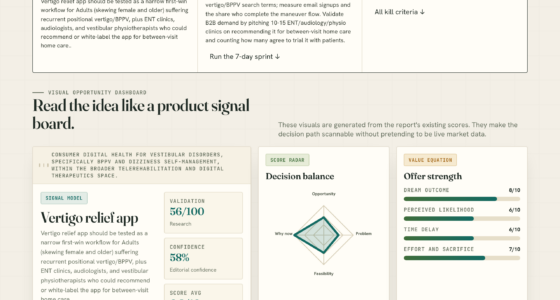
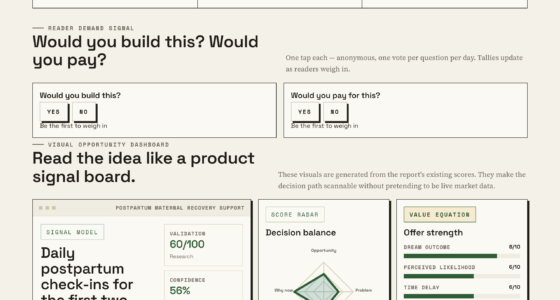
📊 Full opportunity report: Is Your Youth Pitcher’s Arm Load Being Tracked Year-Round? on IdeaNavigator AI — validation score, market gap, and execution plan.

Prime made for students and young adults
- Fast, free delivery for dorm and study essentials
- Prime Video and Amazon Music included
- Member-only deals
TL;DR
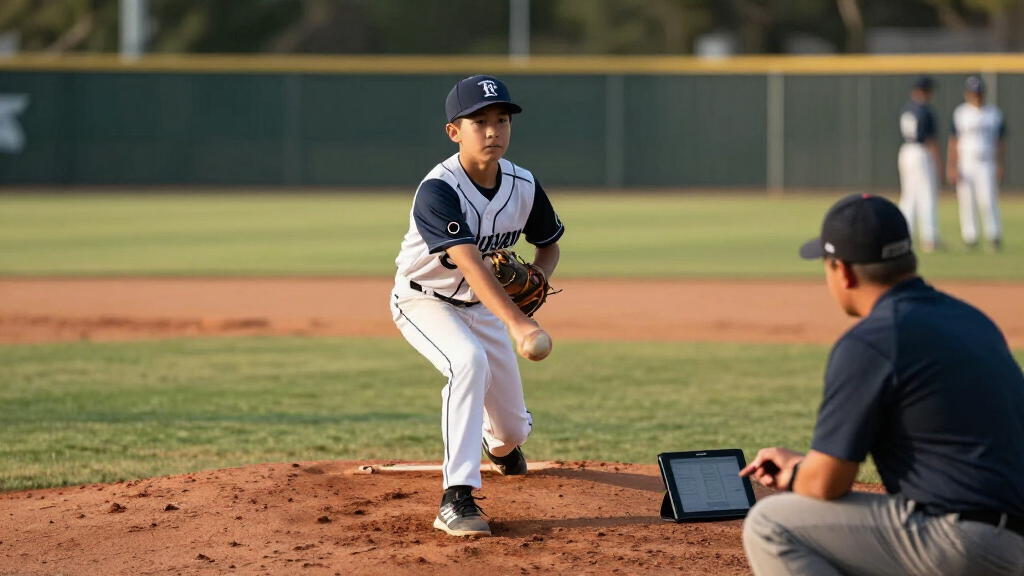
A product proposal calls for an app that lets parents track a youth pitcher’s workload across school, travel and showcase teams. The idea has not been shown to prevent injuries; the proposed first test would recruit 200 travel-ball families and assess logging consistency and whether alerts affect rest decisions.
IdeaNavigator AI’s proposal describes testing an app that would let parents track a youth pitcher’s outings across school, travel and showcase teams, addressing a gap the proposal identifies in fragmented pitch-count records. The idea is at the validation stage: the proposal reports no completed trial, injury-prevention result or launched product, and suggests a first test involving 200 travel-ball families.
According to the IdeaNavigator AI proposal, the app would let parents log pitching appearances quickly or import outing information from GameChanger. It would combine activity across teams, compare a pitcher’s rolling workload with age-based guidelines, flag selected risk thresholds and suggest rest periods. Parents could also generate a shareable workload report for coaches.
The proposal describes the intended customer as a parent whose child pitches across multiple settings and seasons. It suggests a family annual subscription, with team licenses as a possible expansion. These are product and revenue concepts, not evidence that an app has been built, that teams would adopt it, or that the proposed alerts reliably identify injury risk.
For validation, IdeaNavigator AI suggests recruiting 200 travel-ball families and tracking two outcomes over a season: how consistently families record outings and whether workload flags change decisions about rest. The proposal does not report that recruitment has started or provide results from any such study.
A Cross-Team Record Could Fill Gaps
The IdeaNavigator AI proposal argues that a centralized record could help families see a pitcher’s accumulated activity when teams keep separate schedules and statistics. If entries are accurate and timely, a report shared with coaches might make it easier to discuss workload across a school team and travel or showcase commitments. That potential benefit depends on participation from the adults who record and review the information.
The distinction between tracking workload and preventing injury matters. A count or app-generated alert does not by itself establish that a pitcher is injured, predict an individual injury, or show that a particular amount of rest is medically appropriate. The proposal presents no clinical validation, evidence that alerts reduce arm injuries, or comparison with existing monitoring practices.
The proposed season-long test would therefore address an initial practical question: can families maintain a usable record, and does that information affect rest decisions? Even a positive answer would not establish that the app prevents injuries. Injury outcomes, data accuracy and the effects of any recommended rest would require further evidence.
youth baseball pitch count tracker app
As an affiliate, we earn on qualifying purchases.
As an affiliate, we earn on qualifying purchases.
Why Team Schedules Complicate Tracking
The IdeaNavigator AI proposal is based on a practical coordination problem: a young pitcher may play for multiple teams with separate records, while parents and coaches may not have a shared view of appearances across a full season. A count maintained by one team may not include activity elsewhere. The proposal argues that a parent-facing tool could gather those records in one place.
The proposal also points to Pitch Smart guidelines as an existing reference for age-based pitching limits, while saying those guidelines are not enforced across a child’s fragmented team schedule. It provides no data on how often young players exceed a guideline, how many teams currently share records, or the rate of youth elbow injuries. Its claim that youth elbow-surgery rates are rising as travel baseball expands is not accompanied by figures or a cited study in the proposal, so it should be treated as an asserted rationale rather than a quantified finding.
Evidence and Adoption Still Unclear
The IdeaNavigator AI proposal reports no trial findings, launch date, finished app or confirmed partnership with leagues, teams or GameChanger. The suggested integration is a feature concept; the proposal does not specify whether data can be imported, under what terms, or how complete those records would be.
The proposal also leaves unclear how the app would define a workload threshold, account for differences among players, or translate an alert into a rest recommendation. It does not identify a clinical review process, explain how incorrect or missing entries would be handled, or set out privacy protections for minors’ activity data. Nor does it specify what evidence would be needed before describing the tool as reducing injury risk.
The Proposed Season-Long Test
As described by IdeaNavigator AI, the next step would be to recruit 200 travel-ball families and observe their logging habits over one season. The proposed assessment would look at whether records are maintained consistently and whether flags lead families or coaches to change rest decisions. The proposal provides no recruitment timeline or study protocol.
Those results could show whether the workflow is practical, but they would not alone establish medical effectiveness. Any later claim about injury prevention would need evidence beyond app use and changed rest choices. For now, the central development is a proposal for a testable product concept, not a proven youth-pitching intervention.
Source: IdeaNavigator AI proposal
Key Questions
Is a youth pitcher workload-tracking app available now?
The IdeaNavigator AI proposal describes an app concept and a possible minimum viable product. It does not report a product launch or confirm that the proposed app is available.
What would the proposed app track?
According to the proposal, parents would log outings or potentially import them from GameChanger. The app would combine activity across teams, compare rolling workload with age-based guidelines, flag thresholds and create reports for coaches.
Has the app been shown to prevent arm injuries?
The proposal reports no injury-prevention results. Its proposed first test would measure logging consistency and whether alerts change rest decisions, not establish that injuries are reduced.
What is the proposed test?
IdeaNavigator AI proposes recruiting 200 travel-ball families and following their use of the tracking workflow over a season. The proposal does not report recruitment or results.
Source: IdeaNavigator AI
Fall Picks
fall essentials
As an affiliate, we earn on qualifying purchases.