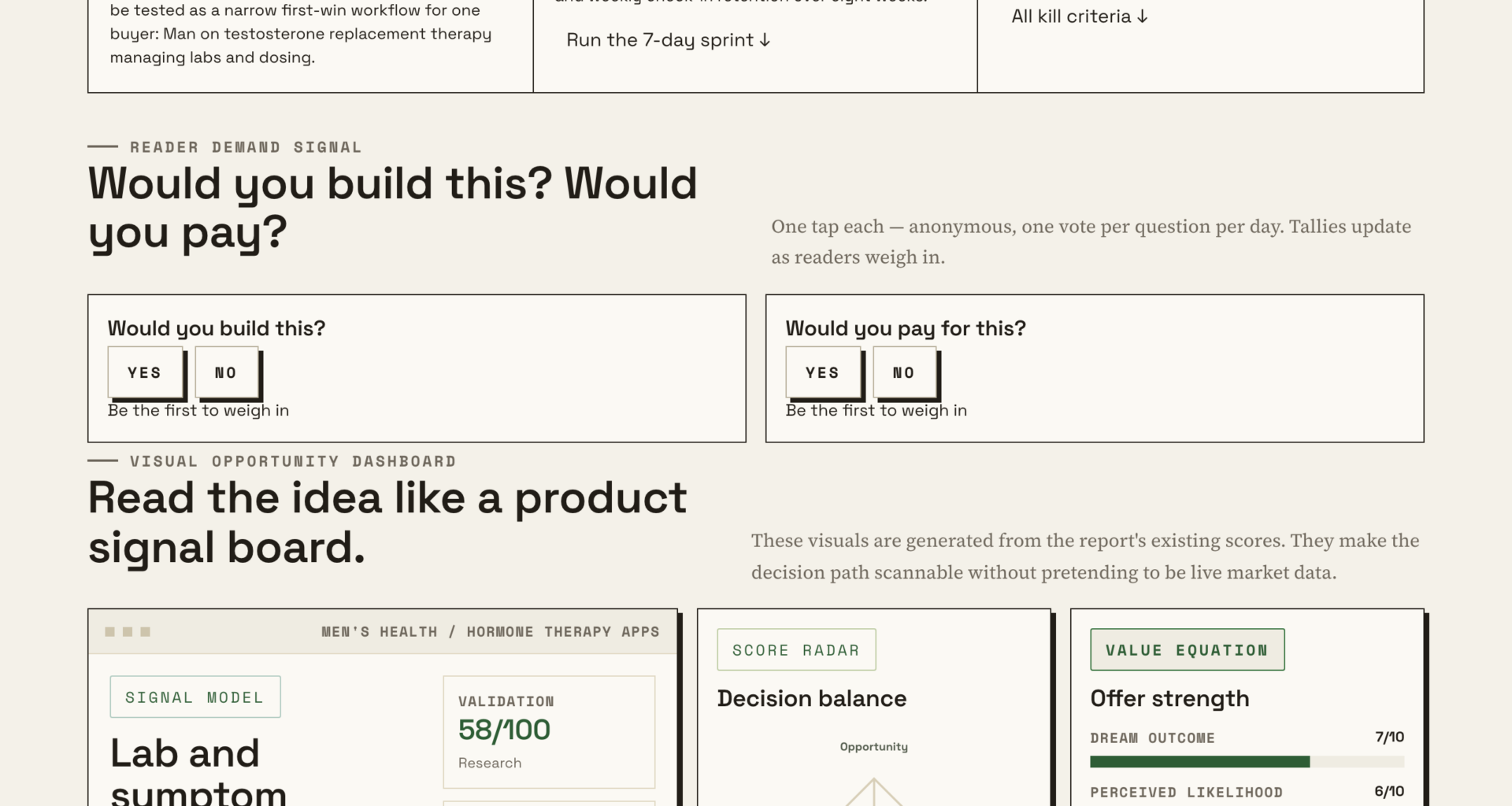

📊 Full opportunity report: Follow Your Hormone Therapy With A TRT Tracker on IdeaNavigator AI — validation score, market gap, and execution plan.

Prime made for students and young adults
- Fast, free delivery for dorm and study essentials
- Prime Video and Amazon Music included
- Member-only deals
TL;DR
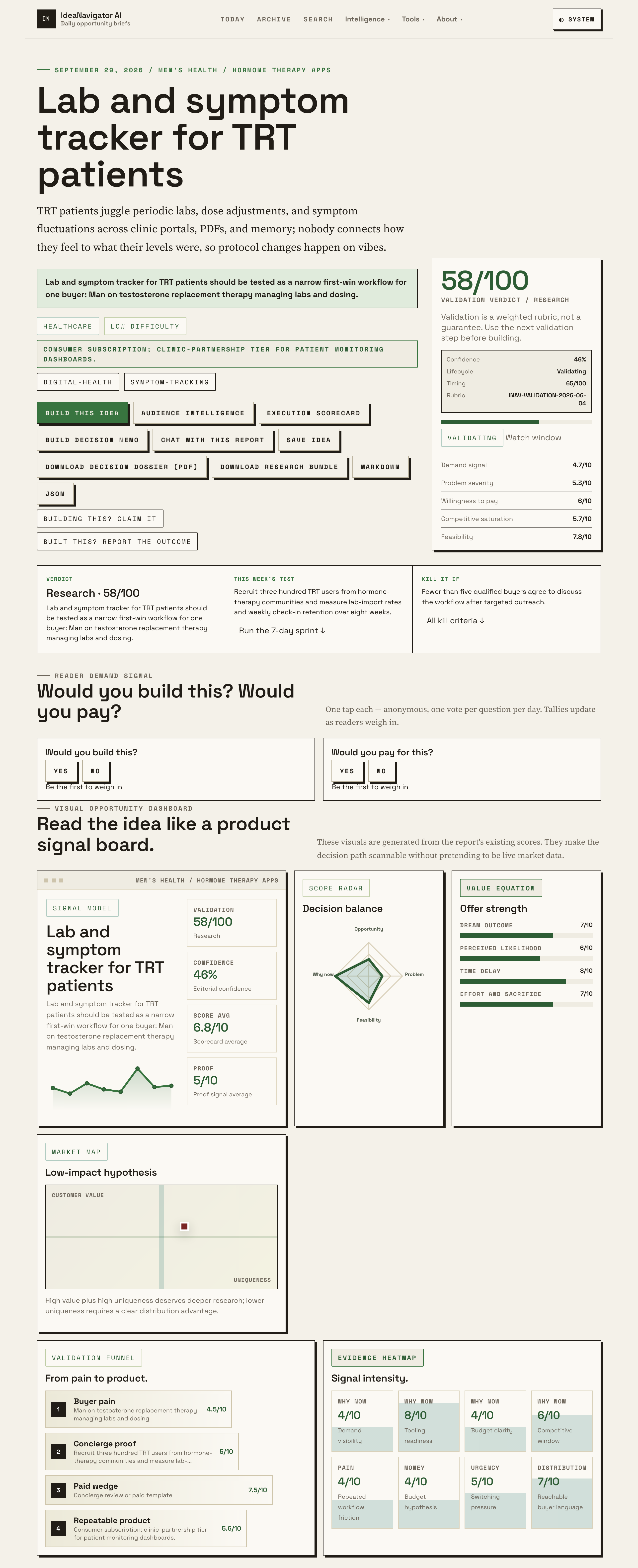
IdeaNavigator AI has outlined a proposed tracker for men on testosterone replacement therapy that would combine imported lab results, dose changes and daily symptom check-ins. The concept is at the proposal stage; no launch, clinical validation or user-trial results are reported.
IdeaNavigator AI has proposed a tracking app for men using testosterone replacement therapy (TRT), designed to bring lab results, dose changes and daily symptom reports into one timeline. The idea targets people who currently manage those records across clinic portals, PDF files and memory, but it remains a product proposal; no evidence of a released app, clinical testing or measured patient outcomes is provided.
The proposed minimum viable product would let users import lab-report PDFs and chart hormone panel results over time alongside recorded dose changes. Patients would also enter daily symptom check-ins, giving them a combined view of reported symptoms and available lab measurements. The proposal does not specify which hormone tests would be supported or how PDF data would be extracted and checked for accuracy.
The app would generate trend summaries for clinic visits and flag readings that move outside user-defined or otherwise established target ranges. Those features are described as product goals, not as validated clinical functions. The proposal does not name a medical team, explain who would set the ranges, or say whether clinicians would review alerts before patients see them.
The suggested business model combines a consumer subscription with a possible clinic-partnership tier offering patient-monitoring dashboards. To test demand, IdeaNavigator AI proposes recruiting 300 TRT users through hormone-therapy communities and tracking lab-import rates and weekly check-in retention for eight weeks. The proposed test is a validation plan; no recruitment, participation or results are reported.
A Patient Timeline for TRT Care
The proposal focuses on a practical record-keeping gap: patients may have lab results, treatment changes and symptom notes, but those records can sit in separate places. A shared timeline could make it easier for a patient to prepare a clear account of changes between appointments and discuss that history with a clinician. That is the product’s intended value, not a demonstrated improvement in care.
For clinics, a monitoring dashboard could offer a more organized view of patient-submitted information between visits. Its usefulness would depend on whether patients keep logging symptoms, whether imported results are accurate and whether clinics can fit the information into their workflows. The proposal provides no evidence yet that either patients or providers would adopt a paid service.
Because the app concerns hormone results and treatment, presentation matters. A flag that a value is outside a target range could prompt questions, but without clinical context it might also be misread as a diagnosis or instruction to change a dose. The concept does not describe safeguards, medical oversight or how it would tell users to handle concerning results.
Fragmented Records Shape the Proposal
IdeaNavigator AI frames the opportunity around men managing TRT across multiple providers and digital systems. In its description, patients may need to keep track of periodic labs, dose adjustments and changes in how they feel, while records are spread across portals, PDFs and personal memory. The proposal says that this makes it difficult to connect symptoms with hormone levels over time.
The timing rationale offered is that TRT prescriptions and telehealth clinics have grown, leaving more patients to manage care across providers. No figures, dates or independent evidence are supplied to quantify that growth, so the scale of the trend cannot be established from the proposal alone. The suggested target market is men’s health and hormone-therapy apps, with patients as the initial users and clinics as a possible second customer group.
The proposed validation test is tightly focused on usage: whether recruited patients import labs and continue weekly check-ins over eight weeks. Those measures could indicate whether people use the core tracking features, but the proposal does not say how it would assess accuracy, patient understanding, clinical usefulness or changes in treatment decisions.
Clinical Safeguards Remain Unspecified
No launch or trial is reported, and there are no named developers, clinic partners, pricing details or user results. It is also unclear how the app would handle different lab formats, units, reference intervals and test timing, all of which affect how results are recorded and compared.
The proposal does not explain how it would define a target range, whether ranges would vary by patient or treatment plan, or who would approve them. It also leaves open how the app would protect sensitive health data, correct extraction errors and distinguish an informational trend from medical advice. No evidence is presented that symptom tracking alongside lab values can establish why a patient feels a certain way.
Eight-Week Usage Test Proposed
The next step in the outlined plan is to recruit 300 TRT users from hormone-therapy communities and observe lab-import rates and weekly check-in retention for eight weeks. Those results could show whether the intended users engage with the basic workflow. The proposal does not give a start date, recruitment method beyond the communities, or thresholds that would count as success.
Further development would need to clarify how clinicians would set or review ranges, how patient data would be handled and what users should do when a result is flagged. Until a test is conducted and its findings are reported, the app’s demand, clinical value and business prospects remain unverified.
Source: IdeaNavigator AI
Key Questions
Has the TRT tracker been released?
No release is reported. IdeaNavigator AI describes a proposed product and a plan to test its core workflow.
What would the app track?
The proposed app would combine imported lab results, dose changes and daily symptom check-ins, then present trends for clinic visits.
Would the app recommend dose changes?
The proposal mentions flagging values outside target ranges, but does not describe dose recommendations. It does not specify the clinical oversight or safeguards behind any alerts.
How would the idea be tested?
The suggested test would recruit 300 TRT users and measure lab-import rates and weekly check-in retention over eight weeks. No results are available in the proposal.
Source: IdeaNavigator AI
Fall Picks
fall essentials
As an affiliate, we earn on qualifying purchases.