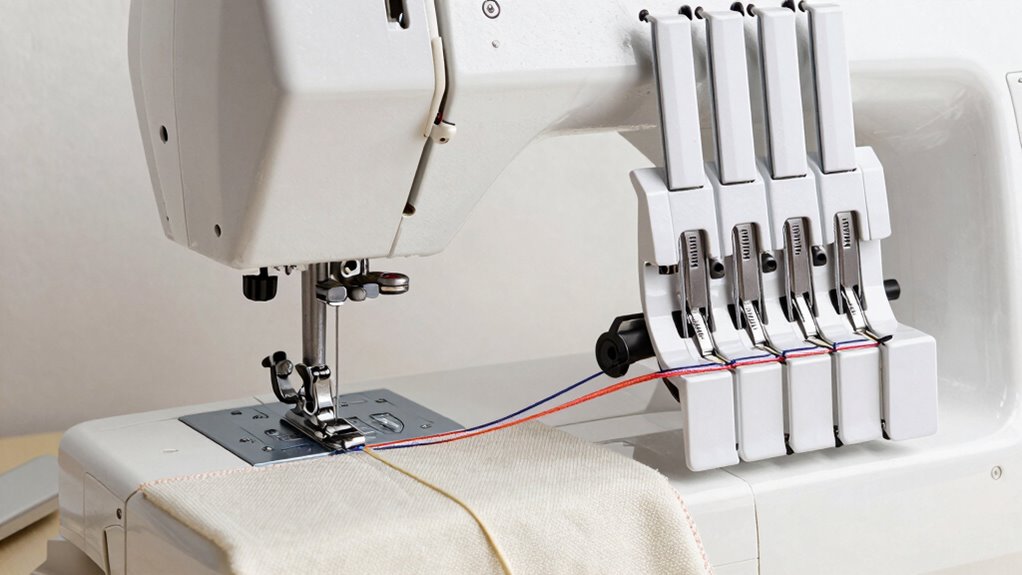
Sewing machines help you create a variety of stitches, from straight to decorative, and are great for constructing garments, quilting, and detailed sewing tasks. Sergers, on the other hand, specialize in finishing raw edges quickly, trimming fabric, and making durable, stretchable seams—perfect for knits. While sewing machines give you more control over stitches and designs, sergers boost efficiency with seamless edge finishing. Want to explore how both tools can enhance your projects? Keep going for more details.
Key Takeaways
- Sewing machines create a variety of stitches for construction, while sergers primarily finish edges and seams for durability.
- Sewing machines handle detailed, precise stitching; sergers focus on fast, efficient seam finishing and fabric trimming.
- Sewing machines are versatile for different fabrics and decorative stitches; sergers excel with stretch fabrics and seam reinforcement.
- Sergers work quickly by trimming excess fabric as they sew; sewing machines prioritize stitch variety and control.
- Sewing machines offer more stitch options for customization; sergers specialize in durable, professional seam finishes.
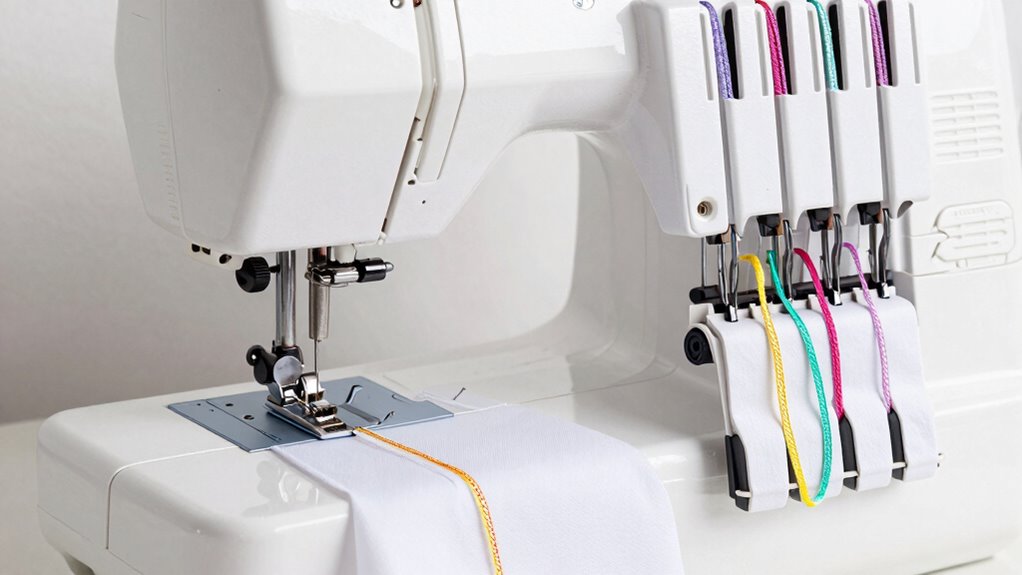
When it comes to sewing, understanding the differences between sewing machines and sergers is essential for choosing the right tool for your projects. While both are vital in a sewing room, they serve distinct purposes and excel with different fabric types and sewing techniques. A sewing machine is versatile, allowing you to create a wide range of stitches, from straight and zigzag to decorative patterns. It’s perfect for constructing garments, quilting, and detailed sewing tasks. You’ll find it useful when working with fabrics like cotton, linen, and lightweight knits, where precision and multiple stitch options help you achieve professional results. Sewing machines are also ideal for techniques such as topstitching, hem finishing, and inserting zippers, where control over stitch length and type is crucial.
On the other hand, a serger, also known as an overlock machine, specializes in finishing raw edges and creating clean, durable seams. It works quickly and efficiently, trimming excess fabric as it sews, which makes it an excellent choice for sewing seams on knit fabrics like jersey, fleece, and stretchy knits. Sergers excel at fabric types that tend to fray or unravel easily, providing a neat, professional finish that prevents fraying over time. They’re also invaluable for sewing techniques like creating rolled hems, flatlock seams, and seam stretching, which require secure, stretchable finishes that a regular sewing machine might struggle to replicate. Additionally, sergers often incorporate overlock stitches that enhance the durability and stretchability of seams.
While a sewing machine handles a broad spectrum of sewing techniques, a serger’s main strength lies in seam finishing and speed. When you’re working on projects that involve knit fabrics or require a polished look with minimal finishing, a serger can significantly cut down your time and effort. Proper fabric handling and tension adjustment are crucial for achieving the best results with both machines, especially when transitioning between different fabric types. It’s also helpful to understand how natural fabrics respond differently to various sewing techniques, which can influence your choice of machine settings. Recognizing the importance of correct tension adjustments can make a significant difference in preventing puckering or uneven stitches. Furthermore, understanding how different fabric types behave can help prevent issues like puckering or stretching, ensuring a smooth sewing process. It’s not as flexible for detailed stitching or decorative elements, where a sewing machine’s wide array of stitches and adjustable settings come into play. In many sewing setups, both machines complement each other, with the sewing machine managing the construction and detailed sewing, and the serger handling seam finishing and edge trimming for a professional touch. Understanding these differences helps you select the right tool for each fabric type and sewing technique, ensuring your projects turn out just as you envision.

Brother XR9550 Sewing and Quilting Machine, Computerized, 165 Built-in Stitches, LCD Display, Wide Table, 8 Included Presser Feet, White
165 unique built-in stitches: The Brother XR9550 computerized machine includes 110 built-in utility, decorative and heirloom stitches including…
As an affiliate, we earn on qualifying purchases.
As an affiliate, we earn on qualifying purchases.
Frequently Asked Questions
Can a Sewing Machine Also Function as a Serger?
A sewing machine can’t fully function as a serger because they serve different purposes. While a sewing machine offers stitch versatility for various projects, it doesn’t handle the overlocking tasks like trimming and finishing edges that a serger does. Sergers are specialized for seam construction and edge finishing, often with adjustable thread tension, which a regular sewing machine can’t replicate. So, each has its unique role in your sewing toolkit.
Are Sergers Suitable for All Fabric Types?
Like a trusty knight in shining armor, a serger can handle many fabric types, but it’s not perfect for all. You’ll find it excels with stretch fabrics, offering smooth seams that move with your project. It also creates decorative finishes, giving your garments a professional touch. However, delicate fabrics like lace might require more gentle stitching, so consider your fabric’s stretch and texture before using a serger.
Do Sergers Require Special Thread Compared to Sewing Machines?
Yes, sergers usually require special thread compared to regular sewing machines. You should pay attention to thread tension to guarantee proper seam quality, and use threads designed specifically for sergers, like polyester or wooly nylon, for best results. Needle types also matter; sergers often use specific needles, such as serger needles, which are different from standard sewing machine needles. Using the right thread and needles helps prevent jams and promotes smooth stitching.
How Much Space Do Sergers Typically Occupy?
Sergers typically occupy around 1 to 2 square feet of space, making them fairly compact. When considering storage, think about storage considerations like easy access for maintenance and extra attachments. Portability concerns arise if you plan to move your serger often; lightweight models are ideal for this. Make sure you have enough space for comfortable operation and storage, especially if your sewing area is limited.
Can Sewing Machines Perform Overlock Stitches Like Sergers?
Sewing machines can perform some overlock stitches, but they usually don’t match the finish of a serger. For fabric finishing, sewing machines handle basic overlock stitches, but sergers excel with professional, clean edges and seam durability. Thread compatibility is essential; sergers use multiple threads for stronger, stretchy seams, while sewing machines often use fewer. If you want a polished, overlocked edge, a serger is your best bet.

B0000CBK1L
As an affiliate, we earn on qualifying purchases.
As an affiliate, we earn on qualifying purchases.
Conclusion
Now that you know what sewing machines and sergers do differently, you can see how they complement each other. A sewing machine sews seams, hems, and detailed stitches, while a serger trims, overcasts, and finishes edges. Together, they create a seamless combination of precision and efficiency. Whether you’re assembling garments or adding professional touches, understanding their roles helps you choose the right tool. Embrace their differences to make your sewing projects stronger, cleaner, and more polished.

SINGER® Heavy Duty 4411 (Grey) High Speed Sewing Machine + Accessories | 11 Built-In Stitches Deliver 69 Stitch Applications | 50% More Power, 1100 Stitches/Min | Metal Frame, 4-Step Buttonhole
POWERFUL FOR TOUGH FABRICS: With 50% more power, the SINGER Heavy Duty 4411 is built to handle tough…
As an affiliate, we earn on qualifying purchases.
As an affiliate, we earn on qualifying purchases.

SINGER 10-Pack Serger Overlock Needles for Woven and Stretch Fabrics, Size 90/14
Perform Genuine
As an affiliate, we earn on qualifying purchases.
As an affiliate, we earn on qualifying purchases.