
When daylight saving time ends, you turn your clocks back an hour to make better use of natural daylight and save energy. The practice was originally meant to reduce energy use and better align with daylight hours, but modern studies show only modest benefits. It can disrupt your sleep and make evenings darker, affecting safety and mood. To understand more about why this change happens and how to adjust, keep exploring these details.
Key Takeaways
- We change clocks to mark the end of Daylight Saving Time, usually shifting back one hour in fall.
- The original goal was to save energy by making better use of natural daylight.
- Modern studies show limited energy savings and potential increases in heating or cooling costs.
- The time change can disrupt sleep patterns, causing grogginess and affecting health and mood.
- Darker evenings after the change can reduce safety and visibility for drivers and pedestrians.
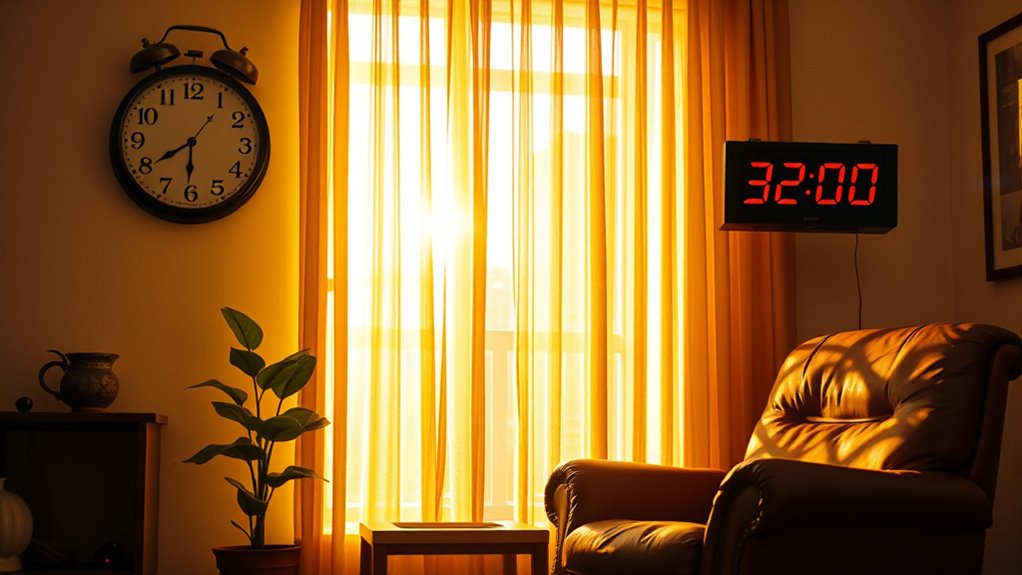
As the days grow shorter and evenings more darkness, it’s time to mark the end of Daylight Saving Time. You might wonder why we bother changing the clocks twice a year and what benefits or drawbacks this practice brings. One key reason behind ending Daylight Saving Time is the pursuit of energy savings. By shifting clocks back an hour, evenings tend to have more natural light, which reduces the need for artificial lighting in homes and businesses. Historically, this was seen as a way to conserve energy, especially during wartime and energy crises. However, recent studies suggest the energy savings are modest at best, and some research indicates that the changes might lead to increased energy use in other areas, like heating or cooling, depending on your location.
Another important aspect to contemplate is how the time change affects your sleep patterns. When clocks fall back, you gain an extra hour, but that doesn’t necessarily mean you get better rest. Many people experience sleep disruption around the time change, which can leave you feeling groggy or less alert during the days that follow. Your body’s internal clock, or circadian rhythm, struggles to adjust instantly, leading to temporary sleep disturbances. For some, it might mean difficulty falling asleep or waking up too early, disrupting your usual routine. Over time, this sleep disruption can impact your mood, concentration, and overall health. That’s why some health experts argue against the biannual clock changes, emphasizing the importance of maintaining consistent sleep schedules.
Changing clocks twice a year disrupts sleep and affects mood, emphasizing the need for consistent sleep routines.
Beyond energy savings and sleep issues, the end of Daylight Saving Time influences daily activities and safety. With darker evenings, visibility decreases, which can make driving or walking more hazardous. Pedestrians and drivers alike need to be extra cautious, especially in the weeks immediately following the time change. Additionally, some people find the shift affects their mental health, as the change in daylight hours can influence mood and energy levels. For those who struggle with Seasonal Affective Disorder (SAD), the reduced sunlight can exacerbate feelings of depression or fatigue. Furthermore, the impact on light exposure can significantly influence your circadian rhythm and overall well-being.
Ultimately, the biannual clock change is a complex issue with pros and cons. While it was originally implemented to conserve energy, today’s modern lifestyle has shifted the focus toward balancing energy efficiency, health, and safety. As you prepare for the end of Daylight Saving Time, it’s wise to be mindful of how the change impacts your sleep and daily routines. Adjusting your schedule gradually and prioritizing good sleep hygiene can help minimize the negative effects of the time change, allowing you to adapt more smoothly to the darker evenings.
Top picks for "daylight time ends"
Open Amazon search results for this keyword.
As an affiliate, we earn on qualifying purchases.
Frequently Asked Questions
How Does DST Impact Energy Consumption Globally?
You might notice that DST reduces energy consumption by extending evening daylight, leading to energy savings. This global impact varies by region, with some countries experiencing significant reductions in lighting and heating use, while others see minimal effects. Overall, DST aims to optimize energy use, but its effectiveness depends on local habits and climate. By shifting clocks, you contribute to a worldwide effort to conserve energy and reduce environmental impact.
Are There Health Risks Associated With Changing Clocks?
Yes, changing clocks can pose health risks. You might experience sleep disruption, which affects your body’s internal clock, leading to fatigue and difficulty concentrating. This adjustment can also impact your mental health, increasing stress or mood swings. If you don’t adapt quickly, these effects might last for days. To minimize risks, try to maintain a consistent sleep schedule and get plenty of sunlight during the day.
Which Countries Do Not Observe Daylight Saving Time?
You might think everyone changes clocks, but surprisingly, many equatorial regions and tropical zones don’t bother. Countries like Indonesia, most of Africa, and parts of South America stay on their standard time year-round, enjoying consistent daylight. Ironically, they avoid the hassle because their daylight hours don’t shift much. So, if you’re in these areas, you’re spared the clock-changing chaos and can focus on more important things—like enjoying the sun.
How Does DST Affect International Business Operations?
You might find that DST causes time zone adjustments, leading to scheduling challenges in international business operations. When clocks change, it can disrupt meeting times, deadlines, and communication across different regions. To stay efficient, you need to plan ahead for these shifts, update schedules promptly, and consider time zone differences. By doing so, you minimize confusion and keep your global collaborations running smoothly despite the time changes.
What Are the Historical Origins of Daylight Saving Time?
You should know that the history origins of daylight saving time trace back to the early 20th century, when it was introduced to help with time regulation and conserve energy. Benjamin Franklin first suggested the idea in 1784, but it was George Vernon Hudson and William Willett in the early 1900s who championed its implementation. This shift aimed to better align human activities with natural daylight, saving resources and boosting productivity.
Conclusion
As daylight saving time ends, you gain an extra hour of sleep and more daylight in the evening. Notably, studies show that this shift can reduce car accidents by up to 20%, highlighting how changing the clocks impacts safety. So, while it may feel like a small change, it can substantially affect your daily routines and well-being. Embrace the new schedule—your body and community might just thank you for it.