
When you choose a real Christmas tree from sustainable local farms, you’re supporting responsible land management that benefits the environment and reduces carbon footprints. However, fake trees made from non-biodegradable plastics can contribute to landfill waste and involve energy-intensive manufacturing. Your decision impacts land use, biodiversity, and waste management. To make greener choices, consider sourcing sustainably or recycling your tree properly. For more insights on how your holiday picks affect the planet, keep exploring the details below.
Key Takeaways
- Real Christmas trees are sustainably farmed, support biodiversity, and can be recycled or composted after use.
- Artificial trees are made from non-biodegradable plastics with a higher environmental cost during manufacturing.
- Local sourcing of real trees reduces transportation emissions and benefits regional economies.
- Artificial trees contribute to landfill waste over time, as recycling options are limited.
- Making eco-friendly choices involves considering lifecycle, sourcing practices, and disposal methods to minimize environmental impact.
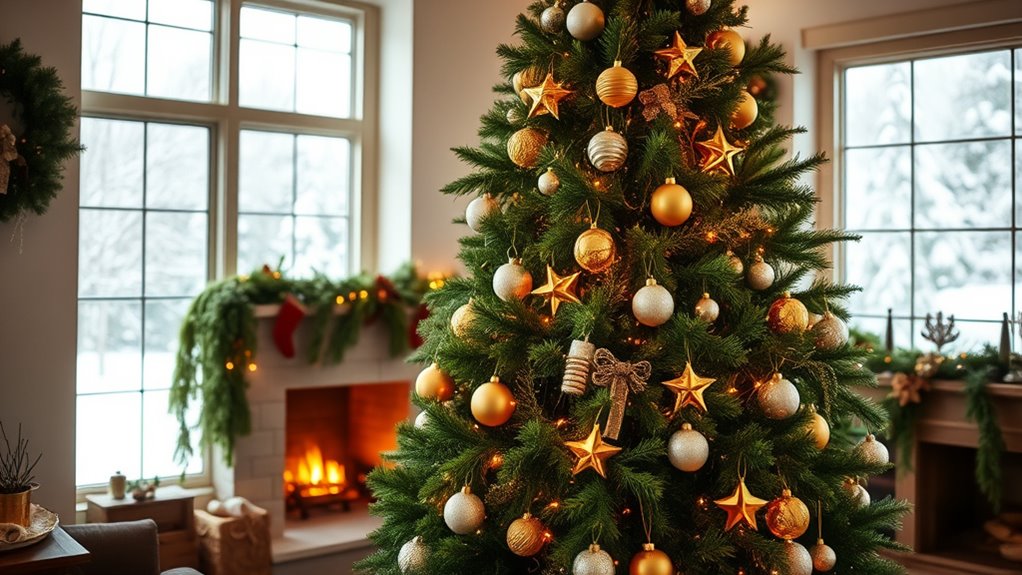
Every holiday season, choosing a Christmas tree impacts the environment more than many realize. Your decision between a real tree and an artificial alternative can influence local ecosystems, carbon emissions, and waste management. Real trees are often grown in farms practicing sustainable forestry, which aims to balance tree harvesting with replanting and maintaining healthy forests. These farms tend to have a lower environmental footprint than the mass production of artificial trees, which are typically made from plastics derived from fossil fuels. When you opt for a real tree from a sustainable forestry operation, you’re supporting responsible land management that minimizes deforestation and encourages biodiversity. Conversely, artificial alternatives, while reusable, come with their own environmental costs. They are manufactured using non-renewable resources and often contain chemicals that can be harmful if disposed of improperly. Additionally, since artificial trees are usually meant to last many years, their environmental impact is spread out over time, but eventually, they end up in landfills, where plastics can take centuries to decompose.
It’s vital to contemplate the full lifecycle of your holiday tree. If you choose a real tree, you can often find options from local farms that prioritize sustainable forestry practices. These farms plant a new tree for every one they harvest, creating a cycle that keeps forests healthy and productive. Many communities also offer Christmas tree recycling programs, allowing you to compost or mulch your tree after the holidays, returning nutrients to the soil and reducing waste. This process makes a real tree a more eco-friendly choice, especially if sourced locally, reducing transportation emissions and supporting regional economies. Moreover, certified sustainable forestry practices help ensure that harvesting does not compromise forest health or biodiversity.
On the other hand, artificial alternatives might seem more convenient and long-lasting, but their environmental benefits diminish when you consider the energy used in production and the difficulty of recycling them. While you can reuse an artificial tree for several years, eventually, it will still need to be disposed of, often ending up in a landfill. Recycling programs for artificial trees are limited, and most plastics used are not biodegradable. If you decide to go with an artificial tree, choose one made from recycled or eco-friendly materials, and plan to use it for many seasons to offset its initial environmental impact.
Ultimately, your choice should reflect your values and circumstances. Supporting sustainable forestry by choosing a real tree from responsible growers can considerably reduce your holiday’s carbon footprint. If you prefer the convenience and longevity of artificial alternatives, aim to maximize reuse and proper disposal. Being mindful of these factors helps ensure that your holiday cheer doesn’t come at the expense of the environment.
Top picks for "christma tree environmental"
Open Amazon search results for this keyword.
As an affiliate, we earn on qualifying purchases.
Frequently Asked Questions
Are Real Christmas Trees More Eco-Friendly Than Artificial Ones?
Real Christmas trees are generally more eco-friendly than artificial ones. You can choose pesticide-free trees, reducing chemical concerns, and support local farms that help preserve wildlife habitats. Additionally, real trees are biodegradable, so they break down naturally, unlike plastic trees that persist in landfills. By recycling or composting, you minimize environmental impact. So, opting for a real tree benefits the environment and supports sustainable practices during the holidays.
How Can I Recycle or Dispose of My Christmas Tree Responsibly?
You can recycle or dispose of your Christmas tree responsibly by exploring local recycling options, such as curbside pickup or designated drop-off sites. Many communities offer tree mulching programs that turn your tree into mulch for parks or gardens. If these aren’t available, consider cutting your tree into smaller pieces for composting or check with your local waste management for proper disposal methods. This helps reduce waste and supports eco-friendly practices.
Do Christmas Tree Farms Use Sustainable Farming Practices?
Many Christmas tree farms do utilize sustainable farming and eco-friendly practices. They often implement water conservation, integrated pest management, and minimal chemical use to protect the environment. By choosing trees from farms that prioritize these methods, you support eco-conscious efforts. Look for certifications like USDA Organic or sustainable forestry standards to ensure you’re buying from farms committed to environmentally responsible practices. Your choices can make a positive impact on the planet.
What Are the Carbon Footprints of Artificial Versus Real Trees?
Imagine you’re choosing between an artificial and a real tree for the holidays. Studies show that real trees typically have a lower carbon footprint if you consider their growth and disposal, especially if sourced locally. Artificial trees, made from plastics, often have a higher environmental impact due to manufacturing and long-term use. So, your choice impacts the overall carbon footprint and environment, making local, sustainably farmed real trees a greener option.
Can Planting a Christmas Tree Offset Its Environmental Impact?
Planting a Christmas tree can substantially offset its environmental impact if you choose to do so. By engaging in tree planting, you contribute to environmental offset efforts that absorb CO₂ and promote biodiversity. To maximize benefits, plant a tree locally or participate in community programs. This proactive step helps balance out the carbon footprint of your holiday celebration, making your festive season more eco-friendly and sustainable.
Conclusion
As you embrace the holiday spirit, remember that choosing a Christmas tree gently supports our planet’s well-being. Opting for sustainable options or recycling your tree can be like giving a quiet gift to the Earth. With mindful choices, you help keep the season joyful yet kind to nature’s delicate balance. So, this year, let your holiday cheer bloom in ways that softly nurture the environment, making your celebrations truly meaningful and warm for everyone.