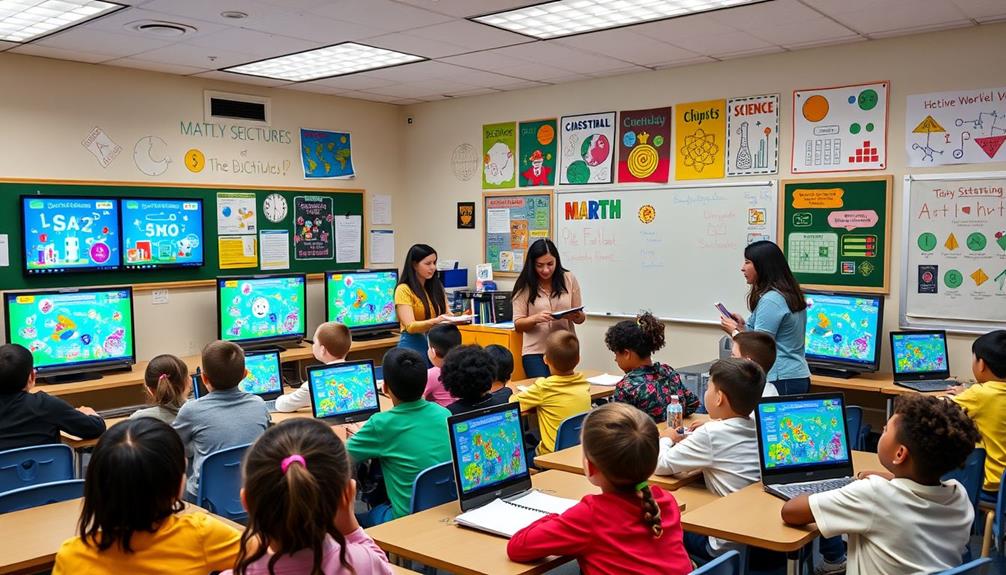

In 2025, you’ll experience language learning through innovative apps that leverage AI-powered tutoring, offering personalized lessons that adapt to your progress. Virtual reality immerses you in realistic environments for practical practice, while AI provides real-time feedback to refine your skills instantly. These cutting-edge techniques make learning engaging, effective, and tailored just for you. Keep exploring to uncover how these advanced tools are transforming your journey to fluency.
Key Takeaways
- AI-powered tutoring algorithms will deliver highly personalized lessons, adapting instantly to learners’ strengths and weaknesses.
- Real-time feedback will enable immediate correction and tailored exercises for more efficient language skill development.
- Conversational AI will simulate natural dialogues, helping learners build confidence in speaking through safe, interactive practice.
- Immersive VR environments will offer realistic cultural and social scenarios for experiential language learning.
- Advanced apps will integrate AR and VR to create engaging, context-rich experiences, enhancing retention and motivation in 2025.

Ever wondered how language learning will evolve by 2025? You’re about to discover a future where technology transforms the way you pick up new languages. AI-powered tutoring is set to become your personal language coach, offering tailored lessons that adapt to your learning pace, strengths, and weaknesses. Gone are the days of one-size-fits-all approaches; instead, these intelligent systems analyze your progress in real-time, providing targeted feedback and customized exercises. Whether you’re struggling with pronunciation, grammar, or vocabulary, AI tutors will modify their strategies instantly, ensuring you stay motivated and engaged. This personalized touch makes learning more efficient and enjoyable, especially because AI can simulate conversational partners, giving you the chance to practice speaking in a safe, supportive environment.
Alongside AI tutoring, immersive VR experiences will revolutionize your language practice. Imagine stepping into a virtual marketplace in Paris, chatting with a shopkeeper, or attending a simulated classroom in Tokyo—all from your living room. These immersive environments make language practice feel natural and spontaneous, mimicking real-world interactions that textbooks and traditional apps can’t replicate. You won’t just memorize words; you’ll live them. These VR experiences foster contextual learning, helping you grasp idiomatic expressions, cultural nuances, and social cues more intuitively. Plus, VR makes practicing more engaging—you’re no longer just clicking through exercises, but actively participating in dynamic scenarios that boost retention and confidence.

Smart Wearable Translator,English Spanish Voice Translation Device,Supports 133 Languages,Real-time AI Translation and LanguageLearning,Foreign Language Practice Partner,for Work,Travel,Communication
- Supports 133 Languages: Real-time voice translation across 133 languages
- AI Language Learning: Interactive English conversation practice
- Speech Recognition & Feedback: Real-time pronunciation and vocabulary correction
As an affiliate, we earn on qualifying purchases.
As an affiliate, we earn on qualifying purchases.
Frequently Asked Questions
Will AI Replace Human Language Teachers Entirely by 2025?
AI dependency won’t fully replace human language teachers by 2025. You’ll still benefit from personal interaction and nuanced understanding that AI can’t match. While AI tools might assist with practice and feedback, they’re unlikely to completely replace teacher roles. Teachers provide cultural context, emotional support, and adaptability, which technology struggles to replicate. So, expect a future where AI complements, but doesn’t fully replace, human involvement in language learning.
How Will Language Learning Apps Ensure Privacy and Data Security?
You can trust that language learning apps will prioritize your privacy and data security by implementing strong data encryption and rigorous user authentication. These apps will encrypt your data both during transfer and storage, making it nearly impossible for outsiders to access. Additionally, they’ll require secure login processes, such as two-factor authentication, to ensure only you can access your account, keeping your personal information safe while you learn.
Are There Plans to Include Less Commonly Spoken Languages in New Apps?
Yes, future language apps plan to include less commonly spoken languages, focusing on regional dialects and language preservation. You’ll find tools that help you learn endangered languages, supporting cultural diversity. Developers aim to incorporate local dialects and oral traditions, making learning authentic and accessible. This approach not only helps users connect deeply with unique cultures but also contributes to preserving these languages for future generations.
Will AR and VR Be Accessible for All Learners Financially?
AR and VR will become more accessible for all learners, but cost barriers and accessibility challenges remain. As technology advances, prices will likely drop, making these tools more affordable. Developers are also working to create inclusive designs that address diverse needs. While progress is promising, you might still face some hurdles, so staying informed about new offerings and discounts can help you access immersive learning experiences more easily.
How Will Cultural Nuances Be Integrated Into Future Language Learning Tools?
You’ll see future language learning tools deeply integrate cultural context by using advanced AI to simulate real-life situations and conversations. Nuance integration becomes seamless as these tools analyze language patterns, idioms, and cultural cues, helping you grasp subtle meanings. This way, you won’t just learn words but also understand cultural nuances, making your language skills more authentic and effective. The technology will make cultural understanding an essential part of your learning journey.
Conclusion
By 2025, language learning will feel like having a personal guide right beside you, thanks to innovative apps and new techniques. These tools will make mastering a language feel as natural as chatting with a friend. As technology continues to evolve, you’ll find it easier and more enjoyable to reach your language goals. Embrace these changes, and you’ll open new worlds just like opening a door to endless adventures.