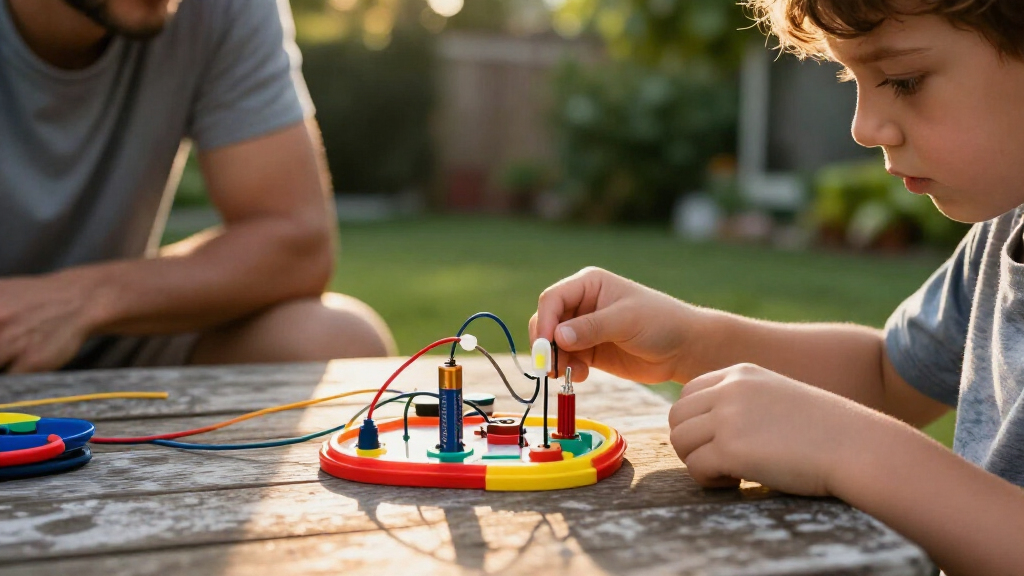

Use this guide to choose an educational science kit for a child or beginner, prepare the materials, and complete one activity safely. It is for adults supporting young learners and for older beginners who can follow written instructions. Most kit activities take 30-90 minutes, though some experiments need waiting time or several sessions. You will finish with an observed result and a simple record of what happened.

Prime made for students and young adults
- Fast, free delivery for dorm and study essentials
- Prime Video and Amazon Music included
- Member-only deals

National Geographic Amazing Chemistry Set with 100+ Experiments Ages 8-12
- ✔ Brand: National Geographic
- ✔ Recommended age: 8 years and up
- ✔ Subject: Chemistry and STEM
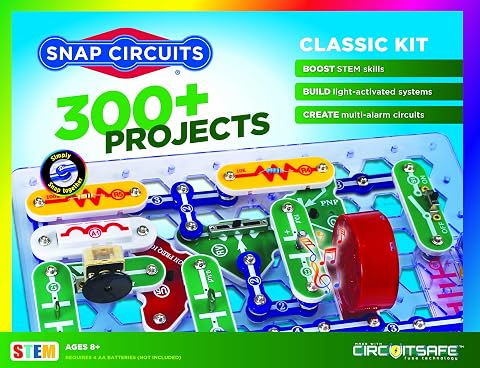
Snap Circuits Classic SC-300 STEM Electronics Kit – 300+ Projects, Ages 8+
- ✔ Recommended age: 8 years and up
- ✔ Subject: Electronics and electrical engineering
- ✔ Project ideas: 300+
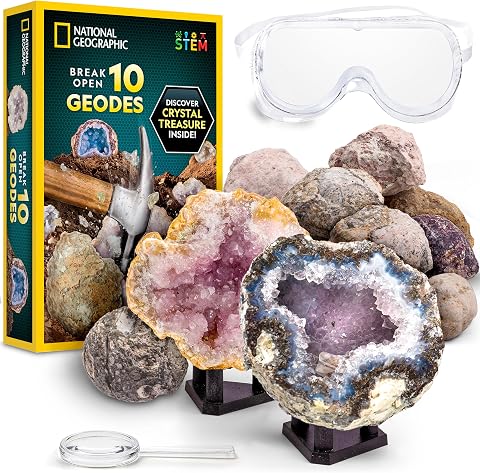
National Geographic Break Open 10 Premium Geodes for Kids (Ages 8-12)
- ✔ Brand: National Geographic
- ✔ Recommended age: 8 years and up
- ✔ Subject: Geology and STEM
Difficulty: Beginner | Time: 30-90 minutes, depending on the activity
What You’ll Need
Tools & Materials:
- The science kit and its printed instructions
- A clear, stable work surface
- A notebook or activity sheet and a pencil
- Safety items named by the kit, such as goggles or gloves
- Household materials listed in the instructions
Knowledge:
- Ability to read and follow the kit’s age guidance and safety labels
- Basic measuring and observation skills, or an adult who can help
Check the kit contents before starting and read the instructions for the chosen activity from beginning to end. Do not substitute materials or combine activities unless the manufacturer says it is safe. An adult should supervise activities involving heat, sharp tools, chemicals, glass, electricity, or small parts.
National Geographic Amazing Chemistry Set with 100+ Experiments Ages 8-12
For a child who wants to try several kinds of science activity, the Amazing Chemistry Set gives us the broadest starting point in this group. Its experiments include crystal growing, color-changing solutions, and glowing test tubes, so children can observe visible changes while using test tubes, beakers, and pipettes. That mix makes chemistry feel like a sequence of investigations rather than a single demonstration. Compared with the Geodes Kit, it covers more kinds of activity; unlike Snap Circuits, it centers on chemical reactions and observation rather than construction and troubleshooting.The bonus guide adds 85 activities using common household items, which can help extend learning beyond the supplied experiments. That breadth is its main advantage, but it also means caregivers should check each activity’s instructions and prepare for some mess. The kit is listed for ages 8 and up, yet the product information notes that certain experiments may need adult supervision. It suits families seeking variety and basic lab-tool familiarity; children who prefer building stable projects or studying one natural subject in depth may find Snap Circuits or the geode set a closer match.
Pros:
- Includes more than 100 experiments spanning several chemistry activities.
- Provides test tubes, beakers, and pipettes for hands-on work.
- Adds 85 suggested experiments using common household items.
- Covers a wider range of activity types than the focused geode kit.
Cons:
- Some experiments may require adult supervision.
- Chemical activities can be messy and require preparation.
Best for: Children ages 8 and up who enjoy varied experiments, visible chemical changes, and using basic lab tools with caregiver guidance.
Not ideal for: Families looking for a low-preparation activity with minimal supervision, or children more interested in electronics or rocks than chemical reactions.
Bottom line: We recommend this as the most versatile educational science kit here for families ready to guide a broad range of chemistry experiments.
“We recommend this as the most versatile educational science kit here for families ready to guide a broad range of chemistry experiments.”
Snap Circuits Classic SC-300 STEM Electronics Kit – 300+ Projects, Ages 8+
Snap Circuits Classic SC-300 is the clearest choice for children who want to make something work, then change it and see what happens. Its 47 color-coded components snap onto a plastic grid, introducing circuit building without tools or soldering. Compared with the chemistry set’s changing mixtures and the geode kit’s one-time breaking activity, this approach encourages repeatable construction and troubleshooting. The illustrated instructions begin with simple projects and move toward more complex inventions, supporting a gradual introduction to electrical engineering.The headline total is more than 300 projects, but the printed manual includes only the first eight; the remaining project instructions are online. That makes this a less self-contained pick than the chemistry set, especially where internet access or screen use is a concern. It also needs four AA batteries, which are not included. We would choose it for a child who enjoys following diagrams and experimenting with connections, but skip it if the household wants a complete printed activity book or the child is more excited by natural specimens.
Pros:
- 47 color-coded components snap together without tools or soldering.
- Project sequence introduces circuits through increasingly complex builds.
- More than 300 project ideas provide options for repeated exploration.
- Plastic grid helps keep components organized during assembly.
Cons:
- Four AA batteries are required and not included.
- Only eight projects are in the printed manual; more require online access.
Best for: Children ages 8 and up who like building, following visual instructions, and repeating projects to learn how circuits behave.
Not ideal for: Families without convenient online access to instructions, or buyers seeking a kit with batteries included and a broad mix of science subjects.
Bottom line: We favor Snap Circuits for hands-on electronics learning, provided online project access and separate batteries work for your household.
“We favor Snap Circuits for hands-on electronics learning, provided online project access and separate batteries work for your household.”
National Geographic Break Open 10 Premium Geodes for Kids (Ages 8-12)
If a child is curious about what forms inside a rock, the Break Open Geodes Kit offers the most direct geology experience in this roundup. It includes ten natural geodes, safety goggles, a magnifying glass, a display stand, and a full-color learning guide about how geodes form. Unlike Snap Circuits, where the main learning comes from assembling and revising a working system, geode exploration starts with real mineral specimens. It is also more focused than the chemistry set, giving children one subject to observe closely rather than a series of different experiments.That focus is both its strength and its limitation. The geodes are a finite set of specimens, and their sizes vary; smaller ones may offer less visible detail. Breaking them requires adult supervision for safety, so this is not an activity a child should start alone. The magnifier and guide can support closer observation, but families looking for projects to repeat over many sessions will get more variety from chemistry or more rebuildable challenges from Snap Circuits. Choose this kit when natural crystals are the draw and a caregiver can help with the opening process.
Pros:
- Uses ten real geodes for an authentic geology activity.
- Includes safety goggles and a magnifying glass for observation.
- Learning guide explains how geodes form.
- Display stand helps keep selected specimens available for viewing.
Cons:
- Geode sizes vary, and some crystals may be small.
- Opening geodes requires adult supervision for safety.
Best for: Children ages 8 and up who are interested in rocks, crystals, and seeing mineral formations inside natural specimens with adult help.
Not ideal for: Children seeking many repeatable projects, or families who want an activity that does not require supervision while breaking specimens.
Bottom line: We recommend this focused geology pick for crystal-curious children when a caregiver can supervise the hands-on opening activity.
“We recommend this focused geology pick for crystal-curious children when a caregiver can supervise the hands-on opening activity.”
As an Amazon Associate we earn from qualifying purchases.
Before You Start
Prepare for the activity
Pick a time when you can work without rushing. Some experiments need a result to develop over several minutes or days. Keep food and drinks away from the work surface, and use only the amounts and materials specified in the instructions. If the kit is damaged, missing a safety item, or has unclear instructions, set that activity aside and contact the manufacturer or choose a different activity.
Step-by-Step Instructions
Step 1: Choose a kit for the learner
Read the age range, subject, and skill descriptions on the package or product listing. Match the kit to the learner’s reading ability, interest, and experience. For a first kit, choose one with clear instructions, reusable tools, and activities that can be completed in a single sitting. Check the activity descriptions to see whether an adult needs to handle any steps.
Tip:Age ranges are a starting point. Consider whether the learner can follow the written steps and safely use the included parts with the level of supervision available.
Check: The kit’s activities and instructions fit the learner, and any required adult support is available.
Step 2: Check the contents and instructions
Open the kit over the work surface and compare every item with the parts list. Read the safety guidance, activity instructions, and any preparation notes. Identify materials that must be supplied at home, such as water, paper, or a timer. Confirm that all items are clean, intact, and within any stated use or storage limits.
Tip:Do not begin an activity if a listed item is missing or damaged, especially if it is a protective item or a part needed to control a reaction.
Check: You have all required kit and household materials, and you know the activity’s safety directions.
Step 3: Set up a safe workspace
Clear a flat, well-lit surface and place the instructions where they can be read without moving experiment materials. Put on the protective gear specified by the kit. Move food, pets, and unrelated objects away. Ask an adult to supervise any step involving heat, sharp tools, chemicals, electricity, glass, or small pieces that could be swallowed.
Tip:Keep packaging and labels nearby when they identify ingredients or provide disposal directions.
Check: The work area is stable and uncluttered, required safety gear is on, and the appropriate supervision is present.
Step 4: Select and prepare one activity
Choose one activity and read all of its steps before handling materials. Gather only the items it calls for. Measure or prepare materials as directed, using the specified units and quantities. If the instructions require a clean container, use one intended for the activity and keep it separate from food containers.
Tip:Changing quantities or combining materials can change the result and may create a safety problem. Follow the kit’s recipe or setup as written.
Check: All materials for the selected activity are ready, measured as instructed, and arranged in the order they will be used.
Step 5: Run the experiment as written
Follow the instructions one step at a time. Measure carefully, use each tool only for its stated purpose, and observe any time, temperature, or distance limits. Pause before a step if it is unclear; ask the supervising adult to review the directions. Do not taste, smell closely, touch, or directly handle substances unless the instructions explicitly permit it.
Tip:Keep hands away from your face and wash them after handling kit materials, even when the activity seems harmless.
Check: You have completed each stated step in order without adding unlisted materials or skipping a safety direction.
Step 6: Record what you observe
Write down the activity name, the materials used, and what you see at each observation point. Note colors, shapes, movement, texture, measurements, and how long changes take. Separate observations from guesses: write “the liquid turned blue” as an observation and “the material caused the color change” as an explanation to investigate.
Tip:A quick drawing or a time-stamped note can help when a change happens gradually.
Check: Your notes describe the result clearly enough that another person could understand what you observed.
Step 7: Compare the result with the instructions
Check your observations against the expected result or explanation provided by the kit. If the result differs, review your notes and the steps to see whether a quantity, timing, or setup detail varied. Treat an unexpected result as information; do not repeat the activity until you have checked that the materials and directions allow another attempt.
Tip:Experiments can produce different results because of measurement, room conditions, or materials. A difference is a reason to investigate, not to change the procedure at random.
Check: You can state what happened and whether it matched the kit’s description, based on your observations.
Step 8: Clean up and store the kit
Follow the kit’s disposal instructions for every mixture and used material. Do not pour substances down a drain or put them in household waste unless the directions allow it. Clean tools and the work surface as instructed, wash hands, and return reusable parts to their labeled compartments. Store the kit as directed, away from young children, heat, or moisture where applicable.
Tip:Keep remaining materials in their original labeled containers so they can be identified before the next activity.
Check: Materials have been disposed of as directed, the workspace is clean, and reusable kit parts are stored safely.
Common Mistakes to Avoid
- Starting an activity before checking the full instructions or parts list. — Read the activity through first, gather all listed materials, and check that safety items are present.
- Changing ingredient amounts or substituting household materials. — Use the stated quantities and materials; contact the kit maker if a required item is unavailable.
- Rushing measurements or ignoring wait times. — Use the recommended measuring tools and a timer, and record when each observation is made.
- Throwing away a mixture or returning used parts without checking disposal directions. — Read cleanup instructions before starting and follow them for each material.
Troubleshooting
Problem: A required part or material is missing.
Solution: Pause the activity and compare the box contents with the parts list. Ask the kit maker about replacement parts or choose another activity that does not depend on the missing item.
Problem: The result does not match the expected outcome.
Solution: Review the recorded quantities, order, timing, and setup. Check whether the instructions mention room conditions or a waiting period. Repeat only if the kit permits it and the materials remain safe to use.
Problem: The directions are unclear or seem inconsistent with a safety label.
Solution: Stop before the unclear step. Ask a supervising adult to check the kit’s safety guidance and contact the manufacturer if the conflict remains. Do not guess or proceed with that step.
Problem: A mixture spills or contacts skin or eyes.
Solution: Stop the activity and follow the kit’s spill or first-aid instructions. Tell the supervising adult immediately; use the product label or kit guidance to determine the correct response. Seek medical or emergency help if the instructions call for it or symptoms occur.
What Success Looks Like
The activity is complete when you have followed its instructions and safety directions, recorded what happened, and compared the observations with the kit’s expected result. The work area should be clean, materials should be disposed of or stored as directed, and you should be able to describe the result using evidence from your notes.
Next Steps
Choose another activity that builds on the same subject or introduces one new skill, such as measuring, sorting, or making a comparison. Keep the observation notes with the kit so the learner can compare results across activities. Before reusing tools, check their condition and the kit’s storage directions. Ask the manufacturer for guidance if parts are damaged or instructions remain unclear.
Frequently Asked Questions
How do I choose a science kit for a young child?
Check the recommended age, reading demands, small-parts warnings, and level of adult involvement. Choose activities that match the child’s interests and can be supervised safely. An adult should handle any steps the kit assigns to adults.
Can I use household substitutes for missing materials?
Only use substitutes named or approved by the kit’s instructions. Different materials can change the experiment or introduce hazards. If a required item is missing, ask the manufacturer or select a different activity.
What should I do if the experiment does not work?
Record what happened, then check the measurements, order of steps, wait time, and any stated room conditions. Follow the kit’s advice before trying again. Do not add materials or repeat an activity if its directions do not allow it.
Do I need to supervise an older child using a science kit?
Follow the kit’s age and supervision guidance. Provide adult supervision for heat, chemicals, sharp tools, electricity, glass, or small parts, and stay available if the learner needs help understanding a step.
How should I dispose of materials after an activity?
Use the cleanup and disposal directions supplied with the kit and any labels on its containers. If disposal instructions are missing or unclear, ask the manufacturer before putting a mixture in a drain or household waste.