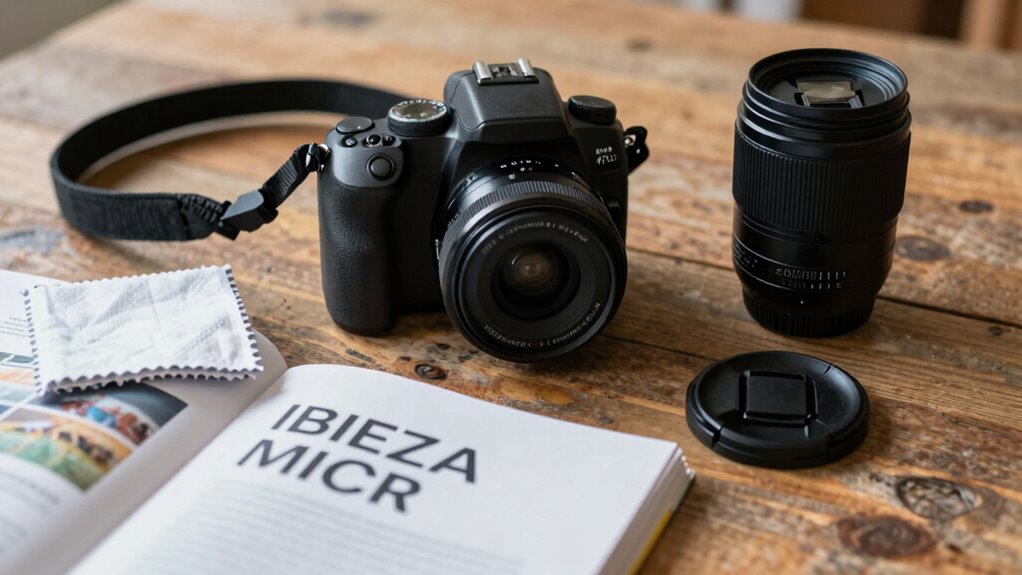
To start your beginner photography kit, focus on a good camera with versatile lenses like an 18-55mm zoom and a 50mm prime for better low-light shots. Keep your gear protected with proper storage and maintain it regularly by cleaning with a microfiber cloth. Learn to use natural light, golden hour, and simple reflectors to improve your photos. Adding basic accessories like filters and reflectors will boost your skills—keep exploring to discover more tips and techniques.

Prime made for students and young adults
- Fast, free delivery for dorm and study essentials
- Prime Video and Amazon Music included
- Member-only deals
Key Takeaways
- A quality camera with versatile lenses (e.g., 18-55mm zoom and 50mm prime) for different shooting situations.
- Proper lens care routines, including cleaning and safe storage, to maintain image quality and prevent damage.
- Natural light mastery, especially during golden hour, with optional reflectors and artificial lighting for flexibility.
- Basic accessories like filters, reflectors, and a padded bag to enhance creative control and protect gear.
- Understanding contrast and lighting techniques to improve photos in various environments.
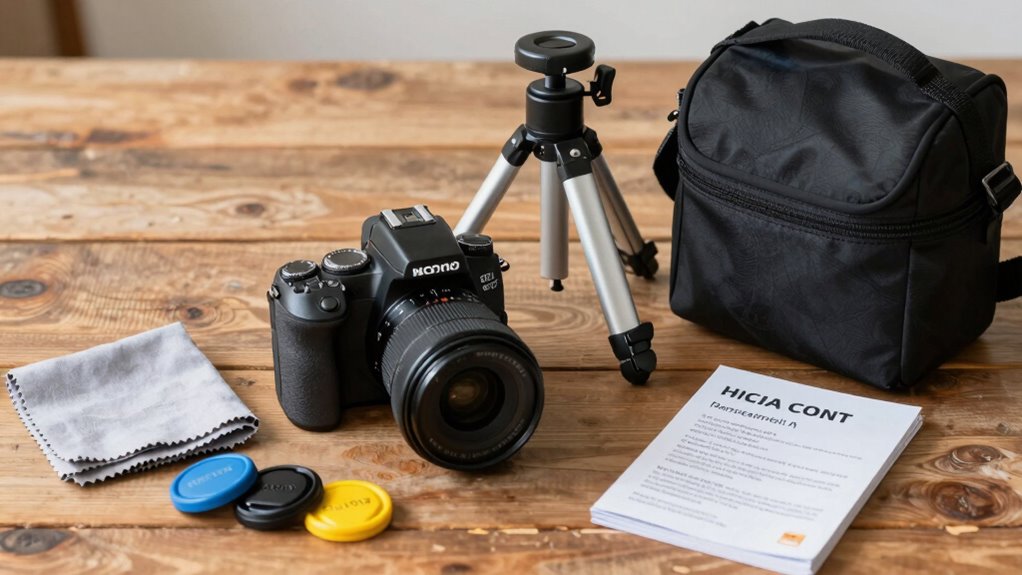
Starting your photography journey can feel overwhelming, but building a solid beginner kit makes it manageable and fun. When you’re just starting out, having the right gear can boost your confidence and help you learn faster. One of the most important pieces of your kit is your camera, but equally essential are the accessories and knowledge you gather along the way. A good lens is necessary, but knowing how to maintain it through proper lens maintenance is just as imperative to keep your images sharp and your equipment in top shape. Regularly cleaning your lens with a microfiber cloth and avoiding touching the glass with your fingers help preserve image quality and extend the life of your gear. Developing good lens maintenance habits, including inspecting and cleaning your equipment regularly, can prevent costly repairs and ensure consistent image quality.
Building a beginner kit with proper lens maintenance keeps your gear sharp and your confidence growing.
Lighting techniques are another critical aspect to master early on. Your camera can only do so much without proper lighting, so understanding natural light and how to manipulate it gives you a significant advantage. Using the sun to your benefit, whether during golden hour or with reflectors to bounce light, helps you create striking images without complicated setups. As you progress, experimenting with artificial lighting, like softboxes or external flashes, will broaden your creative options. But initially, focusing on natural light and simple lighting techniques will give you a solid foundation to build on. Learning how to optimize your lighting techniques will also help you adapt to various shooting environments and improve your overall results.
Your lens choice can make or break your photography experience. A versatile zoom lens, such as an 18-55mm, often comes with beginner kits and covers most situations, from landscapes to portraits. As you gain confidence, consider adding a prime lens like a 50mm for sharper images and better low-light performance. Remember, caring for your lenses through routine lens maintenance ensures they stay clear and free of dust or smudges, which can ruin your shots. Proper storage in a padded bag and avoiding extreme temperatures are simple steps that prolong your gear’s lifespan. Additionally, understanding the role of contrast ratio in your images can help you achieve better detail and depth, especially in challenging lighting conditions. Incorporating the importance of regular filter checks into your routine can also help maintain optimal image clarity.
As an affiliate, we earn on qualifying purchases.
Frequently Asked Questions
How Do I Choose the Right Camera for Beginners?
To choose the right camera for beginners, focus on camera ergonomics—how comfortable and intuitive it feels in your hands. Look for models recommended in beginner camera guides, which often highlight user-friendly features and good image quality. Consider your budget and the type of photography you want to explore. Testing a few options in-store helps you find one that feels natural, making learning easier and more enjoyable.
Are Expensive Lenses Necessary for Starting Out?
Think of your camera setup as a toolbox—expensive lenses are like shiny, specialized tools you don’t need right now. You can start with affordable alternatives that offer great lens versatility, like kit lenses, which cover many situations. As you grow, you can add more specific lenses. For now, focus on mastering your camera’s basics; expensive gear won’t make you a better photographer overnight.
What Lighting Equipment Is Essential for Beginners?
You don’t need expensive lighting equipment to get started. Focus on natural light, which is free and versatile, and learn basic lighting techniques like using reflectors or diffusers to soften shadows. Experiment with different times of day to see how natural light impacts your photos. As you grow, you can add simple tools like a small flash or portable LED lights, but natural light should be your primary resource early on.
How Important Is a Tripod for Beginner Photography?
A tripod is surprisingly essential for beginner photography. It provides tripod stability, ensuring your camera stays steady during long exposures or low-light shots. Without it, camera shake reduction becomes a challenge, often ruining sharpness. Imagine capturing a perfect sunset or intricate details—without a tripod, that moment might be lost. Don’t underestimate its power; it’s the secret weapon that sharpens your photos and elevates your skills from the start.
Should I Invest in Photo Editing Software Immediately?
You don’t need to invest in photo editing software right away. Focus on capturing great images first, as editing skills develop with experience. Once you’re comfortable with your camera and want to enhance your photos, then consider investing in photo editing software. This way, you’ll make a more informed decision, saving money and ensuring the software aligns with your creative goals. Patience now pays off later.
Conclusion
Don’t let the idea of a fancy camera hold you back. A simple, well-chosen kit can open your creativity and help you grow as a photographer. Remember, it’s not about having the most expensive gear, but about mastering what you have. So, start small, practice often, and trust that your passion will take you further than any fancy equipment ever could. Your best shot is just a click away—so get shooting!
Halloween Picks
halloween
As an affiliate, we earn on qualifying purchases.