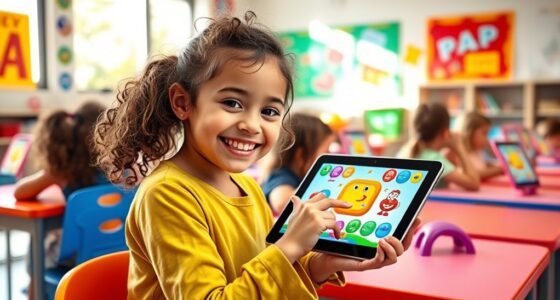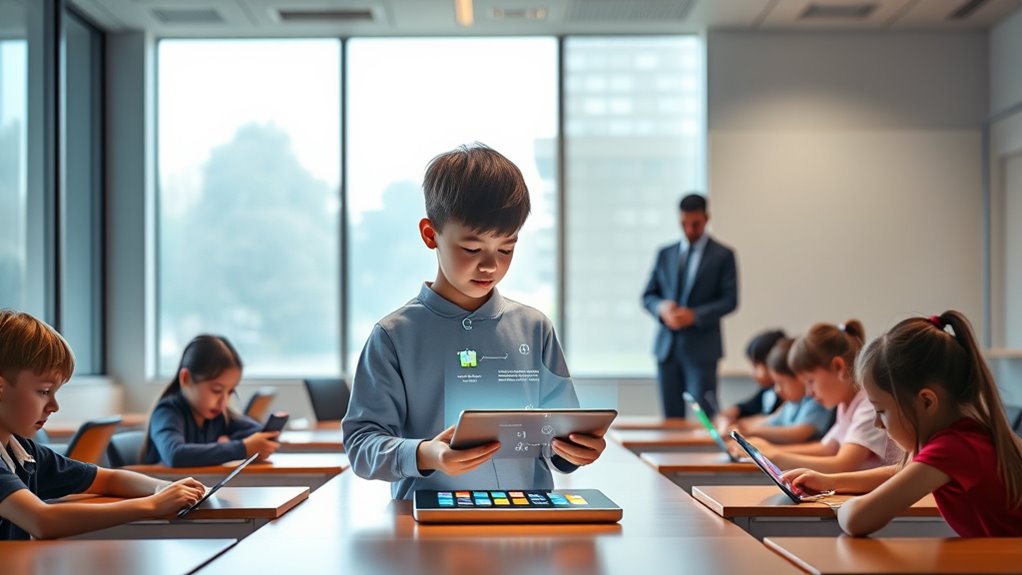

AI-powered chatbots are transforming education by making learning more personalized, engaging, and accessible. They adapt assessments to fit your needs, provide instant feedback, and keep you motivated with real-world scenarios. Chatbots are available around the clock, so you can learn at your own pace and get support whenever needed. As these tools analyze your progress and adjust difficulty, you’ll experience a more dynamic and effective learning journey. Keep exploring to see how this technology can benefit you further.
Key Takeaways
- AI-powered chatbots personalize learning experiences by adapting assessments and providing tailored feedback to meet individual student needs.
- They increase engagement through interactive, real-world simulations and immediate responses, motivating students to participate actively.
- Chatbots offer 24/7 accessible support, enabling flexible, self-paced learning and reaching a larger number of students simultaneously.
- AI systems dynamically adjust difficulty levels based on responses, ensuring optimal challenges and continuous progress tracking.
- The integration of chatbots transforms traditional classrooms into interactive, technology-driven environments that foster active participation and personalized education.
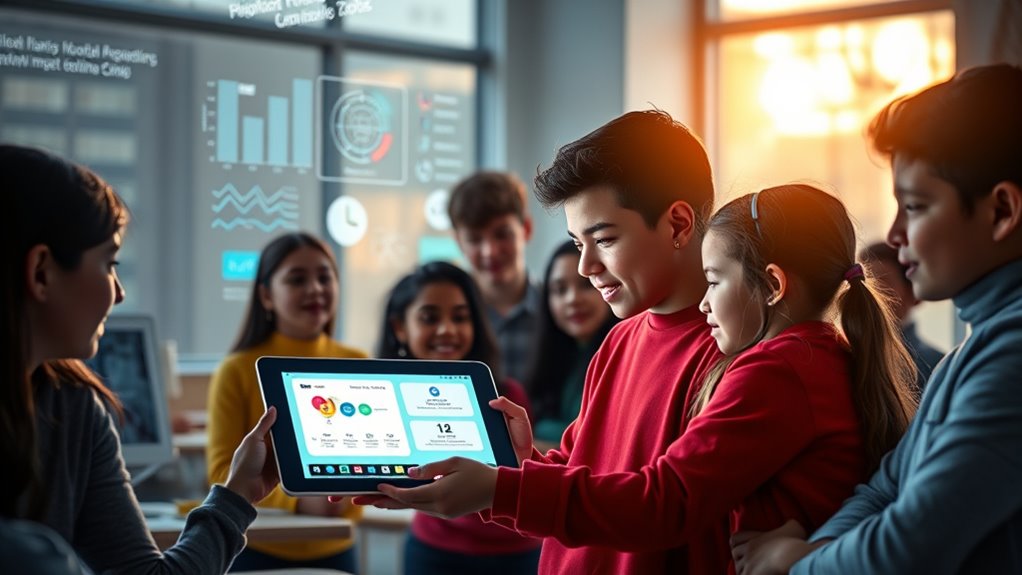
Have you ever wondered how artificial intelligence is transforming the way we learn? One of the most exciting developments is how AI-powered tools, like chatbots, are shaping education. These intelligent systems are changing the traditional classroom dynamic, making learning more interactive, personalized, and engaging. When you use AI in education, you get access to personalized assessments that adapt to your individual needs, helping you identify your strengths and weaknesses more efficiently. Unlike standard tests that provide a one-size-fits-all score, these assessments respond to your specific responses, guiding you toward areas where you need improvement. This tailored approach keeps you motivated because it feels relevant and customized, rather than generic. It also boosts student engagement by making learning feel more dynamic and interactive. Instead of passively absorbing information from textbooks or lectures, you can actively participate in conversations with chatbots that simulate real-world scenarios, answer your questions instantly, and provide immediate feedback. This interaction makes the learning process more compelling, encouraging you to stay curious and invested in your education. Chatbots are accessible 24/7, so you can learn at your own pace and convenience, whether that’s late at night or during a quick break between classes. They can also handle multiple students simultaneously, making personalized support scalable and available to everyone, regardless of class size or resource limitations. As you work through lessons or practice exercises, the AI continually analyzes your responses, adjusting the difficulty level to match your current understanding. This adaptive learning keeps you challenged but not overwhelmed, helping you stay engaged without frustration. Plus, these systems can track your progress over time, offering insights into your development and suggesting the next steps to improve. This ongoing feedback loop nurtures a growth mindset, encouraging you to view setbacks as opportunities to learn rather than failures. The role of AI in creating personalized assessments isn’t just about efficiency; it’s about fostering a deeper connection to the material. When your learning experience is tailored to your needs, you’re more likely to stay committed and excited about your education journey. Student engagement skyrockets because the process feels less intimidating and more relevant. You’re empowered to take charge of your learning, with AI acting as a supportive guide rather than a mere tool. As AI continues to evolve, its capacity to enhance personalized assessments and boost student engagement will only grow, integrating AI into education and revolutionizing how we approach learning and making it more inclusive and effective for everyone.
Top picks for "education chatbot chang"
Open Amazon search results for this keyword.
As an affiliate, we earn on qualifying purchases.
Frequently Asked Questions
How Do Chatbots Personalize Learning for Individual Students?
You see how chatbots personalize learning by offering adaptive feedback tailored to your progress and needs. They analyze learning analytics to identify your strengths and weaknesses, adjusting content and questions accordingly. This real-time customization keeps you engaged and helps you learn more effectively. By continuously monitoring your performance, chatbots create a unique learning experience that adapts to you, ensuring you get the support you need at every step.
What Are the Privacy Concerns With Ai-Powered Educational Tools?
You might worry about data privacy and security when using AI-powered educational tools, and those concerns are valid. These tools collect sensitive data like your learning habits and personal info, which could be susceptible to breaches if not properly protected. While many platforms implement strong security measures, it’s essential to stay vigilant, read privacy policies, and guarantee your data isn’t shared without consent. Protecting your information remains a top priority.
How Effective Are Chatbots Compared to Traditional Teaching Methods?
You’ll find chatbots quite effective, especially in boosting student engagement through personalized support. While AI bias can sometimes affect responses, these tools often complement traditional methods by offering instant feedback and tailored learning experiences. Although they might not fully replace teachers, chatbots enhance understanding and motivation, making learning more interactive and accessible. Overall, they’re powerful supplements that improve engagement and help address individual student needs.
Can AI Replace Human Teachers Entirely in the Classroom?
You might wonder if AI will ever fully replace human teachers, but like a lighthouse guides ships, teachers provide emotional connection and ethical guidance AI can’t replicate. While AI shapes future job implications and offers personalized learning, ethical considerations remain critical. Human teachers bring empathy, creativity, and moral judgment to the classroom that AI simply can’t match, making them irreplaceable for meaningful education and holistic development.
What Skills Do Educators Need to Integrate Chatbots Effectively?
To integrate chatbots effectively, you need strong digital literacy and technological adaptability. You should understand how AI tools work and stay current with new developments. By developing these skills, you can confidently troubleshoot issues, customize chatbots for your students’ needs, and incorporate them seamlessly into your teaching strategies. This guarantees you leverage AI’s full potential, enhancing learning experiences while maintaining a human touch where it matters most.
Conclusion
Just as Da Vinci’s brush transformed art, chatbots are revolutionizing learning, making education more personalized and accessible. You now hold the key to a future where technology guides your path, much like Athena’s wisdom illuminating your way. Embrace these tools, and you’ll find yourself steering knowledge’s labyrinth with confidence. The classroom of tomorrow is here—ready for you to seize it, just like those who dared to dream beyond the horizon.