
Choosing the right science activity books for kids requires balancing engagement with educational depth. Science Magic Tricks for Kids stands out as the best overall pick because it combines high-interest spectacle with clear scientific explanations, keeping children engaged without requiring complex setups. For those seeking a broader range of disciplines, Awesome Outdoor Science Experiments for Kids offers superior variety by leveraging natural environments, while School Zone Big Science Workbook serves as the best structured option for parents wanting curriculum-aligned reinforcement. The main tradeoff you face is between open-ended exploration and guided step-by-step instruction. Continue reading for a detailed breakdown of how these titles differ in age appropriateness, material requirements, and learning outcomes.

Prime made for students and young adults
- Fast, free delivery for dorm and study essentials
- Prime Video and Amazon Music included
- Member-only deals
Key Takeaways
- Hands-on vs. Passive Learning: Books with physical experiments (like Science Magic Tricks) require more supervision but yield higher retention than sticker-based or coloring-only formats.
- Material Accessibility: Top-ranked titles minimize special equipment, relying on common household items, whereas lower-ranked picks often require purchasing specific kits or rare chemicals.
- Age Segmentation Matters: Books labeled for ages 5-9 often include reading support for independent use, while titles for older children assume higher literacy and abstract reasoning skills.
- STEM Integration: The most effective books explicitly link ‘fun’ activities to underlying scientific principles, preventing the ‘magic trick’ effect where the child learns nothing but the outcome.
- Niche vs. General: Specialized books (like Astronomy Activity Book) offer deeper engagement for focused interests but lack the variety needed to sustain long-term curiosity compared to general science compilations.
| Science Magic Tricks for Kids: 50 Experiments That Explode, Change Color, Glow, and More | 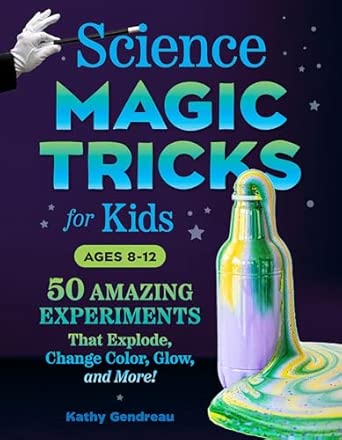 | Best for Visual Science Effects | Subject: Science experiments | Number of experiments: 50 | Featured effects: Explosions, color changes, glowing reactions, and more | VIEW LATEST PRICE | See Our Full Breakdown |
| National Geographic Kids Super Space Sticker Activity Book |  | Best for Space-Themed Sticker Activities | Theme: Space | Sticker count: Over 1,000 | Product type: Sticker activity book | VIEW LATEST PRICE | See Our Full Breakdown |
| STEM Starters for Kids: Meteorology Activity Book |  | Best for Weather-Curious Beginners | Subject: Meteorology | Content: Hands-on activities and weather facts | Audience: Children | VIEW LATEST PRICE | See Our Full Breakdown |
| Awesome Outdoor Science Experiments for Kids: 50+ STEAM Projects and Why They Work |  | Best for Outdoor Learning with Explanations | Subject: Outdoor science and STEAM | Project count: 50+ | Explanations: Explains why projects work | VIEW LATEST PRICE | See Our Full Breakdown |
| 101 Science Experiments and Projects for Children: 101 Fun Activities |  | Best for a Large General Activity Collection | Subject: Science | Number of activities: 101 | Activity types: Experiments and projects | VIEW LATEST PRICE | See Our Full Breakdown |
| Science Experiments for Kids Ages 5 to 9: 101 Fun STEAM Projects for Curious Minds |  | Best for Early Elementary Variety | Target Age: 5-9 years | Project Count: 101 | Subject Focus: STEAM (Science, Technology, Engineering, Arts, Math) | VIEW LATEST PRICE | See Our Full Breakdown |
| Awesome Science Experiments for Kids: 100+ Fun STEM/STEAM Projects and Why They Work |  | Best for Conceptual Understanding | Project Count: 100+ | Subject Focus: STEM/STEAM | Format: Book | VIEW LATEST PRICE | See Our Full Breakdown |
| Astronomy Activity Book for Kids: 100+ Fun Ways to Learn About Space and Stargazing |  | Best Niche Subject Focus | Project Count: 100+ | Subject Focus: Astronomy and Space | ASIN: 0593435486 | VIEW LATEST PRICE | See Our Full Breakdown |
| School Zone Big Science Workbook for Grades 2–3 |  | Best for Curriculum Alignment | Pages: 320 | Grade Level: 2nd–3rd Grade | Age Range: 7–9 Years | VIEW LATEST PRICE | See Our Full Breakdown |
| STEM Starters for Kids: Science Activity Book |  | Best Entry-Level Introduction | Series: STEM Starters for Kids | Format: Activity Book | ASIN: 1631581929 | VIEW LATEST PRICE | See Our Full Breakdown |
| The Science Spell Book: 30 Enchanting Experiments for Kids |  | Best for Thematic Engagement | Experiment Count: 30 | Target Audience: Kids | Theme: Enchanting/Magical | VIEW LATEST PRICE | See Our Full Breakdown |
| Awesome Engineering Activities for Kids: 50+ Exciting STEAM Projects to Design and Build |  | Best for Hands-On Builders | Project Count: 50+ | Subject Focus: Engineering | Methodology: Design and Build | VIEW LATEST PRICE | See Our Full Breakdown |
| Explore Space, Stars, and Planets: Activity and Fact Book for Kids Ages 5–9 |  | Best for Early Learners | Age Range: 5–9 | Subject: Space, Stars, Planets | Content Types: Stickers, Experiments, Diagrams, Mazes, Coloring | VIEW LATEST PRICE | See Our Full Breakdown |
| 101 Great Science Experiments: A Step-by-Step Guide |  | Best Comprehensive Guide | Experiment Count: 101 | Format: Step-by-Step Guide | Subject: General Science | VIEW LATEST PRICE | See Our Full Breakdown |
| science activity books for kid | Format | ASIN | Subject |
|---|---|---|---|
| Science Magic Tricks for Kids: | — | — | Science experiments |
| National Geographic Kids Super | — | — | — |
| STEM Starters for Kids: Meteor | — | — | Meteorology |
| Awesome Outdoor Science Experi | Book | — | Outdoor science and STEAM |
| 101 Science Experiments and Pr | — | — | Science |
| Science Experiments for Kids A | Paperback Book | 1646387503 | — |
| Awesome Science Experiments fo | Book | 1939754666 | — |
| Astronomy Activity Book for Ki | Activity Book | 0593435486 | — |
| School Zone Big Science Workbo | Workbook | 1681473682 | — |
| STEM Starters for Kids: Scienc | Activity Book | 1631581929 | General Science |
| The Science Spell Book: 30 Enc | Activity Book | 172823252X | — |
| Awesome Engineering Activities | Activity Book | 1641523697 | — |
| Explore Space | Activity and Fact Book | 1646389530 | Space, Stars, Planets |
| 101 Great Science Experiments: | Step-by-Step Guide | 1465428267 | General Science |
More Details on Our Top Picks
Science Magic Tricks for Kids: 50 Experiments That Explode, Change Color, Glow, and More
Science Magic Tricks for Kids earns its place for families who want science activities with immediately visible results: its 50 experiments promise effects such as explosions, color changes, and glowing reactions. That spectacle gives it a different appeal from STEM Starters for Kids: Meteorology Activity Book, which focuses on weather facts and activities rather than a broad menu of showy reactions. The tradeoff is that the available product information says nothing about experiment instructions, required materials, or recommended ages, so I can’t judge how independently children can use it or how much preparation adults may need. It is a strong thematic match for curious kids drawn to dramatic demonstrations, but buyers who need clear age guidance or predictable supply lists may prefer a book with more documented details.
Pros:- Includes 50 experiments, offering a substantial set of activities.
- Promises varied visual effects, including color changes and glowing reactions.
- Its magic-trick framing can make science demonstrations appealing to children who enjoy surprises.
Cons:- The available product information does not specify experiment materials or preparation needs.
- No age range or instruction details are provided, making independent-use suitability difficult to judge.
Best for: Families looking for a variety of visually dramatic science experiments to share with children, and who are comfortable checking the book for age guidance and materials before starting.
Not ideal for: Caregivers who need confirmed age recommendations, materials lists, or instruction details before choosing a science book.
- Subject:Science experiments
- Number of experiments:50
- Featured effects:Explosions, color changes, glowing reactions, and more
- Audience:Kids
- Product type:Activity book
- Age range:Not provided
Our verdict“Choose this for kids drawn to dramatic science effects, but look elsewhere if you need documented age and materials guidance.”
National Geographic Kids Super Space Sticker Activity Book
National Geographic Kids Super Space Sticker Activity Book is the most visual, low-barrier pick in this group: its space theme and over 1,000 stickers give children plenty of material for sticker-based activities. Compared with Astronomy Activity Book for Kids: 100+ Fun Ways to Learn About Space and Stargazing, this title’s clearest stated draw is sticker play, not a documented focus on astronomy activities or stargazing. That distinction matters for buyers seeking science content rather than a themed activity experience. The supplied details do not describe the activities, learning topics, age range, or book format, so I can’t tell how much factual science content accompanies the stickers. I’d choose it for a child who engages through hands-on, space-themed play; a buyer prioritizing described science lessons may find the other space title easier to evaluate.
Pros:- Includes over 1,000 stickers for sticker-focused activity.
- Space theme can appeal to children interested in planets and space.
- Its sticker format offers a visually engaging alternative to experiment-centered books.
Cons:- The available details do not explain the activities or the science topics covered.
- No age range or book-format details are provided.
Best for: Families seeking a space-themed activity book for children who enjoy sticker-based play and visual engagement.
Not ideal for: Buyers who want confirmed astronomy lessons, activity descriptions, or age guidance before selecting a science book.
- Theme:Space
- Sticker count:Over 1,000
- Product type:Sticker activity book
- Publisher imprint:National Geographic Kids
- Audience:Kids
- Activity details:Not provided
Our verdict“Pick this for a space-loving child who enjoys stickers, not when clearly specified astronomy learning is the priority.”
STEM Starters for Kids: Meteorology Activity Book
STEM Starters for Kids: Meteorology Activity Book is the most focused choice here: it pairs hands-on activities with weather facts, giving children a topic-specific entry into meteorology. That narrower scope sets it apart from 101 Science Experiments and Projects for Children, which offers a much larger activity count but no supplied detail about its subjects. For a child who regularly asks about clouds, storms, or forecasts, a clear weather theme can make the science feel more connected than a general assortment. The tradeoff is uncertainty about how many activities the book includes and what they involve; the available data also does not state an age range or materials. I’d choose it for subject interest over sheer quantity, while families wanting a known activity count or broad variety may prefer a more clearly specified collection.
Pros:- Combines hands-on activities with meteorology facts.
- Its focused weather subject suits children with a specific interest in meteorology.
- Offers a more defined topic than general experiment collections such as 101 Science Experiments and Projects for Children.
Cons:- The available product data does not specify the number or types of activities.
- No age range or materials information is provided.
Best for: Children interested in weather and families seeking a focused introduction to meteorology through activities and facts.
Not ideal for: Buyers who want a stated number or description of activities, a confirmed age range, or a broad mix of science subjects.
- Subject:Meteorology
- Content:Hands-on activities and weather facts
- Audience:Children
- Product type:Activity book
- Activity count:Not provided
- Materials:Not provided
Our verdict“Choose this for a weather-curious child who values a focused topic more than a documented activity count.”
Awesome Outdoor Science Experiments for Kids: 50+ STEAM Projects and Why They Work
Awesome Outdoor Science Experiments for Kids stands out for combining 50+ outdoor STEAM projects with explanations of why they work. That second part gives it a learning advantage over Science Magic Tricks for Kids, whose supplied description emphasizes visual effects but does not confirm that explanations are included. The outdoor focus also makes this a better fit for families who want activities beyond the desk, though it may be less convenient when weather, space, or supervision limits outdoor time. The available details do not identify specific projects, required supplies, or a recommended age range, so preparation demands remain unclear. I’d put this ahead of a simple activity collection for buyers who value explanations alongside doing, but it is not the most flexible pick for indoor-only households.
Pros:- Includes more than 50 projects.
- Pairs activities with explanations of why they work.
- Outdoor focus offers a distinct alternative to general experiment collections.
Cons:- Outdoor projects may be inconvenient for families without suitable space or dependable outdoor time.
- The available data does not list specific projects, materials, or an age range.
Best for: Families with access to outdoor space who want children to do STEAM projects and learn the reasons behind the results.
Not ideal for: Households that need activities suited to indoor-only use or want project lists, supply details, and age guidance before buying.
- Subject:Outdoor science and STEAM
- Project count:50+
- Explanations:Explains why projects work
- Format:Book
- Audience:Kids
- Materials:Not provided
Our verdict“Choose this when outdoor experimentation and explanations matter more than indoor flexibility or fully listed project details.”
101 Science Experiments and Projects for Children: 101 Fun Activities
101 Science Experiments and Projects for Children is the quantity-led option in this group, with 101 activities spanning science experiments and projects. That makes it a more obvious choice for families who want a long general list than STEM Starters for Kids: Meteorology Activity Book, which concentrates on one subject. But a larger count does not tell buyers whether the activities suit their child, how involved they are, or what supplies they need; none of those details are included in the supplied description. By comparison, Awesome Outdoor Science Experiments for Kids offers fewer projects but confirms an outdoor focus and explanations of how they work. I’d choose this for breadth on paper, not for a specific learning topic or detailed expectations about each activity.
Pros:- Includes 101 activities, the largest stated count among these five picks.
- Covers both science experiments and projects.
- General science framing can suit families looking beyond a single topic such as meteorology.
Cons:- The available product information does not describe individual activities or their subjects.
- No materials, age range, or instruction details are provided.
Best for: Families seeking a large general collection of science activities for children and willing to review the book for project details.
Not ideal for: Buyers who need a specific science topic, activity descriptions, materials guidance, or age recommendations before choosing.
- Subject:Science
- Number of activities:101
- Activity types:Experiments and projects
- Audience:Children
- Product type:Activity book
- Activity details:Not provided
Our verdict“Choose this for a high stated activity count across general science, but not when topic or project details need to be clear upfront.”
Science Experiments for Kids Ages 5 to 9: 101 Fun STEAM Projects for Curious Minds
This book targets a specific developmental window, offering 101 distinct projects that align with the cognitive abilities of children aged 5 to 9. Unlike the Awesome Science Experiments for Kids, which leans heavily into explanatory text, this title prioritizes hands-on engagement with a wider breadth of STEAM disciplines. The sheer volume of activities ensures that boredom is rarely an issue, providing fresh challenges week after week. However, the narrow age range means it becomes less relevant for older siblings or advanced learners. It also lacks detailed material lists in the summary, requiring parents to verify supply availability before starting specific projects.
Pros:- 101 unique projects prevent repetition and sustain long-term interest
- Tailored specifically for the cognitive and motor skills of ages 5-9
- Integrates Arts and Math into science, broadening the educational scope
- Encourages curiosity through accessible, low-barrier entry points
Cons:- Strict age limitation excludes preschoolers and older elementary students
- Lacks clear indication of required household materials or difficulty tiers
- May lack the depth of scientific explanation found in more advanced titles
Best for: Parents of children aged 5-9 who want a high volume of varied activities without needing to research complex setups.
Not ideal for: Families with mixed-age groups or children older than 9, as the content may feel too simple.
- Target Age:5-9 years
- Project Count:101
- Subject Focus:STEAM (Science, Technology, Engineering, Arts, Math)
- Format:Paperback Book
- ASIN:1646387503
- Learning Style:Hands-on Experimentation
Our verdict“This pick makes the most sense for families with a single child in the 5-9 age bracket who enjoys switching between different types of science activities.”
Awesome Science Experiments for Kids: 100+ Fun STEM/STEAM Projects and Why They Work
While Science Experiments for Kids Ages 5 to 9 focuses on the activity itself, this title distinguishes itself by explaining the science behind the experiments. It includes more than 100 projects that cover both STEM and STEAM fields, making it suitable for children who ask “why” after every result. The inclusion of explanatory text helps bridge the gap between observation and comprehension. Compared to the School Zone Big Science Workbook, this book feels more like a guide than a test, allowing for flexible exploration rather than rigid curriculum adherence. The tradeoff is that the explanatory depth might overwhelm younger children who just want to mix things together.
Pros:- Explains the ‘why’ behind each experiment, fostering deeper learning
- Covers a broad range of STEM and STEAM topics
- Over 100 projects provide extensive content value
- Balances fun activities with educational rigor
Cons:- Text-heavy explanations may deter younger or reluctant readers
- Less focus on pure play compared to activity-only books
- Does not specify a narrow age range, making suitability harder to gauge
Best for: Curious kids who want to understand the scientific principles behind the results, not just perform the actions.
Not ideal for: Very young children or impatient learners who may find the explanatory text tedious.
- Project Count:100+
- Subject Focus:STEM/STEAM
- Format:Book
- ASIN:1939754666
- Educational Approach:Explanatory and Hands-on
- Target Audience:General Kids
Our verdict“Choose this if your child benefits from understanding the mechanics of an experiment rather than just completing the task.”
Astronomy Activity Book for Kids: 100+ Fun Ways to Learn About Space and Stargazing
Most books in this roundup offer general science breadth, but this title carves out a specific niche: space and stargazing. It offers more than 100 activities dedicated solely to astronomy, making it ideal for families with a backyard telescope or a strong interest in the night sky. Compared to the STEM Starters for Kids series, which covers general science facts, this book provides specialized depth that generalists lack. The drawback is obvious: if your child’s interest shifts to biology or chemistry, this book becomes obsolete quickly. It is a specialized tool, not a general-purpose activity book.
Pros:- Specialized focus on astronomy and space topics
- Introduces stargazing techniques and concepts
- Over 100 activities keep the theme fresh and engaging
- Niche subject matter stands out from general science titles
Cons:- Limited scope restricts usefulness to space enthusiasts
- May require additional equipment (like a telescope) to fully utilize
- Lacks coverage of other core science disciplines like biology or physics
Best for: Families interested in astronomy, stargazing, or space exploration who want specialized activities.
Not ideal for: Children with broad or shifting interests who need a general science workbook.
- Project Count:100+
- Subject Focus:Astronomy and Space
- ASIN:0593435486
- Format:Activity Book
- Key Activity:Stargazing
- Target Audience:Kids
Our verdict“This is the right choice only if your household has a specific, sustained interest in astronomy.”
School Zone Big Science Workbook for Grades 2–3
This workbook serves a different purpose than the activity-focused books like Awesome Science Experiments for Kids. With 320 pages of material, it aligns with Grade 2-3 curriculum standards, covering specific topics like weather, seeds, and mammals. It is less about messy experiments and more about reinforcing classroom concepts through worksheets and structured exercises. For parents worried about school performance, this offers reassurance that science concepts are being practiced systematically. However, it lacks the hands-on, tactile engagement that makes science fun for many kids. It is a study aid, not an entertainment product.
Pros:- 320 pages offer substantial practice material
- Aligned with Grade 2-3 educational standards
- Covers specific biology and earth science topics like insects and weather
- Structured format helps build academic discipline
Cons:- Worksheet-heavy format may feel like homework to children
- Lacks the interactive, hands-on experiments found in other titles
- Limited age range (7-9) excludes younger or older siblings
Best for: Parents seeking to reinforce Grade 2-3 school curriculum concepts through structured practice.
Not ideal for: Kids who dislike worksheets or prefer messy, hands-on experimentation over reading and writing.
- Pages:320
- Grade Level:2nd–3rd Grade
- Age Range:7–9 Years
- Topics Covered:Weather, seeds, plants, insects, mammals, ocean life, birds
- ASIN:1681473682
- Format:Workbook
Our verdict“Buy this if your primary goal is academic reinforcement rather than exploratory play.”
STEM Starters for Kids: Science Activity Book
As part of the STEM Starters series, this book is designed as a gentle introduction to scientific inquiry. It combines hands-on activities with bite-sized science facts, making it less intimidating than the dense text in Awesome Science Experiments for Kids. The format is likely simpler and more accessible for children who are new to structured science activities. However, it lacks the detailed project counts and specific topic breakdowns seen in the School Zone Big Science Workbook. This vagueness means you might find less variety or depth compared to more robust titles, but it excels at lowering the barrier to entry for hesitant learners.
Pros:- Combines activities with easy-to-digest science facts
- Part of a recognizable series for consistent quality
- Accessible format for beginners in science
- Encourages curiosity without overwhelming the child
Cons:- Lacks detailed specifications on project count or depth
- May feel too simple for children already engaged in science
- Less comprehensive than specialized titles like the Astronomy Activity Book
Best for: Young children or reluctant learners who need a low-pressure introduction to science concepts.
Not ideal for: Advanced students or those looking for complex, multi-step engineering challenges.
- Series:STEM Starters for Kids
- Format:Activity Book
- ASIN:1631581929
- Content Type:Activities and Facts
- Target Audience:Kids
- Subject:General Science
Our verdict“This option stands out for families wanting a gentle, fact-rich starting point for scientific curiosity.”
The Science Spell Book: 30 Enchanting Experiments for Kids
This book stands out by framing science through a magical narrative, which can hold attention better than standard instruction manuals. While The Science Spell Book lacks the sheer volume of projects found in 101 Great Science Experiments, its unique presentation style transforms routine activities into story-driven adventures. This approach is particularly effective for children who resist dry factual learning. However, the limited detail in the product description makes it hard to gauge the complexity of the ingredients required. Compared to the broad range in Awesome Engineering Activities for Kids, this title is narrower in scope but deeper in immersion. It trades variety for a cohesive, imaginative experience that might appeal to reluctant learners.Pros:- Unique magical theme enhances engagement for reluctant learners
- Structured as a cohesive narrative rather than a disjointed list
- Lower experiment count allows for more focused, repeatable activities
Cons:- Limited information on specific materials or difficulty levels
- Fewer total experiments compared to comprehensive guides
- Niche theme may not appeal to children interested in pure mechanics or biology
Best for: Children who respond better to narrative and fantasy themes than to direct scientific instruction
Not ideal for: Parents seeking a broad curriculum or a large volume of diverse experiments
- Experiment Count:30
- Target Audience:Kids
- Theme:Enchanting/Magical
- Format:Activity Book
- Focus:Science Experiments
- ASIN:172823252X
Our verdict“A strong choice for parents looking to spark interest through storytelling rather than technical instruction.”
Awesome Engineering Activities for Kids: 50+ Exciting STEAM Projects to Design and Build
This title is better suited to children who enjoy constructing physical objects than to those who prefer observation-based science. With over 50 projects, Awesome Engineering Activities for Kids offers more variety than The Science Spell Book but focuses specifically on design and building. The emphasis on STEAM (adding Arts to STEM) encourages creative problem-solving, distinguishing it from pure engineering texts. Unlike Explore Space, Stars, and Planets, which mixes coloring with facts, this book demands active assembly and testing. The tradeoff is the potential need for specific, non-household materials, which requires more parental preparation time compared to simple kitchen-science books.Pros:- Strong focus on practical engineering and construction skills
- Integrates arts and creativity into technical projects
- High project count offers long-term value
Cons:- May require purchasing specialized components
- Less emphasis on theoretical scientific explanation
- Higher setup effort compared to observation-based experiments
Best for: Young makers who enjoy assembling, testing, and iterating on physical designs
Not ideal for: Families with limited space or patience for complex material gathering
- Project Count:50+
- Subject Focus:Engineering
- Methodology:Design and Build
- Framework:STEAM
- Format:Activity Book
- ASIN:1641523697
Our verdict“Ideal for households that want to foster engineering intuition through tangible building projects.”
Explore Space, Stars, and Planets: Activity and Fact Book for Kids Ages 5–9
Designed specifically for the 5–9 age range, this book balances passive learning with active play. It includes stickers, coloring, and mazes alongside simple experiments, making it less demanding than Awesome Engineering Activities for Kids. While 101 Great Science Experiments offers a deeper technical dive, Explore Space, Stars, and Planets prioritizes accessibility and fun for younger children. The mix of facts and games helps reinforce concepts without overwhelming early readers. However, the narrow focus on astronomy means it lacks the general science breadth found in multi-subject workbooks. It serves as a gentle introduction rather than a rigorous curriculum.Pros:- Age-appropriate difficulty level for early elementary students
- Variety of activity types prevents boredom
- Combines factual reading with playful engagement
Cons:- Narrow subject matter limits long-term utility
- Less rigorous scientific depth than dedicated experiment books
- Activity variety may distract from core learning objectives
Best for: Parents of children ages 5–9 who need low-pressure, mixed-media learning tools
Not ideal for: Older children or those seeking advanced scientific explanations or complex experiments
- Age Range:5–9
- Subject:Space, Stars, Planets
- Content Types:Stickers, Experiments, Diagrams, Mazes, Coloring
- Series:Gold Stars Series
- Format:Activity and Fact Book
- ASIN:1646389530
Our verdict“A well-rounded entry point for young children curious about space without the pressure of complex tasks.”
101 Great Science Experiments: A Step-by-Step Guide
With 101 experiments, this book offers the highest volume of activities in this batch, far exceeding the 50 projects in Awesome Engineering Activities for Kids. Its step-by-step format supports independent learning, assuming basic literacy and comprehension skills. Unlike The Science Spell Book, which relies on narrative, this guide focuses on procedural clarity and scientific method. The sheer number of options means there is likely an experiment for every interest, from chemistry to physics. The drawback is the potential for overwhelm; without a thematic filter, children may struggle to choose. It requires more parental guidance to select appropriate activities than the curated, age-specific Explore Space title.Pros:- Massive variety of experiments covers multiple scientific disciplines
- Step-by-step instructions promote self-guided learning
- High value due to the extensive number of included projects
Cons:- Can be overwhelming due to lack of thematic organization
- May include experiments requiring uncommon materials
- Less tailored to specific developmental stages than age-branded books
Best for: Homeschoolers or parents seeking a broad, reference-style library of science activities
Not ideal for: Young children who need structured, age-segmented activities or narrative context
- Experiment Count:101
- Format:Step-by-Step Guide
- Subject:General Science
- Target Audience:Kids
- Type:Reference/Activity Book
- ASIN:1465428267
Our verdict“The definitive choice for families wanting a massive, versatile collection of science experiments in one volume.”

How We Picked
I evaluated these science activity books based on four primary criteria: educational clarity, ease of execution, age appropriateness, and engagement potential. Educational clarity meant the book had to explain the ‘why’ behind the ‘what,’ ensuring that the activity was not just a spectacle but a lesson. Ease of execution was critical; I prioritized books that used common household items over those requiring expensive or hard-to-find components, as this directly impacts the frequency of use. Age appropriateness was assessed by looking at the complexity of instructions and the safety warnings provided, ensuring that the recommended age range matches the cognitive and motor skills required. Finally, engagement potential was judged by the variety of activity types—mixing experiments, diagrams, and challenges keeps children interested longer than single-format books.
The ranking logic favors books that offer a balance of immediate gratification and long-term learning. Titles that allow for independent use by older children were ranked higher than those requiring constant adult intervention, unless the activity was inherently dangerous. I also weighed the quality of illustrations and layout, as cluttered pages can confuse young readers. Books that failed to provide clear troubleshooting tips for failed experiments were penalized, as frustration is a major barrier to continued science interest.
| science activity books for kid | Subject | Format |
|---|---|---|
| Science Magic Tricks for Kids: | Science experiments | — |
| National Geographic Kids Super | — | — |
| STEM Starters for Kids: Meteor | Meteorology | — |
| Awesome Outdoor Science Experi | Outdoor science and STEAM | Book |
| 101 Science Experiments and Pr | Science | — |
| Science Experiments for Kids A | — | Paperback Book |
| Awesome Science Experiments fo | — | Book |
| Astronomy Activity Book for Ki | — | Activity Book |
| School Zone Big Science Workbo | — | Workbook |
| STEM Starters for Kids: Scienc | General Science | Activity Book |
| The Science Spell Book: 30 Enc | — | Activity Book |
| Awesome Engineering Activities | — | Activity Book |
| Explore Space | Space, Stars, Planets | Activity and Fact Book |
| 101 Great Science Experiments: | General Science | Step-by-Step Guide |
Factors to Consider When Choosing Science Activity Books For Kids
Selecting a science book is not just about picking a topic; it is about matching the book’s structure to your child’s learning style and your household’s resources.Assessing Material Availability and Cost
One of the most common pitfalls in buying science activity books is overlooking the hidden cost of materials. A book might look appealing, but if it requires buying specific pH strips, non-Newtonian fluid ingredients, or specialized magnets every time, usage drops off rapidly. I recommend scanning the first ten activities in any book before purchasing. If the materials are not in your kitchen or garage, the book will likely sit unread. Books that explicitly list ‘common household items’ are safer bets for sustained engagement. Conversely, if you are willing to invest in a starter kit, books with more specialized equipment can offer deeper, more precise results that basic kitchen science cannot replicate.
Matching Complexity to Reading Level
There is a significant difference between a child who can read instructions independently and one who needs an adult to translate them. For younger children (ages 5-7), look for books with visual step-by-step guides where the pictures carry most of the instructional weight. If the text is dense and abstract, the child will lose interest before the experiment begins. For older children (ages 8+), the book should challenge their reading comprehension while keeping the scientific concepts accessible. A common mistake is buying a book slightly above the child’s reading level, assuming they will ‘figure it out.’ This often leads to frustration and abandonment of the activity. Always check the sample pages for font size, sentence length, and the presence of safety icons.
The Balance Between Open-Ended and Guided Learning
Some books provide rigid, step-by-step recipes for experiments, while others encourage open-ended inquiry. Guided books are better for children who need structure and confidence, as they guarantee a successful outcome if followed correctly. Open-ended books are superior for children who enjoy problem-solving and creative thinking, as they allow for variations and failures. Consider your child’s personality: do they prefer knowing exactly what will happen, or do they enjoy the surprise of testing hypotheses? A mix of both is ideal, but if you must choose, align the book’s philosophy with your child’s natural inclination. Forcing a structured learner into an open-ended book can cause anxiety, while limiting a creative thinker to rigid steps can feel boring.
Evaluating the Quality of Scientific Explanations
Not all science books teach science equally well. Many activity books focus solely on the ‘wow’ factor without explaining the underlying principles. I look for books that include a ‘Why It Works’ section after each activity. This section should use simple analogies and diagrams to explain concepts like chemical reactions, gravity, or light refraction. Without this explanation, the activity is merely entertainment. A good book will also address common misconceptions. For example, if an experiment involves baking soda and vinegar, does the book clarify that it is a chemical change and not just a physical one? This depth of explanation is what separates educational tools from mere toys.
Considering the Physical Durability and Layout
Science activities can be messy. Glue, water, and soil are common components. Therefore, the physical construction of the book matters. Spiral-bound books that lay flat are significantly more user-friendly than hardcovers, as children can keep the book open on a table while working with messy materials. Paper quality also plays a role; thin, glossy pages may warp if wet or tear easily if used for cutting. Additionally, the layout should separate the instructions from the recording space. If a child has to write in the margins, the book becomes less reusable. Look for books that provide dedicated worksheets or journal pages for recording observations, which encourages the habit of scientific documentation.
Aligning Topics with Current Interests
General science books are great, but niche books can spark a lifelong passion. If your child is obsessed with space, an Astronomy Activity Book will engage them far more than a general science book, even if the general book has ‘better’ reviews. Interest-driven learning is more effective than forced exposure. However, be cautious of over-specialization. A book solely about rocks might bore a child who loves space. The best approach is to buy one general book to broaden their horizons and one niche book to deepen their current interest. This combination ensures they are challenged by new topics while feeling confident in their area of expertise. Always let the child choose the niche topic; their enthusiasm is the best predictor of success.
Frequently Asked Questions
Do I need to buy a separate science kit to use these books?
Most of the books in this roundup are designed to be used with common household items, such as baking soda, vinegar, paper, and basic kitchen tools. However, some specialized topics like chemistry or electronics may require specific components that are not typically found at home. I recommend checking the ‘Materials Needed’ section of the first few activities in any book before purchasing. If the list includes items like litmus paper, specific magnets, or electronic components, you may need to buy a small kit or source these items online. For beginners, stick to books that explicitly state ‘no special equipment needed’ to avoid unexpected costs and delays.Are these books suitable for independent use by children?
This depends heavily on the age range and the complexity of the activities. Books labeled for ages 8 and up generally have clearer instructions and simpler layouts that allow for independent work. However, even older children may need adult supervision for activities involving heat, sharp objects, or chemicals. For children under 7, I strongly suggest co-participation. The adult’s role should be to facilitate safety and ask guiding questions rather than doing the experiment for the child. Look for books with visual step-by-step guides and safety icons, as these are better indicators of independent usability than the age label alone.How do I choose between a general science book and a specific topic book?
Choose a general science book if you want to expose your child to a wide variety of disciplines, helping them discover what they enjoy. These books are excellent for broadening horizons and preventing early specialization. Choose a specific topic book, such as astronomy or engineering, if your child has a demonstrated, sustained interest in that area. Niche books offer deeper engagement and more complex projects for that specific interest. A balanced approach is to start with a general book to gauge interests, then supplement with niche books as those interests emerge. This ensures you are investing in topics that genuinely captivate your child.What is the difference between STEM and STEAM activities?
STEM stands for Science, Technology, Engineering, and Mathematics, focusing on technical and analytical skills. STEAM adds Art, integrating creative design, aesthetics, and humanities into the scientific process. Books labeled STEAM often include activities that require drawing, designing, or creative problem-solving, making them more accessible to children who may not identify as ‘science kids.’ If your child enjoys crafting, drawing, or creative projects, a STEAM book will likely engage them more than a strict STEM book. The distinction is subtle but important for matching the book to your child’s learning style. STEAM approaches often make abstract scientific concepts more tangible and enjoyable.Are these books aligned with school curriculums?
Most commercial science activity books are not strictly aligned with specific school curriculums, as they are designed for general interest and home use. However, they often cover topics that overlap with elementary science standards, such as states of matter, ecosystems, and basic physics. School Zone workbooks are an exception, as they are explicitly designed to reinforce classroom learning. If you are looking for supplemental educational material that mirrors school lessons, choose workbooks with clear grade-level labels. For general enrichment and curiosity-driven learning, any of the activity books in this roundup are suitable, as they foster a love of science rather than rote memorization of curriculum standards.Conclusion
Choosing the right science activity book depends on your child’s age, interests, and your willingness to manage materials. Science Magic Tricks for Kids remains the best overall choice for its perfect blend of engagement and educational value, making it ideal for most families. For parents seeking a cost-effective, broad introduction to science, 101 Science Experiments and Projects for Children offers the best value with its extensive variety. If your child is a beginner who needs structured guidance, School Zone Big Science Workbook provides the necessary scaffolding to build confidence. For those with a specific passion for space, Astronomy Activity Book for Kids is the superior niche pick. Ultimately, the best book is the one that gets opened, experimented with, and enjoyed. Start with one title that matches your child’s current curiosity, and let that success guide your next purchase.