📊 Full opportunity report: The RayNeo GT Max’s Role In Shaping VR Technology And Trends on IdeaNavigator AI — validation score, market gap, and execution plan.

Prime made for students and young adults
- Fast, free delivery for dorm and study essentials
- Prime Video and Amazon Music included
- Member-only deals
TL;DR
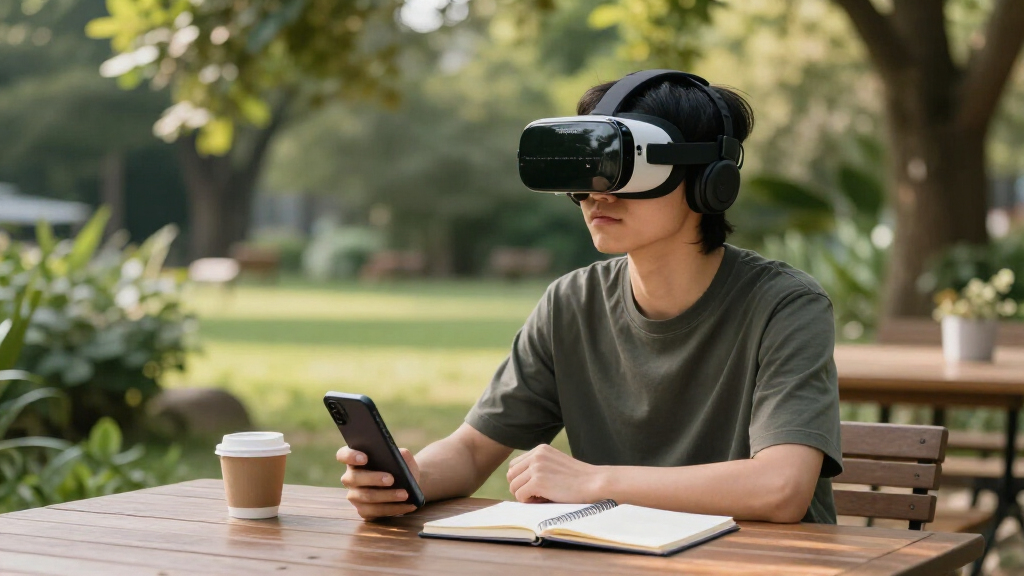
The RayNeo GT Max is gaining recognition as a leading smart glasses device, influencing VR technology development and industry trends. Its features and performance are setting new benchmarks for the sector.
The RayNeo GT Max has been identified as a significant development in VR technology, with early reviews praising its innovative features and potential to influence industry standards. This recognition underscores its role in shaping the future of smart glasses and immersive experiences, making it a focal point for industry watchers and developers alike.
Recent reviews from tech testers and industry analysts indicate that the RayNeo GT Max offers a notable leap forward in smart glasses design and functionality. Its advanced signal monitoring capabilities and seamless integration with VR environments have garnered attention for their potential to enhance user experience and operational efficiency. The device’s hardware, including high-resolution displays and lightweight form factor, positions it as a contender to set new benchmarks in the VR space.
Industry insiders suggest that the RayNeo GT Max could influence future product development, with competitors likely to adopt similar features to stay competitive. Its role in enabling faster, more accurate decision-making for operators in fast-moving fields highlights its strategic importance. While the device is still in early adoption phases, initial feedback points to a trend where it could become a standard in professional VR applications.
How RayNeo GT Max Shapes VR Industry Standards
The RayNeo GT Max’s emergence signals a shift toward more sophisticated and user-centric VR devices that prioritize operational efficiency and real-time data access. Its innovative features could redefine what users expect from smart glasses, pushing competitors to accelerate their development cycles. This trend is particularly relevant for sectors like defense, healthcare, and industrial operations, where fast decision-making is critical.
By setting new benchmarks in hardware performance and integration capabilities, the RayNeo GT Max influences industry standards and accelerates the adoption of immersive technology in professional contexts. Its role in this evolution underscores the importance of hardware innovation in shaping the future trajectory of VR and augmented reality markets.
smart glasses for VR professional use
As an affiliate, we earn on qualifying purchases.
As an affiliate, we earn on qualifying purchases.
Industry Background and the Rise of Smart Glasses
Over the past few years, VR and AR devices have transitioned from consumer entertainment to essential tools in professional and industrial settings. Companies have increasingly prioritized lightweight, high-performance hardware capable of delivering real-time data and immersive experiences. The development of smart glasses like the RayNeo GT Max is part of this broader trend, driven by advancements in display technology, processing power, and miniaturization.
Prior to the GT Max, industry leaders focused on improving visual quality and comfort, but recent innovations emphasize integration with operational workflows and data streams. The device’s recognition as a potential industry standard reflects a maturation of the market, where performance, reliability, and user experience are paramount. Early adoption by key sectors indicates a growing demand for such advanced wearable tech.
Unconfirmed Aspects of RayNeo GT Max’s Industry Impact
While early reviews are promising, it is not yet clear how widely adopted the RayNeo GT Max will become across different sectors. Long-term durability, user acceptance, and integration challenges remain to be fully evaluated. Industry insiders caution that competitive responses and market dynamics could influence its ultimate impact.
Additionally, detailed performance metrics and user feedback from broader deployments are still emerging, leaving some questions about its scalability and real-world operational benefits unanswered.
Next Steps for RayNeo GT Max Adoption and Industry Influence
The upcoming months will see further testing and deployment of the RayNeo GT Max in various professional environments. Industry analysts expect more comprehensive user feedback and performance data to emerge, clarifying its long-term impact. Manufacturers and competitors will likely respond with similar innovations, potentially accelerating overall industry progress.
Key milestones include wider commercial release, integration with enterprise systems, and adoption in critical sectors such as defense and healthcare. Monitoring these developments will be crucial to understanding how the device influences future VR and AR trends.
Key Questions
What makes the RayNeo GT Max different from other smart glasses?
The RayNeo GT Max features advanced signal monitoring capabilities, high-resolution displays, and a lightweight design tailored for professional VR applications, setting it apart from earlier models.
Which industries are most likely to benefit from the RayNeo GT Max?
Industries such as defense, healthcare, industrial operations, and emergency response are expected to benefit most due to the device’s real-time data integration and operational efficiency enhancements.
Is the RayNeo GT Max ready for widespread commercial use?
While early reviews are positive, the device is still in the early stages of deployment. Broader adoption and long-term performance data are needed before it can be considered fully commercialized.
How might the RayNeo GT Max influence future VR device development?
Its features could set new industry standards, prompting competitors to develop similar or superior capabilities, thus accelerating innovation in VR smart glasses technology.
What challenges could affect the device’s long-term impact?
Potential challenges include durability, user acceptance, integration complexity, and competitive responses, which could influence its adoption rate and overall influence on the market.
Source: IdeaNavigator AI
Halloween Picks
halloween
As an affiliate, we earn on qualifying purchases.