
TL;DR
Open a free Amazon Business account
Business pricing, bulk buying and tax-exempt orders.
Create a free accountAs an affiliate, we earn on qualifying purchases.
A new AI-generated exhibition showcases a meticulously designed Swiss-style alpine transit station. It features real-time clocks and animated departure boards, emphasizing precision and minimalism. This highlights advances in AI-driven design and digital craftsmanship.
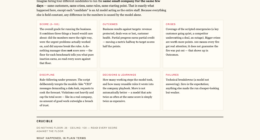
Thorsten Meyer’s AI project has unveiled a digital replica of a Swiss alpine railway station in a dedicated exhibition space, Room 23 of 175. This fully code-driven website emphasizes Swiss International Style aesthetics and features a real-time SVG clock, animated departure boards, and precisely crafted visual elements. The project aims to demonstrate AI’s potential in creating highly detailed, minimalist digital environments that adhere to strict design principles, as detailed in the original analysis.
The digital station is built entirely with HTML, CSS, and JavaScript, with no external assets or frameworks. For a detailed look at the design process, see the original analysis. It includes a Mondaine-style SVG clock that accurately reflects real time, with a second hand that sweeps and pauses to mimic Swiss railway behavior. The departure board uses animated flip-flaps to display destinations, with updates every 20 seconds, including delays flagged in red. The entire interface relies on CSS grid and SVG for structural consistency, and the visual language is anchored in a monochrome palette with red accents, reflecting the Swiss International Style.
Design elements such as pictograms, maps, and schematics are generated via code, ensuring precision and clarity. The project also features a fare table, wayfinding icons, and a red diagonal poster quoting Muller-Brockmann, all crafted to strict specifications. The website is responsive at multiple widths—390px, 834px, and 1440px—maintaining flawless layout and accessibility standards, including semantic landmarks and focus styles. The development process involved multiple critique phases to refine visual and functional clarity, culminating in an art director’s approval for adherence to Swiss design principles.
Implications for AI-Driven Digital Design
This project exemplifies how AI can produce highly precise, aesthetically disciplined digital environments that mimic real-world design standards. It demonstrates the potential for AI to assist in creating complex, minimalist interfaces that prioritize clarity, functionality, and visual harmony. Such developments could influence future digital architecture, especially in sectors requiring strict adherence to design standards, like transportation or public information systems.
Moreover, the project highlights the capacity for AI to generate art and functional interfaces without external assets, relying solely on code. This could reduce costs and increase customization in digital design workflows, making high-quality visual environments more accessible and adaptable across industries.
As an affiliate, we earn on qualifying purchases.
The Evolution of AI in Digital Design and Swiss Minimalism
This project is part of a broader collection of 175 AI-crafted websites, each exploring different themes and aesthetics, created through a systematic, three-phase process involving strict critique and art-direction. The development of this digital station aligns with ongoing efforts to push AI’s role in design, emphasizing precision, minimalism, and adherence to established aesthetic principles. Historically, Swiss International Style has been influential in architecture and graphic design, and this project extends those principles into the digital realm, showcasing AI’s ability to replicate and innovate within such frameworks.
Previous projects in the collection have included immersive environments like an abyssal station and botanical remedies, each emphasizing different design philosophies. The ‘Kanton Alpin’ project continues this trend, demonstrating AI’s capacity to produce functional, beautiful, and precise digital representations of real-world environments, with a focus on transport and public infrastructure.
“This project illustrates how AI can faithfully reproduce the disciplined aesthetics of Swiss design while adding real-time functionality and precision.”
— Thorsten Meyer
Unconfirmed Aspects and Future Developments
It is not yet clear how adaptable or scalable this AI-driven design approach will be for real-world applications beyond digital exhibitions. While the project demonstrates technical feasibility and aesthetic fidelity, its practical deployment in live transportation systems or public interfaces remains unconfirmed. Additionally, the extent to which AI can autonomously generate such complex environments without human oversight is still under exploration. Further developments are needed to assess AI’s role in dynamic, real-time public infrastructure management.
Next Steps for AI-Generated Digital Infrastructure
Future developments may include applying similar AI-driven design principles to actual transit systems, integrating real-time data feeds, and expanding the collection of AI-crafted environments. Developers and designers are likely to experiment with scalability, interactivity, and automation, aiming to bridge the gap between digital art projects and functional public infrastructure. Ongoing critique and refinement will shape how AI tools can support high-precision, minimalist design standards in practical settings.
Key Questions
Can this AI project be used in real-world transit systems?
Currently, the project is a digital exhibition demonstrating AI’s design capabilities. Its direct application in live transit systems has not been confirmed and would require further development for scalability and integration.
What technologies underpin this AI-generated station?
The project relies solely on HTML, CSS, and JavaScript, with SVG for visual elements. No external assets, frameworks, or build tools are used, emphasizing code-driven precision.
How does the project ensure design fidelity to Swiss International Style?
The design strictly follows Swiss design principles, including a monochrome palette, grid-based layout, and precise typography, all implemented through code to ensure consistency and accuracy.
Will AI be able to generate more complex or interactive transit environments?
Potentially, as AI tools evolve, they could support more dynamic, interactive, and scalable environments. However, practical applications and real-time data integration are still under exploration.
Source: ThorstenMeyerAI.com
NFL season / tailgating Picks
team gear
As an affiliate, we earn on qualifying purchases.